
Asia
One Month in Laos: Temples, Rivers & Mountains—A Real Itinerary
Plan a month-long journey through Laos balancing iconic temples, river adventures, and mountain exploration while traveling slowly and staying within budget.

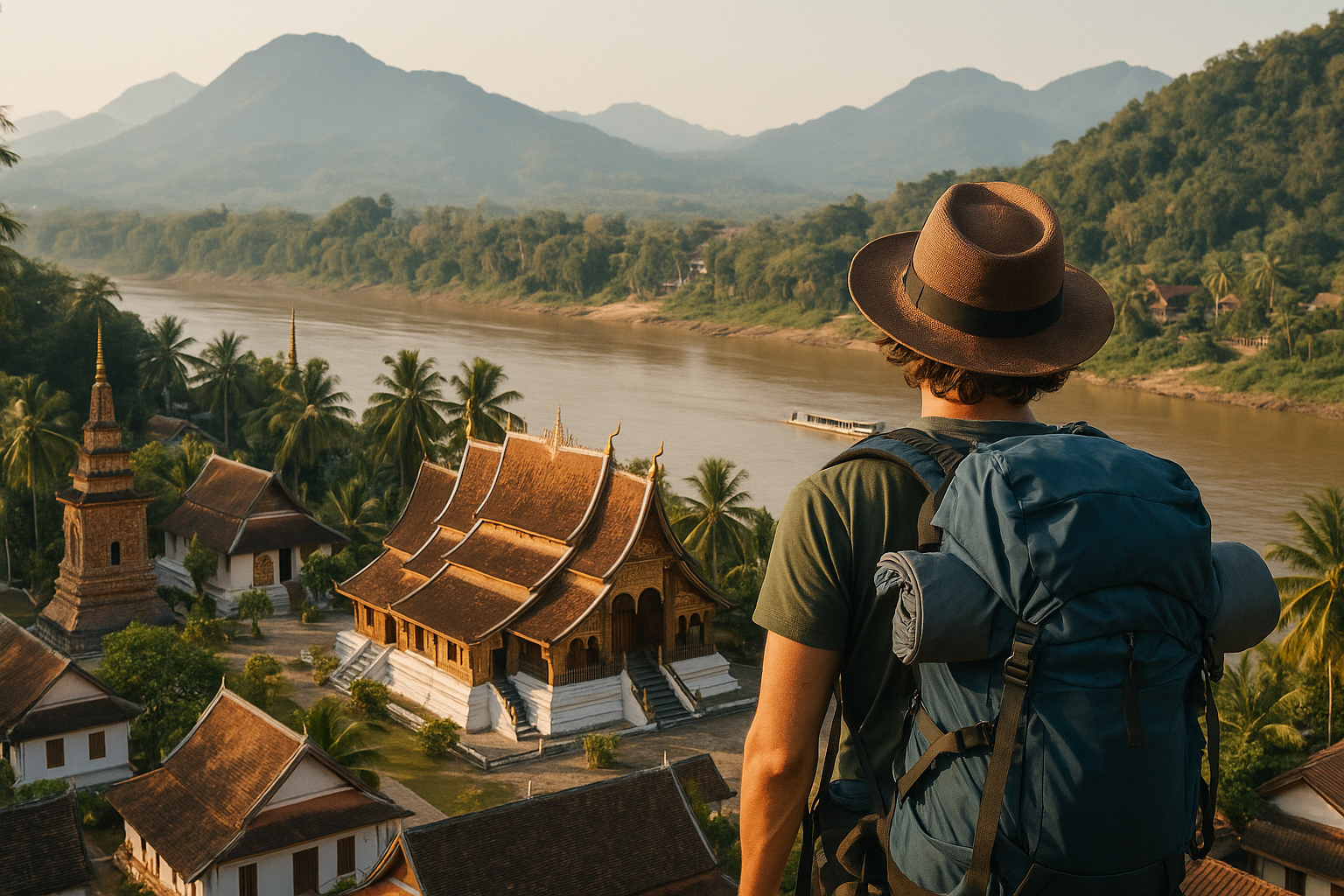
Why a Month in Laos Might Be the Best Decision You Make This Year
If you’ve been scrolling through Southeast Asia itineraries wondering which country deserves more than just a rushed weekend, let this be your answer: Laos. A well-planned Laos itinerary one month long gives you exactly enough time to move slowly, breathe deeply, and actually understand what makes this country so quietly extraordinary. Laos is underrated in the best possible way — thinly populated, genuinely peaceful, and full of experiences that feel nothing like the tourist conveyor belts you’ll find elsewhere in the region. Here’s how to spend thirty days in a place that will stay with you long after you’ve left.
What to Know Before You Go
The Basics That Actually Matter
Laos is a landlocked country in the heart of Southeast Asia, and that geography shapes everything about traveling here. The currency is the Laotian Kip, and while you’ll see prices listed in various currencies at tourist spots, it’s worth getting comfortable with Kip early — it makes daily transactions much smoother. The primary religion is Buddhism, and you’ll feel its presence everywhere: in the rhythm of daily life, the temple bells at dawn, and the saffron-robed monks walking through town in the early morning light.
The country is widely considered safe for solo travelers, including solo female travelers. That said, Laos has its own pace. Things move slowly here — and that’s not a flaw, it’s the whole point. If you arrive expecting the relentless energy of Bangkok or the party scene of Bali, you’ll need to recalibrate. Give yourself permission to slow down, and Laos will reward you generously.
Getting There
One of the most iconic ways to enter Laos is via the slow boat route from Northern Thailand. Buses run from Chiang Mai to the Thai-Lao border, and from there you can board a slow boat that drifts down the Mekong River into Luang Prabang over two days. It’s not the fastest option — obviously — but it’s one of those travel experiences that becomes a story in itself. You’re watching the river change, the landscape shift, the jungle thicken, and you’re arriving somewhere feeling like you’ve actually traveled, not just teleported.
If time is tighter at the start of your trip, flying into Luang Prabang or Vientiane is straightforward and opens up more flexibility for the rest of your month. Either way, plan your entry point based on where you want to begin your journey.
Week One: Luang Prabang — The North That Stays With You
Start in Luang Prabang. There’s really no better place to ease into Laos. This postcard-perfect city in the north of the country sits at the confluence of two rivers, wrapped in jungle hills, and filled with golden temples, French colonial architecture, and one of the most peaceful atmospheres you’ll find anywhere in Asia.
The Morning Alms Ceremony
Set your alarm early on your first morning. Before the city fully wakes up, Buddhist monks walk silently through the streets collecting alms from local residents. It’s a ritual that has continued for centuries, and watching it — respectfully, from a distance — is one of those moments that genuinely shifts your perspective. Don’t treat it as a photo opportunity. Just watch, be present, and let it land.
Wat Xieng Thong and the Temple Circuit
Wat Xieng Thong is the most celebrated temple in Luang Prabang, and it earns that reputation. Built in the sixteenth century and sitting right at the tip of the peninsula, it’s a masterpiece of Lao religious architecture — low-sweeping roofs, intricate mosaic work, and a sense of stillness that even a crowd can’t fully disrupt. Spend a morning here, then wander to the other temples scattered through the old town. Each one has its own character, its own quiet corner worth finding.
Kuang Si Waterfall
A trip to Luang Prabang without visiting Kuang Si Waterfall would be a genuine missed opportunity. The falls cascade through a series of turquoise pools surrounded by forest, and you can swim in them. It’s the kind of place that makes you understand why people extend their Laos trips by a week. Get there early to beat the crowds, bring a picnic, and give yourself a full day rather than a rushed afternoon.
The Night Market and Slow Evenings
Every evening, the main street of Luang Prabang transforms into a night market. It’s not overwhelming — it’s actually one of the more pleasant markets in Southeast Asia. Local crafts, textiles, street food, and that easy social energy of a town that knows how to enjoy its evenings. Grab some sticky rice and whatever’s grilling nearby, find a spot along the river, and do absolutely nothing for a while. This is the pace Laos wants you to adopt.
Plan to spend at least five to seven days in Luang Prabang. It sounds like a lot, but the city reveals itself slowly, and the surrounding area — day hikes, village visits, boat trips on the Mekong — gives you plenty to fill the time without ever feeling rushed.
Week Two: Nong Khiaw and the Mountains of the North
After Luang Prabang, head northeast to Nong Khiaw. This rural town sits in a river valley surrounded by dramatic limestone karst mountains, and it’s the kind of place that makes you feel like you’ve genuinely discovered something. It’s quieter than Luang Prabang, simpler, and in many ways more rewarding for travelers who want to connect with the landscape rather than just look at it.
Trekking Into the Hills
Nong Khiaw is a base for trekking into the surrounding mountains and visiting villages that see relatively few tourists. The trails range from accessible half-day walks to more demanding multi-day routes that take you deep into the countryside. If you’re up for it, an overnight trek staying in a local village is one of the most memorable experiences you can have in Laos — sharing a meal, learning a few words of Lao, sleeping somewhere genuinely remote. It’s the kind of night that doesn’t translate well into Instagram captions but stays vivid in your memory for years.
Kayaking and River Life
The Nam Ou River that runs through Nong Khiaw is perfect for kayaking. You can rent a kayak and paddle at your own pace, stopping at sandbars, watching fishermen work the shallows, and drifting through scenery that feels almost unreal in its beauty. The Mekong River is a major travel route throughout Laos, but the smaller rivers of the north offer something more intimate — a chance to move through the landscape rather than just observe it.
Give Nong Khiaw four or five days. It might feel like a long time for a small town, but the area rewards those who stay. Day two always feels richer than day one here.
Week Three: Vang Vieng — More Than You’ve Heard
Vang Vieng has a reputation. For years it was known primarily as a party town, and that reputation isn’t entirely undeserved. But Vang Vieng has changed considerably, and if you approach it with curiosity rather than just looking for a good time, you’ll find a genuinely stunning destination that happens to also have a lively social scene.
The Landscape Is the Main Event
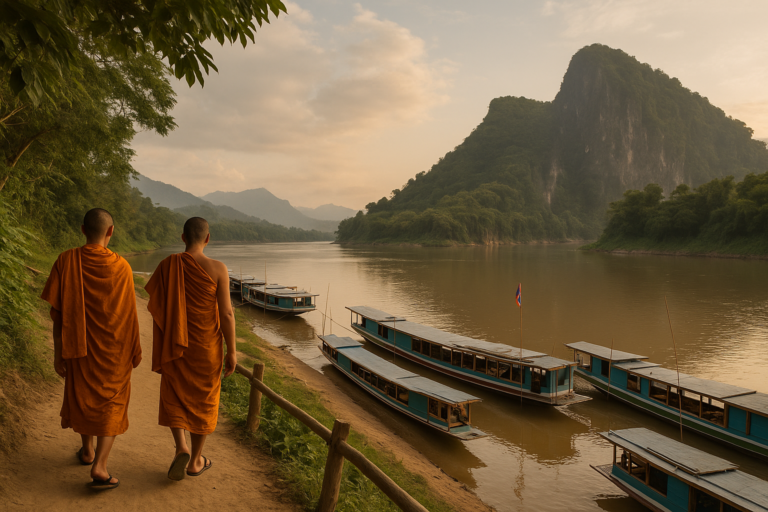
The karst mountains around Vang Vieng are extraordinary. Cycling through the valley, past rice paddies and river crossings, with those jagged limestone peaks rising on every side — it’s the kind of scenery that makes you stop pedaling just to look. Rent a bike for a day and explore the countryside at your own pace. Cross the bamboo bridge, visit a cave or two, and find a quiet spot by the Nam Song River for an afternoon swim.
Hot Air Balloons and Viewpoints
If your budget allows, a hot air balloon ride over Vang Vieng at sunrise is genuinely spectacular. The valley looks like something from a dream when you’re floating above it in the early morning light. If that’s not in the cards, there are several accessible viewpoints that offer similarly impressive panoramas for the cost of a short hike and some sweat.
Finding Balance in Vang Vieng
Spend three to four days here. It’s enough time to explore the landscape, enjoy the social energy, and move on without feeling like you’ve overstayed. The town can feel a little intense after a while — the contrast with the quiet north is real — so knowing when to leave is part of traveling Laos well.
Week Four: Vientiane and the South
The Capital That Surprises You
Vientiane is the southern capital of Laos, and it’s unlike any other capital city in Southeast Asia. It’s small, walkable, and genuinely relaxed. There are temples worth visiting, a riverfront worth strolling, and a café culture that reflects the French colonial history of the country in the best possible way. Give yourself two or three days here to decompress, do some laundry, eat well, and prepare for the final stretch of your trip.
Heading South: The River Islands
The southern part of Laos is dominated by the Mekong River delta, and the region often referred to as the Four Thousand Islands — Si Phan Don in Lao — is one of the most laid-back corners of Southeast Asia. The Mekong widens dramatically here, scattering hundreds of islands across its surface, and the pace of life slows to something approaching a full stop. Rent a bicycle, cross between islands by small boat, watch the sunset over the river, and find the kind of stillness that’s increasingly rare in the modern world.
This is also one of the best places in Laos to spot Irrawaddy dolphins, a critically endangered freshwater species that still inhabits this stretch of the Mekong. Spotting one — even briefly — is something you’ll talk about for a long time.
Spend the final four or five days of your month in the south, moving slowly between islands and letting the Mekong set the tempo. It’s the perfect way to end a month in Laos: unhurried, reflective, and deeply content.
Practical Notes for Your Month in Laos
Budget and Money
Laos is one of the more affordable destinations in Southeast Asia, though it’s worth noting that some areas — particularly popular tourist towns — have seen prices rise in recent years. The Laotian Kip is the local currency, and you’ll use it daily for food, transport, and accommodation. ATMs are available in major towns but less reliable in rural areas, so carry cash when heading off the beaten path. A daily budget that covers a simple guesthouse, local meals, and a few activities is very achievable here — though your exact spend will depend on your travel style and how many adventure activities you choose.
Getting Around
The Mekong River is a major travel route throughout Laos, and slow boats remain one of the most atmospheric ways to move between destinations. Minibuses connect most towns and are generally affordable and reasonably reliable. For shorter distances, tuk-tuks and motorbike rentals are the norm. Renting a motorbike gives you the most freedom, especially in rural areas, but make sure you’re comfortable riding one before you commit.
Respecting Local Culture
Buddhism shapes daily life in Laos in ways that are visible and meaningful. When visiting temples, dress modestly — shoulders and knees covered — and remove your shoes before entering. During the morning alms ceremony in Luang Prabang, observe quietly and avoid getting too close or using flash photography. These aren’t just rules; they’re ways of showing respect for a living tradition that the local community genuinely values. Travelers who approach Laos with that kind of awareness consistently have richer, more meaningful experiences.
Best Time to Visit
The dry season, roughly from November through April, is generally considered the best time to visit Laos. The weather is cooler, the roads are more passable, and the rivers are calmer. The wet season brings lush landscapes and fewer tourists, but some roads and trekking routes become difficult or impassable. For a month-long trip, the dry season gives you the most flexibility — especially if you’re planning to trek in the north or travel by river in the south.
For more detailed planning resources, The Broke Backpacker’s Laos itinerary guide is a solid starting point, and Indie Traveller’s Laos travel guide offers thoughtful, experience-focused advice for independent travelers.
Why This Itinerary Works
The structure of this Laos itinerary one month long is built around one core principle: moving slowly enough to actually experience each place rather than just pass through it. Luang Prabang in the north gives you cultural depth and natural beauty. Nong Khiaw gives you mountains, trekking, and a genuine sense of remoteness. Vang Vieng gives you adventure and landscape. Vientiane gives you a capital city on a human scale. And the south gives you the Mekong at its widest and most magical.
You’ll notice this route moves roughly north to south, which makes logistical sense and gives the trip a natural narrative arc — from the cultural heart of the country to its wildest, most river-soaked edges. That said, Laos rewards spontaneity. If you fall in love with Nong Khiaw and want to stay an extra three days, stay. If Vang Vieng isn’t your scene, move on sooner. The best version of your trip is the one that responds to how you actually feel while you’re there.
One Last Thing Before You Go
Laos is the kind of country that people describe as underrated, and then immediately hope it stays that way. It’s quiet, it’s genuine, and it doesn’t try to impress you. The temples are ancient and unhurried. The rivers are wide and slow. The mountains are dramatic without being theatrical. And the people you meet — both fellow travelers and locals — tend to be exactly the kind of company you want when you’re far from home.
A full Laos itinerary one month in length gives you the rare gift of time — time to wander without a plan, to sit by the Mekong and watch the light change, to get lost in a market and find something you weren’t looking for. This is not a country you rush. It’s a country you settle into, slowly and gratefully, until leaving feels like a genuine loss. Start planning. The slow boat is waiting.
This article was produced with AI assistance and reviewed editorially.


Vietnam Uncovered: Beyond the Chaos, Into the Real Story

Beyond the Guidebook: What Hanoi Actually Feels Like


