
Portugal
Portuguese Islands for First-Time Visitors: Madeira vs. Azores—Which Archipelago Should You Choose?
Compare Madeira and Azores to find your perfect Portuguese island escape. Explore landscapes, food, activities, and 7-day itineraries for first-time visitors.

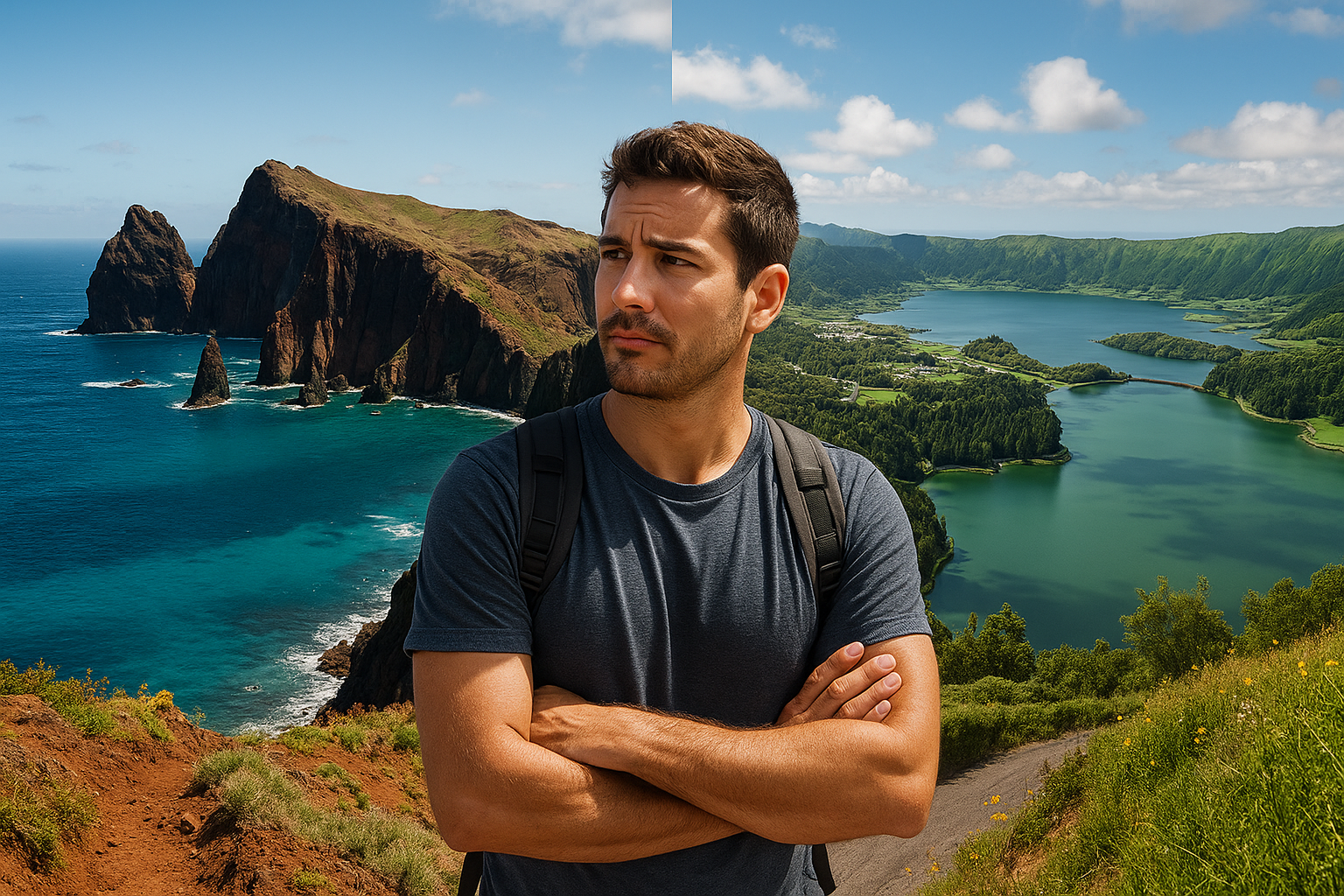
Two Islands, One Big Decision: Madeira vs. Azores for First-Time Visitors
So you’ve decided to explore Portugal’s islands — great call. But then comes the question that stops almost every first-time visitor in their tracks: when it comes to Madeira vs. Azores, which one actually deserves your time, your energy, and your travel budget? Both archipelagos are genuinely spectacular. Both offer volcanic landscapes, ocean views, and a pace of life that makes you wonder why you ever stressed about anything back home. But they’re also very different experiences — and depending on what you’re after, one will suit you far better than the other. Let’s break it down honestly, so you can stop overthinking and start packing.
Getting to Know the Islands: A Quick Geography Lesson
Madeira: Europe’s Garden in the Atlantic
Madeira is a Portuguese archipelago sitting in the North Atlantic, closer to the coast of Africa than to mainland Portugal. It’s a compact, lush, dramatically mountainous island that has long been a favorite for Europeans seeking an offbeat nature destination. Think towering cliffs that drop straight into the ocean, dense laurel forests that feel prehistoric, and terraced hillsides covered in banana plantations and vineyards. The main island, also called Madeira, is where most travelers spend their time — though the smaller island of Porto Santo, with its golden sand beach, is worth a day trip if you’re craving something more beach-holiday-esque.
Funchal, the island’s capital, has a cosmopolitan edge. There are good restaurants, lively markets, and a cable car that takes you up into the mountains for views that genuinely stop you mid-sentence. It’s well connected to mainland Europe, with direct flights from dozens of cities, and it’s been drawing visitors for generations — which means the infrastructure is solid and easy to navigate.
The Azores: Nine Islands, Endless Possibilities
The Azores are a completely different beast. This is a string of nine volcanic islands scattered across the mid-Atlantic, roughly 1,000 miles from mainland Portugal. They’re often called “The Hawaii of Europe” — and once you’ve seen the emerald crater lakes, the steaming volcanic fumaroles, and the whale-watching boats heading out at dawn, you’ll understand why. The flight from Lisbon takes around two hours and twenty minutes, and from there you can island-hop by small regional flights or, between some islands, by ferry.
São Miguel is the largest island and the most visited entry point. It’s home to three volcanic areas, including the jaw-dropping Sete Cidades caldera — a twin lake system sitting inside an ancient volcano that looks almost too dramatic to be real. But São Miguel is just the beginning. Faial, Flores, Pico, Terceira — each island has its own personality, its own landscape, its own reasons to stay longer than you planned.
For a deeper dive into the geography and character of both destinations, Moon Travel Guides offers a solid overview of visiting Portugal’s islands that’s worth bookmarking before you go.
The Vibe: What Kind of Traveler Are You?
This is really where the Madeira vs. Azores decision gets personal. Both islands reward curious, outdoorsy travelers. But the energy is different.
Madeira feels polished. There are well-marked levada walks (the island’s famous network of irrigation channel paths), a thriving food scene in Funchal, and a tourism infrastructure that’s been refined over decades. You’ll find good hostels, reliable buses, and plenty of English spoken. It’s an excellent choice if this is your first solo adventure and you want somewhere that feels welcoming and easy to navigate without sacrificing genuine natural beauty.
The Azores feel wilder. Travelers consistently report that the islands feel less touristy than Madeira and tend to be more affordable, too. There’s a rawness to the landscape — geysers shooting steam from the earth, black lava fields stretching to the horizon, cows grazing on impossibly green hillsides above the clouds. If you want to feel like you’ve genuinely discovered something, the Azores deliver that feeling more consistently. The trade-off is that some logistics, particularly island-hopping, require a bit more planning and flexibility.
Outdoor Adventures: Hiking, Diving, and Everything in Between
Madeira’s Mountains and Levadas
Madeira is one of Europe’s premier hiking destinations, full stop. The levada walks are the island’s signature experience — flat, scenic paths that follow ancient water channels through the forest, often clinging to cliffsides with dizzying drops below. They range from easy strolls to serious all-day treks, so there’s genuinely something for every fitness level.
For those who want to push harder, the high-altitude peaks are calling. Pico do Areeiro and Pico Ruivo are the two most famous hiking destinations on the island — dramatic, cloud-piercing summits connected by a ridge trail that offers some of the most surreal mountain scenery you’ll find anywhere in Europe. The route between them involves rocky terrain, tunnels carved through the mountain, and views that make you feel like you’re walking through a fantasy novel. Start early to beat the clouds and the crowds.
Beyond hiking, Madeira offers canyoning, paragliding, sea kayaking, and some excellent diving along its volcanic coastline. The water is clear and surprisingly warm for an Atlantic island.
The Azores: Where the Earth Is Still Alive
In the Azores, the outdoor experience is defined by the feeling that the earth here is still very much alive. You can hike to the rim of Sete Cidades on São Miguel and look down at two lakes — one green, one blue — sitting inside an ancient volcanic caldera. It’s the kind of view that makes you go quiet for a moment.
Beyond hiking, the Azores are one of the best places in the world for whale watching. The deep Atlantic waters around the islands attract sperm whales, blue whales, and dolphins year-round, with peak season running through spring and summer. Diving and snorkeling are exceptional, particularly around the island of Faial and the underwater volcanic formations near São Miguel. On Pico, you can climb the highest mountain in Portugal — a serious, rewarding ascent through lava fields to a summit that emerges above the clouds.
The island-hopping element adds another layer of adventure. Each island you visit feels like a new discovery. Flores, in the western group, is arguably the most beautiful island in the entire archipelago — waterfalls, hydrangea-lined roads, and almost no tourists. If you have time, try to visit at least two or three islands rather than staying on São Miguel alone.
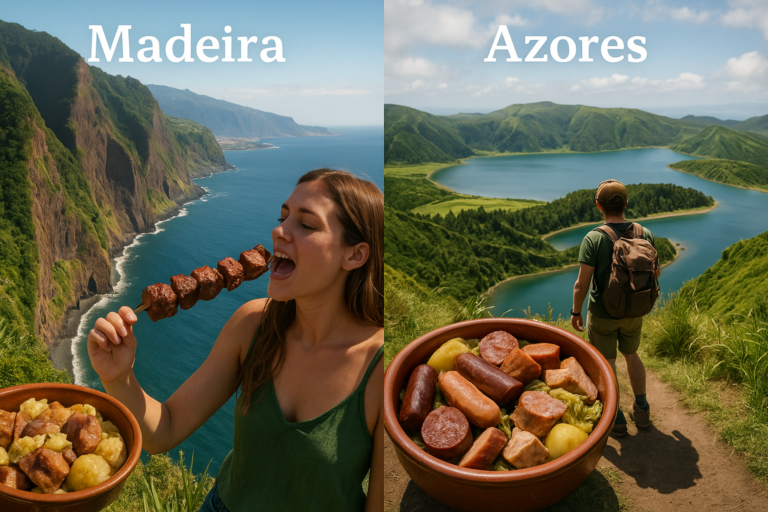
For inspiration on what to explore across both archipelagos, Adventure Life’s guide to Portugal’s minor islands covers some of the standout experiences worth planning around.
Food, Culture, and Local Life
Eating and Drinking in Madeira
Madeira has a proud food culture built around the ocean and the land. Espada — the black scabbardfish — is the island’s most iconic dish, often served with banana or passion fruit in combinations that sound strange and taste wonderful. Grilled limpets, cooked with garlic and butter and eaten straight from the shell at a clifftop restaurant, are a ritual you shouldn’t skip. The local wine, Madeira wine, is one of Portugal’s most distinctive exports — a fortified wine that ranges from dry to rich and sweet, and pairs beautifully with the island’s cuisine.
Funchal’s Mercado dos Lavradores is one of the best markets in Portugal. Go in the morning when it’s lively, pick up exotic local fruit — tamarillo, passion fruit, custard apple — and watch the flower sellers arrange their stalls. The city has a genuine cultural energy: street art, live music, small museums, and a cable car up to the village of Monte where you can ride a traditional wicker toboggan back down the hill. It’s one of those experiences that’s slightly absurd and completely unforgettable.
Culture and Community in the Azores
The Azores have a quieter cultural identity, but it runs deep. The islands have a strong sense of community, and you’ll feel it quickly — in the friendliness of locals, in the religious festivals that fill the calendar through summer, and in the way food is tied closely to the land and sea. Cozido das Furnas is the dish you have to try on São Miguel: a hearty stew of meat and vegetables slow-cooked underground using volcanic geothermal heat. The restaurant sits beside the steaming calderas, and the food arrives having been buried and cooked by the earth itself. It’s one of those meals that’s as much about the story as the flavor.
Terceira island is a UNESCO World Heritage site, with a beautifully preserved historic center in Angra do Heroísmo that tells the story of the Azores’ role in Atlantic trade routes. Spend an afternoon wandering those streets and you’ll understand that these islands have been quietly shaping history for centuries.
Suggested Week-Long Frameworks: How to Spend Seven Days
Seven Days in Madeira
A week in Madeira is genuinely enough time to get under the skin of the island. Use Funchal as your base — it’s central, well-connected, and has the best range of accommodation for different budgets. Spend your first couple of days exploring the capital: the market, the old town, the seafront, a cable car ride up to Monte. Then dedicate two or three days to hiking — the levadas first, then the high peaks if you’re up for it. Save a day for the western tip of the island, where the cliffs of Cabo Girão and the village of São Vicente offer a different, quieter face of Madeira. If time allows, a day trip to Porto Santo for the beach is a nice contrast to all that mountain scenery.
Seven Days in the Azores
Seven days in the Azores works best if you split your time between two islands. Fly into São Miguel, spend three or four days exploring its volcanic landscapes, hot springs, tea plantations (yes, the only tea grown in Europe grows here), and the Sete Cidades caldera. Then take a short flight or ferry to a second island — Pico for mountain climbing and whale watching, Faial for diving and a charming harbor town, or Flores if you want something truly off the beaten path. The inter-island logistics require a bit of planning in advance, especially in peak summer months when flights fill up, but the reward is a trip that feels genuinely expansive.
Practicalities: Getting There and Getting Around
Both archipelagos are served by regular direct flights from Lisbon, Porto, and many European cities. The flight to the Azores from Lisbon takes around two hours and twenty minutes; Madeira is slightly closer. Budget airlines serve both routes, making them accessible without a huge outlay on transport.
Within Madeira, public buses connect the main towns and trailheads, though renting a car gives you far more freedom to explore the island’s remote corners. The roads are dramatic — tunnels through mountains, narrow switchbacks above the sea — so if you’re not confident driving in those conditions, the bus network is a solid alternative.
In the Azores, inter-island travel is the main logistical consideration. Regional flights connect most islands quickly, and ferries run between some of the closer islands in the central group during summer. Within each island, a rental car is the most practical option — public transport exists but is limited, and the best landscapes are often reached by roads that buses don’t serve.
On budget: travelers consistently find the Azores to be the more affordable option of the two, with accommodation, food, and activities generally coming in at lower price points than Madeira. Neither archipelago is as expensive as many Western European destinations, which makes both of them excellent value for younger travelers watching their spending.
So, Which One Should You Choose?
Here’s the honest answer: both are worth it, and if you can find a way to do both, do both. But if you have to choose, think about what you’re actually chasing.
- Choose Madeira if you want polished infrastructure, excellent hiking, a vibrant city base in Funchal, and an island that’s easy to navigate on a first solo trip.
- Choose the Azores if you want to feel like you’ve discovered something, if you’re drawn to wilder, more volcanic landscapes, if whale watching or island-hopping is on your list, and if you’re traveling on a tighter budget.
- Choose both if you have two weeks and a flexible spirit — they’re different enough that visiting one won’t make the other feel repetitive.
The Madeira vs. Azores debate doesn’t have a wrong answer. What both archipelagos share is the ability to make you slow down, look around, and feel genuinely present in a way that’s harder to find in busier, more crowded destinations. Whether you’re standing on a ridge between Pico do Areeiro and Pico Ruivo with clouds rolling below you, or staring into the twin lakes of Sete Cidades from the caldera rim, you’ll have that same feeling: that you made exactly the right choice. These are places that stay with you — not because they’re perfect, but because they’re real, alive, and quietly extraordinary. Start planning, and let the islands do the rest.
This article was produced with AI assistance and reviewed editorially.


Vietnam Uncovered: Beyond the Chaos, Into the Real Story

Beyond the Guidebook: What Hanoi Actually Feels Like


