
Asia
Laos Backpacking Essentials: Budget Routes, Hostels & Authentic Experiences
Plan your backpacking Laos trip with budget routes from north to south, hostel recommendations, and authentic local experiences beyond the tourist trail.

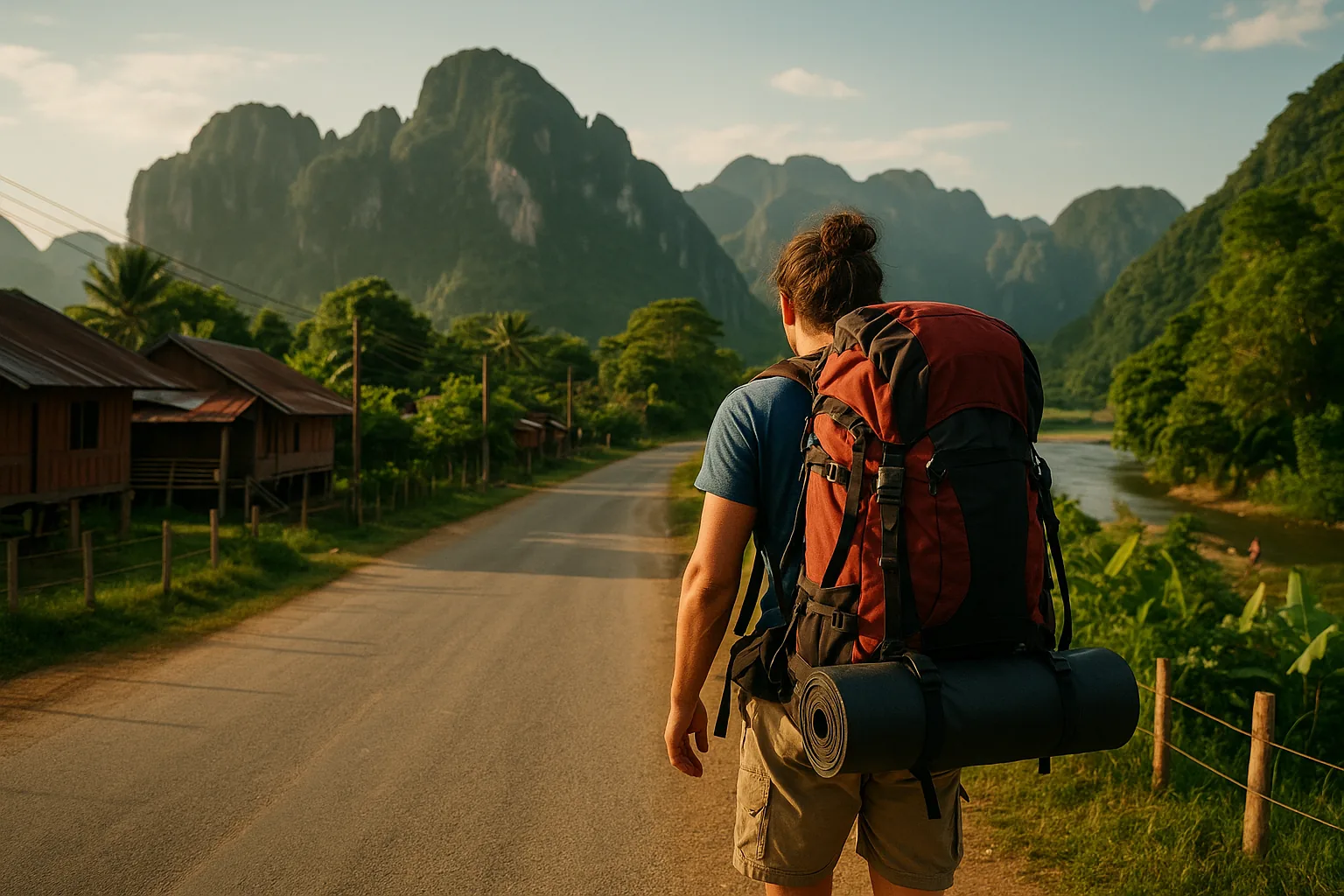
Laos sits quietly between its louder Southeast Asian neighbours, and that’s exactly what makes it so worth exploring. If you’re thinking about backpacking Laos, you’re choosing a country that rewards slow travel, genuine curiosity, and a willingness to wander off the obvious path. From the gilded temples of Luang Prabang to the lazy river islands of the south, Laos offers something rare in modern travel: the feeling that you’ve actually discovered something.
Why Laos Deserves a Spot on Your Route
Southeast Asia is a well-worn backpacker circuit, and it’s easy to rush through countries ticking off the highlights. Laos is the one place that tends to slow people down — sometimes by choice, sometimes because the infrastructure simply doesn’t allow for rushing. Either way, most travellers end up grateful for it.
The country is landlocked, largely forested, and home to a culture that feels genuinely distinct from its neighbours. Buddhism shapes daily life in visible, meaningful ways. You’ll hear temple bells in the early morning, watch monks walk barefoot through misty streets collecting alms, and find that the pace of conversation — even with strangers — is unhurried and warm. There’s a quality of stillness here that’s increasingly hard to find in more tourist-saturated destinations.
For budget-conscious travellers, Laos is also one of the most affordable countries in the region. Daily costs can sit around $35 USD if you’re staying in hostel dorms and eating street food — a figure that includes accommodation, meals, and basic transport. That kind of budget gives you real freedom to linger, to take an extra day in a place that surprises you, or to say yes to an experience you hadn’t planned.
Planning Your Backpacking Route Through Laos
Most travellers enter Laos from Thailand, Vietnam, or Cambodia, and the classic north-to-south (or south-to-north) route remains the most logical way to see the country’s greatest variety. A two-week trip gives you enough time to hit the main highlights without feeling like you’re constantly on a bus.
The Northern Loop: Luang Prabang and Beyond
Luang Prabang is where most people begin, and for good reason. The old city is a UNESCO World Heritage Site — a blend of traditional Lao wooden houses and French colonial architecture, surrounded on three sides by the Mekong and Nam Khan rivers. The alms-giving ceremony at dawn, where monks walk silently through the streets collecting offerings from local residents, is one of the most quietly moving experiences you’ll have anywhere in Asia. If you attend, do so respectfully — observe from a distance, dress modestly, and avoid using flash photography.
Just outside the city, Kuang Si Falls is a series of turquoise tiered pools set in the jungle. Go early to beat the crowds, bring a swimsuit, and allow at least half a day. It’s the kind of place that makes you forget what day it is.
From Luang Prabang, many backpackers head east toward Phonsavan, home to the Plain of Jars — a mysterious archaeological landscape scattered with ancient stone vessels whose purpose remains debated by historians. It’s genuinely strange and fascinating, and the region around it carries the weight of a complex history from the mid-twentieth century that’s worth reading about before you arrive.
The Middle: Vang Vieng
Vang Vieng has a reputation — and it’s earned it. For years it was known primarily as a party destination, but the town has matured considerably. What remains is a genuinely beautiful setting: dramatic karst limestone mountains, the Nam Song River, and access to some of the best adventure activities in the country.
You can go kayaking, explore caves by lantern light, hike to viewpoints above the valley, or simply rent a bicycle and pedal through rice paddies with the mountains as your backdrop. There’s still a lively bar scene if that’s your thing, but Vang Vieng now offers something for every type of traveller. It’s a natural midpoint between Luang Prabang and Vientiane, and worth two or three nights.
👉 Read also: Budget Backpacking Southeast Asia: Sri Lanka, Laos & Beyond
The Capital: Vientiane
Laos’s capital is often described as the world’s most relaxed capital city, and that’s not really an exaggeration. Vientiane moves slowly. The riverfront along the Mekong is a great place to watch the sunset, grab some street food, and get a feel for everyday Lao life. The city has good transport connections, making it a practical base for onward travel.
The South: 4000 Islands
The far south of Laos is anchored by Si Phan Don, or 4000 Islands — a sprawling archipelago in the Mekong River near the Cambodian border. Don Det and Don Khon are the most popular islands for backpackers, and they offer a genuinely unhurried experience: rent a bicycle, cycle along dirt paths past rice paddies and stilted wooden houses, and spend your evenings watching the sun melt into the river. The rare Irrawaddy dolphins can sometimes be spotted in the waters nearby, particularly around Don Khon. It’s a beautiful, peaceful way to end a journey through Laos — or begin one heading into Cambodia.
Where to Stay: Budget Accommodation Across Laos
Laos has a solid hostel scene, particularly in the main backpacker hubs. Hostel dorm beds typically cost between $5 and $10 per night, while private rooms in budget guesthouses usually run $15 to $30. Mid-range hotels sit in the $40 to $80 range, and if you feel like treating yourself, luxury options exist — though they can climb to €200 or more per night.
In Luang Prabang, you’ll find the widest range of options, from basic dorms to beautifully restored colonial guesthouses. Vang Vieng has plenty of riverside hostels that are social and well-located. Vientiane is slightly less hostel-heavy but still affordable. In the 4000 Islands, accommodation is simple and charming — think bamboo bungalows with hammocks on the porch.
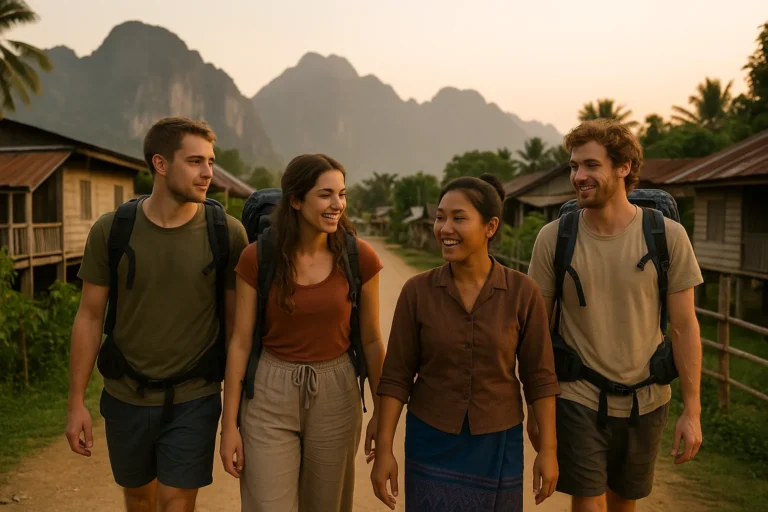
When choosing where to stay, look for places with good communal spaces — common areas, shared kitchens, or rooftop terraces. These are where you’ll meet other travellers, swap route tips, and find out about experiences that aren’t in any guidebook. Some of the best moments of a trip happen in hostel common rooms.
Getting Around Without Breaking the Budget
Transport in Laos is an adventure in itself. The country’s road network is improving but still limited in places, and journeys between cities often take longer than you’d expect from the map. Build that into your planning — and try to enjoy the ride rather than resent it.
Local buses between cities typically cost $10 to $20, making them the most budget-friendly option for longer distances. Minivans are faster and slightly pricier but widely used on popular routes. For shorter distances, tuk-tuks and motorbike taxis are everywhere and easy to negotiate.
A slow boat along the Mekong is one of the classic Laos travel experiences — particularly the two-day journey from the Thai border at Huay Xai down to Luang Prabang. It’s not the fastest way to travel, but watching the river landscape unfold from the deck of a wooden boat, stopping at small villages along the way, is the kind of experience you’ll be describing to people for years.
Renting a bicycle or motorbike is a great option for exploring local areas at your own pace. Cycling through the 4000 Islands or the countryside around Luang Prabang gives you access to villages and landscapes you’d never reach by bus.
Eating Well on a Backpacker Budget
Lao food is one of the country’s great underrated pleasures. Street food meals cost as little as $1 to $3, and sitting down at a local restaurant will rarely set you back more than $5 to $10. The cuisine shares some DNA with Thai food but has its own distinct character — less sweet, more herbaceous, with a strong emphasis on fresh ingredients and bold flavours.
👉 Read also: One Month in Laos: Temples, Rivers & Mountains—A Real Itinerary
Look out for laap (a minced meat salad with herbs and toasted rice powder), tam mak hoong (green papaya salad), and khao niao (sticky rice, which is the staple carbohydrate and eaten with almost everything). Grilled meats on skewers from street stalls are cheap, flavourful, and perfect for eating while wandering.
Luang Prabang has a famous night market where you can fill a plate from a buffet of local dishes for a dollar or two. It’s a brilliant way to try multiple things at once and eat alongside locals rather than in tourist restaurants. Night markets and morning markets across the country are consistently your best bet for authentic, affordable food.
Local Experiences That Go Beyond the Tourist Trail
The standard highlights of Laos are genuinely worth seeing — but the experiences that stay with you longest are often the ones that happen between the sights. Laos has a culture of hospitality that, if you approach it with openness and respect, can lead to real connections.
Consider taking a cooking class in Luang Prabang or Vientiane. You’ll visit a morning market with a local guide, learn to identify ingredients you’ve never seen before, and spend a few hours making dishes you can actually recreate at home. It’s practical, social, and genuinely fun.
Meditation retreats are available at several temples across the country, some of them open to foreign visitors for a day or longer. They offer a chance to engage with Lao Buddhist practice in a meaningful way — not as a spectator, but as a participant. Check in advance about etiquette and expectations.
Hiking and trekking through remote villages in northern Laos — particularly around Nong Khiaw and Muang Ngoi, two small towns along the Nam Ou River — puts you in contact with communities that see relatively few visitors. These areas are stunning: dramatic cliffs, river valleys, and traditional villages where life moves to agricultural rhythms. Go with a local guide who can introduce you properly and ensure your visit benefits the community.
A Mekong River sunset cruise sounds like a tourist activity — and it is — but it’s also genuinely beautiful and a good way to meet other travellers. Many are simple wooden boats with cold drinks and drifting views of the riverbanks turning gold in the late afternoon light.
Money, Visas, and Practical Essentials
Laos operates largely as a cash-based economy. While ATMs exist in larger towns, they’re unreliable in rural areas and often charge significant fees. Carry enough Lao Kip for local expenses — markets, street food, tuk-tuks, and smaller guesthouses all expect cash. Some businesses in tourist areas accept Thai Baht or US dollars, but using Kip will generally get you better rates and is more respectful to local vendors.
Visa requirements for Laos vary depending on your nationality, and policies do change. As of late 2026, many nationalities can obtain a visa on arrival at major border crossings and airports, or apply for an e-visa in advance online. Always check the official Lao Embassy or consulate website for your country before you travel, as requirements and fees are subject to change.
The best time to visit Laos is November through February, when the weather is cool and dry. This is peak season, so expect more company at popular sites — but the climate is genuinely comfortable for travelling and exploring outdoors. March to May brings heat and dust before the rains arrive. The monsoon season runs roughly from June to October: the landscape turns intensely green and beautiful, some roads become difficult, and you’ll find fewer tourists and lower prices. Travelling in the wet season requires flexibility, but it has its own rewards.
Laos is a country that asks something of you — patience, curiosity, a willingness to slow down and be present. In return, it gives you something that’s becoming harder to find: a travel experience that still feels genuinely your own. Whether you’re spending two weeks on a classic north-to-south journey or carving out your own route through river towns and jungle trails, backpacking Laos has a way of getting under your skin. You’ll leave with sticky rice on your fingers, a head full of temple bells, and the quiet certainty that you want to come back.
This article was produced with AI assistance and reviewed editorially.


Almaty & Tashkent: Central Asia’s Modern Cities Beyond the Silk Road Clichés

Stay Smart in Asia: Budget Accommodation in Osaka, Kyoto & Kuala Lumpur 2026


