
Asia
Southeast Asia’s Emerging Cities: Vung Tau, Hat Yai & Songkhla Beyond the Tourist Trail
Discover three underrated Southeast Asian cities where authentic local life thrives beyond tourist crowds. Explore Vung Tau’s fishing heritage, Hat Yai’s markets, and Son

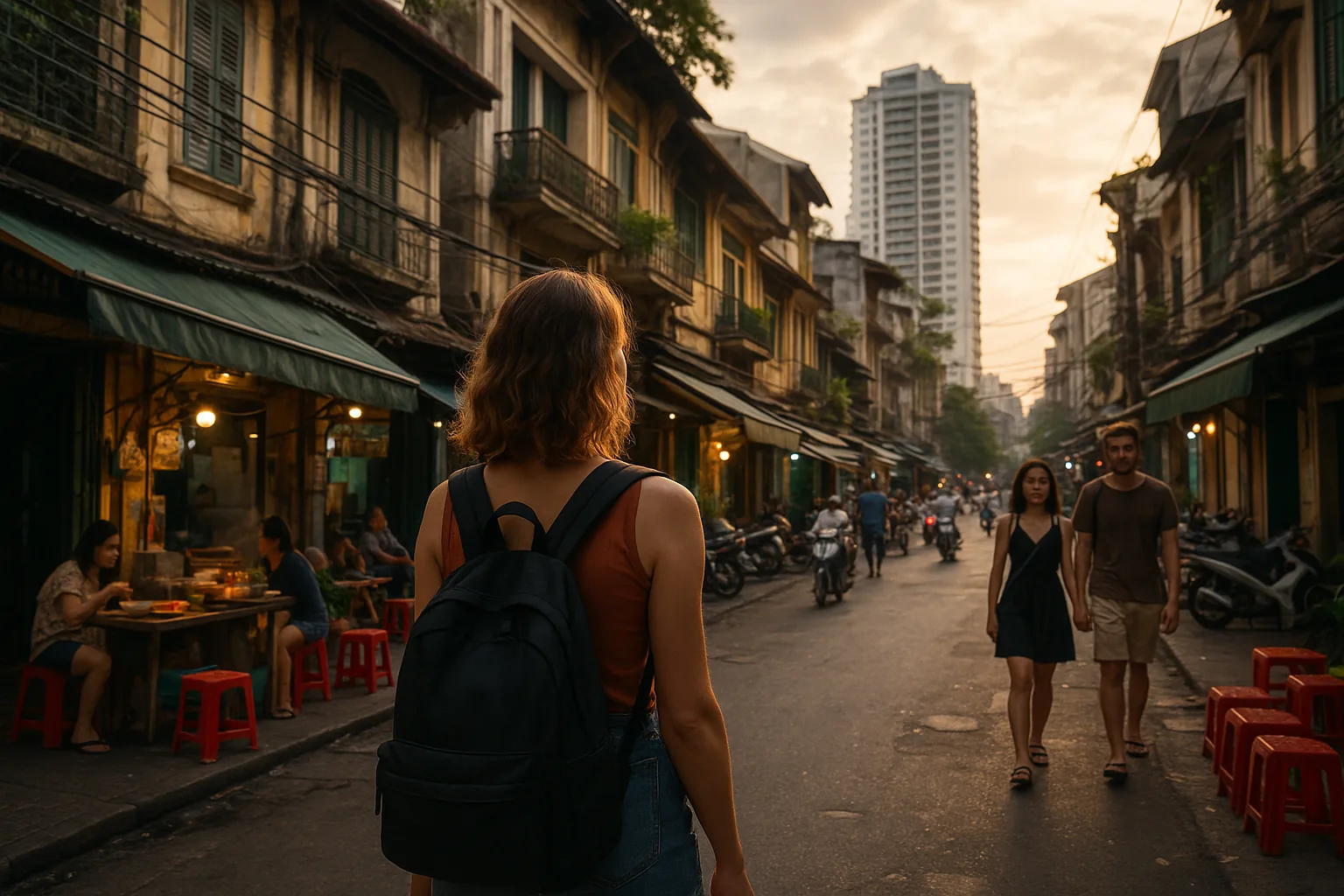
There’s a version of Southeast Asia that most travelers never see — not because it’s hard to reach, but because the well-worn path keeps pulling everyone toward the same cities. Bangkok, Hanoi, Bali, Hoi An. They’re incredible, no question. But if you’re the kind of traveler who gets restless the moment a place starts to feel like a theme park, the southeast asia emerging cities scene is exactly where you need to be looking right now. Vung Tau in Vietnam, and the southern Thai duo of Hat Yai and Songkhla, are three places where you can still walk into a morning market, eat something you can’t pronounce, and feel like you actually belong somewhere rather than just passing through it.
Why Skipping the Obvious Cities Is the Best Decision You’ll Make
Let’s be honest. Arriving in a city where every guesthouse has a “backpacker special” menu and every tuk-tuk driver already knows your nationality before you open your mouth is a very particular kind of travel experience. It’s not bad, exactly — but it’s not the whole story either. The real texture of Southeast Asia lives in cities that haven’t been fully packaged yet. Places where the infrastructure exists for travelers but hasn’t been built around them. Where locals eat at the same noodle stalls you eat at, because there’s no “tourist version” of the restaurant yet.
That’s the promise of destinations like Vung Tau, Hat Yai, and Songkhla. They’re not undiscovered — that word gets overused to the point of meaninglessness. But they’re underexplored, and that’s a genuinely different thing. You’ll find hotels, transport links, and street food you can point at and order without a phrase book. What you won’t find is the relentless hustle of the mega-tourist trail.
Vung Tau: Vietnam’s Coastal City That Breathes at Its Own Pace
About two hours from Ho Chi Minh City — either by road or by the far more enjoyable high-speed ferry across the Mekong Delta — Vung Tau sits on a small peninsula jutting into the South China Sea. For decades it was a weekend escape for Saigon residents rather than a stop on any international itinerary, and that local character still defines it today.
The city has a fishing village soul beneath its coastal-resort surface. Early mornings are the best time to feel it. Walk down toward the working harbor before the heat builds and you’ll find boats coming in, women sorting the overnight catch, and the kind of organized chaos that tells you this place has been doing this for generations. The seafood markets here are not curated experiences — they’re functional, loud, and genuinely fascinating. You can buy directly, or simply watch, and either way you’ll understand something about this city that no guidebook paragraph can fully capture.
The beach scene in Vung Tau is split between different neighborhoods, each with its own personality. Front Beach is the busier, more developed stretch — lined with seafood restaurants and popular with Vietnamese families on weekend trips. Back Beach is longer and more relaxed, better for an afternoon swim or a slow walk as the light changes. Neither beach is going to compete with the Andaman Sea for pure visual drama, but that’s not the point. The point is that you’re sharing the water with Vietnamese day-trippers, not a crowd of people who all read the same travel blog.
Accommodation in Vung Tau ranges from basic guesthouses near the market area to mid-range hotels along the beachfront. Budget travelers can generally find clean, comfortable rooms at prices well below what you’d pay in Ho Chi Minh City for equivalent quality — the city’s domestic-tourism focus keeps the market honest. Getting there is straightforward: ferries from Bach Dang Wharf in Ho Chi Minh City run regularly and the journey itself is part of the experience, crossing busy river traffic with the city skyline behind you and open water ahead.
One thing worth knowing: Vung Tau has a giant Christ the Redeemer-style statue on the hill above the city, a legacy of French colonial and later American military presence in the region. The climb up is steep but the view over the peninsula is worth every step, especially in the late afternoon when the light goes golden and the fishing boats start heading back out.
👉 Read also: Southeast Asia Beyond the Backpacker Trail: Vung Tau, Hat Yai & Kuala Lumpur's Real Neighborhoods
Hat Yai: Southern Thailand’s Most Misunderstood City
Hat Yai is the largest city in southern Thailand, and for years it’s carried an unfair reputation as nothing more than a place you pass through on your way somewhere else. It’s often described as a mandatory transit point when heading south toward Malaysia, and plenty of travelers have spent a night here without ever really arriving. That’s a genuine shame, because Hat Yai is one of the most culturally layered cities in the region.
The city was largely built on tourism originating from Malaysia and Singapore — a fact that shaped its character in interesting ways. It’s not a city designed to impress Western backpackers. It’s a city designed to serve a regional Southeast Asian clientele, which means the food, the markets, and the nightlife all have a different energy to what you’d find in Chiang Mai or Krabi. Hat Yai has a strong Malay influence in its cooking and culture, alongside a significant Chinese presence that shows up in the temples, the shophouse architecture, and the food stalls that open before dawn.
The night markets here are genuinely excellent. You’ll find grilled meats, southern Thai curries that hit differently from the central Thai versions you might know, and a general atmosphere of people who are here to eat well and enjoy themselves. The city also has a reputation for its dim sum culture — breakfast in Hat Yai, done properly, is a serious meal eaten slowly with good tea, and it’s one of the most enjoyable ways to spend a morning here.
Nightlife in Hat Yai is lively without being overwhelming. There are bars and clubs, particularly around the central hotel district, but the city’s evening energy is just as present in the street markets and the late-night food stalls. You don’t need to go looking for a party to feel the city alive around you after dark.
Getting to Hat Yai is easy from multiple directions. There are direct trains from Bangkok — a long journey, but a scenic and affordable one — as well as flights from Bangkok and Kuala Lumpur. If you’re crossing from Malaysia, Hat Yai is a natural first stop, and it’s worth treating it as a destination rather than a layover. Budget accommodation is plentiful and generally good value, with guesthouses and mid-range hotels concentrated near the train station and the central market area. Expect to pay less per night than you would in Bangkok for comparable comfort.
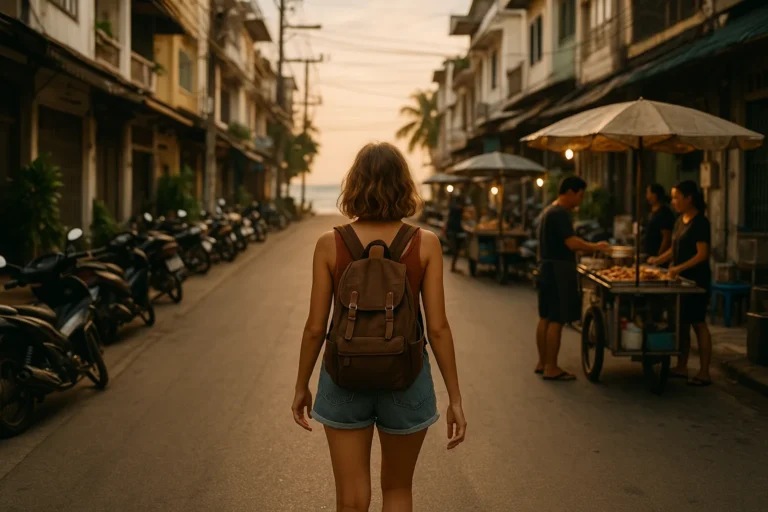
Songkhla: The Coastal Town That Feels Like a Secret
Just approximately 30 kilometers from Hat Yai, Songkhla is one of those places that makes you wonder why it isn’t more famous. It sits on a narrow strip of land between a large inland lake and the Gulf of Thailand, which gives it an unusual geography — you can watch the sunrise over the sea and the sunset over the lake, all from the same small town. That alone should be enough to make it a travel essential.
Songkhla is a coastal town in the far south of Thailand, sitting around 1,000 kilometers from Bangkok — which is part of why it stays under the radar. It’s a long way from the country’s main tourist corridors, and most travelers heading south have their eyes on the islands rather than the mainland coast. But Songkhla rewards the detour in ways that are hard to explain until you’re actually there.
The old town is genuinely beautiful. Shophouse architecture in faded yellows and greens lines narrow streets that lead down to the waterfront. There are Chinese temples, a small but worthwhile museum, and a fishing community that still operates exactly as you’d expect a fishing community to operate — with purpose and without any interest in performing itself for visitors. The khanom jeen noodle dishes here, served with rich southern-style curries, are among the best you’ll eat anywhere in Thailand.
👉 Read also: Hidden Gems in Southeast Asia: Vung Tau, Hat Yai & Thailand's Underrated South
The beach at Songkhla is long and largely empty by the standards of Thai beach tourism. It’s not the turquoise-water postcard version — the Gulf coast has a different character — but it has a quiet, windswept beauty that suits the town’s personality. You’ll share it with local families, joggers, and the occasional fisherman, rather than sunbed operators and cocktail vendors.
Proximity to Malaysia makes Songkhla an interesting option for travelers entering or exiting Thailand from the south. It’s close enough to Hat Yai to be a day trip, but it deserves at least one or two nights of its own. Accommodation options are more limited than in Hat Yai, but there are guesthouses in the old town that put you right in the middle of the neighborhood’s quiet, unhurried rhythm. Staying in the old town rather than near the beach is the right call — you’ll wake up to the sound of temple bells and the smell of someone’s breakfast being cooked two doors down, which is exactly the kind of morning you came here for.
Practical Notes for Exploring These Southeast Asia Emerging Cities
A few things worth knowing before you go. All three of these cities reward slow travel. They’re not places where you arrive, tick off a list of sights, and move on — they’re places where the experience builds over a couple of days as you find your own rhythm and start to feel less like a visitor.
- Transport between Hat Yai and Songkhla is easy and cheap — shared taxis and songthaew minibuses run regularly throughout the day, and the journey takes under an hour.
- Vung Tau is best reached by ferry from Ho Chi Minh City; the boat journey is part of the experience and far more enjoyable than the road alternative.
- In Hat Yai and Songkhla, some English is spoken in hotels and popular restaurants, but learning a handful of Thai phrases will open doors — and smiles — that nothing else will.
- In Vung Tau, Vietnamese is the working language everywhere outside the main tourist hotels. A translation app and a willingness to gesture your way through ordering will serve you well.
- All three cities have ATMs and mobile payment options, but carrying some local cash is always smart in market areas.
- The best time to visit southern Thailand — including Hat Yai and Songkhla — is generally between January and April, when the weather on the Gulf coast is most reliable. Vung Tau is accessible year-round, though the dry season from November to April is the most comfortable.
For a broader look at how southeast asia emerging cities are shaping up as travel destinations in the current landscape, Southeast Asia Travel’s 2026 forecast gives a useful overview of the regional trends worth knowing before you plan your route.
How to Build a Route That Connects All Three
One of the most satisfying things about these three cities is that they can be combined into a coherent journey rather than treated as isolated detours. A practical route might look something like this: fly into Ho Chi Minh City, spend a few days exploring before taking the ferry to Vung Tau for two or three nights. Then fly from Ho Chi Minh City to Hat Yai — the flight is short and affordable — and spend a couple of nights getting to know the city properly. From Hat Yai, make the easy trip to Songkhla for another two nights before crossing into Malaysia or flying onward.
That’s roughly ten days of travel that covers three genuinely different cultural environments — Vietnamese coastal culture, Thai-Malay southern Thailand, and the quiet, historically layered world of Songkhla’s old town — without a single moment of feeling like you’re on a conveyor belt between tourist checkpoints.
The southeast asia emerging cities circuit isn’t about bragging rights or finding somewhere “no one else knows about.” It’s about choosing depth over density, and giving yourself the time and space to actually connect with the places you’re visiting. These three cities offer something increasingly rare in popular travel: the feeling that you’re experiencing a place on its own terms, not yours. That’s worth more than any Instagram-famous viewpoint, and it’s the kind of memory that doesn’t fade when you get home.
The cities that stay with you longest are rarely the ones everyone told you to visit. They’re the ones you almost skipped — and didn’t. Vung Tau, Hat Yai, and Songkhla are exactly those kinds of places. Go find out why for yourself.
This article was produced with AI assistance and reviewed editorially.


Almaty & Tashkent: Central Asia’s Modern Cities Beyond the Silk Road Clichés

Stay Smart in Asia: Budget Accommodation in Osaka, Kyoto & Kuala Lumpur 2026


