
Costa Rica
Costa Rica Beyond the Guidebook: Real Itineraries & Where to Actually Stay
Discover authentic Costa Rica itineraries that skip the guidebook clichés. Explore San José neighborhoods, Caribbean towns, and Central Valley villages where real travele

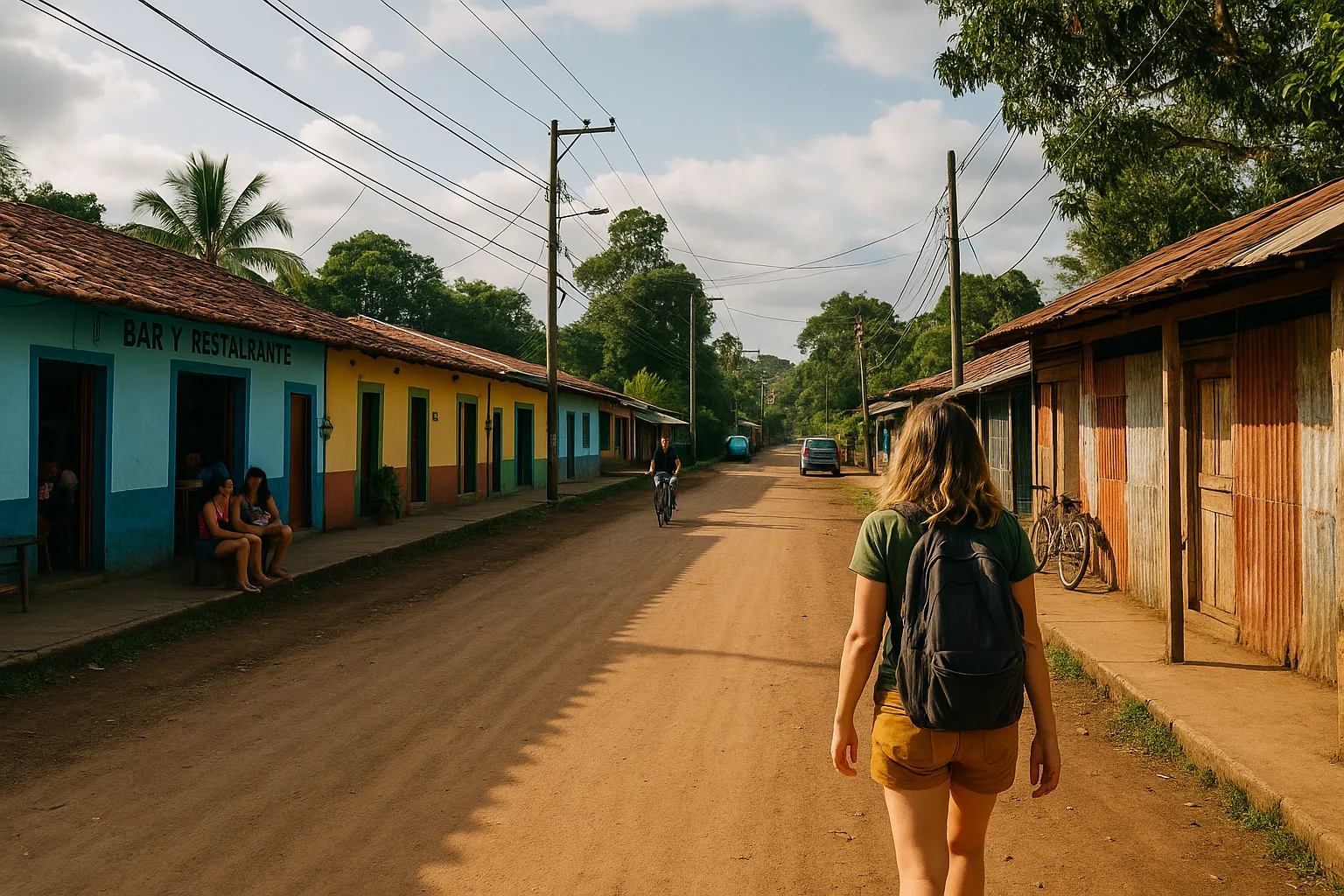
If your idea of a Costa Rica itinerary still looks like a greatest-hits reel — Arenal volcano, Monteverde cloud forest, Manuel Antonio beach — you’re not doing anything wrong, but you might be missing the version of this country that actually gets under your skin. Costa Rica is one of the most popular and accessible adventure destinations in the world, and it’s also one of the most eco-conscious. But between the zip-line packages and the all-inclusive lodges, there’s a whole other country hiding in plain sight: vibrant city neighborhoods, quiet Caribbean towns, and Central Valley villages where life moves at its own pace and the locals aren’t performing anything for anyone.
Why Costa Rica Rewards the Curious Traveler
Costa Rica has earned its reputation as the king of Central American tourism, and honestly, the hype is justified. The biodiversity is real. The commitment to environmental protection is real. The adventure is absolutely real. But what the glossy brochures don’t always tell you is that mass tourism tends to cluster in very specific corridors — and just a short bus ride outside those corridors, the country opens up into something far more textured and personal.
The philosophy of pura vida — literally “pure life” — is the cultural heartbeat of Costa Rica. It’s not a marketing slogan. It’s a genuine expression of optimism, gratitude, and the art of enjoying simple things. You’ll hear it as a greeting, a farewell, a response to almost anything. And the deeper you go into the country beyond the tourist trail, the more you actually feel it rather than just reading it on a souvenir mug.
For young travelers, that’s the real draw. Not just the scenery — though the scenery is extraordinary — but the chance to connect with a place and its people in a way that feels authentic rather than transactional. A well-planned Costa Rica itinerary can give you both: the iconic experiences and the hidden ones.
Starting in San José: Give the Capital a Real Chance
Most travelers treat San José as an airport layover. That’s a mistake. The capital is messy, loud, and full of contradictions — and that’s exactly what makes it interesting. Rather than rushing out to the countryside on day one, spend at least two nights actually exploring the city.
The neighborhood of Barrio Escalante is where the city’s creative energy lives. It’s a walkable stretch of converted houses turned into cafés, independent restaurants, and small galleries. This is where young Ticos — Costa Ricans — eat out on weekends, where local musicians play low-key sets, and where you can have a genuinely good meal without a laminated tourist menu in sight. Wander down Calle 33 in the early evening and just follow the noise.
Barrio México, a short distance away, has a more working-class, lived-in energy. It’s not a polished neighborhood, but it’s an honest one. Street food here is cheap and good. The people are friendly if you approach with curiosity rather than camera-first. Together, these two neighborhoods give you a sense of San José that the guidebooks rarely bother with.
For accommodation in the capital, look for hostels in the Barrio Amón area, which is close to the historic center and well-connected by public bus. Barrio Amón itself has some beautiful old architecture — Victorian-era houses painted in faded colors — and a handful of independent bars that feel nothing like the tourist strip near the central market.
Building Your Costa Rica Itinerary: Two to Three Weeks Done Right
Two to three weeks is the sweet spot for actually understanding this country rather than just photographing it. Here’s a framework that balances the well-known with the genuinely off-the-beaten-path.
Days 1–3: San José and the Central Valley
Use your first days to settle in, adjust to the pace, and explore the capital properly. On day two or three, take a day trip into the Central Valley — the highland region surrounding San José that most tourists skip entirely in their rush to the coasts.
👉 Read also: Costa Rica for First-Time Explorers: Hidden Stays Beyond the Tourist Trail
Towns like Grecia and Atenas sit in this region and offer a completely different rhythm from the tourist trail. Grecia is known for its striking red metal church at the center of a well-kept town square — a very typical Costa Rican scene that you’ll rarely share with other foreign visitors. Atenas has a reputation among locals for having some of the most pleasant weather in the country year-round. Neither town has a major attraction to speak of. That’s the point. You’re not there to tick a box. You’re there to drink coffee at a local soda — the small family-run restaurants that are the backbone of Costa Rican food culture — and watch the day unfold.
Getting around the Central Valley by public bus is straightforward and very affordable. Buses connect most towns to San José’s main terminal, and journey times are usually under an hour. This is also a good opportunity to practice navigating the local transport system before you head further afield.
Days 4–8: The Caribbean Coast
The Caribbean side of Costa Rica feels like a different country. The culture shifts noticeably — there’s a strong Afro-Caribbean heritage here, the food changes dramatically (think coconut rice, fresh fish, and spices you won’t find on the Pacific side), and the energy is slower and more musical.
Puerto Viejo de Talamanca is the main hub on the southern Caribbean coast, and it’s become fairly well-known on the backpacker circuit. That doesn’t mean it’s not worth visiting — it absolutely is — but it does mean you need to be intentional about how you engage with it. Skip the beach bars aimed at tourists and instead spend time at the local pulperías (corner shops), eat at the small family-run spots near the bus stop, and ask about community-led tours rather than the packaged ones.
Just up the coast, Cahuita is smaller, quieter, and has a national park right at its edge that you can walk into for free (a donation is encouraged). The town has a genuinely local feel — kids playing in the streets, reggae drifting from open windows, fishermen bringing in the morning catch. It’s the kind of place where you end up staying longer than planned.
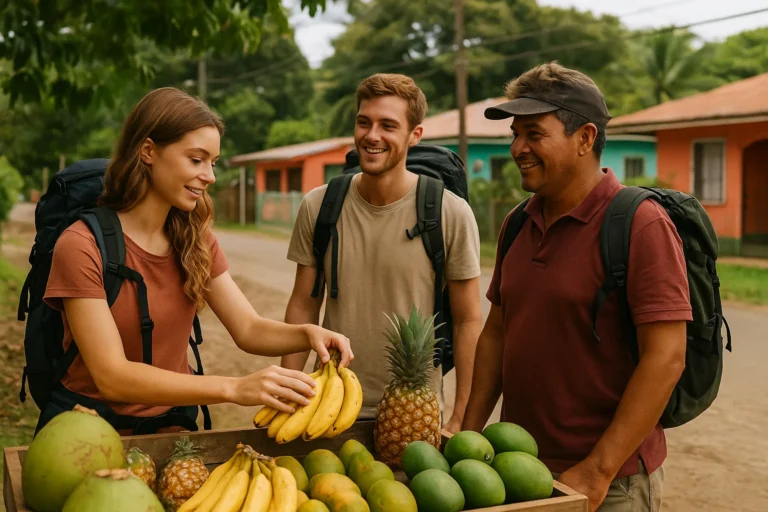
For accommodation on the Caribbean coast, homestays are worth seeking out. Several local families rent rooms, and staying with them gives you access to home-cooked meals, genuine conversation, and a perspective on the region that no eco-lodge can offer. Ask at the local bus station or community notice boards when you arrive — this is the kind of thing that works better in person than online.
Days 9–14: Pacific Coast and Beyond
The Pacific side is where most of the big-name destinations sit — Manuel Antonio, Jacó, the Nicoya Peninsula. These are worth visiting, but the way you visit them matters.
Manuel Antonio National Park is genuinely spectacular — white sand beaches, howler monkeys in the trees, crystal water — but it gets very busy. Go early in the morning, ideally on a weekday, and you’ll experience something close to magic. Go at midday on a weekend and it’s a different story. The town of Quepos, just nearby, is where locals actually live and eat. It has a busy fishing port, a good market, and restaurants that serve fresh seafood at prices that make sense.
If you have time, push further south toward the Osa Peninsula. This is one of the most biodiverse places on the planet and remains genuinely remote. Getting there takes effort — a combination of buses, ferries, and possibly a small domestic flight — but the reward is a rainforest experience that feels nothing like a theme park. Costa Rica’s official tourism board offers regional itinerary guides that can help you plan logistics for more remote areas like this.
Getting Around: What Local Transport Actually Looks Like
Costa Rica has a solid public bus network that connects most towns and cities at prices that are genuinely budget-friendly. A long-distance bus from San José to the Caribbean coast, for example, typically takes a few hours and costs a fraction of what a shuttle or rental car would. The buses are usually punctual, reasonably comfortable, and give you an immediate window into how the country actually moves.
👉 Read also: Backpacking Central America & Cuba: Routes, Costs & Where Young Travelers Actually Stay
Shared shuttles — operated by private companies and bookable at most hostels — are faster and more comfortable but cost significantly more. They’re worth it for routes that are complicated or time-consuming by public bus, like getting to the Osa Peninsula or crossing between coasts.
Renting a car gives you the most freedom, especially in the Central Valley and on the Pacific coast, where some of the best spots are down unpaved roads that buses don’t serve. If you go this route, factor in the cost of insurance, which is mandatory and can add significantly to the daily rate. A 4×4 is worth it during the rainy season, when some roads become genuinely challenging.
For a two to three week Costa Rica itinerary on a backpacker budget, public buses and the occasional shared shuttle will cover most of what you need. Budget for a few taxi rides in cities and you’ll be fine.
Where to Stay: Matching Accommodation to the Experience
The type of place you sleep in shapes the kind of trip you have more than almost anything else. In San José, hostels in the historic center put you close to public transport and the neighborhoods worth exploring on foot. Look for places with common areas where guests actually talk to each other — that’s usually a sign the hostel has a good community feel.
On the Caribbean coast, as mentioned, homestays are one of the best options available if you can find them. Failing that, small guesthouses run by local families are a step up from the chain-style options and usually come with better food and better stories.
Eco-lodges are genuinely worth considering in areas like the Osa Peninsula or the cloud forest regions — not as a luxury upgrade, but because many of them are deeply integrated with conservation efforts and local communities. The best ones employ local guides, source food locally, and contribute directly to the ecosystems they sit within. Ask questions before you book: what percentage of staff are from the local community? Does the lodge work with any conservation projects? The answers will tell you a lot.
In the Central Valley towns like Grecia and Atenas, small bed and breakfasts run by local families are the norm. They’re rarely listed on the big booking platforms, but asking around in town or at the local tourist office (if there is one) usually turns something up. This is the kind of accommodation that doesn’t photograph well for Instagram but makes for the best memories.
Eating Like You Actually Live There
Costa Rican food at its best is humble, fresh, and deeply satisfying. The casado — a plate of rice, beans, salad, plantains, and a protein — is the everyday meal of the country and costs very little at a local soda. Gallo pinto, the rice-and-beans breakfast dish, is served everywhere and is one of those things that sounds simple until you’ve had it made well, at which point you understand why people eat it every single day.
On the Caribbean coast, the food shifts toward coconut milk, fresh fish, and spiced stews that reflect the region’s Afro-Caribbean roots. In the Central Valley, you’ll find excellent coffee — Costa Rica produces some genuinely outstanding coffee and it’s worth seeking out a local roaster rather than a chain. Along the Pacific coast, fresh ceviche and grilled fish are the obvious choices, and the best versions are always at the smallest, least-decorated spots near the water.
The rule of thumb everywhere: eat where the locals eat. If the menu is only in English and there are photographs of every dish, you’re paying the tourist premium. Walk one street further and you’ll usually find something better for half the price.
Planning a Costa Rica itinerary that leaves room for spontaneity — an extra day in Cahuita because you found a great spot, a detour to a Central Valley town you’d never heard of — is ultimately what separates a trip you remember from one you just document. Costa Rica has built its identity around pura vida, and the best way to honor that philosophy is to slow down, stay curious, and let the country show you what it actually is rather than what the highlight reel promised.
This article was produced with AI assistance and reviewed editorially.


Almaty & Tashkent: Central Asia’s Modern Cities Beyond the Silk Road Clichés

Stay Smart in Asia: Budget Accommodation in Osaka, Kyoto & Kuala Lumpur 2026


