
Asia
Stay Smart in Asia: Budget Accommodation in Osaka, Kyoto & Kuala Lumpur 2026
Find affordable places to stay across three major Asian cities. Discover capsule hotels in Kyoto and Osaka, neighborhood hostels in Kuala Lumpur, and booking tips for bud

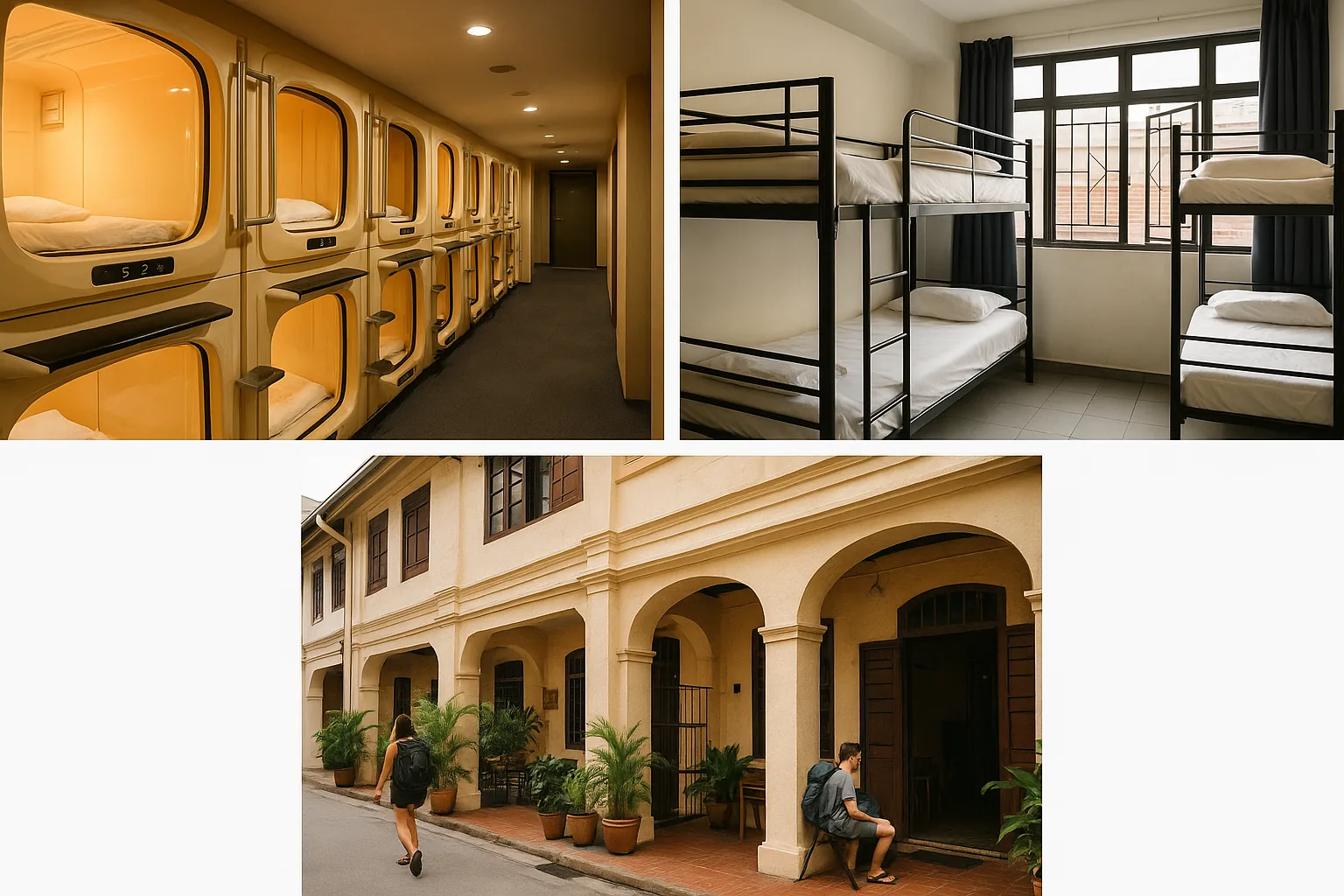
Asia has long been the go-to continent for travelers who want to stretch every dollar, euro, or pound as far as it will go — and in 2026, that reputation is absolutely still deserved. Finding budget accommodation in Asia doesn’t mean settling for damp sheets and broken Wi-Fi. In cities like Osaka, Kyoto, and Kuala Lumpur, affordable stays can actually be some of the most memorable parts of your trip — places where you meet other travelers over breakfast, stumble into local neighborhoods you’d never have found otherwise, and wake up genuinely excited about the day ahead.
Why These Three Cities Are Perfect for Budget Travelers
Osaka, Kyoto, and Kuala Lumpur represent three very different flavors of Asia — but they share one important quality: they reward travelers who do their homework before booking a bed. Each city has a distinct accommodation culture, a different set of neighborhoods worth knowing about, and a range of options that can suit everything from a solo backpacker to a small group of friends on a tight timeline.
Osaka is Japan’s second-largest city, home to around 2.7 million people, and it pulses with an energy that feels completely its own. It’s louder and more irreverent than Tokyo, obsessively food-focused, and genuinely welcoming to visitors. Kyoto, just 15 minutes away by shinkansen, is the cultural counterpoint — quieter, more considered, layered with temples, bamboo groves, and a slow kind of beauty that takes time to appreciate. Kuala Lumpur sits in a different world entirely: a sprawling, multicultural Southeast Asian capital where the food scene is extraordinary, the transport links are excellent, and budget options are genuinely plentiful.
Together, they make a compelling itinerary. And knowing where to sleep in each one makes all the difference.
Navigating Budget Accommodation in Osaka
Osaka’s neighborhoods each have their own personality, and where you stay will shape your entire experience of the city. The good news is that almost every area has budget-friendly options — you just need to know what you’re looking for.
Minami: The Best Starting Point for First-Timers
Minami is widely considered the best overall area for first-time visitors to Osaka. It’s home to Namba, which sits right next to Dotonbori — that iconic stretch of neon-lit canals and street food stalls that you’ve probably already seen in a hundred photos. Staying in this part of the city means you’re immediately in the thick of it: takoyaki vendors, ramen shops open until 3am, and a street energy that doesn’t really stop.
For budget travelers, Namba is ideal because so much of what makes Osaka great is literally walkable from your front door. Capsule hotels and smaller guesthouses cluster throughout this area, and competition keeps prices reasonable. The tradeoff is noise — if you need silence to sleep, Namba at midnight might test your patience. Pack earplugs.
Kita and Umeda: Convenience Over Atmosphere
Kita, centered around Umeda, is Osaka’s northern hub and the area most recommended for convenience and transport connections. If you’re planning to use Osaka as a base for day trips — to Kyoto, Kobe, or even Himeji — staying near Umeda makes a lot of logistical sense. The main train lines converge here, and you can be on a platform and moving within minutes of leaving your accommodation.
Budget accommodation in Kita tends to skew toward compact business hotels and capsule-style stays. They’re functional, clean, and efficient — which, honestly, is exactly what you need when you’re spending most of your time out exploring. Don’t expect charm; expect reliability.
👉 Read also: Southeast Asia on a Budget: Hidden Neighborhoods in Kuala Lumpur, Chiang Mai, Ipoh & Ho Chi Minh City
Honmachi: The Quieter Choice
If you want to feel more like a resident than a tourist, Honmachi is worth considering. It’s recommended as Osaka’s best quieter central area — still well-connected, but without the sensory overload of Namba. You’ll find smaller guesthouses here, and the surrounding streets have a more everyday feel: local coffee shops, convenience stores, people going about their lives. It’s a good base if you want to explore the city at your own pace rather than being swept up in the tourist current.
Finding Your Place in Kyoto
Kyoto operates differently. The city doesn’t rush, and neither should you. Budget accommodation here ranges from traditional machiya guesthouses — narrow wooden townhouses converted into small inns — to modern capsule hotels that have elevated the format into something genuinely stylish.
The Capsule Hotel Experience, Done Right
Capsule hotels in Kyoto have evolved well beyond the utilitarian pods of decades past. Today’s versions often feature mood lighting, personal USB ports, curtained privacy screens, and shared lounge spaces that actually encourage conversation. Some are designed with a strong aesthetic — think clean lines, natural wood, and a calm that feels very deliberate for a city built around temples and meditation gardens.
What makes capsule hotels particularly smart for budget travelers is the value density. You’re paying for a sleeping pod, but you’re often getting access to shared bathrooms that are genuinely beautiful, common areas with good coffee, luggage storage, and sometimes even onsen-style bathing facilities. For a solo traveler, it’s hard to beat.
When searching for capsule options in Kyoto, focus your search around Kyoto Station and the Gion area. Staying near the station gives you fast access to bullet trains if you’re moving between cities; staying near Gion puts you within walking distance of the city’s most atmospheric streets, where lantern light reflects off cobblestones and the evening feels like it belongs to a different century.
What to Expect When You Arrive
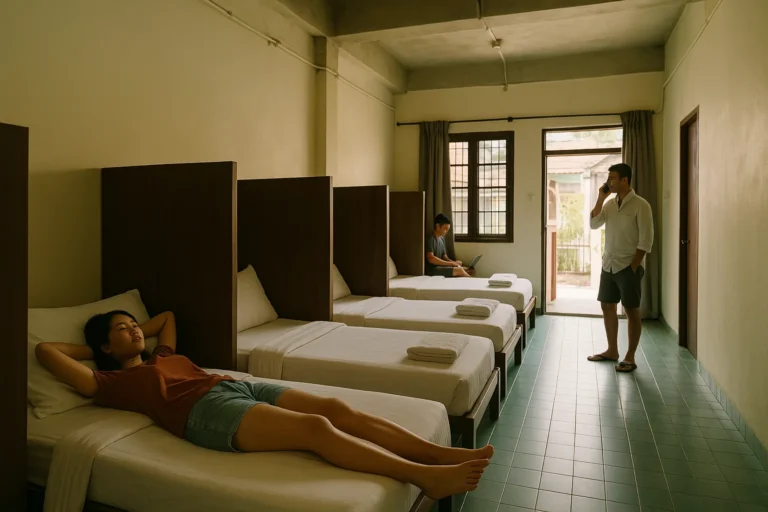
A few practical things worth knowing before you check in anywhere in Kyoto or Osaka. Many budget properties — especially capsule hotels — operate a shoe-removal policy at the entrance, so you’ll want clean socks. Some have gender-separated floors or facilities, which is worth checking in advance if you’re traveling with a mixed group. Check-in times tend to be strict, and luggage storage before check-in is common but not always guaranteed, so confirm ahead if you have an early arrival.
Most budget stays in Japan will have free Wi-Fi, and many will offer pocket Wi-Fi rental or IC card top-up points nearby. The infrastructure is genuinely excellent — you won’t feel disconnected just because you’re not staying somewhere expensive.
Kuala Lumpur: Neighborhoods, Hostels, and Smart Choices
Kuala Lumpur rewards spontaneity. It’s a city of contrasts — gleaming towers next to crumbling shophouses, hawker stalls beneath luxury malls, neighborhoods where three different languages drift out of three adjacent doorways. For budget travelers, it’s one of the most accessible major cities in Asia, and the accommodation scene reflects that.
Understanding the KLCC Area
Kuala Lumpur City Centre, or KLCC, is considered the best area for tourists due to its central location. It’s anchored by the Petronas Twin Towers and surrounded by upscale fashion malls and luxury hotels — which might make it sound like the wrong place for budget travelers. But staying near KLCC doesn’t have to mean spending a fortune. Smaller guesthouses and budget hotels exist on the edges of this area, and the transport links make it easy to reach every other part of the city quickly.
That said, KLCC isn’t the only option. Bukit Bintang, just a short walk or monorail ride away, is arguably more interesting for younger travelers — it’s where you’ll find street food lanes like Jalan Alor, independent cafés, and a nightlife scene that ranges from rooftop bars to basement music venues. Budget accommodation clusters here too, and the atmosphere is more relaxed and lived-in than the polished KLCC core.
👉 Read also: Budget Stays in Japan: Capsule Hotels, Airbnbs & Guesthouses Across Tokyo, Kyoto & Mt. Fuji
Chinatown and Masjid India: Character and Value
For travelers who want maximum character at minimum cost, Chinatown (Petaling Street) and the Masjid India district are hard to beat. These are Kuala Lumpur’s oldest commercial neighborhoods, dense with history, color, and some of the cheapest food you’ll find anywhere in Southeast Asia. Hostels in these areas tend to be smaller and more social — the kind of places where you end up sharing a meal with someone you met in the common room and spending the rest of the evening exploring together.
The trade-off is that these neighborhoods can feel chaotic at peak times, and the streets aren’t always the easiest to navigate. But that’s also part of the appeal. Getting a little lost in Kuala Lumpur’s older quarters is rarely a bad thing — there’s almost always something worth finding around the next corner.
How to Book Smartly Across All Three Cities
The mechanics of booking budget accommodation in Asia have changed significantly in recent years, and knowing your options gives you a real advantage. International platforms like Hostelworld remain useful for finding and comparing hostels, reading verified reviews, and locking in rates in advance — particularly important during peak travel periods like cherry blossom season in Japan (late March to early April) or major public holidays in Malaysia.
But don’t ignore local booking platforms and direct booking options. Many smaller guesthouses and capsule hotels offer their best rates on their own websites, cutting out the commission fees that platforms charge. It’s worth spending ten minutes checking the property’s direct site after finding it on a larger platform. You might save a meaningful amount — and in some cases, direct bookers get perks like free luggage storage or a later checkout.
Timing Your Booking
For Kyoto and Osaka, book early. Japan’s tourism has been growing steadily, and popular budget properties — especially well-reviewed capsule hotels — sell out weeks or months in advance during high season. If you’re flexible on dates, traveling in late autumn (November) or early winter (December, before Christmas) can offer a sweet spot: beautiful scenery, fewer crowds, and better availability at lower prices.
Kuala Lumpur is generally more forgiving on lead time, but if you’re visiting during major festivals — Hari Raya, Chinese New Year, or Deepavali — book ahead. The city fills up, and the atmosphere during these periods is extraordinary. Showing up without a reservation and hoping for the best is a gamble you don’t need to take.
What Budget Accommodation in Asia Actually Feels Like
There’s a version of budget travel that feels like a compromise. And then there’s the version you get in cities like Osaka, Kyoto, and Kuala Lumpur — where staying somewhere affordable actually adds to the experience rather than detracting from it.
A well-run hostel common room at 9pm, with travelers from six different countries comparing notes on the best bowl of ramen they had that day — that’s a memory. A capsule hotel in Kyoto where you pull the curtain closed and listen to the city settle into quiet — that’s a memory too. Even a simple guesthouse in Chinatown, where the owner recommends a breakfast spot around the corner that no review has ever mentioned — that’s the kind of thing you come home talking about.
The point of finding smart budget accommodation in Asia isn’t just to save money. It’s to stay somewhere that puts you closer to the real texture of a place — the neighborhoods, the people, the rhythms that don’t show up on any tourist map. In Osaka, Kyoto, and Kuala Lumpur, those places exist at every price point. You just have to know where to look.
So do your research, book a little earlier than feels necessary, and trust that the right bed in the right neighborhood will set the tone for everything that follows. Asia has a way of exceeding expectations — and it tends to start the moment you drop your bag and step outside.
This article was produced with AI assistance and reviewed editorially.


Almaty & Tashkent: Central Asia’s Modern Cities Beyond the Silk Road Clichés

Stay Smart in Asia: Budget Accommodation in Osaka, Kyoto & Kuala Lumpur 2026


