
Roaming Around the World
Almaty & Tashkent: Central Asia’s Modern Cities Beyond the Silk Road Clichés
Explore Almaty and Tashkent beyond Silk Road clichés. Discover mountain trails, vibrant neighborhoods, local food scenes, and contemporary culture in these two dynamic Ce

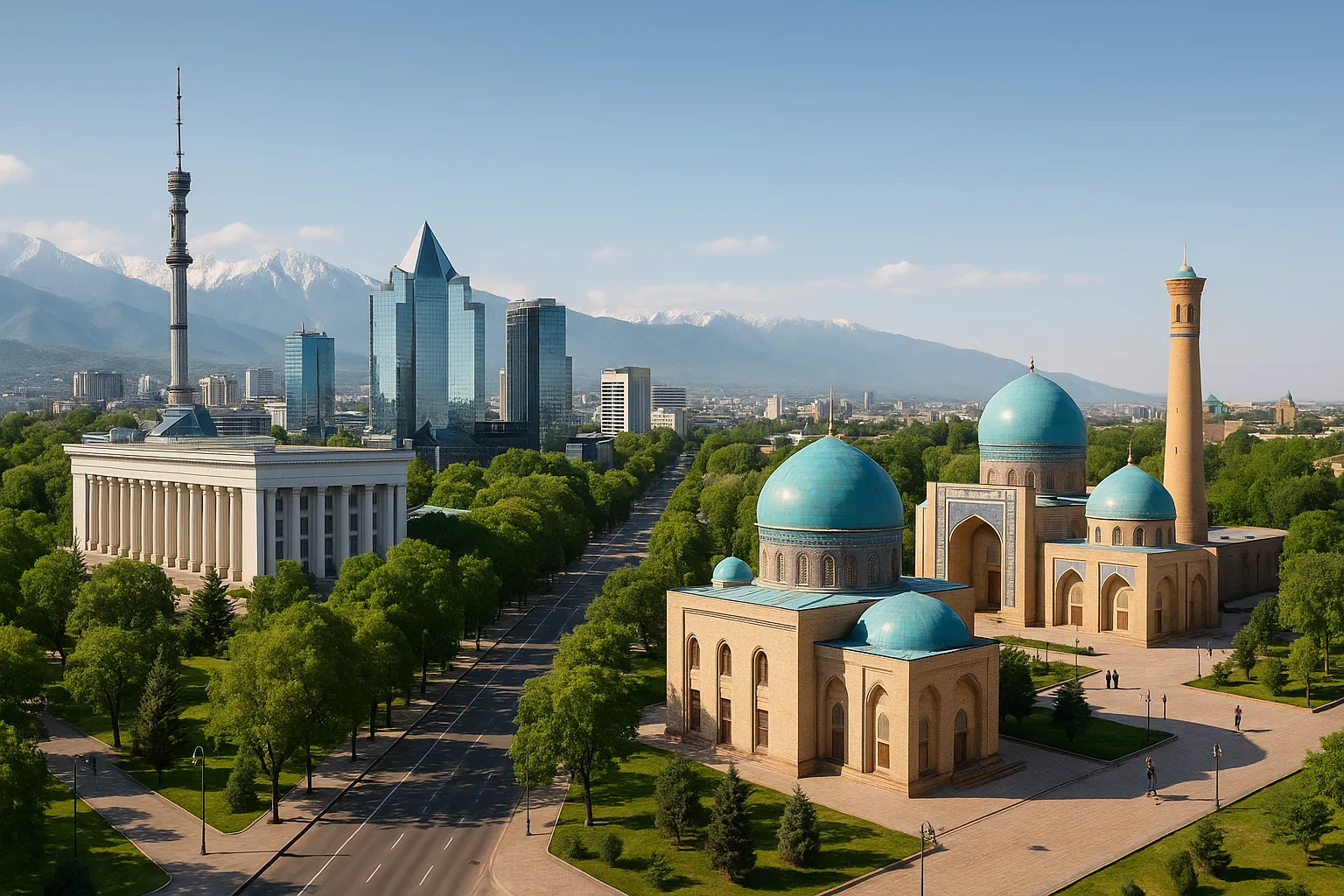
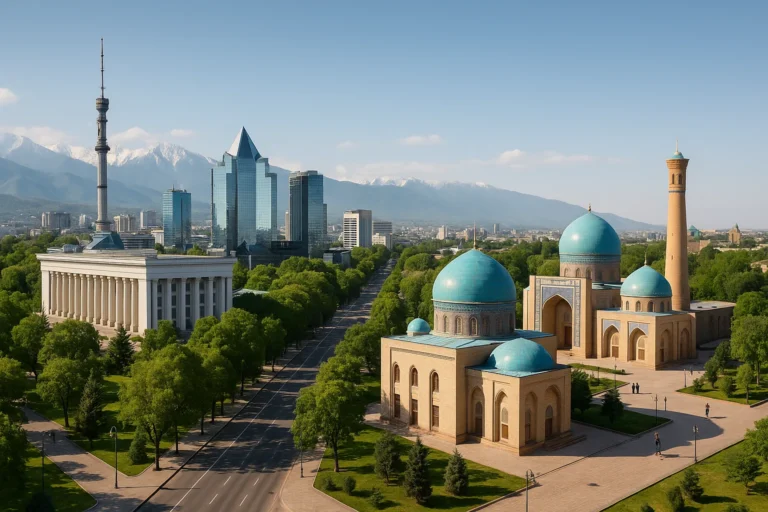
If your mental image of Central Asia is all camel caravans and ancient minarets, Almaty and Tashkent are about to completely rewire your expectations. This almaty tashkent travel guide exists for one reason: to show you that these two cities are so much more than Silk Road footnotes. They’re living, breathing, genuinely exciting urban destinations where Soviet-era architecture rubs shoulders with contemporary art galleries, where mountain trails begin practically at the city limits, and where the food scene is quietly becoming one of the most interesting in Asia. Whether you’re planning a dedicated city trip or threading them into a longer Central Asian journey, both cities reward slow, curious exploration in ways that most travelers never expect.
Why Central Asia Deserves a Spot on Your Travel Radar Right Now
Central Asia — the vast, landlocked sweep of Kazakhstan, Uzbekistan, Kyrgyzstan, Tajikistan, and Turkmenistan — has spent decades sitting just outside the mainstream travel conversation. That’s changing fast. Young travelers who’ve already done Southeast Asia, Eastern Europe, and the Caucasus are turning their eyes eastward, drawn by the combination of genuine cultural depth, relatively low tourist numbers, and a sense of discovery that’s increasingly hard to find elsewhere.
What makes Almaty and Tashkent particularly compelling is that they offer an urban gateway into all of that without throwing you in at the deep end. Both cities have international airports with decent connections, growing hostel and guesthouse scenes, and enough English-language signage to make navigation manageable. They’re challenging enough to feel like a real adventure, but not so overwhelming that first-time independent travelers will feel lost. That balance is genuinely rare.
The Silk Road framing, while historically accurate, has become something of a cliché that undersells what these cities actually are in 2026. Yes, you’ll find echoes of ancient trade routes in both places. But you’ll also find specialty coffee shops, contemporary music venues, excellent public parks, and neighborhoods where young locals are building creative communities in real time. That’s the version of Central Asia worth chasing.
Almaty: Mountains, Green Streets, and a City That Feels Unexpectedly European
Almaty is the largest city in Kazakhstan, and from the moment you arrive, the mountain backdrop changes everything. The Tian Shan range frames the southern edge of the city in a way that makes even an ordinary afternoon feel cinematic. Snow-capped peaks hover above tree-lined boulevards, and on clear days you can see them from the city center — a reminder that serious wilderness is never far away.
The city has a distinctly European character that surprises most first-time visitors. Wide, leafy avenues, pavement cafés, and an abundance of green spaces give Almaty a rhythm that feels closer to a mid-sized European city than to what many people picture when they think of Kazakhstan. This is partly a legacy of Soviet urban planning, which prioritized parks and broad streets, and partly a result of Almaty’s own cosmopolitan identity — it was the country’s capital for decades and still functions as its cultural and commercial heart.
Spend a morning wandering the Panfilov Park area, where the ornate Zenkov Cathedral — a wooden Russian Orthodox church that survived a major earthquake — sits among towering trees. In the afternoon, head toward the Green Bazaar, one of Central Asia’s most atmospheric markets. Stalls overflow with dried fruits, spices, fresh bread, and cuts of meat you might not immediately recognize. Go hungry. Buy things without knowing exactly what they are. That’s the point.
The Alatau and Medeu districts, climbing toward the mountains in the south of the city, are where you’ll find the most interesting mix of local life and outdoor access. The famous Medeu skating rink and the Shymbulak ski resort sit just above the urban edge, accessible by cable car. Even in summer, the ride up is worth it for the views alone.
Getting Out of the City: Mountain Day Trips
One of Almaty’s biggest advantages for young travelers is how quickly you can escape into proper wilderness. Charyn Canyon — sometimes compared to a miniature Grand Canyon — is a popular day trip that delivers dramatic red-rock scenery and hiking trails above the Charyn River. It’s a long day from the city, so start early and consider joining a shared tour if you don’t want to navigate the logistics alone.
👉 Read also: Central Asia's Silk Road Cities: Samarkand, Bukhara & Almaty for Solo Travelers
Kolsai Lake is another option that rewards the effort. A series of alpine lakes connected by hiking trails, Kolsai sits in a protected nature reserve and offers the kind of scenery that makes you genuinely forget what day it is. Camping overnight is possible and highly recommended if you have the gear. The combination of pine forest, clear water, and mountain silence is hard to match.
For shorter escapes, the gorges and foothills immediately south of the city are accessible by public transport or taxi and offer afternoon hikes without requiring a full-day commitment. Almaty is one of those rare cities where you can genuinely do both — urban exploration in the morning, mountain air by the afternoon.
Where to Stay and Eat in Almaty
The Almaty City Center and the areas around Arbat pedestrian street are natural bases for young travelers. Hostels, guesthouses, and budget hotels cluster here, and the walkability is excellent. You’re close to cafés, restaurants, and the metro line that connects the main parts of the city.
Almaty’s food scene is one of its most underrated qualities. Kazakh cuisine is hearty and meat-heavy — beshbarmak, a dish of boiled meat and flat noodles, is the national staple and worth trying at least once in a proper local restaurant rather than a tourist-facing place. Beyond traditional food, the city has a genuinely diverse restaurant culture reflecting its cosmopolitan history: Russian, Korean, Uyghur, and Georgian restaurants all have a strong presence, and the quality is consistently high relative to price.
Street food and market eating are where your money goes furthest. A filling meal from a stolovaya — a Soviet-style canteen that still operates across the city — costs very little and usually involves more food than you can comfortably finish. Grab samsa (baked meat pastries) from bakeries, and wash everything down with kymyz (fermented mare’s milk) if you’re feeling adventurous.
In terms of overall costs, Almaty is affordable by European standards but not as cheap as some Southeast Asian destinations. Transport within the city — metro, buses, and taxis via app — is inexpensive, and accommodation in good-quality hostels is reasonable. Budget travelers who eat local and use public transport will find their money stretches comfortably.
Tashkent: Where Soviet Grandeur Meets a City Reinventing Itself
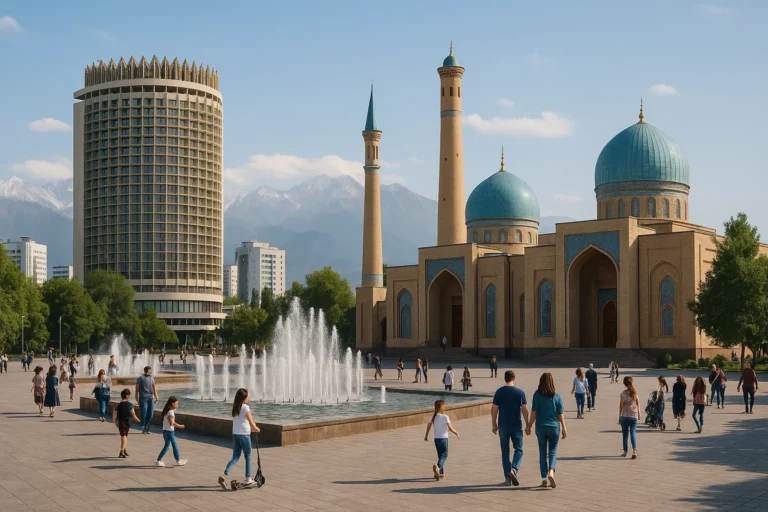
Tashkent, the capital of Uzbekistan, operates on a different energy from Almaty — bigger, busier, and carrying a more complex layering of history. It’s one of the major cities along the ancient Silk Road, and while that heritage is real, what makes Tashkent fascinating in 2026 is the tension between its past and its present. The city is actively reimagining itself, and you can feel that energy in its neighborhoods, its food, and its public spaces.
The Tashkent Metro is one of the city’s most talked-about features among travelers, and for good reason. Built during the Soviet era, many of its stations are elaborately decorated with mosaics, chandeliers, and architectural details that turn a simple commute into something closer to a museum visit. Riding the full network just to see the stations is a legitimate way to spend a couple of hours, and it costs almost nothing. Photography rules have relaxed significantly in recent years, so bring your camera.
Above ground, Amir Timur Square and the surrounding area give you the monumental, wide-boulevard version of Tashkent — grand fountains, manicured parks, and imposing public buildings that reflect the city’s ambitions. But wander a little further and the scale becomes more human. The Chorsu Bazaar area, near the old city, is where Tashkent’s daily life feels most vivid. The domed market building and surrounding stalls sell everything from spices and ceramics to electronics and clothing, and the crowd is entirely local.
Neighborhoods Worth Exploring on Foot
The Yunusabad and Mirabad districts attract younger travelers and locals alike, with a growing number of independent cafés, bookshops, and creative spaces appearing alongside older residential blocks. These aren’t tourist neighborhoods — they’re places where Tashkent’s young professional class actually spends time, which makes them far more interesting than anywhere designed with visitors in mind.
👉 Read also: Kazakhstan's Hidden City: Almaty's Green Neighborhoods, Mountains & European Vibe
The old city area around Khast Imam and the historic mosques is worth a morning, not because it’s a theme park version of ancient Uzbekistan but because it’s still a functioning religious and community center. The contrast between the ancient architecture and the modern city pressing in around it is genuinely thought-provoking.
Parks are a serious part of Tashkent life, and locals use them properly — for picnics, chess, evening walks, and socializing. Navoi Park and the botanical gardens offer green breathing room in a city that can feel intense. On weekends especially, these spaces fill with families and friend groups, and the atmosphere is warm and welcoming to curious visitors.
Eating Your Way Through Tashkent
Uzbek food is arguably the most celebrated cuisine in Central Asia, and Tashkent is the best place to eat it. Plov — the rice dish cooked with meat, carrots, and spices in a massive kazan cauldron — is the undisputed national dish, and eating it at a dedicated plov center (exactly what it sounds like: a restaurant that serves almost exclusively plov) is a rite of passage. Go for lunch, when it’s freshest. Arrive early, because it sells out.
Lagman (hand-pulled noodles in a rich broth), manti (steamed dumplings), and shashlik (grilled meat skewers) round out the essentials. Tashkent also has a strong café culture, and the city’s younger generation has embraced specialty coffee in a way that means you can find genuinely good espresso alongside traditional chai in the same neighborhood.
Budget travelers will find Tashkent very affordable. Meals at local restaurants are inexpensive, market food costs almost nothing, and transport — whether by metro, bus, or app-based taxi — is among the cheapest you’ll encounter anywhere in Asia. Accommodation options range from family-run guesthouses to modern hostels, with the guesthouse experience often being the more memorable choice for the insight it gives you into local hospitality.
Practical Notes for Navigating Both Cities
Both Kazakhstan and Uzbekistan have simplified their visa processes significantly for most passport holders in recent years, with e-visa systems making pre-trip admin straightforward. Always check current requirements for your specific nationality before booking, as policies can shift.
Moving between Almaty and Tashkent is genuinely easy. Direct flights connect the two cities in roughly two hours, and for travelers with more time, overland routes through Kyrgyzstan or Tajikistan turn the journey itself into part of the adventure. The train network within Uzbekistan is excellent — fast, comfortable, and a great way to continue from Tashkent to Samarkand or Bukhara if you’re extending your trip.
Within each city, navigation apps work well, local SIM cards are cheap and easy to buy at airports, and payment is increasingly card-friendly in restaurants and shops, though carrying some local cash for markets and smaller vendors is always smart. The Uncorned Market’s Central Asia beginner’s guide is a solid resource for broader regional context if you’re planning a longer trip beyond the two cities.
Language can feel like a barrier at first — Kazakh and Uzbek are the primary languages, with Russian widely spoken across both cities — but younger locals in urban areas often have some English, and the combination of translation apps and genuine human warmth tends to fill the gaps. Don’t let it stop you from trying.
This almaty tashkent travel guide barely scratches the surface of what both cities offer, and that’s honestly the point. The best parts of Almaty and Tashkent aren’t in any guide — they’re in the side streets you wander down by accident, the conversations you have over tea with a guesthouse host, the moment the mountain view hits you for the first time, or the evening you spend in a Tashkent park watching a city simply live its life. Central Asia has been waiting for travelers who are genuinely curious rather than just checking boxes. If that sounds like you, these two cities are ready.
This article was produced with AI assistance and reviewed editorially.


Almaty & Tashkent: Central Asia’s Modern Cities Beyond the Silk Road Clichés

Stay Smart in Asia: Budget Accommodation in Osaka, Kyoto & Kuala Lumpur 2026


