
Asia
Capsule Hotels in Japan: Budget Stays in Tokyo, Kyoto & Osaka 2026
Discover capsule hotels across Japan’s major cities. Learn what to expect, typical nightly rates of ¥2,500–¥8,500, and why they’re ideal for solo travelers and backpacker

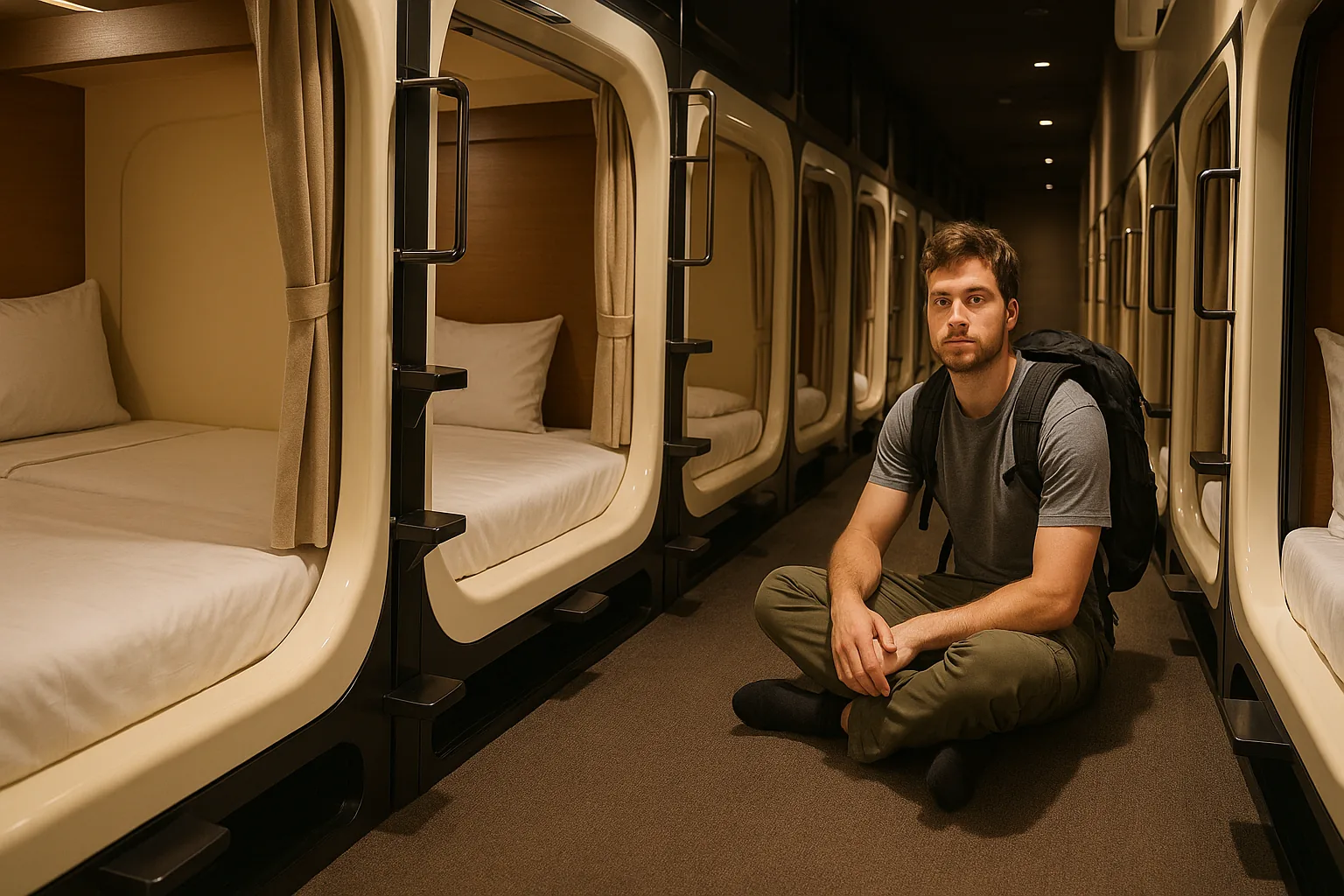
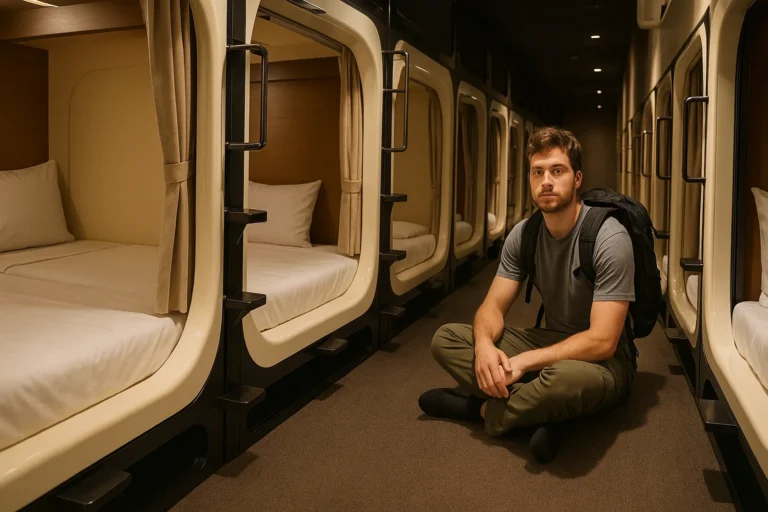
There’s a moment, somewhere between landing in Tokyo and realising your accommodation budget needs to stretch across three cities, when the idea of sleeping in a sleek pod sounds less like a compromise and more like the adventure itself. Capsule hotels in Japan have been reshaping the way budget-conscious travelers think about where they sleep — and in 2026, they’ve evolved into something genuinely worth getting excited about. Whether you’re planning a solo journey through Tokyo, Kyoto, and Osaka, or you’re a backpacker looking to stretch every yen without sacrificing comfort or culture, these compact, cleverly designed spaces deserve a serious look.
What a Capsule Hotel Actually Feels Like
Forget everything you think you know about tiny, claustrophobic boxes. Modern capsule hotels in Japan have come a long way from the original concept that emerged in the late 1970s. Yes, your sleeping space is small — typically a pod just large enough for a bed, with a curtain or sliding door for privacy — but the experience surrounding that pod is anything but basic.
When you check in, you’re usually handed a locker key or a wristband that serves as your digital key. Your capsule itself often includes a small television screen, USB charging ports, personal lighting controls, and sometimes even a built-in alarm system. The pod is your private world. Everything else — the bathrooms, lounges, luggage storage, and often communal kitchens or café areas — is shared.
That shared element is, honestly, one of the best parts. Capsule hotels attract a fascinating mix of people: solo travelers from every corner of the world, young professionals on work trips, backpackers mid-journey, and curious first-timers who wanted to try something distinctly Japanese. The social energy in the common areas can be surprisingly warm. You’ll find yourself swapping city recommendations over free coffee at 7am or comparing itineraries with someone you just met by the lockers.
Most capsule hotels in Japan operate with separate floors or wings for men and women, and the shared bathrooms are almost always divided by gender too. This setup makes capsule hotels a genuinely comfortable option for solo female travelers — a detail that’s worth knowing before you book.
Understanding the Pricing: What Your Yen Actually Gets You
One of the biggest draws of capsule hotels in Japan is the price. Depending on the property, the city, and the season, you can expect to pay somewhere in the range of ¥2,500 to ¥8,500 per night — that’s roughly $17 to $60, or around €25 to €65, depending on exchange rates at the time of your trip.
At the lower end of that scale, you’re looking at a clean, functional pod in a well-located property — solid, no-frills, exactly what you need. Spend a little more, and you start unlocking genuinely impressive amenities: onsen (traditional hot spring baths), rooftop terraces, in-house restaurants, high-speed Wi-Fi, and design-forward interiors that feel more boutique hotel than budget stay.
To put this in context: a standard business hotel in Japan typically runs between ¥4,000 and ¥7,000 per night, and reliable chain hotels with extras like free breakfast and station-adjacent locations can cost between ¥4,500 and ¥6,500. A mid-range capsule hotel sits competitively within that bracket — but with the added bonus of a uniquely Japanese cultural experience built right into the stay.
When it comes to booking, Booking.com remains one of the most practical platforms for finding budget accommodation across Japan, with flexible cancellation policies on the majority of listed properties. That flexibility matters when you’re traveling spontaneously and your plans might shift between cities. Still, for the most popular capsule hotels in central Tokyo, Kyoto, and Osaka — especially during cherry blossom season or Golden Week — booking several weeks in advance is genuinely smart.
👉 Read also: Budget Stays in Japan: Capsule Hotels, Airbnbs & Guesthouses Across Tokyo, Kyoto & Mt. Fuji
Tokyo: Where the Capsule Hotel Culture Was Born
Tokyo is where you go to understand what capsule hotels in Japan are really about. The city has dozens of options spread across its many distinct neighborhoods, and the variety is remarkable. In areas like Shinjuku, Asakusa, and Akihabara, you’ll find everything from heritage capsule hotels that preserve the original 1970s aesthetic to ultra-modern properties that feel like something out of a design magazine.
Shinjuku is a particularly strong base. It’s chaotic in the best possible way — neon-lit, layered, endlessly interesting — and staying in a capsule hotel here puts you within walking distance of some of the city’s most iconic streets, markets, and transport connections. Many capsule hotels in this area include access to communal baths, which is an experience in itself. After a long day of exploring, soaking in a shared ofuro (Japanese-style bath) with other guests is one of those small rituals that makes a Japan trip feel genuinely immersive.
Asakusa offers a different energy — older, quieter, more rooted in traditional Tokyo. Capsule hotels here tend to attract travelers who want to be close to Senso-ji Temple and the historic shitamachi (old town) atmosphere. If you’re someone who wants to wake up early and walk through ancient streets before the crowds arrive, this is the neighborhood to base yourself in.
In Tokyo, prices at capsule hotels typically land in the mid-to-upper range of the national scale, reflecting the city’s higher cost of living. Expect to pay closer to ¥5,000–¥8,500 for a well-located, amenity-rich pod in a central area — still significantly cheaper than a private hotel room in the same neighborhoods.
Kyoto: Tradition Meets the Modern Pod
Kyoto is where Japan’s ancient soul lives. Walking between temples, bamboo groves, and centuries-old tea houses, you might wonder whether a capsule hotel even fits the city’s atmosphere. It does — and often beautifully.
Many capsule hotels in Kyoto lean into the city’s aesthetic, incorporating natural wood finishes, muted tones, and design details that echo traditional Japanese architecture. The result is a sleeping experience that feels connected to the place rather than at odds with it. You’re not just crashing in a pod — you’re staying in a space that understands where it is.
The best neighborhoods to look for capsule hotels in Kyoto include areas around Kyoto Station, which gives you easy access to the Shinkansen and local buses, and the Gion district, famous for its preserved machiya (traditional townhouses) and the chance of spotting a geiko (Kyoto’s term for geisha) in the early evening. Staying in or near Gion puts you at the heart of Kyoto’s cultural identity.
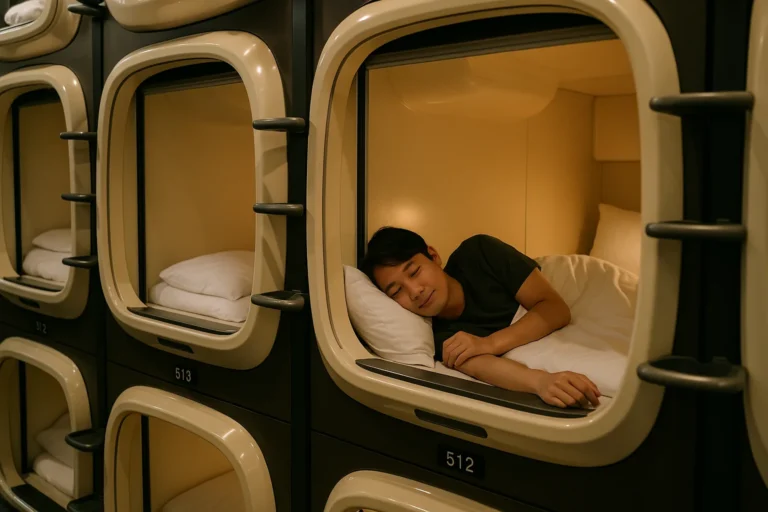
Prices in Kyoto for capsule hotels tend to be slightly more moderate than Tokyo, often falling in the ¥3,500–¥7,000 range, though this varies considerably by season. During peak travel periods — spring cherry blossom season and autumn foliage season — demand spikes sharply and prices follow. If you’re visiting during these windows, book early and consider being flexible on your exact neighborhood.
One thing that makes Kyoto capsule hotels particularly appealing for young travelers is the proximity to day-trip destinations. From a central Kyoto base, you can reach Nara, Osaka, and even Hiroshima within a few hours by train. Staying in a capsule hotel here isn’t just a budget decision — it’s a strategic one.
👉 Read also: Stay Smart in Asia: Budget Accommodation in Osaka, Kyoto & Kuala Lumpur 2026
Osaka: The Social Traveler’s City
If Tokyo is Japan’s head and Kyoto is its heart, Osaka is its stomach — and that’s meant entirely as a compliment. The city is famous for its food culture, its irreverent humor, and its genuinely warm, outgoing locals. It’s also one of the best cities in Japan to experience capsule hotels, partly because the social atmosphere of the city bleeds naturally into the communal spaces of these properties.
Capsule hotels in Namba and Shinsaibashi — Osaka’s most vibrant central districts — put you within stumbling distance of the city’s legendary street food scene. Imagine finishing a night of eating takoyaki (octopus balls) and okonomiyaki (savory pancakes) along Dotonbori, then walking back to your pod knowing you’ve spent a fraction of what a private hotel room would have cost. That’s the Osaka capsule hotel experience in a sentence.
The Umeda area, north of Namba, is another strong option — particularly if you’re arriving by Shinkansen and want to stay close to Osaka Station. Capsule hotels here tend to attract a mix of business travelers and tourists, and the common areas often have a lively, sociable energy in the evenings.
Osaka’s capsule hotel prices are generally competitive with — or slightly lower than — Kyoto’s, making the city one of the most affordable places in Japan to try this style of accommodation. For travelers doing a classic Kyoto-Osaka-Tokyo circuit, using capsule hotels across all three cities is a genuinely smart way to keep accommodation costs manageable while maximising what you spend on food, experiences, and day trips.
The Amenities That Make It Worth It
The sleeping pod is just the beginning. What distinguishes a good capsule hotel from a great one is almost always the quality of its shared spaces and amenities. Here’s what to look for when you’re comparing options:
- Shared baths and onsen: Many capsule hotels include access to traditional Japanese-style baths. Some properties have full onsen facilities with multiple pools, saunas, and relaxation areas. This alone can justify the price.
- Lounge and social spaces: The best properties have comfortable common areas where guests naturally gather — think good seating, decent coffee, and the kind of atmosphere that makes conversation easy.
- Secure lockers: Your capsule is for sleeping, not storing your entire backpack. Good lockers — big enough for a 70-litre pack — are essential. Check the size before you book if you’re traveling with large luggage.
- High-speed Wi-Fi: Non-negotiable for most travelers in 2026. Most capsule hotels offer it, but connection quality varies. Reading recent reviews is the best way to verify this.
- In-house café or vending areas: Japan’s vending machine culture means you’re never far from a drink or snack, but some capsule hotels go further with proper café spaces or even small restaurants.
- Location: Proximity to train stations is consistently one of the most valuable features a capsule hotel can offer in Japan. Being a five-minute walk from a major station saves you time and money every single day.
Practical Tips Before You Book
A few things worth knowing before your first capsule hotel experience in Japan:
- Check the gender policy: Most properties have separate areas for men and women. Some newer hotels are mixed-gender but with private pods that lock. Read the property description carefully before booking.
- Tattoo policies: Some capsule hotels — particularly those with onsen facilities — still maintain traditional policies around visible tattoos in shared bath areas. This is worth checking in advance if it applies to you.
- Noise awareness: Capsule hotels are social spaces, but they’re also sleeping spaces. Most have quiet hours from late evening. Respect the unwritten rules and you’ll be a guest everyone’s happy to share a lounge with.
- Pack light: The capsule hotel experience genuinely rewards compact packing. A smaller bag means less stress with lockers and more freedom moving between cities.
- Book flexible rates when possible: Japan travel in 2026 remains popular, and the best capsule hotels fill up quickly during peak seasons. Booking a flexible rate gives you options if your plans shift.
Why Capsule Hotels Are More Than Just a Budget Option
Here’s the thing about capsule hotels in Japan that often surprises first-time guests: they stop feeling like a compromise almost immediately. What starts as a practical decision — I need to save money — quickly becomes something richer. You’re sleeping in a format that’s genuinely Japanese, in a space designed with real attention to detail, surrounded by other travelers who are just as curious about the world as you are.
The onsen soak after a day of exploring. The late-night conversation in the lounge with someone who just arrived from Seoul. The early morning light filtering through the common area windows as you plan your day over a vending machine coffee. These are the moments that make a Japan trip memorable — and they happen, naturally and effortlessly, in capsule hotels.
For anyone planning a journey through Japan, the capsule hotel isn’t just where you sleep. It’s part of the experience itself. And in 2026, with so many well-designed, well-located options across Tokyo, Kyoto, and Osaka, there’s never been a better time to give one a try. Pack your curiosity, keep your expectations open, and let the pod surprise you.
This article was produced with AI assistance and reviewed editorially.


Teaching English Abroad in 2026: Top Countries, Visa Requirements & Real Salaries

Where to Stay in Latin America’s Top Destinations: Buenos Aires, Bogota & Beyond


