
Asia
Southern Thailand Beyond the Guidebook: Hat Yai & Songkhla’s Hidden Appeal
Discover why Hat Yai and Songkhla deserve more than a stopover. Explore local culture, street food, coastal charm, and the hidden appeal of southern Thailand’s overlooked

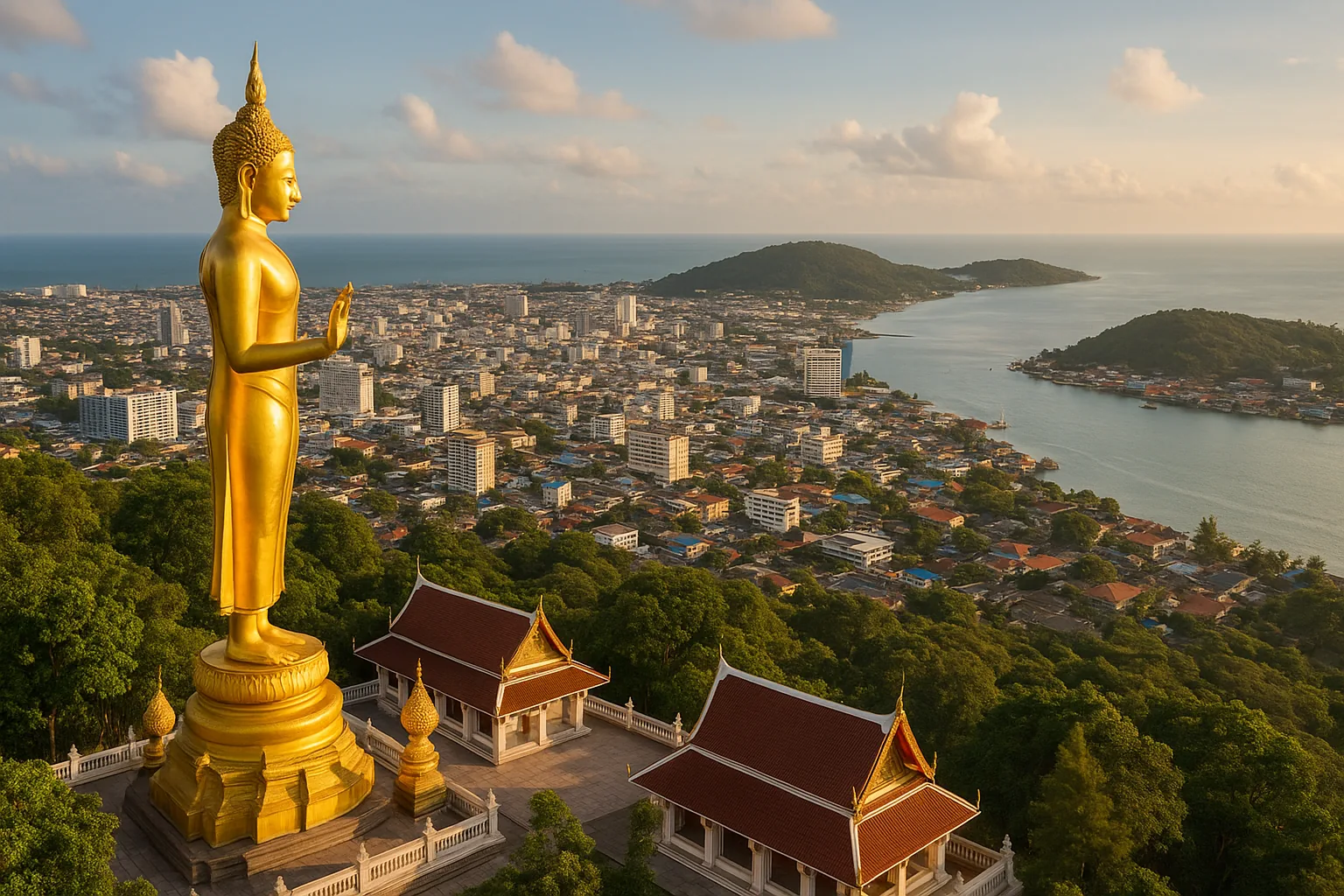
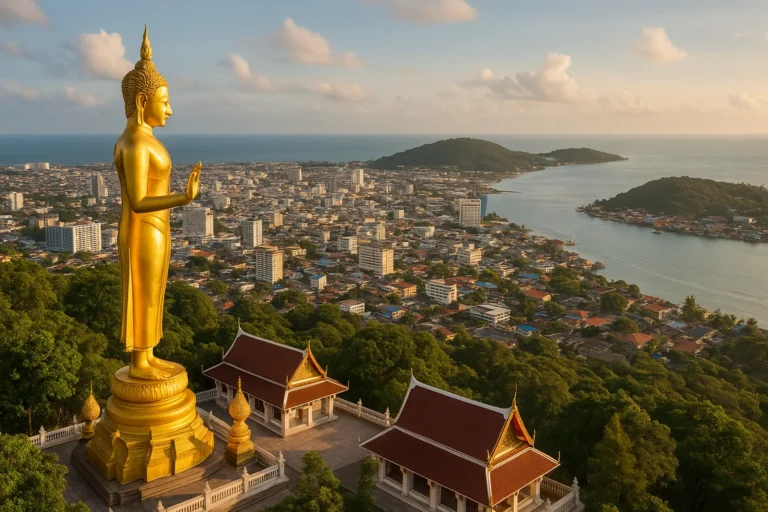
Most travelers passing through southern Thailand treat Hat Yai and Songkhla as nothing more than a stopover — a place to sleep before crossing into Malaysia or catching a connection north. That’s a genuine shame, because this corner of Hat Yai, Songkhla, Thailand holds a cultural richness, a street-level energy, and a coastal calm that most backpacker routes completely miss. Stay longer than one night and you’ll start to understand why.
Two Cities, One Region Worth Knowing
Hat Yai is the largest city in southern Thailand — a fact that surprises plenty of visitors who arrive expecting a sleepy border town and find instead a buzzing, layered urban hub. It’s loud in the best way. Markets spill onto sidewalks, motorbikes thread through narrow lanes, and the smells drifting from roadside stalls could make you forget you ever had a meal plan.
Just approximately 30 kilometres away, Songkhla feels like a different world entirely. Where Hat Yai hums with commercial energy, Songkhla moves slowly, thoughtfully — a city that hasn’t forgotten its past. Described by long-term travellers as a forgotten trading port, it sits on a narrow peninsula bordered on the east by the ocean and on the west by Songkhla Lake. That geography alone makes it visually striking in a way that photographs struggle to capture.
Together, these two cities form a travel experience that rewards curiosity. They complement each other perfectly: one gives you the pulse of a real Thai city, the other offers quiet streets and the feeling that you’ve discovered something most tourists walk past.
Why Hat Yai, Songkhla, Thailand Gets Skipped — and Why That’s Your Advantage
There’s no single reason why this region gets overlooked. It’s more of a combination of factors that conspire to keep it off most itineraries. The classic Thailand trail pulls travelers north toward Chiang Mai or south toward the islands — Koh Samui, Koh Phangan, Phuket. Hat Yai sits in a gap between those two gravitational pulls, and Songkhla sits even further off the radar.
There’s also the perception problem. Because Hat Yai functions as a major transit hub — often the first or last stop for land travel between Thailand and Malaysia — many travelers treat it purely as logistics. They arrive, they sleep, they leave. The city never gets a fair chance to show itself.
That’s your advantage as a traveler. Fewer crowds. More authentic encounters. Prices that reflect local life rather than tourist demand. When you wander through a morning market here, you’re not competing with tour groups for space. You’re just there, in it, experiencing it the way the locals do every day.
The region also benefits from a cultural complexity that takes a little time to appreciate. Hat Yai sits close to the Malaysian border, and that proximity has shaped everything — the food, the architecture, the rhythm of daily life. You’ll notice it quickly if you pay attention.
The Cultural Mix That Makes Hat Yai Fascinating
What makes Hat Yai genuinely compelling isn’t any single attraction — it’s the layering. The city carries a strong Malay influence in its cooking and culture thanks to its position near the border, and it also has a significant Chinese presence that shows up in temples, shophouses, and the way certain festivals are celebrated.
👉 Read also: Hat Yai & Songkhla: Southern Thailand's Underrated Alternatives to Phuket
Walk through the city and you’ll see this blend playing out in real time. A Chinese shrine sits a few streets from a mosque. The food stalls shift from one culinary tradition to another within the space of a single block. It’s not a curated multicultural experience designed for tourists — it’s just how the city has always been, shaped by trade, migration, and geography over generations.
That Malay influence in the food is particularly worth seeking out. Southern Thai cooking is already distinct from what you’ll find in Bangkok — spicier, richer, with stronger coconut and turmeric notes — but in Hat Yai it takes on additional dimensions. You’ll find dishes that reflect the border region’s blended identity, and eating your way through the city’s markets and street stalls is one of the most satisfying ways to spend a day.
The Chinese heritage adds another layer. Look for the older shophouse architecture, the lantern-lit temples, and the kinds of dim sum and noodle traditions that have settled into the local food culture over time. Hat Yai doesn’t announce these things loudly. You find them by wandering.
Songkhla Old Town: A Living Piece of History
If Hat Yai gives you energy, Songkhla Old Town gives you perspective. This is a neighborhood that has held onto its character in a way that feels increasingly rare. The architecture reflects the city’s history as a trading port — shophouses with faded painted facades, Portuguese-influenced buildings, narrow streets that haven’t been widened for the sake of traffic flow.
Songkhla Old Town is a short drive from Hat Yai, making it an easy and deeply worthwhile day trip. But if you can, stay overnight. The town changes completely once the day-trippers leave. In the evening, the streets quiet down, local restaurants fill up, and the light over the lake turns everything golden.
The significance of this place isn’t lost on those working to preserve it. Songkhla hopes to become a UNESCO World Heritage Site — a recognition that would acknowledge what thoughtful travelers already sense when they walk through the old quarter: this is a place with a story, and that story is still being lived in.
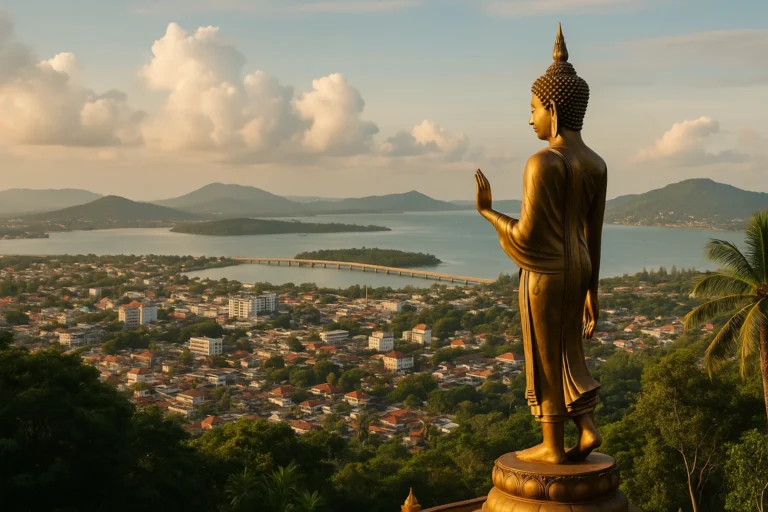
The peninsula setting is part of what makes Songkhla so visually distinctive. With water on both sides — the Gulf of Thailand to the east, Songkhla Lake stretching out to the west — the city has a geographic drama that influences everything from the light to the breeze to the kinds of seafood that end up on your plate. Walking from one coast to the other takes less time than you’d expect, and doing it at different points in the day gives you two completely different atmospheres.
Eating Your Way Through Southern Thailand’s Most Underrated Food Scene
Food is where this region really earns its place on any serious traveler’s list. Southern Thai cuisine is already a world unto itself, and the Hat Yai and Songkhla area sits at a cultural crossroads that makes the food even more interesting than you might expect.
The morning markets are the best place to start. Arrive early — and early here means before eight — and you’ll find stalls doing a brisk trade in dishes that locals eat for breakfast, lunch, and sometimes dinner. The variety is striking. You’ll find khao yam, a southern rice salad dressed with herbs and toasted coconut, sitting alongside Chinese-style porridge and Malay-influenced curries that carry a depth of spice you won’t find further north.
Hat Yai also has a reputation for its fried chicken — a local style that’s crispier and more intensely seasoned than the versions you’ll find elsewhere in Thailand. It’s the kind of thing that becomes a craving long after you’ve left. Street-side vendors serve it with sticky rice, and the combination is one of those simple, perfect meals that you’ll remember more vividly than expensive restaurant dinners.
👉 Read also: Hidden Gems in Southeast Asia: Vung Tau, Hat Yai & Thailand's Underrated South
In Songkhla, the seafood naturally takes center stage. The lake and the sea between them provide an extraordinary variety of fresh catch, and the local restaurants — particularly the smaller, family-run spots in and around the old town — know exactly what to do with it. Grilled fish, shellfish cooked in aromatic broths, seafood stir-fries with southern spice blends: this is coastal Thai cooking at its most honest.
Getting Here and Moving Around: The Malaysia Connection
One of Hat Yai’s most practical qualities is its connectivity. As a major transit point for land travel between Thailand and Malaysia, it’s genuinely easy to reach from both directions. Buses and trains connect Hat Yai to the Malaysian border crossings, and from there you can continue toward Penang, Kuala Lumpur, or other destinations across the border.
This makes Hat Yai an ideal pivot point for a broader Southeast Asian journey. Instead of flying over this region entirely, consider building it into your route as a meaningful stop rather than a rushed transit. Arrive from Malaysia, spend two or three days exploring Hat Yai and making the short trip out to Songkhla, then continue north toward Bangkok or the Gulf islands.
Within the region, getting between Hat Yai and Songkhla is straightforward. Shared taxis and local transport make the roughly 30-kilometre journey regularly throughout the day, and the cost is low enough that you can make the trip multiple times without it affecting your budget. If you want more flexibility, renting a motorbike gives you the freedom to stop along the way and explore at your own pace — though it’s worth getting comfortable with Thai road conditions before committing to that option.
Hat Yai itself is navigable on foot in the central areas, and songthaews — the covered pickup trucks that serve as shared taxis — cover the wider city at reasonable prices. For anyone used to navigating Southeast Asian cities, the transport here feels familiar and manageable. For first-time travelers to the region, it’s a gentle introduction to the rhythm of getting around independently.
How Long Should You Actually Stay?
The honest answer is: longer than you think. Most travelers who pass through Hat Yai give it a single night. Experienced travelers who’ve spent time in the region — including long-term nomads like Claudia Schmidt, who has spent over a decade traveling the world independently — tend to suggest that two to three days in the area is the minimum to actually feel the place rather than just passing through it.
A rough framework that works well: spend your first day settling into Hat Yai, walking the markets, eating without a plan, and letting the city’s energy wash over you. Use your second day for Songkhla — leave early enough to catch the old town in the morning light, walk the peninsula, eat lunch somewhere by the water. On a third day, go deeper into whichever of the two cities resonated more with you. Find the neighborhood you didn’t explore. Go back to the stall you liked. Talk to people.
That third day is often where the real memories get made. It’s the day you stop being a visitor moving through a checklist and start being someone who actually knows a small corner of a place.
Practical Notes Before You Go
- Best time to visit: The region has a distinct wet season, and the east coast of the peninsula (including Songkhla) can experience heavy rainfall between October and January. The drier months generally offer more comfortable conditions for exploring on foot.
- Budget: This is one of the more affordable corners of Thailand for travelers. Accommodation, food, and transport all come in at prices that stretch a budget comfortably.
- Language: English is spoken in tourist-facing businesses, but less widely than in Bangkok or the major resort islands. Learning a few basic Thai phrases goes a long way and is always appreciated.
- Respect local culture: The region’s Muslim communities observe practices and dress codes that travelers should be mindful of, particularly when visiting mosques or more conservative neighborhoods. Dressing modestly and being observant of local customs shows respect and opens doors.
- Cash: ATMs are available throughout Hat Yai, but smaller stalls and local restaurants in Songkhla may be cash-only. Carry enough to cover a day’s spending without relying on finding a machine.
For a broader look at traveling off the standard Thai tourist trail, Indie Traveller’s Hat Yai and Songkhla guide offers a well-researched starting point from someone who’s spent serious time in the region.
Southern Thailand beyond the guidebook is exactly that — a place that rewards the traveler willing to slow down, look closer, and resist the pull of the obvious. Hat Yai and Songkhla won’t dazzle you with Instagram-ready infinity pools or perfectly curated experiences. What they offer is something harder to find and longer-lasting: the feeling of discovering a place on your own terms, in its own rhythm, before the rest of the world catches up.
This article was produced with AI assistance and reviewed editorially.


Central Asia’s Silk Road Cities: Samarkand, Bukhara & Almaty for First-Time Visitors

Bali & Lombok Itineraries: Island-Hopping for Young Travelers Who Want More Than Beaches


