
Asia
Chiang Mai After 12 Visits: A Traveler’s Deep Dive Into Thailand’s Most Beloved City
Discover what makes Chiang Mai special beyond standard recommendations. Explore local neighborhoods, temples, food scenes, and why travelers keep returning to Thailand’s

Why Chiang Mai Keeps Pulling Travelers Back
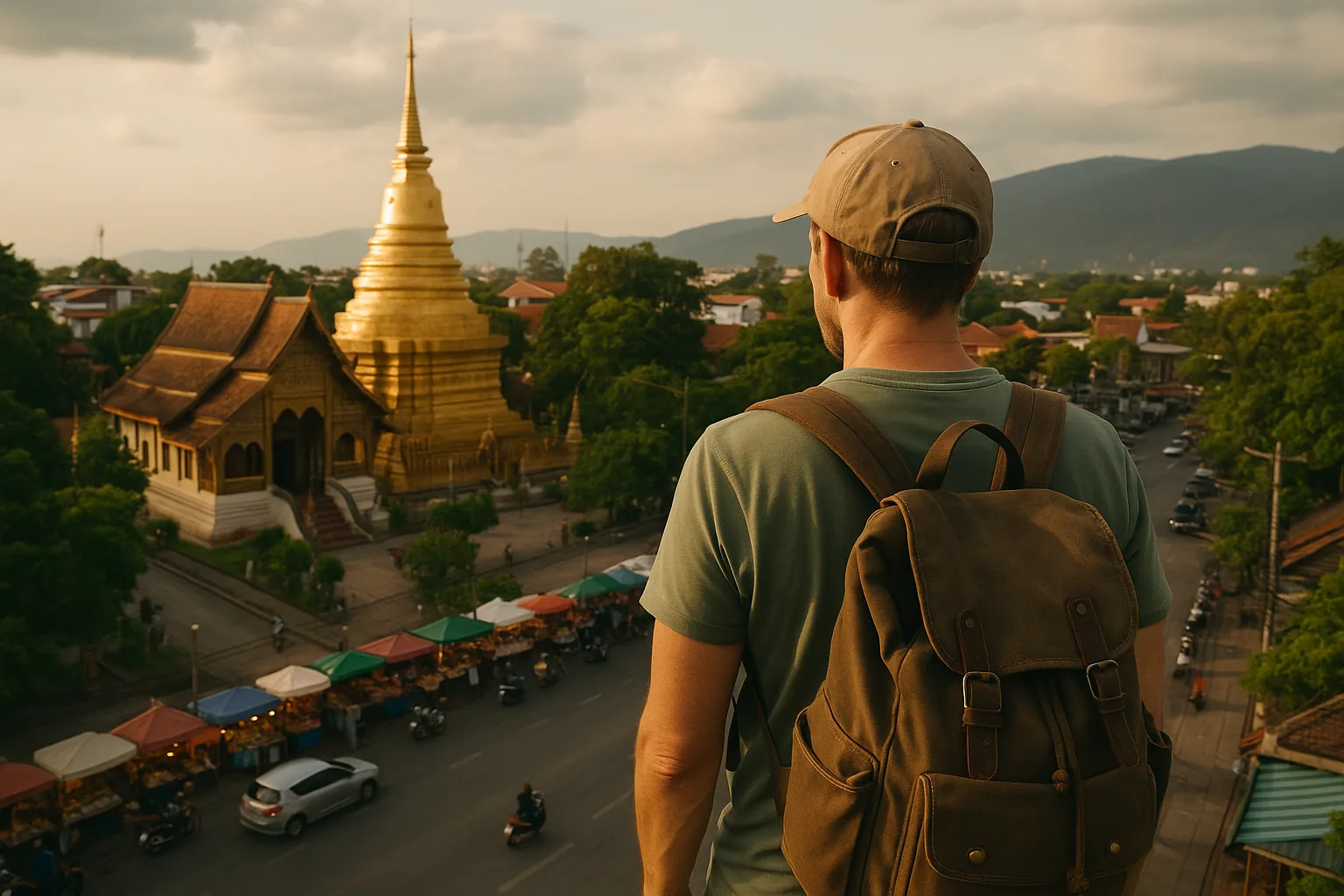
There are cities you visit once and check off the list. Then there are cities that get under your skin. Chiang Mai is firmly in the second category — and if you’re putting together a Chiang Mai travel guide for your first visit, know this: it probably won’t be your last. Considered the spiritual capital of Thailand, this northern city sits at the crossroads of ancient history, mountain wilderness, and one of the most vibrant food scenes in Southeast Asia. It’s the kind of place where you arrive with a rough itinerary and leave wondering how you’re going to come back sooner.
After Bangkok and the southern islands, Chiang Mai is the most popular destination for travelers exploring Thailand. That popularity is well-earned — but it’s also a little misleading. Most first-timers scratch the surface. The city rewards curiosity. The more time you spend here, the more it reveals: quieter neighborhoods, local markets that don’t appear in any app, temples you’ll stumble into by accident, and a pace of life that makes it genuinely hard to leave.
This guide goes deeper than the highlights. It covers what makes Chiang Mai special, how to move through the city like someone who’s been here before, and why travelers who think they know this city often discover they’ve only just started.
The Soul of the City: Understanding What Makes Chiang Mai Different
Chiang Mai was the favorite city of King Bhumibol Adulyadej, who ruled Thailand until his passing in 2016. That’s not just a historical footnote — it says something real about the city’s character. There’s a dignity and warmth to Chiang Mai that you feel from the first morning you spend wandering its streets. It doesn’t perform for tourists. It simply exists, confidently, with centuries of culture layered into every corner.
Unlike Bangkok’s relentless energy, Chiang Mai breathes. The mountains surrounding the city give it a different atmosphere — cooler air, a greener landscape, and a sense of being somewhere that exists slightly apart from the rest of the world. The Lanna Kingdom, which ruled this region for centuries before unification with Siam, left behind an architectural and cultural identity that’s still visible everywhere: in temple designs, in local dialects, in the food, and in the craftsmanship you’ll find in markets and workshops across the city.
Understanding that Chiang Mai has its own cultural identity — distinct from central Thailand — changes how you experience it. You’re not just visiting “Thailand.” You’re visiting a place with its own history, its own aesthetic, and its own way of doing things. That’s worth slowing down for.
The Old City: Where the History Lives
The Old City is the natural starting point for any Chiang Mai travel guide, and for good reason. Enclosed by a historic wall and a moat, this square-shaped district is the ancient heart of the city. Inside, you’ll find temples, guesthouses, coffee shops, restaurants, and the kind of winding lanes that reward aimless exploration.
Wat Phra Singh is one of the most significant temples in the Old City — and in all of northern Thailand. Its intricate Lanna-style architecture, gilded details, and serene courtyards make it a genuinely moving place to visit, not just a photo opportunity. Arrive early in the morning, before the day heats up, and you might find monks going about their routines in near silence. That kind of moment is why people keep coming back.
The Old City is also home to the Sunday Night Market, one of the most atmospheric markets in the country. The streets fill with local artisans, food vendors, and musicians, and the whole neighborhood transforms into something that feels more like a community celebration than a tourist attraction. Even if you’ve been to night markets elsewhere in Thailand, this one has a distinct character. Buy something handmade. Eat something you can’t identify. Talk to the person selling it.
Beyond the main temples and the market, the Old City is full of smaller discoveries. Tiny shrines tucked between guesthouses. A century-old teak building converted into a café. A wall mural that tells a story you’ll want to look up later. The best way to explore it is simply to walk — no map, no agenda, just curiosity.
👉 Read also: Chiang Mai After 12 Visits: What a Repeat Traveler Knows That First-Timers Miss
Beyond the Old City: Neighborhoods Worth Exploring
The Old City is where most travelers spend their time. But Chiang Mai’s character extends well beyond the moat, and the neighborhoods surrounding it are where the city really comes alive on a day-to-day basis.
Nimman (Nimmanhaemin Road)
Nimman is Chiang Mai’s creative quarter — a neighborhood of independent coffee shops, design studios, art galleries, and restaurants that blend Thai and international influences. It’s where a lot of the city’s younger, creative community gathers, and the energy reflects that. You’ll find everything from specialty espresso bars to plant-based Thai restaurants to concept stores selling locally designed clothing. It’s a great area to base yourself if you want easy access to both the Old City and the more modern parts of town.
Riverside and the Ping River Area
The area along the Ping River has a quieter, more relaxed feel than the Old City. Here you’ll find traditional wooden shophouses alongside contemporary restaurants and bars, with views of the water that make for a genuinely peaceful afternoon. The Saturday Night Market (different from the Sunday market in the Old City) runs along the river and has a local, community feel that’s worth experiencing. This neighborhood is also home to some of the city’s best independent restaurants — the kind of places that don’t advertise much but are packed with locals every evening.
Tha Phae Gate Area
Tha Phae Gate sits on the eastern wall of the Old City and serves as one of the main entry points into the historic center. The area around it is lively, with street food stalls, cafés, and the kind of foot traffic that makes people-watching genuinely entertaining. It’s also a good orientation point — once you know where Tha Phae Gate is, the rest of the city starts to make sense geographically.
Food in Chiang Mai: Eat Like You Mean It
If you do nothing else in Chiang Mai, eat well. The food here is some of the best in Thailand — and that’s saying something. Northern Thai cuisine is distinct from what you’ll find in Bangkok or on the islands. It’s earthier, less sweet, often more complex, and deeply tied to the region’s agricultural traditions and neighboring influences from Myanmar and Laos.
Khao Soi is the dish you need to understand before you arrive. It’s a rich, slightly spicy coconut curry broth served over egg noodles, topped with crispy fried noodles, and usually accompanied by pickled mustard greens, shallots, and lime. Every restaurant has its own version. Trying several and forming a strong opinion about which is best is a completely valid way to spend a few days.
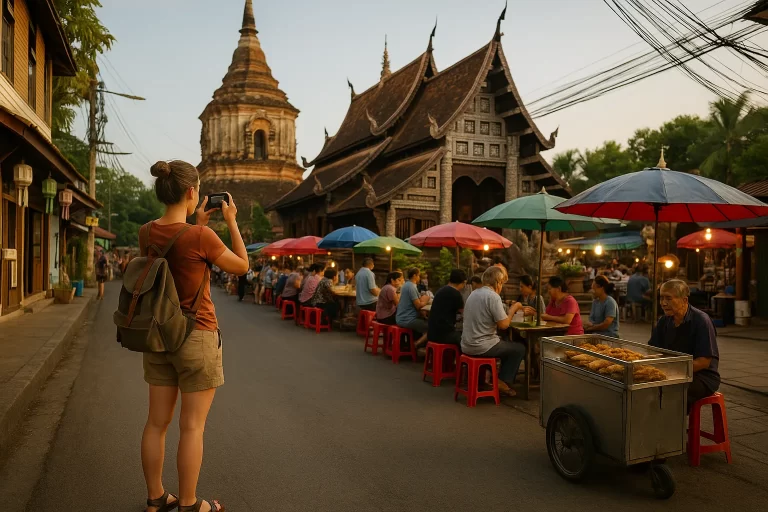
Beyond Khao Soi, look for Sai Oua (northern Thai sausage seasoned with lemongrass and galangal), Nam Prik Noom (a roasted green chili dip served with vegetables and pork rinds), and Larb Moo (a minced pork salad with herbs and toasted rice powder). These are dishes with real depth — flavors that are unfamiliar at first and then suddenly essential.
The best places to eat aren’t always the most obvious ones. The markets — particularly the morning markets that locals use for daily shopping — are full of ready-to-eat food at prices that make restaurant dining feel expensive by comparison. Wandering through a morning market with no particular destination is one of the great pleasures of being in Chiang Mai.
Thai cooking classes are also widely available and genuinely worth doing, even if you’ve done one elsewhere. The emphasis on northern Thai dishes and local ingredients makes the experience specific to this region rather than generic. You’ll learn techniques you’ll actually use, and you’ll eat everything you make. For practical planning, resources like Indie Traveller’s Chiang Mai guide cover the food scene in useful detail.
Getting Outside the City: Mountains, Jungle, and Day Trips
Chiang Mai’s location in the mountains of northern Thailand makes it one of the best bases for outdoor adventure in the country. The city itself is surrounded by forested hills, and within a short distance you can access trekking routes, waterfalls, hot springs, and villages that feel genuinely remote.
👉 Read also: Chiang Mai Travel Guide: 12 Visits Later, Here's What You Actually Need to Know (2026)
Doi Inthanon National Park is the most significant natural destination near the city — home to Thailand’s highest peak and a landscape of cloud forest, waterfalls, and incredible birdlife. A day trip here gives you a completely different perspective on the region. The higher elevations are noticeably cooler, and on clear days the views are the kind that stay with you.
Trekking in the hills north of the city is a popular activity, and for good reason. Multi-day treks that pass through hill tribe villages and remote forest give you a sense of the landscape that no day trip can replicate. If you’re considering this, take time to research operators carefully — choose companies that operate ethically and prioritize the wellbeing of the communities you’ll be visiting. Travel Age West’s Chiang Mai guide offers useful context on responsible tourism in the region.
Elephant sanctuaries are another major draw. Chiang Mai has become a focal point for ethical elephant tourism in Southeast Asia — there are sanctuaries where you can observe and interact with elephants in a way that prioritizes the animals’ welfare over entertainment. Do your research before booking. The distinction between ethical and exploitative operations matters enormously, and the right experience is genuinely moving.
Practical Things Worth Knowing Before You Go
When to Visit
The cool season, roughly from November through February, is the most comfortable time to visit Chiang Mai. Temperatures are pleasant, the air is clear, and the mountains are at their most beautiful. The hot season (March to May) brings intense heat and, unfortunately, smoke from agricultural burning in the region — air quality can be a real issue during this period. The rainy season (June to October) brings lush green landscapes and fewer crowds, though some outdoor activities become more difficult.
Getting Around
The Old City is compact enough to walk comfortably. For longer distances, songthaews (red shared pickup trucks) are the classic local option — affordable, frequent, and a legitimate part of the city’s transport culture. Tuk-tuks are available but tend to be priced for tourists. Renting a scooter gives you real freedom, particularly for exploring the surrounding countryside, though the traffic in the city center can be chaotic. Ride-hailing apps also work well here.
Respect the Culture
Chiang Mai has more temples per square kilometer than almost anywhere in Thailand. When visiting, dress appropriately — shoulders and knees covered is the standard expectation. Remove your shoes before entering temple buildings. Be quiet and respectful inside. These aren’t just tourist rules; they’re places of active worship, and the people praying there deserve that consideration.
Budget and Money
Chiang Mai is genuinely affordable, even by Southeast Asian standards. Street food meals cost very little. Guesthouses in the Old City cover a wide range of budgets. The city has become more expensive over the years as its popularity has grown, but it remains excellent value — especially if you eat where locals eat and avoid the tourist-oriented restaurants around the main backpacker areas.
Why Chiang Mai Stays With You
There’s a version of Chiang Mai travel guide content that covers the temples, mentions the night market, recommends a cooking class, and calls it done. That version isn’t wrong — those things are genuinely worth doing. But it misses the deeper quality that makes this city so hard to leave behind.
Chiang Mai works on you slowly. The first visit, you’re taking in the obvious things. By the second or third, you start to find your own rhythms — a particular coffee shop where you like to spend the morning, a market stall you keep returning to, a neighborhood that feels like yours. The city has enough layers that you can keep going deeper for years without reaching the bottom.
It’s the spiritual capital of Thailand for a reason. There’s something in the combination of ancient temples, mountain air, extraordinary food, and the warmth of the people that creates an atmosphere unlike anywhere else in the country. Whether you’re here for a week or a month, Chiang Mai has a way of making you feel like you’ve arrived somewhere that matters — and that’s the kind of travel experience worth chasing.
Start planning. Come curious. And leave yourself room to come back.
This article was produced with AI assistance and reviewed editorially.


Southeast Asia on a Shoestring: Budget Travel Guide to Border Crossings & Regional Itineraries

London Beyond the Eye: 8 Walks from Landmarks to Hidden Neighborhoods (2026)


