
Spain
Barcelona Like a Local: 12 Cafes Where Locals Actually Spend Their Time (2026 Guide)
Discover where locals actually spend their time in Barcelona’s best cafes. Explore Gràcia, Sant Antoni, and Eixample neighborhoods with insider tips on coffee culture.

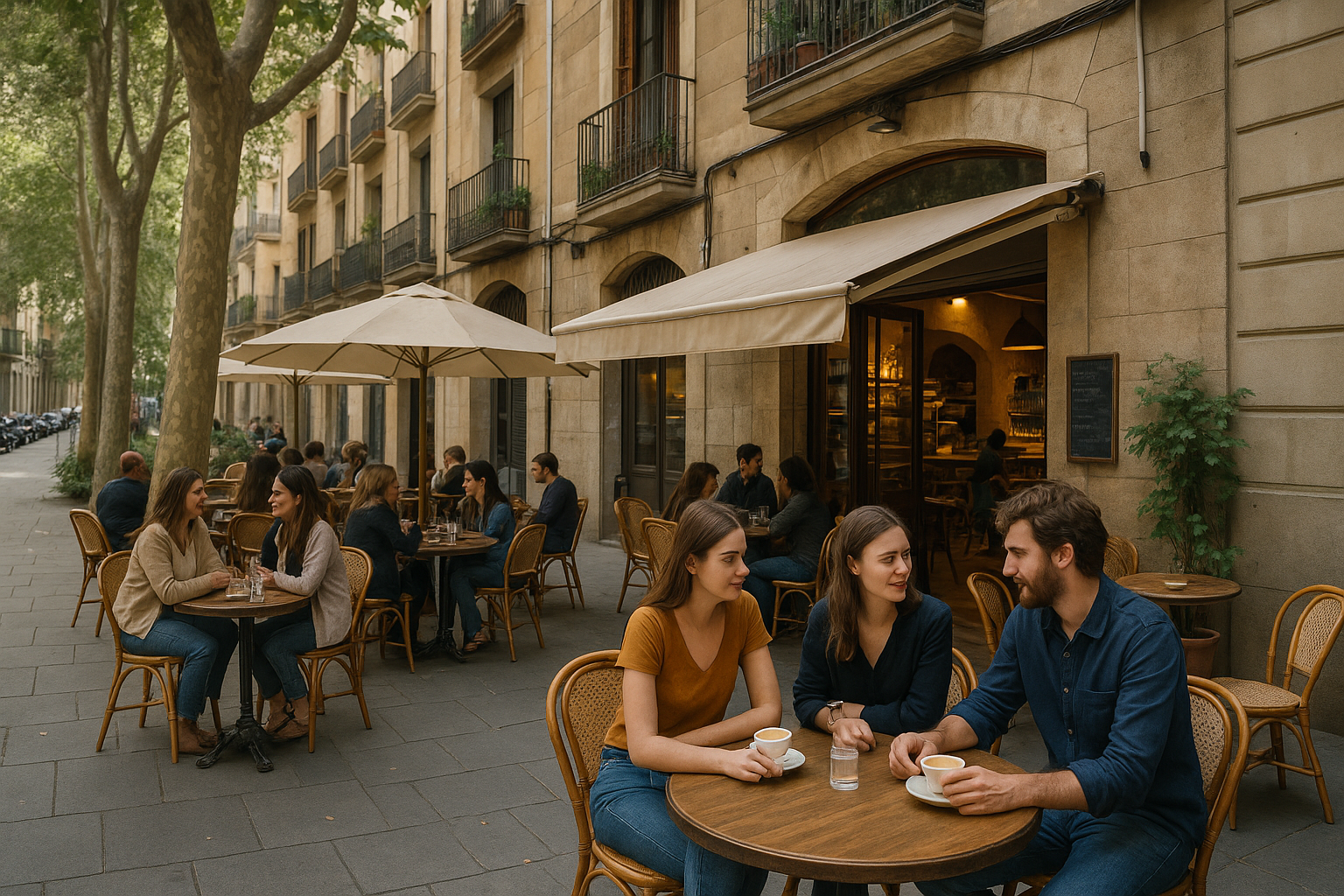
Why Barcelona’s Cafe Scene Is Worth Your Full Attention
If you want to understand a city, don’t start with its monuments. Start with its cafes. In Barcelona, that advice carries real weight. The local cafes Barcelona residents actually love aren’t always the ones you’ll find on the first page of a tourist search. They’re tucked into neighborhood corners, hidden inside bookstores, or spilling out onto quiet squares where the only rush is deciding whether to order a second coffee. This guide is here to help you find them — and more importantly, to help you experience them the way locals do.
Barcelona moves at its own pace. The coffee culture here isn’t about grabbing a cup and running. It’s a ritual. A reason to sit down, slow your thoughts, and actually look at the city around you. Once you understand that, everything changes — the way you plan your mornings, the neighborhoods you wander through, and the memories you bring home.
Understanding Barcelona’s Coffee Culture Before You Go
Before we get into specific spots, it helps to understand what makes Barcelona’s cafe scene different. This isn’t just about great espresso, though you’ll find plenty of that. It’s about a culture that treats coffee as a social anchor — a reason to meet, to linger, and to connect.
Barcelona has evolved significantly as a coffee destination. Alongside traditional neighborhood cafes serving short, strong espressos, the city now has a thriving specialty coffee scene, complete with single-origin beans, careful brewing methods, and even matcha bars woven into the mix. You’ll find both worlds here, and they’re worth exploring on their own terms.
The rhythm of a Barcelona cafe day tends to follow a pattern locals know well. Mornings are quieter, especially on weekdays before mid-morning. That’s when you’ll find residents at the bar, ordering a cortado or a café amb llet — coffee with warm milk, the Catalan version of a café con leche — alongside a piece of toast with tomato and olive oil. By late morning, the pace picks up. By midday, some cafes transition into something closer to a vermouth bar, with locals gathering for a pre-lunch drink. Understanding this rhythm helps you time your visits to feel like a local rather than a tourist passing through.
The Neighborhoods You Need to Know
Gràcia: The Village Within the City
Gràcia is the neighborhood that makes you forget you’re in one of Europe’s biggest cities. Its narrow streets, independent shops, and sun-drenched plazas create a pace that’s genuinely its own. The people here are proud of their neighborhood’s identity, and the cafes reflect that — independent, characterful, and deeply local.
One verified standout is Jaç Hi-Fi Café, a coffee shop in Gràcia that combines quality coffee with music in a way that feels curated rather than random. It’s the kind of place where the playlist matters as much as the espresso, and where you might end up staying far longer than you planned. That’s not a complaint — that’s the point.
Gràcia is also a great neighborhood to simply wander. Settle into a cafe, watch the street life unfold, and let the morning take its time. The plazas — Plaça del Sol and Plaça de la Vila de Gràcia among them — draw locals throughout the day, and the cafes surrounding them are natural gathering points. Arrive early on a weekday morning and you’ll have your pick of seats. Arrive on a sunny weekend afternoon and you’ll be sharing the space with half the neighborhood, which is honestly its own kind of experience.
Sant Antoni: The Neighborhood That Reinvented Itself
Sant Antoni sits at the edge of Eixample and has become one of the most talked-about neighborhoods in Barcelona over the past several years. The renovation of the Mercat de Sant Antoni — a stunning iron market building — brought new energy to the area, and a wave of independent cafes, bookshops, and small restaurants followed.
This is a great neighborhood to explore if you’re interested in seeing how Barcelona blends old and new. You’ll find traditional bars that have been serving vermouth on Sunday mornings for decades sitting alongside specialty coffee shops with minimalist interiors and carefully sourced beans. Neither is more authentic than the other — both are genuinely Barcelona.
Sant Antoni tends to draw a younger, creative crowd, which means the cafe culture here leans toward the relaxed and the curious. People come with laptops, with books, with friends. The energy is calm but alive. It’s a good place to spend a slow morning before heading to the market to pick up something for lunch.
Eixample: The Grid That Hides Its Best Spots
Eixample is Barcelona’s famous grid neighborhood — wide boulevards, modernist architecture, and a density of life that can feel overwhelming at first. But look past the main avenues and you’ll find quieter streets lined with genuinely excellent cafes.
La Papa is one verified coffee shop in Eixample worth seeking out. It represents the kind of neighborhood spot that locals return to not because it’s trendy but because it’s consistently good — good coffee, good atmosphere, good reasons to stay. That consistency is rarer than it sounds, and in a neighborhood as large and varied as Eixample, it’s worth following the locals to find it.
Eixample is also where you’ll notice how Barcelona’s cafe culture shifts throughout the day. A bar that serves espresso in the morning might pull out the vermouth bottles by noon, drawing a different crowd entirely. Embracing that fluidity — letting the day guide you rather than sticking rigidly to a plan — is one of the best ways to experience the neighborhood authentically.
Raval: Culture, Creativity, and Coffee in a Bookstore
Raval is one of Barcelona’s most layered neighborhoods. It’s dense, diverse, and full of creative energy. It’s also home to La Central Café, a coffee shop located inside a bookstore — which tells you almost everything you need to know about the neighborhood’s spirit.
Spending a morning at La Central means browsing shelves, settling into a corner with a coffee, and letting the hours pass in the best possible way. It’s the kind of place that reminds you why travel is about more than sightseeing. A good bookstore cafe doesn’t just serve coffee — it creates a space where ideas feel possible. If that sounds appealing, Raval is worth a full morning of your time.
Poblenou: Barcelona’s Creative Quarter
Poblenou used to be Barcelona’s industrial district. Now it’s one of the city’s most interesting neighborhoods — a mix of converted warehouses, design studios, street art, and some genuinely excellent coffee shops. Raw Studio is a verified example of what Poblenou does well: a specialty coffee space that feels rooted in the neighborhood’s creative identity rather than imported from somewhere else.
Getting to Poblenou takes a bit more effort than the central neighborhoods, but that’s part of why it still feels local. You’re less likely to be surrounded by tour groups here. You’re more likely to sit next to someone who works in the area and actually knows where to eat lunch. That’s the kind of local knowledge that’s worth its weight in gold.
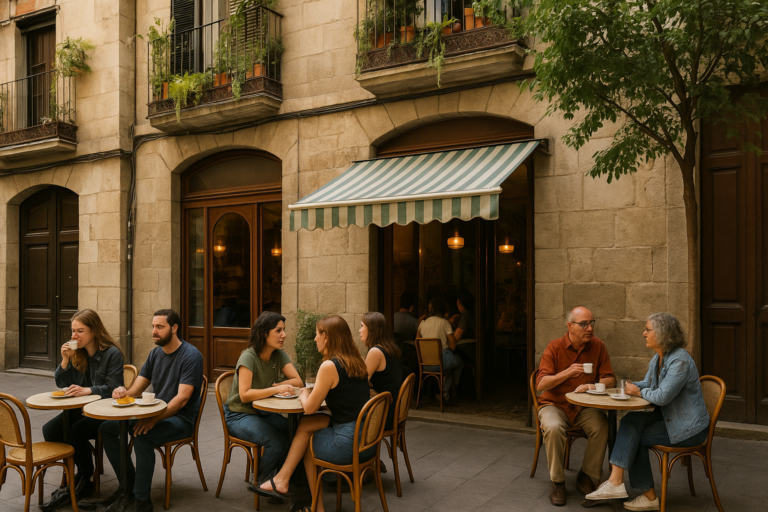
What to Order: Navigating the Coffee Menu
Walking into a Barcelona cafe and ordering a “coffee” will get you an espresso — which is exactly right, but worth knowing in advance. Here’s a quick breakdown of what you’ll commonly find on the menu:
- Sol·lo / Espresso: A short, strong shot. The default. Order this if you want to drink like a local at the bar.
- Cortado: Espresso with a small amount of warm milk. The sweet spot between intensity and smoothness.
- Café amb llet: Coffee with a generous amount of warm milk. The Catalan version of a café con leche. A classic morning order.
- Flat white or filter coffee: Increasingly common in specialty cafes. If you prefer a longer, more nuanced drink, look for cafes that advertise specialty or third-wave coffee.
- Matcha: Yes, really. Barcelona’s cafe scene has embraced matcha with genuine enthusiasm, and several specialty spots serve it well.
Alongside your coffee, look out for pastries — particularly croissants de mantequilla (butter croissants), ensaïmades (a spiral pastry originally from Mallorca but beloved across Catalonia), and pa amb tomàquet if the cafe serves savory options. Toast rubbed with ripe tomato and drizzled with olive oil is one of those simple things that tastes far better than it sounds.
The Vermouth Ritual: A Barcelona Tradition Worth Joining
No guide to Barcelona’s cafe and bar culture is complete without mentioning vermouth. The vermut tradition — gathering for a pre-lunch glass of vermouth, usually between noon and two in the afternoon — is one of those local rituals that feels distinctly Spanish and specifically Barcelonan at the same time.
Many neighborhood bars and cafes participate in this tradition, serving vermouth on tap or by the bottle alongside small snacks — olives, chips, anchovies, whatever the house offers. It’s social, unhurried, and deeply satisfying. If you happen to be in a neighborhood like Gràcia or Sant Antoni on a Sunday morning, following the locals to a vermouth bar around midday is one of the most authentic things you can do in the city.
You don’t need a specific recommendation to find a good vermouth spot. Look for a bar with locals standing at the counter, a bottle of Yzaguirre or Martini on the shelf, and a relaxed atmosphere. That’s enough.
Practical Tips for Experiencing Barcelona’s Cafes Like a Local
Timing Your Visits
Barcelona’s most tourist-heavy hours tend to fall between mid-morning and mid-afternoon, particularly on weekends. If you want to experience a cafe at its most local, aim for weekday mornings — before ten in the morning is ideal in most neighborhoods. You’ll find residents stopping in before work, the pace is calmer, and you’re far more likely to get a seat without waiting.
Late afternoon — around five or six — is another good window. The post-lunch tourist wave has usually subsided, and locals start drifting back in for a coffee or a cold drink before the evening begins.
Standing at the Bar vs. Sitting at a Table
In traditional Barcelona cafes, standing at the bar is not just acceptable — it’s often cheaper and more social. Many locals drink their morning coffee standing, exchange a few words with the barista, and move on. If you want to linger, grab a table. If you want to feel the rhythm of the morning, stand at the bar.
What to Expect to Spend
Barcelona is generally more affordable than cities like Paris or London, but prices vary significantly between a traditional neighborhood bar and a specialty coffee shop. As a general rule, an espresso at a traditional bar will cost less than one at a specialty cafe. A coffee and a pastry together is a very reasonable morning expense in most neighborhoods. Avoid places with menus written in multiple languages and photographs of every dish — those tend to cater to tourists and charge accordingly.
Learning a Few Words in Catalan
Barcelona is a bilingual city — Catalan and Spanish are both spoken and both official. Greeting someone with bon dia (good morning in Catalan) or saying gràcies (thank you) goes a long way. Locals notice and appreciate it. You don’t need to be fluent — just curious and respectful, which you already are if you’re reading a guide like this.
Going Deeper: Resources Worth Exploring
If you want to dig further into Barcelona’s coffee scene before your trip, there are some genuinely useful resources out there. The Barcelona Food Experience blog covers the city’s cafe landscape with real depth, including specialty spots and neighborhood context. For a more visual introduction to local cafes and the neighborhoods around them, this YouTube guide to Barcelona coffee shops is worth watching before you go — it captures the atmosphere in a way that words alone can’t fully convey.
Making the Most of Every Cup
Here’s the thing about exploring local cafes in Barcelona: the best experiences rarely come from following a list perfectly. They come from wandering into a neighborhood you hadn’t planned to visit, spotting a cafe with steamed-up windows and locals crowded around the bar, and deciding to go in. They come from ordering something you can’t quite pronounce and having the person behind the counter help you get it right. They come from sitting down with a coffee and no particular plan, watching the city move around you.
That’s what Barcelona’s cafe culture is really about. Not the coffee itself — though it’s often excellent — but the permission it gives you to slow down, to be present, and to connect with a city on its own terms. Whether you’re spending a morning in Gràcia, an afternoon in Poblenou, or a lazy Sunday in Sant Antoni, the local cafes Barcelona residents love most are the ones where you feel like you belong — even if you’ve only just arrived.
So put the map away for a moment. Order something you’ve never tried before. Let the morning unfold. Barcelona will take care of the rest.
This article was produced with AI assistance and reviewed editorially.


Vietnam Uncovered: Beyond the Chaos, Into the Real Story

Beyond the Guidebook: What Hanoi Actually Feels Like


