
Tips & Tricks
Learning a Language While Traveling: From ‘Hello’ to Real Conversations
Discover how learning a language while traveling transforms your experience — from practical tips and the best apps to language exchange strategies that actually work on the road.

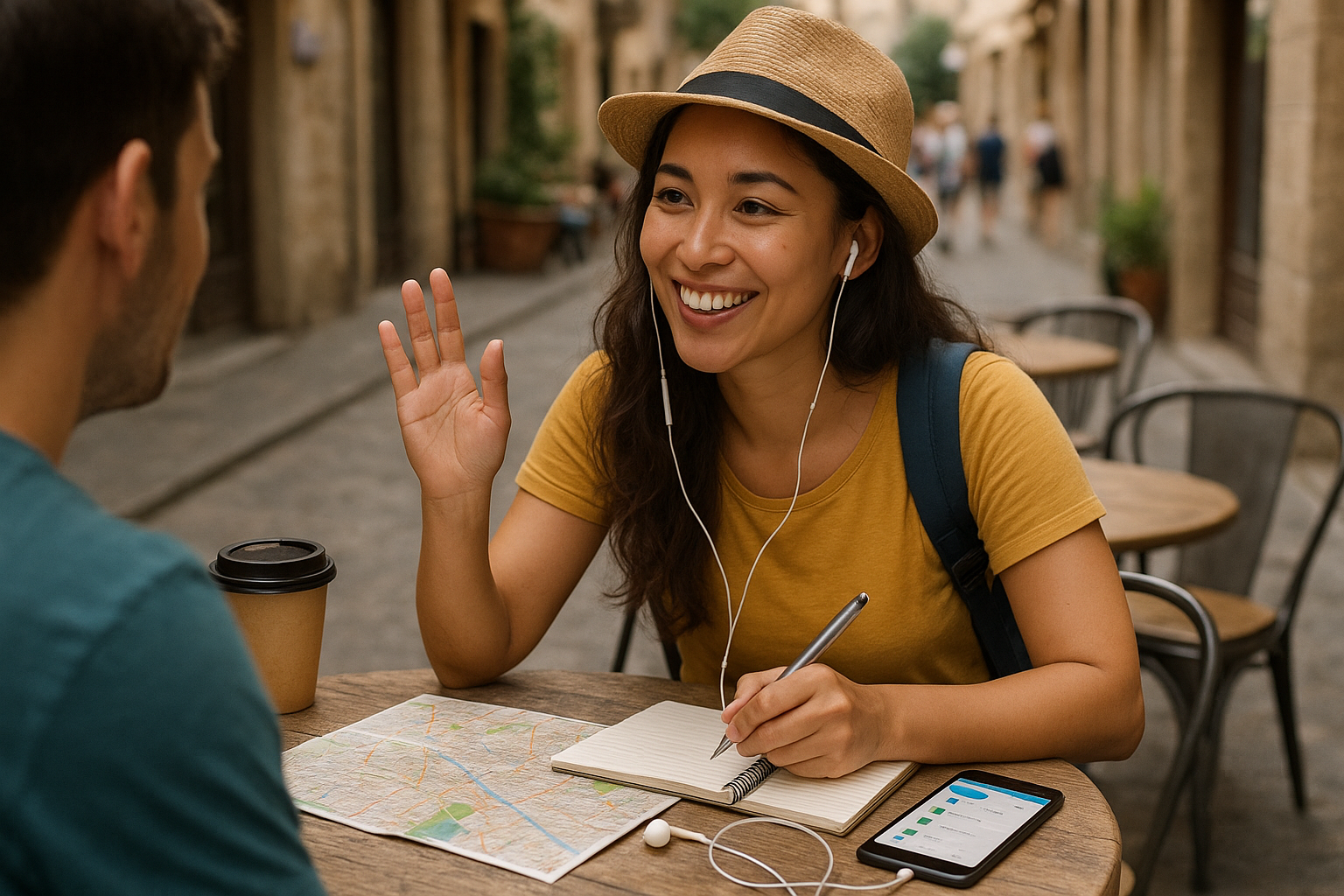
Learning a Language While Traveling: From ‘Hello’ to Real Conversations
Learning a language while traveling is one of the most rewarding things you can do on the road — and one of the most underrated. It’s not about becoming fluent overnight. It’s about opening doors that stay closed when you only speak tourist. Order food the way locals do. Ask for directions and actually understand the answer. Share a laugh with someone whose name you’ll remember long after the trip ends.
That kind of connection doesn’t come from a phrasebook. It comes from showing up, trying, and being willing to sound a little ridiculous along the way. And the good news? You don’t need months of prep or a language degree to make it happen. You just need curiosity and the confidence to start.
Why Travel Is the Best Classroom for Language Learning
Sitting in a classroom and drilling vocabulary has its place. But nothing compares to needing a word right now because your bus leaves in five minutes and you can’t figure out which platform. That urgency is exactly what makes travel such a powerful learning environment.
When you’re immersed in a language, your brain starts making connections faster. Every street sign, every overheard conversation, every menu becomes a lesson. You’re not studying in isolation — you’re learning with immediate, real-world feedback. According to research published in the journal System, learners in immersive environments develop stronger communicative competence because they’re forced to use language functionally, not just theoretically.
Travel also gives you something no classroom can manufacture: genuine motivation. You need the language to navigate daily life. That need is a powerful teacher.
How to Start Learning a Language Before You Land
The smartest thing you can do is arrive with a foundation. You don’t need to be conversational — you just need enough to get started.
- Learn survival phrases first. Greetings, numbers, “where is,” “how much,” “thank you,” and “sorry, I don’t understand.” These seven categories will carry you further than you’d expect.
- Use an app consistently for two to four weeks before your trip. Duolingo, Babbel, and Memrise all work well for building basic vocabulary. The key word is consistently — fifteen minutes a day beats two hours once a week every time.
- Listen to the language passively. Podcasts, music, YouTube videos. You’re not trying to understand everything. You’re training your ear to recognize sounds and rhythms.
- Download an offline dictionary. Google Translate works beautifully, but wifi isn’t always guaranteed. Having something offline can save you in a pinch.
Think of pre-travel preparation as building a scaffold. You’re not constructing the whole building yet — you’re just making sure you have something to hang new knowledge on when you arrive.
On the Ground: Practical Strategies for Learning a Language While Traveling
Once you’re there, the real learning begins. And the single most important thing you can do is talk to people — even when it’s uncomfortable.
Start Small and Build Momentum
Don’t wait until you’re “ready” to speak. You never will be. Start with the basics: greet your hostel receptionist in the local language, order your coffee without pointing at the menu, say thank you the right way. These tiny moments build confidence faster than any app.
Most locals genuinely appreciate the effort. You don’t need to be perfect. You just need to try.
Find a Language Exchange Partner
Language exchanges are one of the best-kept secrets of the traveling community. Apps like Tandem connect you with locals who want to practice your language while you practice theirs. It’s a fair trade, and it almost always turns into more than a language lesson — you end up with a local perspective on the city that no guidebook can offer.
👉 Read also: Making Friends While Traveling: How to Build Real Connections, Not Just Acquaintances
Hostels often organize these exchanges informally too. Ask at the front desk. You might be surprised how easy it is to set something up.
Embrace the Broken Conversations
Here’s something nobody tells you: the conversations where everything goes slightly wrong are often the most memorable. You mime something, they laugh, you both figure it out together. That moment of shared understanding — built without a common language — is something genuinely special.
Broken communication doesn’t mean failed communication. It means you’re pushing past your comfort zone, which is exactly where learning happens. The fear of making mistakes is the biggest barrier most travelers face. The solution is simple, if not always easy: make the mistakes anyway.
Turn Everyday Situations Into Lessons
You don’t need a formal study session to make progress. Every interaction is an opportunity.
- Read menus carefully and look up words you don’t recognize.
- Listen to how locals greet each other and mirror it.
- When someone teaches you a new word, write it down immediately.
- Watch local TV or listen to local radio in your accommodation.
- Take a local tour — guides are usually patient, articulate, and happy to explain things slowly.
The key is staying curious. Treat the language as part of the adventure, not an obstacle to it.
Immerse Yourself in Local Culture
Language and culture are inseparable. The more you engage with local life — markets, community events, neighborhood cafés — the more context you build for the words you’re learning. Context is everything. A word you hear while watching a street performer sticks in your memory far longer than one you read in a textbook.
Seek out experiences that put you in the middle of things. Cook a local dish with someone who doesn’t speak your language. Join a pickup football game in the park. Volunteer for a morning with a community project. These aren’t just great travel memories — they’re some of the most effective language lessons you’ll ever have.
The Best Apps and Tools for Learning a Language While Traveling
Language apps are genuinely useful — but only when you use them alongside real practice, not instead of it. Here’s a quick breakdown of what actually works on the road:
- Duolingo — Great for daily habit-building and beginner vocabulary. The bite-sized lessons fit easily into transit time.
- Babbel — More structured than Duolingo, with a stronger focus on practical conversation. Worth it if you’re serious about a specific language.
- Memrise — Excellent for vocabulary retention thanks to spaced repetition. Particularly good for learning scripts like Arabic, Japanese, or Korean.
- Tandem / HelloTalk — Connect directly with native speakers for real conversation practice. These are language exchange apps, not just study tools.
- Google Translate (offline mode) — Download the language pack before you go. Camera translation is a game-changer for menus and signs.
- Anki — A flashcard app built on spaced repetition. Steeper learning curve, but incredibly powerful for serious learners.
Use apps to reinforce what you’re learning in the field. Review new words in the evening. Revisit grammar you stumbled over during the day. Think of the app as your notebook, and the city as your classroom.
Which Languages Are Worth Learning for Travel?
Every language you pick up — even partially — is worth it. But if you’re wondering where to focus your energy, here’s a practical way to think about it.
For English speakers, Spanish and Portuguese open up enormous parts of the world with a relatively gentle learning curve. French unlocks West Africa and Southeast Asia alongside Europe. Mandarin and Arabic are more challenging but will earn you deep respect and open doors in some of the world’s most fascinating destinations.
👉 Read also: Finding Your People Abroad: How to Build Genuine Friendships While Traveling
The honest answer, though? Learn the language of wherever you’re going next. Even ten words of Thai, Swahili, or Georgian will change how locals see you — and how you experience the place. Effort is universally understood.
Common Mistakes Travelers Make When Learning a Language on the Road
Knowing what slows people down is just as useful as knowing what works. Here are the traps worth avoiding:
- Waiting until you’re “good enough” to speak. That moment never comes. Start on day one.
- Relying entirely on translation apps. They’re a great backup, not a replacement for real interaction. Lean on them too much and you’ll miss the actual learning.
- Only practicing with other travelers. Your fellow hostel guests are great company, but they won’t help your language skills. Seek out locals.
- Giving up after one awkward exchange. Awkward is part of the process. Every confident speaker you admire went through the same thing.
- Forgetting to review. New words fade fast without reinforcement. A five-minute review before bed makes a real difference.
How to Keep the Language Alive After You Leave
One of the real challenges of learning a language while traveling is that progress can fade once you’re back home and no longer immersed. The good news is that the connections you made on the road can keep the language alive.
Stay in touch with the people you met. Watch films in the language. Follow social media accounts from that country. Even ten minutes of exposure a day is enough to maintain what you built. And if you’re already planning your next trip — well, you’ve got the best motivation in the world to keep going.
The Real Reward
Learning a new language won’t happen in a week, and that’s not the point. The point is that every word you learn while traveling deepens your experience of a place. It shifts you from observer to participant. You stop being a tourist passing through and start becoming someone who actually connects with where they are.
That shift — from “hello” to a real conversation — is one of the best things travel can give you. And it starts the moment you decide to try.
Frequently Asked Questions
How much of a language do I need to learn before traveling?
You don’t need much — but a little goes a long way. Focus on greetings, numbers, basic questions, and polite phrases. Even twenty or thirty words can transform how locals respond to you and how confident you feel navigating a new place.
What’s the fastest way to learn a language while traveling?
Speak as much as possible, as early as possible. Combine daily app practice with real conversations — even short ones. Language exchanges, local tours, and simply ordering food in the local language all accelerate your progress far more than passive study alone.
Is it possible to learn a language in a short trip?
Fluency? No. But meaningful progress? Absolutely. A two-week trip can give you a solid foundation in survival phrases, a feel for the rhythm of the language, and enough confidence to keep learning when you get home. Think of it as the beginning of a longer journey, not a sprint to the finish line.
What if locals switch to English when I try to speak their language?
It happens, and it’s usually kindness, not rejection. Politely ask if you can keep practicing — most people are happy to slow down and help. Persistence is key. The more you try, the more opportunities you’ll find to actually use what you’re learning.
Which languages are easiest to pick up while traveling?
It depends on your native language. For English speakers, Spanish, Portuguese, Italian, and Dutch tend to be the most accessible. But “easiest” matters less than “most useful for where you’re going.” Even a few phrases in a tonal language like Mandarin or Thai will earn you genuine appreciation from locals.
Can I really learn a language just by traveling?
Immersion alone won’t do all the work — but it supercharges everything else. Travelers who combine a little structured study with lots of real conversation consistently make faster progress than those who study in isolation. The key is showing up, engaging, and not being afraid to get things wrong. Travel gives you the environment; you bring the effort.
This article was produced with AI assistance and reviewed editorially.


Sri Lanka by Backpack: The Route, Costs, and Unmissable Stops

Uzbekistan’s Silk Road Cities: Samarkand & Bukhara in 2026


