
United Kingdom
UK Coastal Escapes: Where to Stay in Salcombe, the Isles of Scilly & Cornwall
Discover authentic UK coastal holidays accommodation across Salcombe, the Isles of Scilly, and Cornwall. Find self-catering homes, hotels, and local stays with seasonal t

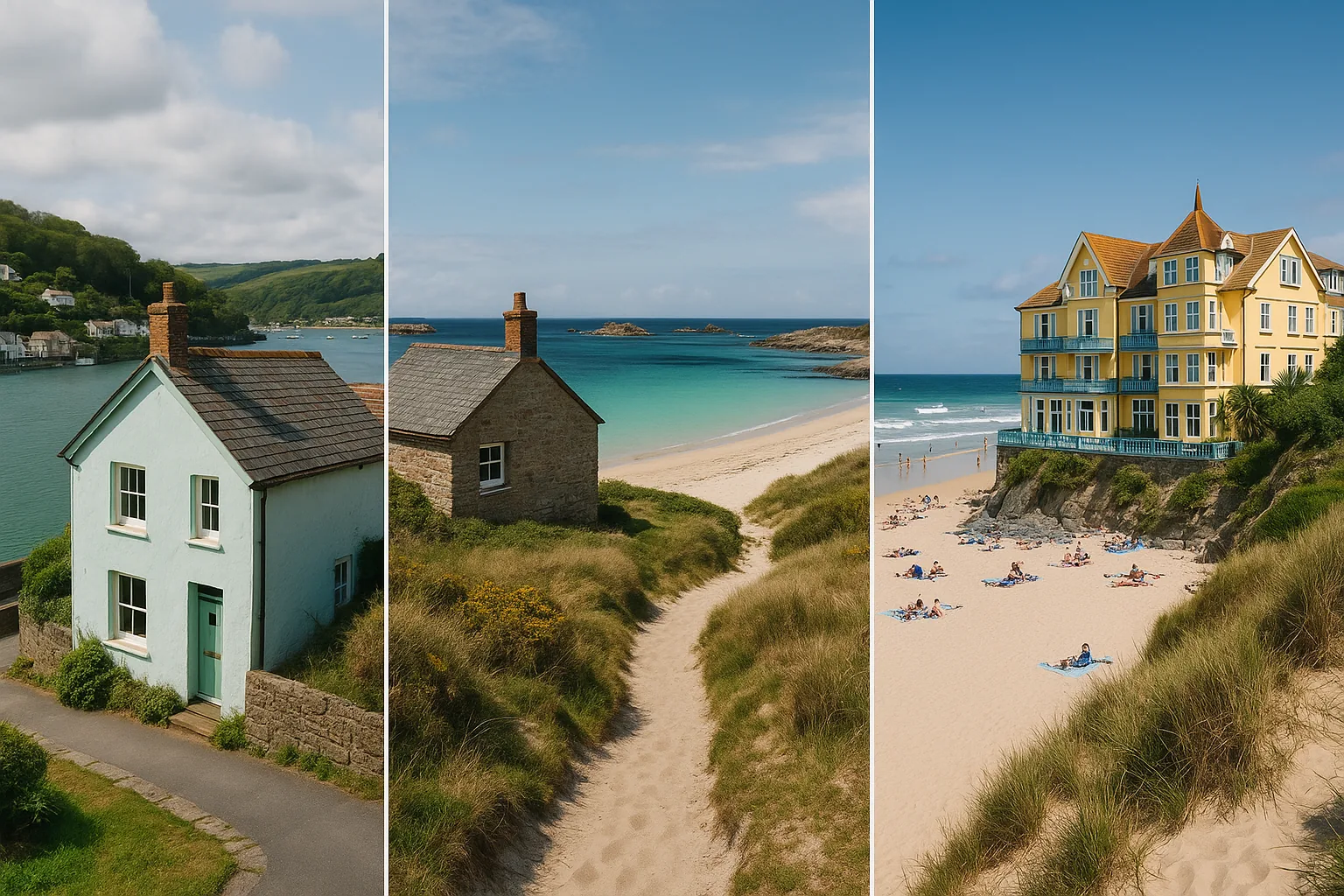
There’s something about the UK’s southwest coastline that gets under your skin. Maybe it’s the salt air hitting you as you step off the train, or the way the light changes over the water in the late afternoon. Whatever it is, planning your UK coastal holidays accommodation across Salcombe, the Isles of Scilly, and Cornwall isn’t just a logistical exercise — it’s the beginning of a story you’ll want to tell for years. These three destinations feel completely different from one another, and that’s exactly the point. One is a tucked-away Devon estuary town, one is a remote Atlantic archipelago, and one is a sprawling coastal county with enough variety to fill a dozen trips. Here’s how to navigate all three.
Salcombe: Devon’s Quieter Secret on the Estuary
Salcombe sits at the mouth of the Kingsbridge Estuary in the South Hams area of Devon, and it has a way of surprising people who expect a typical British seaside town. There are no arcades, no fish-and-chip strips stretching for miles. Instead, you get narrow streets climbing up from the water, colourful boats bobbing in the harbour, and a pace of life that genuinely slows you down.
For accommodation, Salcombe punches well above its size. Self-catering holiday homes are the most popular choice, and for good reason — they give you the freedom to cook local seafood, come and go on your own schedule, and feel like you actually live somewhere rather than just passing through. Options range from shepherd’s hut stays tucked into the hillside to modern apartments with full sea views. There are also luxury villas and eco-lodges in the area, many offering free WiFi and private parking — which matters more than you’d think when you’re lugging surfboards or hiking gear.
If you want something a little more structured, the South Sands Hotel is a well-regarded option with en-suite facilities and a beachside position that’s hard to argue with. It sits right at the southern end of the estuary, and waking up to that view is the kind of thing that makes you reconsider your entire life plan in the best possible way.
One detail worth knowing: the village of East Portlemouth, directly across the bay from Salcombe, offers holiday cottage stays that many visitors overlook entirely. You get the same estuary views, a quieter atmosphere, and a short ferry ride connects you to Salcombe’s shops and restaurants in minutes. If you’re the type who likes discovering a spot before everyone else does, East Portlemouth is worth exploring seriously.
Salcombe’s surrounding coastline is part of the South West Coast Path, so if you’re into hiking, you can walk directly from your accommodation into some genuinely dramatic cliff scenery. The estuary itself is popular for kayaking and paddleboarding, and the local sailing culture means you’ll find boat hire options without much effort. Come summer, the town fills up quickly — so if you’re planning a visit between June and August, booking your stay several months ahead is simply smart planning rather than overcaution.
The Isles of Scilly: When You Want to Really Get Away
The Isles of Scilly sit twenty-eight miles off the Cornish coast, and that distance is more than just geographic. The archipelago operates on its own rhythm. Phones work, but you’ll probably find yourself using yours less. The pace is unhurried in a way that feels earned rather than forced. And with over 35 beaches spread across the islands, you’ll genuinely run out of days before you run out of sand.
Getting there is part of the adventure. Regular flights connect the islands from Exeter, Newquay, and Land’s End, with some routes taking as little as 20 minutes — which makes the whole thing feel almost surreal. You’re sitting in a small plane, and before you’ve finished thinking about it, you’re descending over turquoise water that looks more Caribbean than British. For something even more memorable, helicopter flights from Penzance to Tresco are available, and landing on a traffic-free island by helicopter is one of those experiences that’s simply hard to top.
👉 Read also: Isles of Scilly & Cornwall: Remote UK Island & Coastal Escapes for Adventure Seekers (2026)
The five inhabited islands — St. Mary’s, Tresco, Bryher, St. Martin’s, and St. Agnes — each have a distinct character, and your accommodation choice shapes your whole experience. St. Mary’s is the largest and most connected, with the widest range of places to stay, from guesthouses to self-catering cottages. It’s the best base if you want flexibility and easy access to inter-island boat trips. Tresco is more curated — it’s privately managed and has a more polished feel, with accommodation options that tend toward the higher end. The famous Abbey Garden, filled with subtropical plants that have no business thriving this far north, is reason enough to visit even if you’re staying elsewhere.
Bryher is the smallest of the inhabited islands and the one that really rewards travellers who want solitude. Accommodation here is limited, which means you need to plan ahead, but the reward is a genuinely off-grid feeling — wild Atlantic views, almost no crowds, and the kind of quiet that reminds you how rarely you actually experience silence. Inter-island ferries connect the islands throughout the day during the warmer months, making island-hopping straightforward once you’ve settled in.
When it comes to UK coastal holidays accommodation in the Scillies, self-catering cottages are widely available across the islands, and booking through the official tourism channels is a reliable way to find vetted options. The season matters here more than almost anywhere else on this list — the islands are most accessible and most vibrant between spring and early autumn, and some accommodation providers close entirely during winter months. Visiting in May or early June gives you wildflower season, fewer crowds, and long evenings that stretch out beautifully.
Cornwall: Big Coastline, Bigger Choice
Cornwall is where the variety really opens up. It’s a long county with a genuinely diverse coastline, and the accommodation options reflect that. Whether you want a surf-town hostel, a converted fisherman’s cottage, or a clifftop rental with panoramic Atlantic views, Cornwall has it. The challenge isn’t finding somewhere to stay — it’s narrowing it down.
Polzeath, on the north Cornish coast, is one of the best spots in the UK for beginner surfing. The beach is wide and the waves are consistent enough to learn on without being intimidating. Accommodation here skews toward casual — surf lodges, holiday lets, and campsites that fill up fast in summer. If you’re planning a surf trip, this is your base. Wake up early, walk to the beach before the crowds arrive, and you’ll understand immediately why people come back year after year.
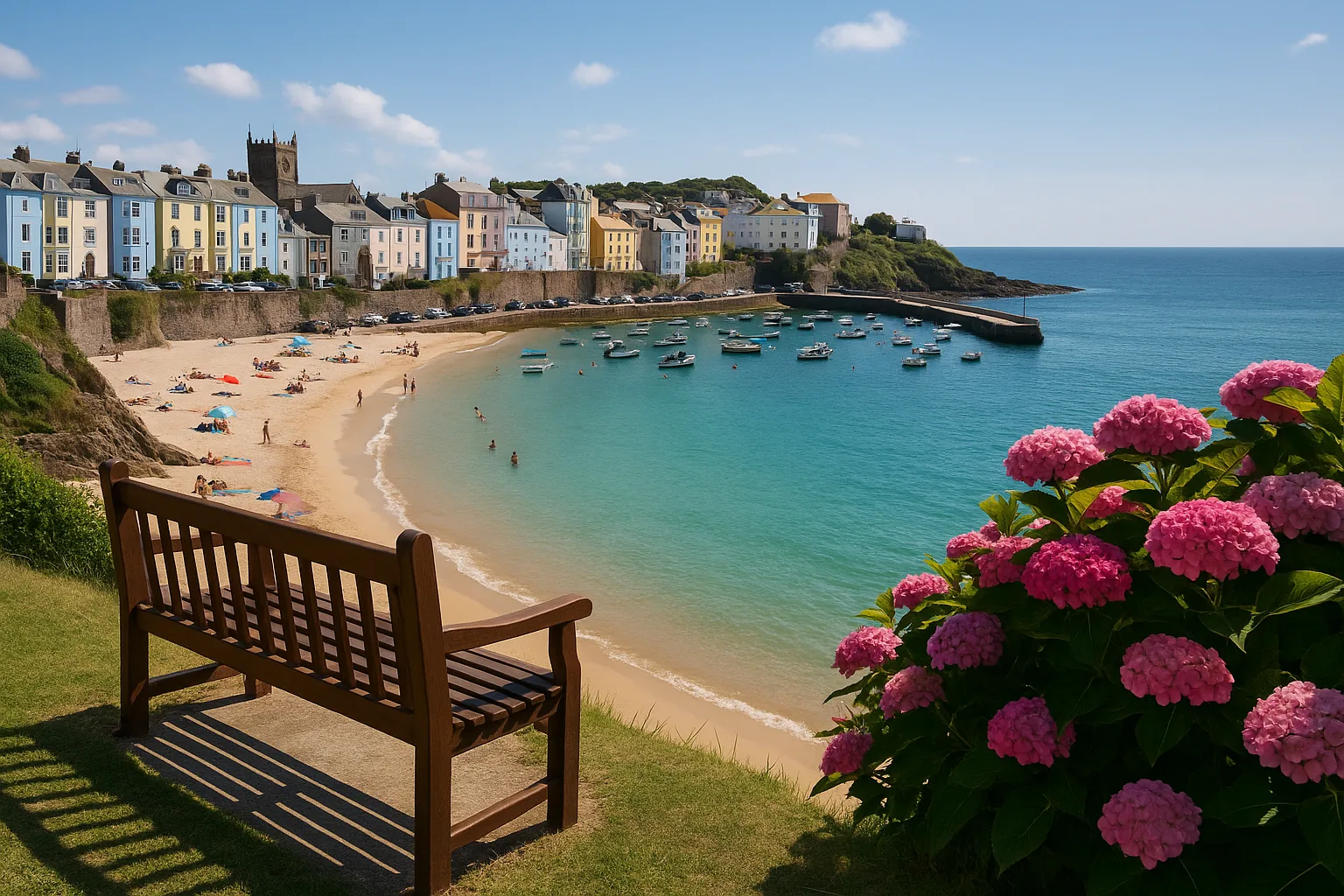
Falmouth is a different beast entirely. It’s a working port town with a strong creative scene, a good range of independent restaurants, and a maritime museum worth a few hours of your time. The accommodation here is more varied than in the smaller villages — you’ll find boutique guesthouses, converted warehouse apartments, and plenty of self-catering options within walking distance of the town’s beaches and harbour. Fal estuary boat trips are easy to organise from here, and the surrounding area includes some of Cornwall’s most beautiful creek-side walking routes.
Porthtowan is the kind of place that feels like a local secret even though it isn’t one. It’s a small village with a surf beach, a handful of places to eat, and an atmosphere that’s noticeably less polished than some of the more famous Cornish spots. That’s exactly the appeal. Accommodation options are limited compared to larger towns, which means you’ll want to book early — but the trade-off is a community feel that’s genuinely hard to manufacture.
Padstow sits on the Camel Estuary and has a reputation for good food that’s well deserved. The harbour is photogenic in the way that makes you reach for your camera without thinking about it. Staying in or near Padstow gives you access to the Camel Trail, a cycling and walking route that follows the river through some seriously beautiful countryside. Self-catering cottages in the surrounding villages offer a quieter alternative to staying in town itself, and the cycle ride into Padstow for dinner is a genuinely lovely way to spend an evening.
👉 Read also: England's Coastal Escapes: Cornwall, Scilly Isles, and Isle of Man for Adventure Seekers
How to Choose Your Base — and What to Know Before You Book
Choosing the right UK coastal holidays accommodation across these three regions comes down to knowing what kind of traveller you are right now. Not in general — right now, for this trip.
If you want community and local culture, Falmouth and Salcombe offer the most authentic town experiences, with independent shops, local pubs, and a sense of place that goes beyond the beach. If you want remote and wild, Bryher or Porthtowan will deliver that feeling of being genuinely away from everything. If you want adventure and activity, Polzeath for surfing or the Isles of Scilly for island-hopping give you built-in daily purpose.
- Book early for peak season. The southwest of England is one of the most popular domestic holiday destinations, and summer availability disappears faster than you’d expect. Aim to book at least three to four months ahead for July and August stays.
- Consider shoulder season. May, June, and September offer a genuinely different experience — better availability, lower prices, and a version of these places that feels more like they actually are when the crowds thin out.
- Self-catering gives you flexibility. Across all three regions, self-catering cottages and holiday lets are often better value than hotels, especially for stays of a week or more. They also let you eat locally at your own pace, which is half the experience.
- Factor in travel time to the Isles of Scilly. Getting to the islands requires planning — book flights or helicopter transfers well in advance, especially for summer travel, as capacity is genuinely limited.
- Don’t overlook the less famous spots. East Portlemouth across from Salcombe, or the smaller Cornish villages around Falmouth, often offer better value and a more authentic experience than the headline destinations.
For deeper research on specific accommodation options in Cornwall and the Isles of Scilly, Bradt’s Guide to Cornwall and the Isles of Scilly — written by Kirsty Fergusson, an award-winning travel writer who spent several years living in far west Cornwall — is one of the most thorough and genuinely useful resources available.
Making the Most of the Coast — Activities Worth Building Your Trip Around
The accommodation is the base, but the coastline is the reason. And across Salcombe, the Isles of Scilly, and Cornwall, there’s enough to keep you moving for weeks without repeating yourself.
In Salcombe, the estuary is the activity. Kayaking, paddleboarding, and sailing are all accessible even for beginners, and the surrounding South West Coast Path offers some of the most dramatic cliff walking in England. The estuary also has sandbanks that appear at low tide — exploring them by kayak on a clear afternoon is one of those simple experiences that stays with you.
On the Isles of Scilly, the inter-island boat trips are central to the experience. Each island is different enough that moving between them feels like genuine exploration. Snorkelling around the uninhabited islands is possible in calm conditions, and the birdwatching is exceptional — the islands sit on major migration routes, and autumn in particular draws serious wildlife enthusiasts from across the country.
In Cornwall, the activities shift depending on where you are. Surfing is the obvious draw on the north coast, but the south coast around Falmouth and the Helford River is better suited to sailing, kayaking, and coastal walking. Fishing villages like Mevagissey and Mousehole are worth a half-day visit for their harbour atmosphere and local seafood — the kind of places where you eat standing up outside, watching the boats, and decide that this is actually enough.
The southwest coast of England has a way of making you feel like you’ve genuinely escaped, even when you haven’t gone that far. Whether you’re watching the sun drop into the Atlantic from a Cornish headland, cycling the Camel Trail with no particular deadline, or sitting outside your Scilly cottage listening to nothing but the sea — these places deliver something that’s harder and harder to find. Plan carefully, stay somewhere that feels right, and then let the coast do the rest.
This article was produced with AI assistance and reviewed editorially.


Adventure Beyond the Beach: Things to Do in Jeju, South Korea & Tayrona Park, Colombia

Where to Stay in 2026: Budget Accommodation Guides for Vancouver, Wellington, Bruges & Andorra


