
United Kingdom
Isles of Scilly & Cornwall: Remote UK Island & Coastal Escapes for Adventure Seekers (2026)
Explore the Isles of Scilly and Cornwall’s dramatic coastline. Discover 35+ beaches, island hopping, hiking, and budget accommodation options across this UK adventure des

Why the Isles of Scilly and Cornwall Belong on Every Young Adventurer’s Radar
There’s a corner of the UK that most travelers walk straight past on their way to more obvious European destinations — and that’s exactly why you should go. The Isles of Scilly and Cornwall sit at the very southwestern tip of England, and together they form one of the most quietly spectacular coastal escapes on the continent. Whether you’re drawn to dramatic clifftop walks, remote island hopping, or the kind of fishing villages that feel like they’ve barely changed in a century, this stretch of the British Isles delivers something real. The Isles of Scilly, Cornwall’s extraordinary offshore archipelago, lie roughly 28 miles off the Cornish coast — far enough to feel like another world, close enough to reach in a single day.
This isn’t a guide about luxury retreats or polished tourist trails. It’s about discovering two destinations that reward curiosity, reward effort, and leave you with the kind of memories that don’t fade after a few weeks. If you’re between 16 and 30 and you’re looking for adventure that doesn’t require a long-haul flight, keep reading.
Getting to Know the Isles of Scilly
The Isles of Scilly are a small Atlantic archipelago made up of five inhabited islands: St Mary’s, Tresco, St Martin’s, Bryher, and St Agnes. Each one has its own personality, its own pace, and its own reasons to explore. St Mary’s is the largest and most connected — it’s where most visitors land first. Tresco is famous for its subtropical gardens and white-sand beaches. St Martin’s is quieter and wilder. Bryher feels remote even by Scilly standards. And St Agnes, the southernmost inhabited island, is the kind of place where you genuinely feel like you’ve reached the edge of the world.
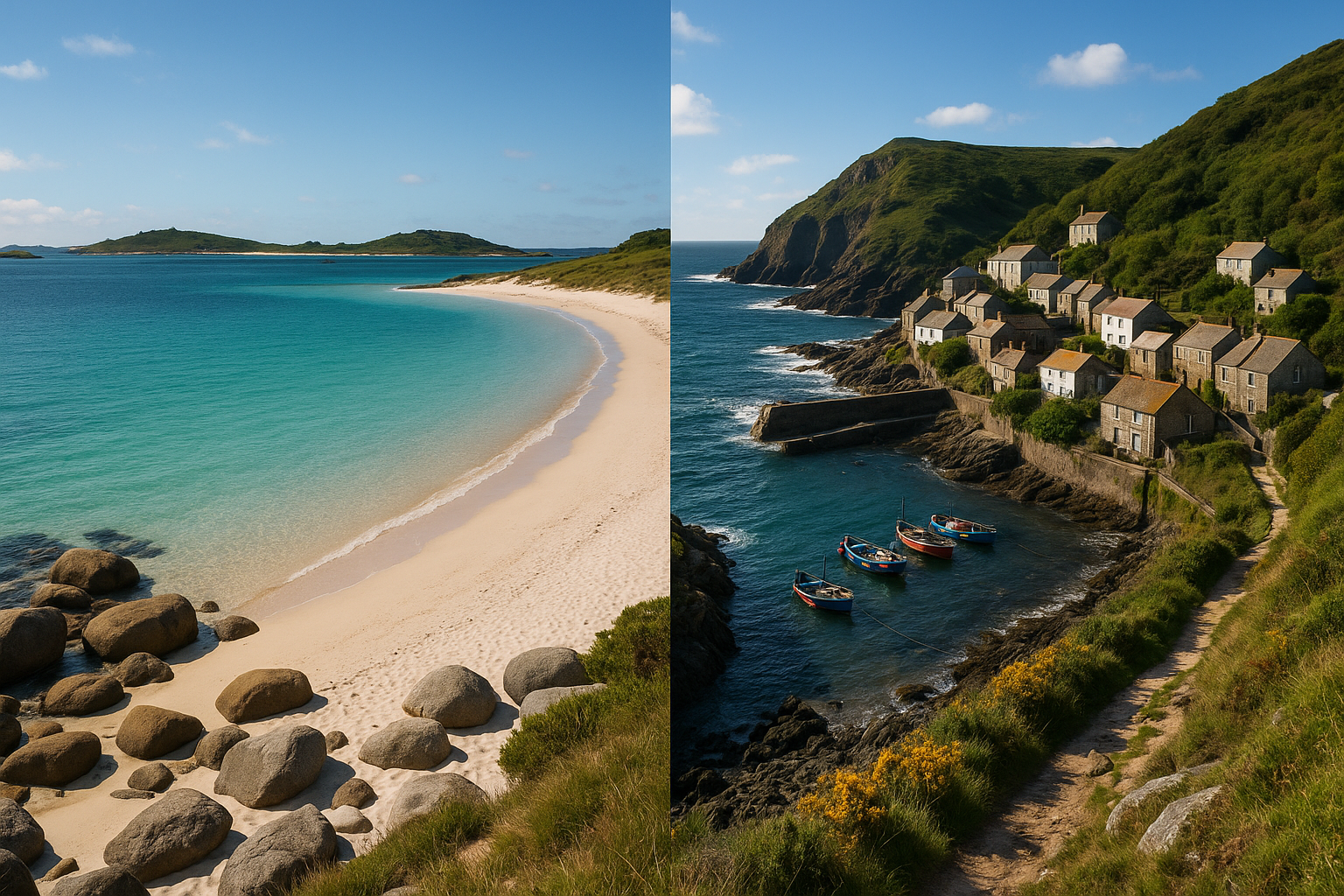
What makes Scilly so striking is how different it looks from the rest of the UK. The waters here are turquoise — genuinely, almost Caribbean-blue turquoise — and the sand is fine and pale. Across the archipelago, there are over 35 beaches, and on a good summer day, some of them feel almost impossibly beautiful for somewhere that’s technically still England. That contrast is part of the magic.
How to Get There
Access to the Isles of Scilly is part of the adventure. You’ve got three options: ferry, Skybus (a small fixed-wing aircraft service), or helicopter. The ferry runs from Penzance on the Cornish mainland and takes a few hours — it’s the most budget-friendly option and gives you a proper sense of the journey. The Skybus connects the islands to a handful of mainland airports and is faster. The helicopter service is the quickest route and offers views that are genuinely worth the experience on their own. Whichever way you travel, booking ahead — especially in summer — is essential. These routes fill up fast.
For more information on planning your crossing, the official Visit Isles of Scilly website is the best starting point for up-to-date transport options and island guides.
Island Life: What to Actually Do on Scilly
Once you arrive, the temptation is to do nothing — and honestly, that’s a valid choice for a day or two. But if you’re the type who needs to move, Scilly delivers.
Beach Hopping Across the Islands
With over 35 beaches spread across the archipelago, you could spend an entire week just working through them. Each island has its own collection, and the experience of reaching a beach by small inter-island boat makes it feel genuinely earned. Porthcressa on St Mary’s is a good starting point — sheltered, accessible, and perfect for an afternoon swim. If you make it to St Martin’s, the beaches on the island’s eastern side are some of the most beautiful in the whole archipelago. Bring a snorkel. The water clarity here is remarkable.
Kayaking, Snorkeling, and Water Sports
The calm, clear waters around the islands are ideal for kayaking between the smaller uninhabited islands. Several operators on St Mary’s offer equipment hire and guided tours — it’s one of the best ways to explore the coastline at your own pace. Snorkeling is also genuinely rewarding here; the visibility is excellent and the seabed around the islands is rich with marine life. If you’re more into sailing, there are opportunities to join day trips and learn the basics from local skippers who know these waters well.
Walking the Islands
Every inhabited island has walking trails, and most of them are short enough to complete in a few hours without any specialist gear. The coastal path on St Mary’s circles the entire island and takes you past ancient Bronze Age burial sites, dramatic headlands, and views across to the other islands. On Bryher, the walk up to Shipman Head offers some of the most exposed, windswept scenery in the archipelago — the kind of place that makes you feel genuinely small in the best possible way. These aren’t technically demanding hikes, but they’re deeply satisfying.
Cornwall: The Mainland That Earns Its Reputation
Cornwall is the jumping-off point for Scilly, but it’s far more than a transit hub. The Cornish coast stretches for hundreds of miles and encompasses everything from busy surf beaches to tiny fishing coves that barely appear on most maps. If you’re combining both destinations — which we strongly recommend — give Cornwall at least three or four days of its own.
The Fishing Villages Worth Seeking Out
Cornwall’s fishing villages are the kind of places that make you want to slow down. Mousehole (pronounced “Mowzel” by locals — don’t get caught out) is one of the most atmospheric, with a tiny harbour, stone cottages, and the kind of evening light that makes everything look like a painting. Porthleven, further along the coast, has a working harbour and a growing reputation for good food. Cadgwith on the Lizard Peninsula is even quieter — a handful of thatched cottages, a working fishing fleet, and a pub that’s been there longer than most countries have had electricity. These places aren’t on the main tourist trail, which is exactly why they’re worth the effort to reach.
Beaches and Surf Culture
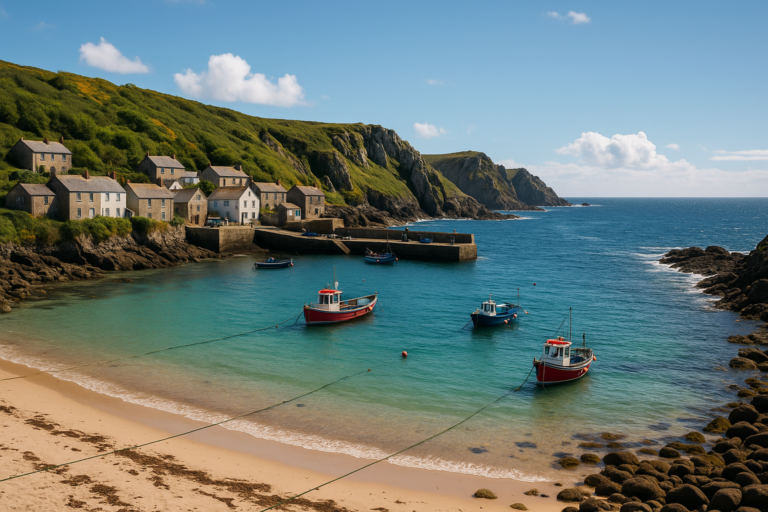
Cornwall’s surf scene is genuine and unpretentious. Newquay is the most well-known surf destination and offers everything from beginner lessons to more challenging breaks — it’s lively, social, and a natural gathering point for young travelers. But if you want something less crowded, head to the beaches around the Penwith Peninsula near Land’s End, or explore the north coast between Bude and Padstow. Porthcurno, on the south coast, has one of the most dramatic settings of any beach in the UK — a white sand cove surrounded by granite cliffs with an open-air theatre cut into the rock above it. Arrive early and you might have it almost to yourself.
Hiking the South West Coast Path
The South West Coast Path is one of England’s great long-distance walking routes, and the Cornish section is arguably its finest stretch. You don’t need to walk the whole thing — even a single day section between two coastal villages gives you a proper sense of what makes this coastline so compelling. The path takes you along clifftops, down into secluded coves, through coastal heathland, and past the ruins of Cornwall’s industrial mining heritage. The combination of natural landscape and human history is genuinely engaging. Decent walking boots, a waterproof layer, and a good map (or a downloaded offline route) are all you need.
When to Visit: Seasons and Weather
The honest answer is that Cornwall and the Isles of Scilly are worth visiting in almost any season — but the experience changes significantly depending on when you go.
Summer, roughly from late June through August, brings the warmest temperatures, the calmest seas, and the longest days. It’s also the busiest period, and accommodation books up quickly — especially on Scilly. If you’re planning a summer trip, start looking at options several months ahead. The upside is that the weather is most reliable for water sports and beach days, and the inter-island boat services run more frequently.
Spring — particularly May and June — is genuinely one of the best times to visit. The crowds are thinner, the wildflowers on the Cornish cliffs are extraordinary, and the light has a quality that photographers chase for good reason. The Isles of Scilly are particularly beautiful in late spring, when the subtropical vegetation on Tresco is at its most lush.
Autumn offers a similar quieter experience with the added drama of Atlantic storms beginning to build. If you’re a surfer, autumn swells on the north Cornish coast can be spectacular. Winter is the off-season, and many businesses on Scilly close down — but if you want raw, elemental coastal scenery with almost no other visitors around, it’s an experience in its own right.
Budget Travel Tips for Cornwall and Scilly
Neither destination is the cheapest place in the UK, but both are manageable on a young traveler’s budget if you plan smartly.
- Book transport early. The ferry and Skybus to Scilly are significantly cheaper when booked well in advance. Last-minute crossings can be expensive and may not be available at all in peak season.
- Consider camping. Cornwall has a strong camping culture, and there are sites across the county — including some with genuinely stunning coastal positions. On Scilly, camping options exist on some of the islands and are among the most affordable ways to stay.
- Travel in the shoulder season. May, June, and September offer a better balance of good weather and lower prices than the peak July-August window.
- Use local buses in Cornwall. The county has reasonable bus connections between major towns and some coastal villages. Combining buses with walking sections of the coast path is a genuinely satisfying and cheap way to explore.
- Self-cater where possible. Both Cornwall and Scilly have good local food — fresh fish, local bakeries, farm shops — and preparing your own meals even occasionally makes a real difference to your daily spend.
- Look into hostels and bunkhouses. Newquay and Penzance both have hostel options that cater well to young travelers. On Scilly, shared accommodation is limited but worth researching early.
For detailed, up-to-date planning information on the Isles of Scilly specifically, the Love Travelling Blog’s Isles of Scilly guide is a useful resource with practical on-the-ground detail.
Combining Both Destinations: A Practical Approach
The most rewarding way to experience this part of the UK is to combine Cornwall and the Isles of Scilly into a single trip. A week to ten days gives you enough time to do both justice without feeling rushed.
A natural itinerary might look something like this: arrive in Penzance, spend a couple of days exploring the Penwith Peninsula and the fishing villages of the far west, then take the ferry or Skybus across to St Mary’s. Spend three or four days island hopping across Scilly, staying on at least two different islands if you can. Return to the mainland and head up the north Cornish coast, stopping at surf beaches and coastal villages before finishing in Newquay or Padstow.
This kind of journey gives you a real contrast — the wild, open Atlantic of Scilly against the more varied landscape of the Cornish coast. The two destinations complement each other well, and the transition between them, whether by boat or small plane, is itself a memorable part of the experience.
What Makes This Corner of the UK Different
There’s something about the far southwest of England that feels genuinely separate from the rest of the country. The light is different. The pace is different. The relationship between the landscape and the sea is immediate in a way that’s hard to find elsewhere in the UK without traveling to the Scottish islands or the Welsh coast.
The Isles of Scilly, Cornwall’s most remote and remarkable neighbour, take that quality and amplify it. Standing on a beach on St Agnes with nothing between you and the Americas but open Atlantic water, you get a rare sense of perspective. Cornwall itself offers enough variety — surf culture, maritime history, wild hiking, vibrant food scenes in its market towns — to feel like a complete destination in its own right.
For young travelers who want something authentic, something that rewards a bit of planning and a bit of effort, and something that feels genuinely different from the usual European circuit, this corner of the UK is worth every mile of the journey. Pack light, book early, and go with an open mind. The southwest has a way of exceeding expectations quietly — and that’s exactly the kind of travel that stays with you.
This article was produced with AI assistance and reviewed editorially.


Vietnam Uncovered: Beyond the Chaos, Into the Real Story

Beyond the Guidebook: What Hanoi Actually Feels Like


