
Asia
Thailand Itinerary 2026: How to Spend 2, 4, or 6 Weeks (Realistic Routes)
Plan your Thailand trip with realistic itineraries for 2, 4, or 6 weeks. Balance famous spots with hidden gems, travel times, and seasonal tips for first-time visitors.

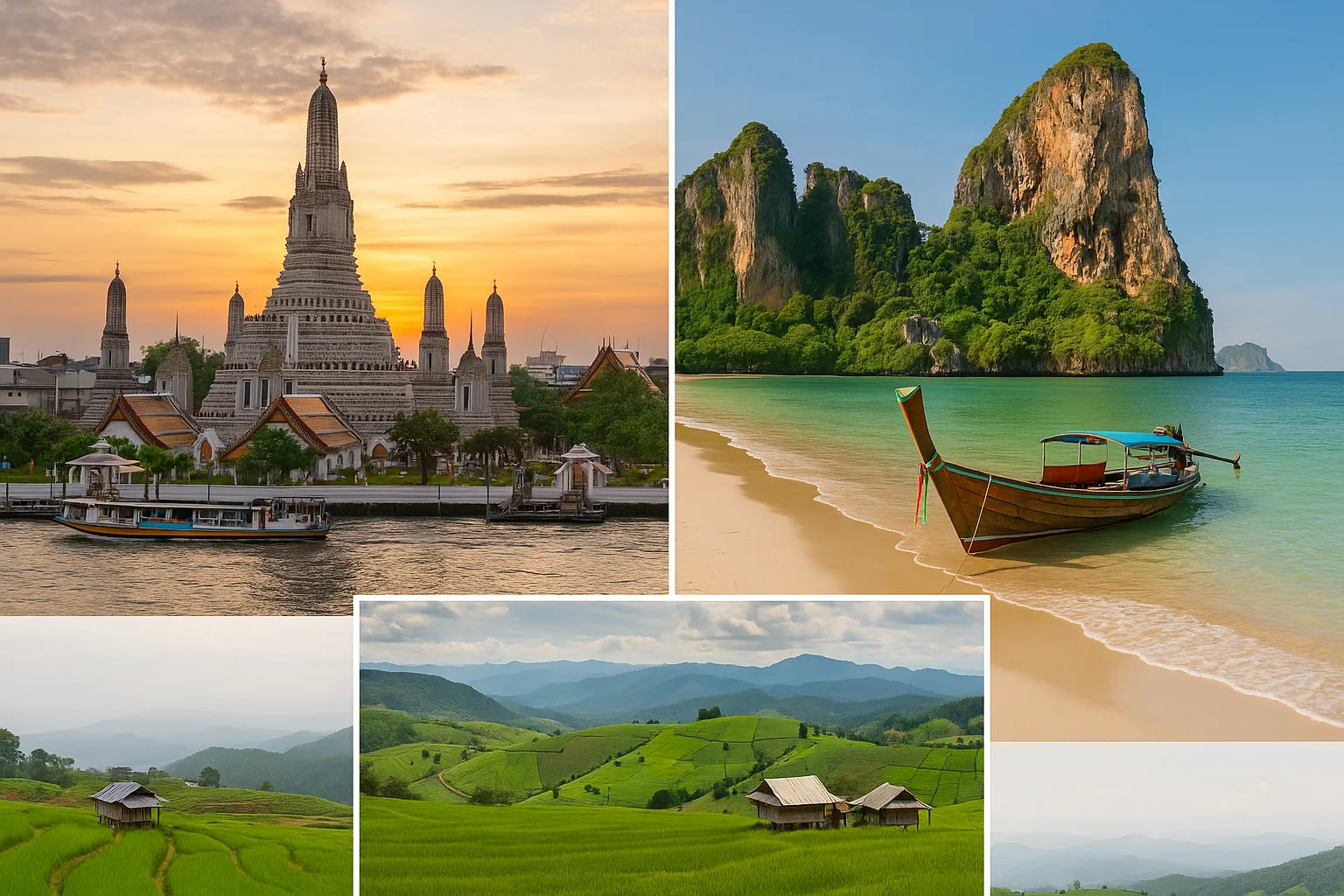
Thailand has a way of getting under your skin. You arrive expecting temples and beaches, and you leave with something harder to explain — the smell of lemongrass from a street stall at midnight, the sound of longtail boats cutting across still water at dawn, a conversation with a stranger that somehow turned into a shared meal. Planning a solid Thailand itinerary is the difference between rushing through highlights and actually living them. Whether you’ve got two weeks, a month, or six full weeks to explore, this guide gives you a realistic, experience-first framework for making the most of every day.
Why Thailand Still Deserves a Spot on Your Travel List
It’s easy to dismiss Thailand as “overdone.” You’ve seen the photos. The floating markets, the golden temples, the turquoise water. But here’s the thing — those images exist because the reality genuinely delivers. The country stretches across a 2,000-mile-long coastline, split between the Gulf of Thailand to the east and the Andaman Sea to the west. That alone tells you how much variety is packed into one destination.
Beyond the coastline, you’ve got mountainous jungle in the north, ancient cities in the central plains, and a street food culture that could occupy weeks of your life on its own. Thailand rewards curiosity. The more you slow down and look sideways — away from the main drag, past the tourist menus — the more interesting it gets.
And practically speaking, it remains one of the most accessible destinations for young travelers. Transport links are solid, the infrastructure for backpackers is well-established, and the local hospitality is genuine. It’s a place where first-time international travelers find their footing, and where experienced explorers keep discovering something new.
Before You Go: Timing, Visas, and Practical Basics
Getting the timing right shapes everything about your trip. Thailand is a winter sun favorite, with warm, balmy temperatures across the islands and coasts from November through February. This is peak season — expect fuller beaches, livelier night markets, and slightly higher prices, but also the most reliable weather across both coastlines simultaneously.
Outside of that window, the picture gets more nuanced. The Gulf of Thailand and the Andaman Sea follow different monsoon patterns, which means that when one coast is being battered by rain, the other is often calm and sunny. If you’re traveling between March and October, it’s worth researching which coast suits your timing — you can almost always find good weather somewhere in Thailand, you just need to know where to look.
On visas: requirements shift regularly, and 2026 has seen updates to Thailand’s entry policies that have made things more accessible for many nationalities. Before you book anything, check directly with the official Thai Embassy or consulate for your country to confirm what you need. Processing times, exemptions, and visa-on-arrival eligibility vary depending on your passport and intended length of stay. Don’t rely on secondhand information here — go to the source.
Health insurance is non-negotiable. Thailand has excellent hospitals, particularly in Bangkok and Chiang Mai, but treatment costs without coverage can be significant. Sort your insurance before you fly, and make sure it covers adventure activities if you’re planning to go diving, trekking, or riding motorbikes.
The 2-Week Thailand Itinerary: Hit the Highlights Without the Rush
Two weeks feels short until you realize how efficiently Thailand moves. With good planning, you can experience the cultural depth of the north, the energy of Bangkok, and the laid-back beauty of at least one island group — without spending half your trip on overnight buses.
👉 Read also: Thailand Itineraries for Every Timeline: 1 Week to 4 Weeks Modular Planning
A sensible two-week structure starts in Bangkok. Give it three days minimum. The city is enormous and relentless, but it rewards those who push past the obvious. Spend a morning at the Grand Palace and Wat Pho, then spend an afternoon doing the opposite — wandering the backstreets of Chinatown, eating your way through Yaowarat Road, hopping on the Chao Phraya river ferry to see the city from the water. Bangkok’s neighborhoods each have a distinct personality. Ari feels like a cool local district; Silom is all business and night energy; the area around the old city feels almost meditative by comparison.
From Bangkok, head north to Chiang Mai. The overnight train is one of those travel experiences worth doing at least once — affordable, atmospheric, and you wake up in a completely different world. Chiang Mai’s old city is ringed by a moat and packed with temples, but the real draw is the surrounding landscape. Elephant sanctuaries (choose ethical ones carefully — look for places focused on rescue and rehabilitation, not riding), cooking classes, and trekking into the hills around the city are all genuinely memorable ways to spend your time.
With the remaining days, head south to the islands. The choice between the Gulf of Thailand and the Andaman coast depends on your travel dates, but both deliver. Koh Lanta, Koh Tao, Koh Phangan, and the Krabi coastline each offer something distinct — from world-class diving to dramatic limestone cliffs to full-moon party energy. Pick one area and settle into it rather than island-hopping frantically. You’ll enjoy it more.
The 4-Week Thailand Itinerary: Space to Breathe and Explore Deeper
A month in Thailand opens up the itinerary considerably. You can move at a pace that feels human rather than frantic, add destinations that don’t make every highlight reel, and actually spend more than two nights somewhere before packing up again.
Start with the same Bangkok foundation, but give yourself more time to explore neighborhoods you wouldn’t reach in a shorter trip. The weekend markets, the contemporary art scene, the rooftop bars that don’t feel like tourist traps — Bangkok has layers, and a month lets you peel a few more back.
The north deserves more than a quick Chiang Mai stop. Chiang Rai sits a few hours further north and offers a completely different atmosphere — quieter, more intimate, with remarkable temples including the surreal White Temple and the Blue Temple. The Golden Triangle, where Thailand meets Laos and Myanmar, is worth the journey for the perspective it gives you on this part of Southeast Asia.
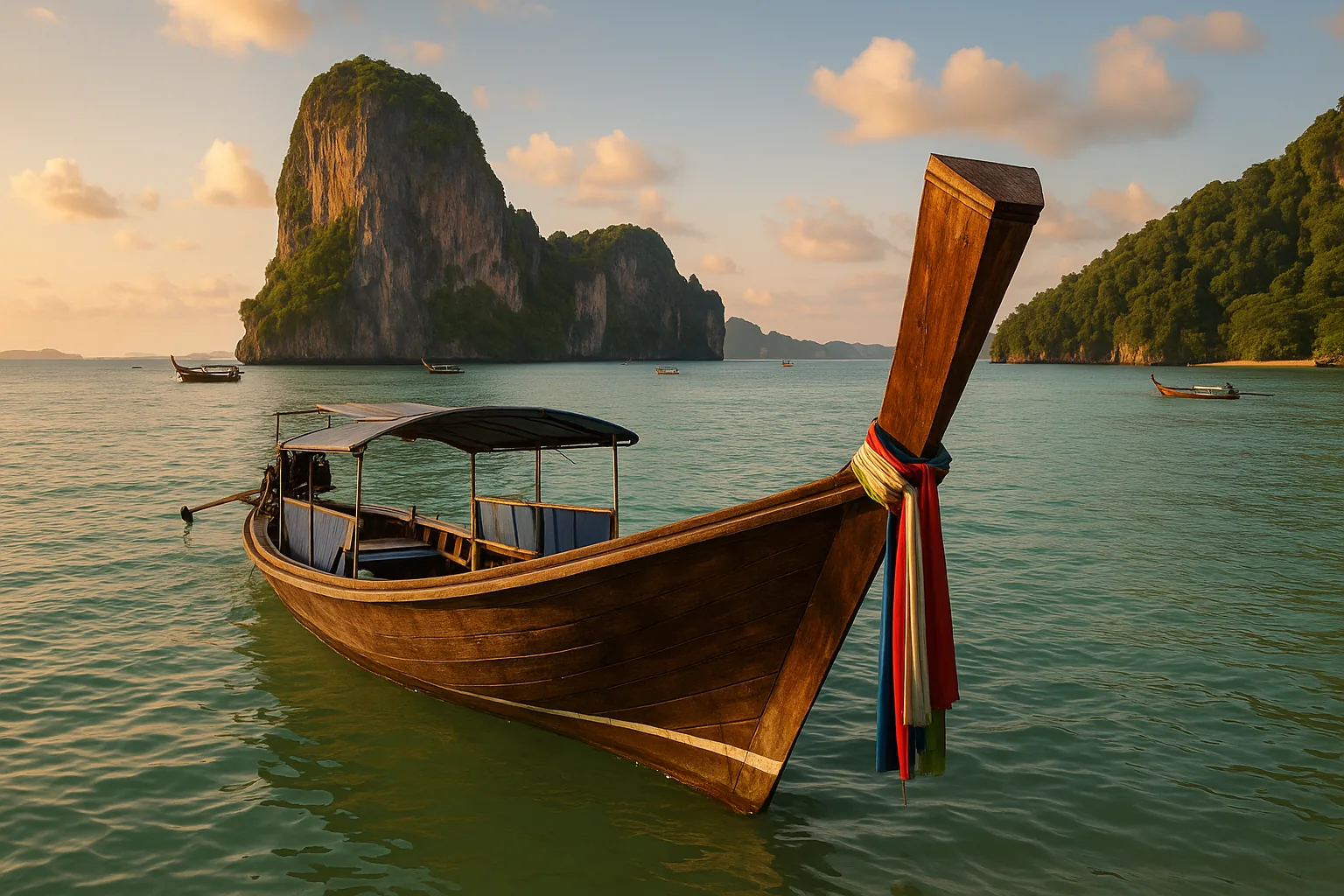
With a month, you can also explore central Thailand more seriously. The ancient city of Ayutthaya, about an hour and a half north of Bangkok by train, is one of the most atmospheric historical sites in the country — crumbling temple ruins rising from the plains, best explored by bicycle in the early morning before the heat takes over. Sukhothai, further north, offers a similar experience with arguably even more space and tranquility.
On the southern end, a four-week itinerary lets you do both coastlines. Spend time on the Andaman side — Krabi, Koh Lanta, or the Trang islands — and then cross to the Gulf for a different flavor entirely. The Samui archipelago and the dive sites around Koh Tao are worth the journey. If you’re a diver or want to learn, Koh Tao remains one of the most affordable places in the world to get certified.
The 6-Week Thailand Itinerary: Go Deep, Go Slow, Go Local
Six weeks is where Thailand stops being a trip and starts becoming a chapter. You have enough time to find your rhythm, to return to a place you loved, to take a detour that wasn’t in any plan. This is the itinerary for people who want to understand a place, not just visit it.
Everything from the four-week route applies here, but with more breathing room at each stop. The real additions come from the places that rarely make the short-trip shortlist.
👉 Read also: Thailand Itineraries 2026: Modular 1-to-4 Week Routes for Northern & Southern Thailand
Pai, a small mountain town in the hills northwest of Chiang Mai, is a classic slow-travel destination. It’s beloved by backpackers for good reason — the scenery is stunning, the pace is gentle, and the community of travelers and locals who settle there for weeks at a time creates a genuinely social atmosphere. It’s the kind of place where you plan to stay three nights and wake up a week later still not quite ready to leave.
In the south, six weeks lets you reach the Trang islands and the less-visited parts of the Andaman coast that require a bit more effort to reach. Hat Chao Mai National Park, the islands of Koh Kradan and Koh Ngai — these are places where the beaches are extraordinary and the crowds are a fraction of what you’ll find further north. The extra travel time to get there is absolutely worth it.
Consider also spending time in Isan, the northeastern region that most visitors skip entirely. It’s the largest region in Thailand, culturally distinct, and almost entirely off the tourist trail. The food is different — spicier, more fermented, deeply flavorful — the temples are ancient and uncrowded, and the experience of traveling somewhere that hasn’t been packaged for tourists is genuinely refreshing. Khao Yai National Park, on the edge of the region, is one of Thailand’s most impressive UNESCO-listed natural areas.
Getting Around: What Actually Works
Thailand’s transport network is genuinely good, especially for a budget traveler. Overnight trains between Bangkok and Chiang Mai are comfortable, affordable, and one of the more enjoyable ways to cover distance. Buses connect most major destinations, and the minivan network fills in the gaps. For island travel, ferries are the standard — they run frequently between the most popular islands and the mainland, though schedules can shift with weather and season.
Domestic flights are worth considering for longer distances, particularly if you’re moving between the far north and the south. Budget carriers make this surprisingly affordable when booked in advance, and it saves you a full day of travel that could be spent somewhere actually interesting.
Within cities and towns, the songthaew (shared pickup truck taxi), tuk-tuk, and ride-hailing apps all have their place. In Bangkok, the BTS Skytrain and MRT metro are fast, air-conditioned, and easy to navigate. For rural areas and smaller towns, renting a scooter gives you a level of freedom that no scheduled transport can match — just make sure your travel insurance covers it and that you’re genuinely comfortable riding before you head out on mountain roads.
Pacing Advice Nobody Tells You Before You Go
The most common mistake in Thailand — and in Southeast Asia generally — is over-scheduling. It’s tempting to fill every day when you look at a map and realize how much is available. Resist it. The best moments of any Thailand trip tend to happen when you’re not rushing to catch the next bus.
Build in at least one or two “nothing days” per week. Use them to revisit a market you liked, to sit in a café and watch the street, to follow a recommendation from someone you met the night before. These unplanned stretches are where the memories actually form.
Also, be honest about what you want. If you’re not a beach person, don’t spend two weeks on islands because you feel like you should. If you’d rather eat your way through Bangkok’s neighborhoods than trek through jungle, do that. A Thailand itinerary is a framework, not a contract. The country is varied enough to support almost any travel style — the key is knowing what yours actually is.
Thailand in 2026 remains one of the most rewarding destinations you can choose, whether it’s your first time stepping off a long-haul flight or your fifth return visit. The temples, the coastline, the food, the mountains — they haven’t lost anything. And somewhere between the plan you made at home and the reality of being there, you’ll find the version of the trip that was actually meant for you.
This article was produced with AI assistance and reviewed editorially.


Nepal’s Mountain Gateway: Kathmandu Neighborhoods, Street Food & Where to Stay for Authentic Exploration

Luang Prabang, Laos: Why This Sacred City Is Perfect for Solo Travelers Seeking Solitude


