
Germany
Christmas Markets in Germany 2026: Where to Go, What to Eat, and How to Experience Them Like a Local
Explore Germany’s best Christmas markets in 2026. Discover Nuremberg, Munich, and Dresden, plus insider tips on traditional foods, dates, and avoiding crowds.

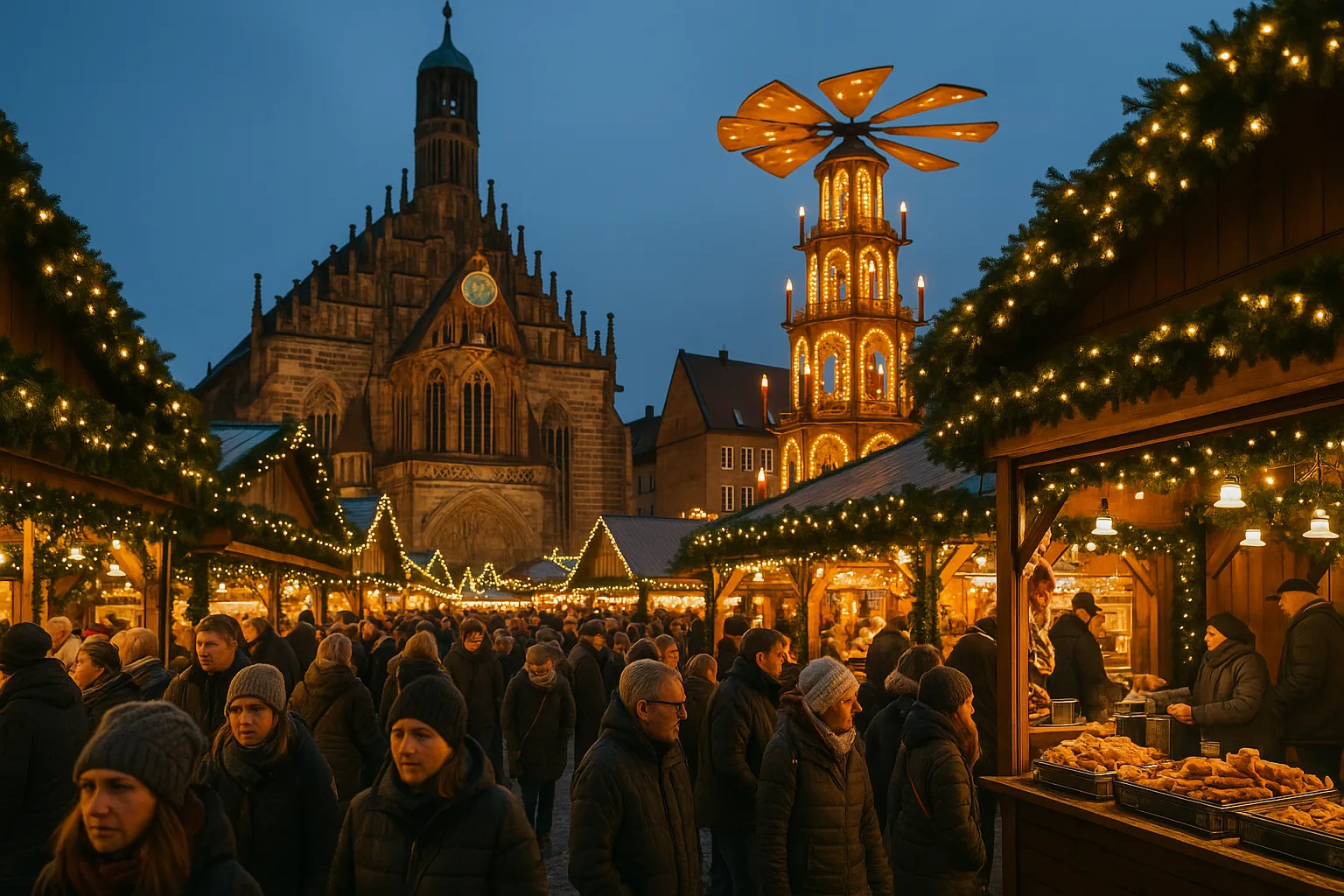
There’s something about a German Christmas market that gets under your skin in the best possible way. The smell of Glühwein drifting through cold air, the glow of wooden stalls lit up against a dark winter sky, the sound of carols echoing off centuries-old buildings — visiting Christmas markets in Germany is one of those travel experiences that genuinely lives up to the hype. And in 2026, with markets opening across the country from late November through Christmas Eve, there’s never been a better time to plan your trip.
Why Germany’s Christmas Markets Belong on Your Travel List
Germany didn’t invent winter — but it may have perfected the art of making it beautiful. The country’s Christmas markets, known as Weihnachtsmärkte, have been a cultural tradition for centuries. These aren’t corporate pop-up events or tourist traps dressed up in tinsel. The best ones are deeply rooted in local tradition, run by local vendors, and attended by locals who genuinely love them.
For young travelers, the appeal goes beyond the obvious. Yes, the markets are visually stunning and practically made for photos. But they’re also one of the easiest ways to connect with German culture without needing a museum ticket or a guided tour. You’re standing in a square, holding a warm drink, surrounded by people celebrating something they’ve celebrated their whole lives. That kind of immersion is rare, and it’s free to experience.
The 2026 season runs roughly from late November to December 24th in most cities, which gives you a solid window — especially if you can travel mid-week or in the earlier weeks of the season before the Christmas rush peaks.
The Cities Worth Visiting for Christmas Markets in Germany
Nuremberg: The Classic
Nuremberg’s Christkindlesmarkt is arguably the most iconic Christmas market in the world. It opens on November 26th and runs through December 24th, 2026, set in the city’s medieval Hauptmarkt square beneath the Church of Our Lady. The market has a reputation for being more traditional than others — you won’t find modern rides or commercial gimmicks here. Instead, expect hand-crafted ornaments, local artisan stalls, and an atmosphere that feels genuinely historic.
Nuremberg is also known for its Lebkuchen, a spiced gingerbread that’s been produced in the city for centuries. The market’s vendors take their crafts seriously, and the quality of what you’ll find here tends to be higher than at more commercialized markets. If you can only visit one market this season, Nuremberg makes a strong case for itself.
Munich: Bavarian Magic at Marienplatz
Munich’s main Christmas market at Marienplatz runs from November 23rd to December 22nd, 2026, with stalls open daily from 10:00 to 21:00. At the heart of it all is a towering Christmas tree, surrounded by Bavarian food stalls and vendors selling everything from handmade decorations to warm woolen scarves.
What makes Munich special is the setting. The neo-Gothic Neues Rathaus (New Town Hall) forms the backdrop, and when the market is lit up at dusk, the whole square looks almost unreal. Munich also has multiple smaller markets scattered across the city — the one at Schwabing tends to draw more locals than tourists, which makes it worth seeking out if you want a slightly quieter experience.
The city itself is easy to navigate on foot and by U-Bahn, and the market area is compact enough that you can take it all in without feeling rushed. Plan to arrive around opening time to get the best atmosphere before the afternoon crowds build.
Dresden: The Oldest Market in Germany
The Dresden Striezelmarkt holds a remarkable distinction: it’s the oldest Christmas market in Germany. Running from November 25th to December 24th, 2026, this market has been drawing visitors to Dresden’s Altmarkt square for centuries. The name “Striezelmarkt” comes from Striezel, an early word for the fruit bread we now know as Stollen — and yes, Dresden’s Stollen is legendary.
👉 Read also: European Hidden Gems: Korcula Croatia, Peak District UK & Gran Canaria's Best Neighborhoods
Dresden is slightly off the beaten path compared to Munich or Cologne, which actually works in your favor. The city itself is stunning — rebuilt after wartime destruction and now home to some of the most beautiful Baroque architecture in Europe. Combining a visit to the Striezelmarkt with a few days exploring Dresden’s museums and riverside Altstadt makes for a genuinely rich trip.
Cologne: The Cathedral Backdrop
Cologne runs several Christmas markets simultaneously, but the one directly in front of the Kölner Dom (Cologne Cathedral) is the one that stops people in their tracks. The Gothic cathedral — one of the largest in the world — towers over the market stalls in a way that feels almost surreal. It’s one of those scenes you have to see in person to fully appreciate.
Cologne’s markets tend to be lively and social. The city has a strong local drinking culture centered around Kölsch, its own regional beer, and the markets reflect that energy. If you’re traveling with friends and want a market experience that mixes tradition with a festive, social atmosphere, Cologne is hard to beat.
Frankfurt and Berlin: Urban Energy Meets Holiday Spirit
Frankfurt’s Römerberg Christmas Market is set in one of the most photogenic medieval squares in Germany. The half-timbered buildings that frame the market have been there since the Middle Ages, and the contrast between the ancient architecture and the warm market lights is striking.
Berlin takes a different approach. The city hosts dozens of markets across its neighborhoods, ranging from traditional to alternative. The market at Gendarmenmarkt is known for being particularly atmospheric, set between two matching cathedrals in one of Berlin’s most elegant squares. But Berlin also has markets that lean more creative and independent — perfect if you want something a little less conventional. Exploring the city’s different markets across a few days gives you a real sense of Berlin’s layered personality.
What to Eat and Drink at the Markets
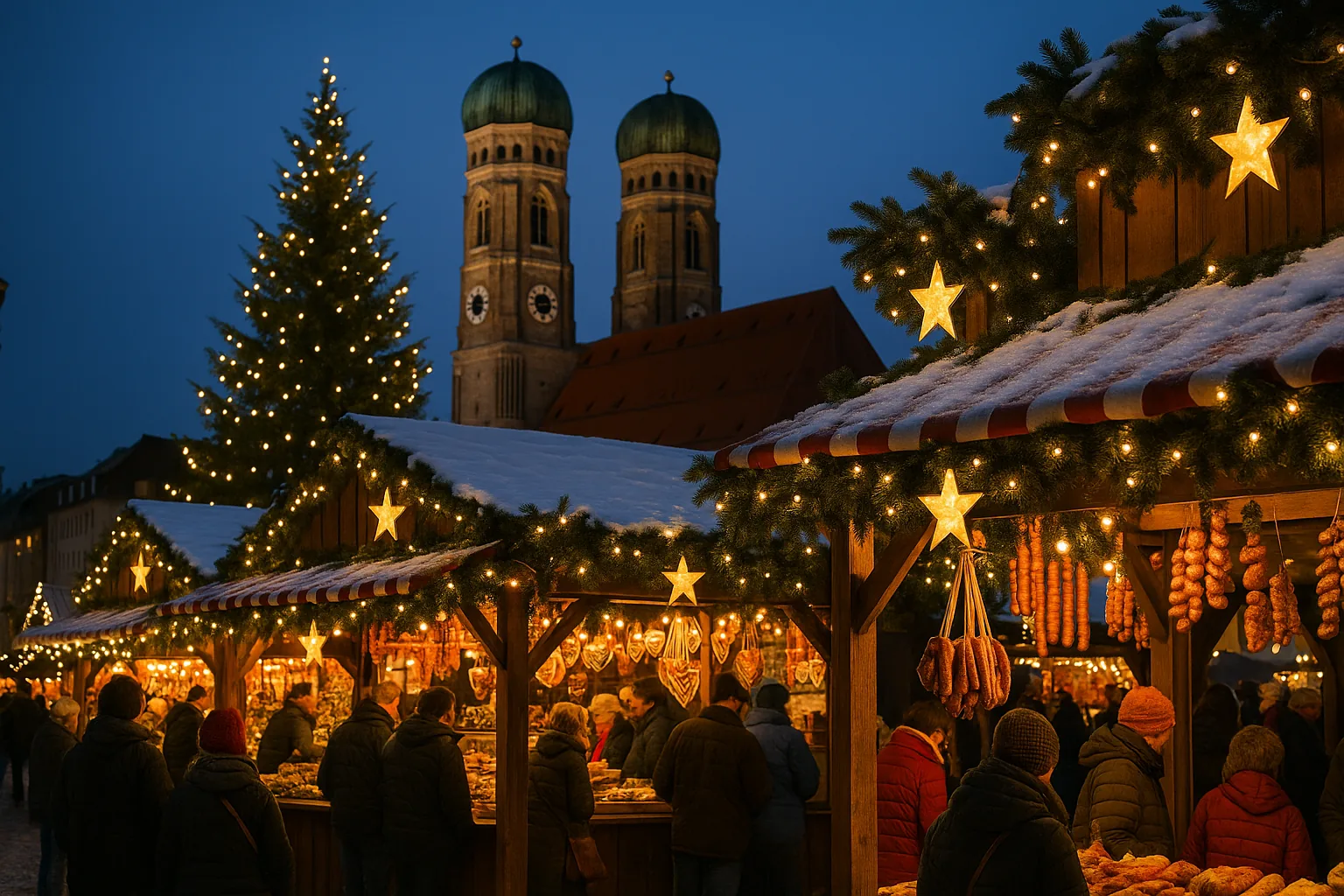
Food is central to the German Christmas market experience, and the range of things to try is genuinely exciting. Glühwein — mulled wine spiced with cinnamon, cloves, and citrus — is the drink of the season. Most markets serve it in collectible ceramic mugs, and you pay a small deposit that you get back when you return the mug. Many travelers keep the mug as a souvenir instead.
Beyond Glühwein, look out for Kinderpunsch (a non-alcoholic spiced fruit punch, perfect if you’re not drinking), Feuerzangenbowle (a dramatic punch made with a rum-soaked sugar cone set on fire above the bowl), and Heißer Kakao (hot chocolate that tends to be richer and less sweet than what you might be used to).
On the food side, Bratwurst served in a bread roll is the quintessential market snack — simple, warming, and deeply satisfying in the cold. Reibekuchen (potato pancakes served with apple sauce) are popular in western Germany, especially around Cologne. Lebkuchen hearts decorated with icing are as much a gift as a snack. And if you’re in Dresden, trying a slice of Dresdner Stollen — the rich, dense fruit bread dusted in powdered sugar — is essentially mandatory.
Don’t overlook the roasted nuts. Vendors selling gebrannte Mandeln (caramelized almonds) are everywhere, and the smell alone is worth stopping for.
Practical Tips for Visiting Like a Local
Timing Your Visit
The single best thing you can do to improve your market experience is visit during the week rather than the weekend. Saturday afternoons at major markets like Nuremberg or Munich can get genuinely crowded — not impossible, but it changes the atmosphere. Weekday mornings and early afternoons are when you’ll find markets at their most relaxed and most local.
👉 Read also: Barcelona & London: Urban Exploration for Young Travelers (2025–2026 Local Guides)
The first two weeks of the season (late November into early December) also tend to be quieter than the final week before Christmas. If you have flexibility in your travel dates, arriving in early December gives you the full experience without the peak-season pressure.
Evening visits — especially in the hour or two after sunset — offer the most magical atmosphere visually, but that’s also when crowds peak. A good strategy is to visit in the late morning, take a break for lunch, and return briefly in the early evening before the biggest rush arrives.
Getting Around Between Cities
Germany’s rail network makes it genuinely easy to visit multiple cities in one trip. Nuremberg, Munich, Frankfurt, and Cologne are all well-connected by fast intercity trains. A trip combining two or three cities over five to seven days is very achievable and gives you a real sense of how different each market’s character can be.
Consider a rail pass if you’re planning to move between several cities — it can simplify both the logistics and the budget. Within cities, most major markets are in or near the historic center, which means public transport or walking gets you there easily.
Where to Stay
Hostels in Germany’s city centers are generally well-run, social, and reasonably priced — especially if you book a few weeks in advance. December is a busy travel period, so leaving accommodation to the last minute will cost you. Look for hostels or budget hotels within walking distance of the city center to save on transport and maximize your time at the markets.
If you’re open to staying slightly outside the center, you’ll usually find better prices and can use the city’s efficient public transport to get in and out. In cities like Munich and Cologne, the U-Bahn and S-Bahn systems are fast and reliable, so a 15-minute journey from your accommodation to the market is genuinely no obstacle.
Booking platforms that let you filter by neighborhood are useful here — aim for areas within two or three stops of the main market square, and you’ll have the best of both worlds.
Making the Most of the Experience
The travelers who get the most out of German Christmas markets are the ones who slow down. It’s tempting to arrive with a checklist — hit the market, grab a photo, move on. But the real experience is in the details: chatting with a vendor about how they make their ornaments, sitting down with a warm drink and watching the square fill up, wandering into a side street and finding a smaller, quieter stall selling something you’ve never seen before.
Learning a few words of German goes a long way. Danke (thank you), bitte (please), and Ein Glühwein, bitte (one mulled wine, please) will get you smiles and often a warmer welcome. Germans appreciate the effort, even if your pronunciation isn’t perfect.
Finally, embrace the cold. Dress in proper layers — a good base layer, a warm mid-layer, and a wind-resistant outer layer — and the cold becomes part of the atmosphere rather than something to endure. Warm hands wrapped around a ceramic mug of Glühwein, breath visible in the night air, lights glimmering across a snow-dusted square: that’s the image you’ll carry home. And it only works if you’re actually present for it.
Germany in winter, with its Christmas markets in full swing, is one of those travel experiences that rewards curiosity and patience in equal measure. Whether you spend a weekend at a single market or build a longer trip across several cities, you’ll leave with something that no highlight reel can fully capture — the feeling of having been somewhere that genuinely moved you. That’s the kind of memory worth chasing. For more information on specific markets and travel planning, Le Shuttle’s guide to German Christmas markets is a solid starting point for your research.
This article was produced with AI assistance and reviewed editorially.


Nepal’s Mountain Gateway: Kathmandu Neighborhoods, Street Food & Where to Stay for Authentic Exploration

Luang Prabang, Laos: Why This Sacred City Is Perfect for Solo Travelers Seeking Solitude


