
United Kingdom
London Walks for Every Traveler: From Iconic Landmarks to Secret Neighborhoods
Discover the best london walking routes from Tower Bridge to Shoreditch. Explore iconic landmarks, street art, literary haunts, and hidden neighborhoods on foot.

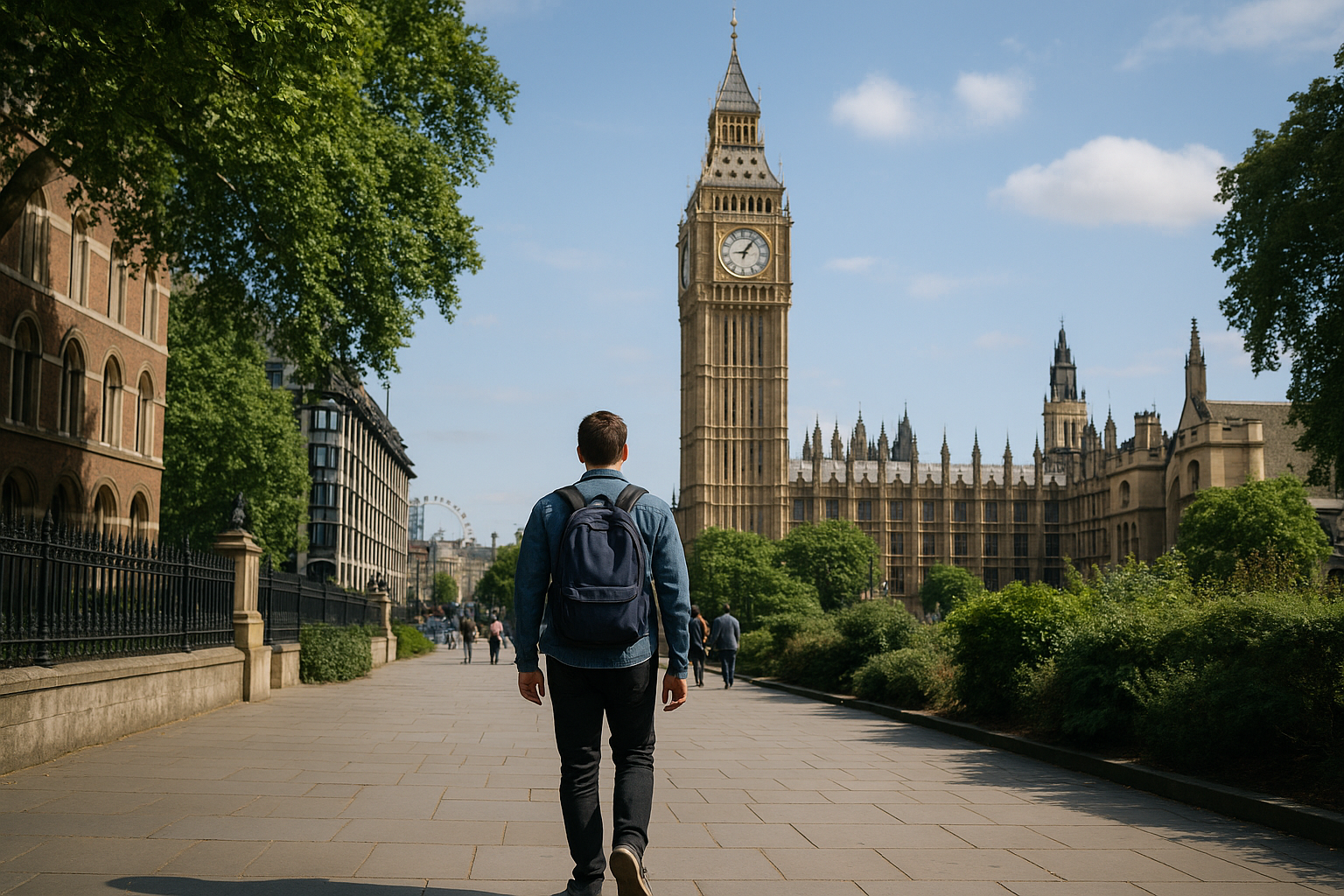
Why London Is Made for Walking
London doesn’t reveal itself from a bus window or a tube carriage. It reveals itself at street level — around a corner, through a market archway, along a riverbank at golden hour. The city is layered in a way that rewards curiosity, and the best london walking routes are the ones that let you move at your own pace, stopping when something catches your eye and lingering when it doesn’t feel right to leave.
Whether you’re visiting for the first time or you’ve already done the tourist trail and want to go deeper, London on foot is a completely different city. You’ll stumble onto Georgian squares, spot hand-painted murals between coffee shops, and find yourself in a bookshop you didn’t plan to enter for two hours longer than expected. That’s the thing about this city — it rewards wandering.
This guide covers four curated walking routes plus a handful of neighborhood walks that balance the iconic with the unexpected. Lace up your most comfortable shoes. London is waiting.
Route 1: The Thames Riverside — Tower Bridge to Westminster
This is the walk that makes you feel like you actually understand London. Starting at Tower Bridge, one of the most recognizable structures in the world, you head west along the South Bank and the north bank alternately, tracing the river that has shaped the city for centuries.
Begin on the north side at the Tower of London. You don’t need to go inside to feel the weight of its history — just standing in its shadow is enough to set the mood. Cross Tower Bridge and drop down to the South Bank, where the path opens up into one of the most vibrant stretches of urban riverside you’ll find anywhere in Europe.
Walk past the Tate Modern, where the old Bankside Power Station now houses one of the world’s great contemporary art collections. Even if you don’t go in, the building itself is worth pausing for. Continue past the reconstructed Globe Theatre, the Millennium Bridge, and the long stretch of food stalls, street performers, and second-hand book sellers that line the embankment on weekends.
Cross back over at Westminster Bridge and finish with a view of the Houses of Parliament and Big Elizabeth Tower reflected in the Thames. On a clear morning, this stretch is genuinely stunning. The whole walk covers roughly five kilometres and takes between ninety minutes and three hours depending on how many times you stop — which will be often.
Tips for This Route
- Start early to avoid crowds around Tower Bridge and the South Bank.
- The walk works in both directions, but west to east in the afternoon gives you the best light for photos.
- Borough Market is just off the South Bank route — arriving before noon means you’ll catch it at full energy.
- If you want a guided version, platforms like London Walks offer two-hour guided tours available daily that cover much of this area with expert commentary.
Route 2: East London — Street Art, Brick Lane, and Shoreditch
East London is where the city gets creative. This route is less about monuments and more about atmosphere — the kind of neighbourhood energy that you absorb rather than photograph (though you’ll photograph plenty of it).
Start in Shoreditch, which has been the heart of London’s street art scene for years. The walls around Shoreditch High Street and Bethnal Green Road change constantly, with new murals appearing and disappearing like a living gallery. Walk slowly here. Look up, look down, look into the side streets. Some of the most striking work is tucked away where you’d least expect it.
From Shoreditch, head south towards Brick Lane. This street is one of London’s most layered — a Bengali community hub, a vintage shopping destination, a bagel institution, and an independent gallery strip all at once. The Sunday market brings the whole area to life with food stalls, vintage clothing rails, and handmade goods. Even on a quieter weekday, Brick Lane has a character that’s completely its own.
Explore the covered market spaces off the main street — Spitalfields Market sits just to the west and offers a mix of independent designers, street food, and art prints. The surrounding streets are lined with Victorian architecture that tells the story of the waves of communities who have called this area home over the centuries.
This route covers a compact area, but you’ll easily spend half a day here without running out of things to discover. It’s the kind of walk that ends with a full camera roll and a bag of things you didn’t plan to buy.
Route 3: Royal London — Palaces, Parks, and Ceremony
If you want to understand the ceremonial side of London — the pageantry, the grandeur, the sheer scale of its royal history — this is your walk. And it’s more beautiful than you might expect, even if you’re not particularly interested in monarchy.
Begin at Buckingham Palace, where the famous Changing of the Guard ceremony takes place on selected mornings. Fun London Tours runs highly rated small group tours specifically covering this ceremony and the surrounding royal landmarks, which can be a great way to get context if it’s your first time in the area.
From the Palace, walk into St James’s Park — arguably London’s most beautiful royal park. The long lake, the pelicans that have lived here for centuries, the view back towards the Palace through the trees: it’s one of those places that feels almost theatrical in the best possible way. On a summer morning, with the light filtering through the leaves and the city still relatively quiet, it’s genuinely peaceful.
Continue through Green Park and up towards Hyde Park, passing Kensington Gardens and the Albert Memorial. The Royal Albert Hall sits just beyond, and the streets around Kensington are lined with white stucco townhouses that give this part of London its particular elegance.
This route covers a significant distance — roughly seven to eight kilometres if you walk the full stretch — but the parks make it feel effortless. You’re never far from a bench, a café kiosk, or a patch of grass to sit on.
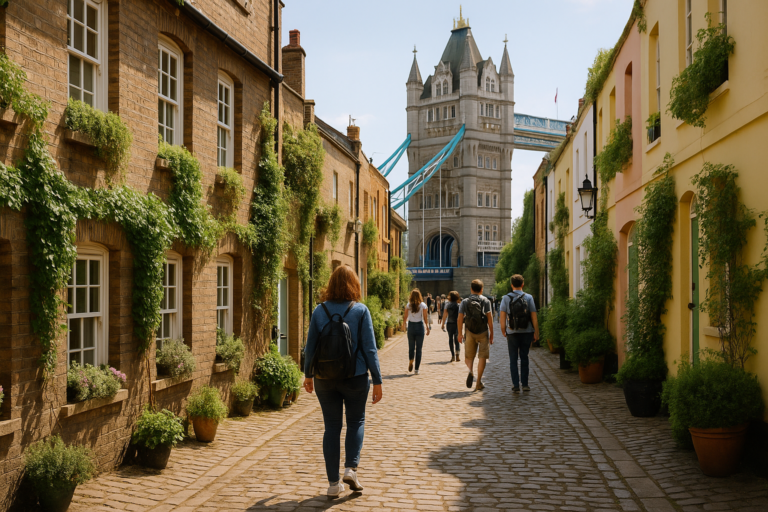
Route 4: Literary London — Bloomsbury, Bookshops, and Historic Pubs
London has always been a city of writers. Charles Dickens, Virginia Woolf, Arthur Conan Doyle, George Orwell — the list of literary giants who lived and worked here is extraordinary. This route takes you through the neighbourhood that has been at the heart of London’s literary life for more than two centuries.
Start in Bloomsbury, the area around the British Museum. The streets here are quieter than the tourist zones nearby, lined with Georgian terraces and garden squares. The neighbourhood gave its name to the Bloomsbury Group, the influential circle of writers and artists who gathered here in the early twentieth century. Walking these streets, it’s easy to understand why they chose it — there’s a contemplative quality to the area that invites thought.
The British Museum itself is one of the great free cultural institutions in the world. Even if you only spend an hour inside, the Great Court alone is worth the detour. From the museum, head south through Covent Garden and into the Strand, where the streets get busier but the history deepens.
The area around Charing Cross Road has long been London’s bookselling heartland. Independent bookshops still survive here, and browsing them is one of the genuine pleasures of a London visit. Pick up something to read on the tube or a title you’ve been meaning to get to for months.
End the route in one of the area’s historic pubs — the kind with low ceilings, dark wood, and a sense that the walls have heard a thousand conversations worth having. Order a pint, find a corner seat, and read a few pages of whatever you just bought. That’s a London afternoon done right.
Neighbourhood Walks Worth an Afternoon Each
Camden
Camden is loud, colourful, and entirely itself. The market area around Camden Lock is one of the most visited spots in London, but it earns its reputation. Alternative fashion, street food from every corner of the world, live music spilling out of venues at all hours — Camden has a particular energy that you either love immediately or take a little time to warm to. Walk along the canal towpath for a quieter perspective on the neighbourhood, or head up into Primrose Hill for a panoramic view of the city skyline.
Notting Hill
Notting Hill is famous for its pastel-coloured houses and Portobello Road Market, and both live up to the reputation. The market stretches for over a kilometre and changes character as you walk along it — antiques at one end, fresh produce in the middle, vintage clothing and street food further along. The surrounding streets are some of the most photographed in London, and for good reason. Come on a Saturday for the full market experience, or visit mid-week for a slower, more local feel.
Greenwich
Greenwich sits southeast of the city centre and feels like a different pace entirely. The Royal Observatory, the Cutty Sark, and the National Maritime Museum cluster together in a way that makes this one of London’s most rewarding half-day trips. Walk up through Greenwich Park to the Observatory for a view across the Thames and the city skyline that genuinely stops you in your tracks. The town itself has independent shops, good cafés, and a covered market worth exploring. Take the river boat from central London to arrive — the approach from the water sets the mood perfectly.
How to Make the Most of London Walking Routes
A few practical things worth knowing before you set off:
- Wear the right shoes. London’s pavements are uneven, its parks are occasionally muddy, and you will walk further than you expect. Comfortable, broken-in footwear is not optional.
- Use offline maps. Download your route before you leave your accommodation. Mobile data can be unreliable in some areas, and getting lost in an unfamiliar neighbourhood is more stressful than it sounds.
- Consider a guided option. Platforms like Guruwalk offer free walking tours led by expert local guides across a huge range of themes and neighbourhoods. If you’re new to the city or want deeper context for what you’re seeing, a guided walk can genuinely transform the experience.
- Build in time to stop. The best moments on any London walk are usually unplanned — a café you noticed from the street, a courtyard you ducked into to check the map, a conversation with someone who’s lived in the neighbourhood for forty years. Don’t schedule so tightly that you can’t follow those moments.
- Layer your clothing. London weather is famously changeable. A light waterproof layer takes up almost no space and saves a lot of misery.
- Start early. Most of these routes pass through areas that get genuinely crowded by mid-morning on weekends. The city at seven or eight in the morning belongs to a different, quieter version of itself.
Finding Your Own Route
The routes in this guide are starting points, not scripts. London rewards deviation. If you’re walking the South Bank and notice a street heading off to the right that looks interesting, follow it. If the Literary London route brings you past a café that looks exactly right, stop. The city is dense enough that you’re never more than a few minutes from something worth seeing, and open enough that getting slightly lost rarely leads anywhere bad.
Self-guided resources like those offered by My London Walks cover a wide range of neighbourhoods and themes, from Westminster and St James’s to the City of London and the areas around Tower Hill. If you want structure without a guide, these kinds of resources give you the best of both worlds.
The most honest thing to say about walking in London is this: the city is inexhaustible. You could spend a week here doing nothing but walking and still feel like you’d only scratched the surface. That’s not a warning — it’s an invitation. Start with one route, see where it takes you, and let the city do the rest.
London on Foot: The Only Way to Really See It
Every great city has a walking pace — a speed at which it finally makes sense. For London, that pace is somewhere between a stroll and a wander, with regular stops for coffee, conversation, and the occasional moment where you look up at a building or down a side street and think: I had no idea this was here. That feeling is available on every one of these routes, in every neighbourhood, on any day of the week. The london walking routes in this guide will get you started, but the real discovery begins the moment you put the map away and just walk.
This article was produced with AI assistance and reviewed editorially.


Vietnam Uncovered: Beyond the Chaos, Into the Real Story

Beyond the Guidebook: What Hanoi Actually Feels Like


