
Greece
Hidden Gems Beyond the Guidebook: Greece’s Milos, Italy’s Capri, and Avoiding Tourist Traps
Learn how to avoid tourist traps in the Mediterranean while exploring Milos’ hidden beaches and caves, plus Capri’s quieter corners for authentic experiences.

Why the Mediterranean Deserves More Than the Postcard Version
There’s a version of the Mediterranean that exists on every travel feed: packed beaches, overpriced cocktails with a view, and queues stretching around ancient ruins. And then there’s the real thing — tavernas where the owner brings out dishes you didn’t order because they want you to try something good, coves where the water is so clear it looks edited, and mornings so quiet you can hear the sea. Knowing how to avoid tourist traps in the Mediterranean is less about having insider secrets and more about shifting how you travel. It’s about slowing down, walking further, and choosing curiosity over convenience. This guide focuses on two of the Mediterranean’s most talked-about destinations — Milos in Greece and Capri in Italy — and gives you the tools to experience both without losing what makes them worth visiting in the first place.
Milos, Greece: The Island That Feels Like Another World
If you’ve seen photographs of Milos and assumed it must be overrun by now, think again. Described by Condé Nast Traveler as an untouched Greek island with a mythological landscape, Milos still manages to feel genuinely undiscovered — even as its reputation slowly grows. The island sits in the Cyclades, and it’s said to have the bluest water in the entire archipelago. That’s a big claim in a region famous for its sea, but when you arrive and see those colors for yourself, it stops sounding like an exaggeration.
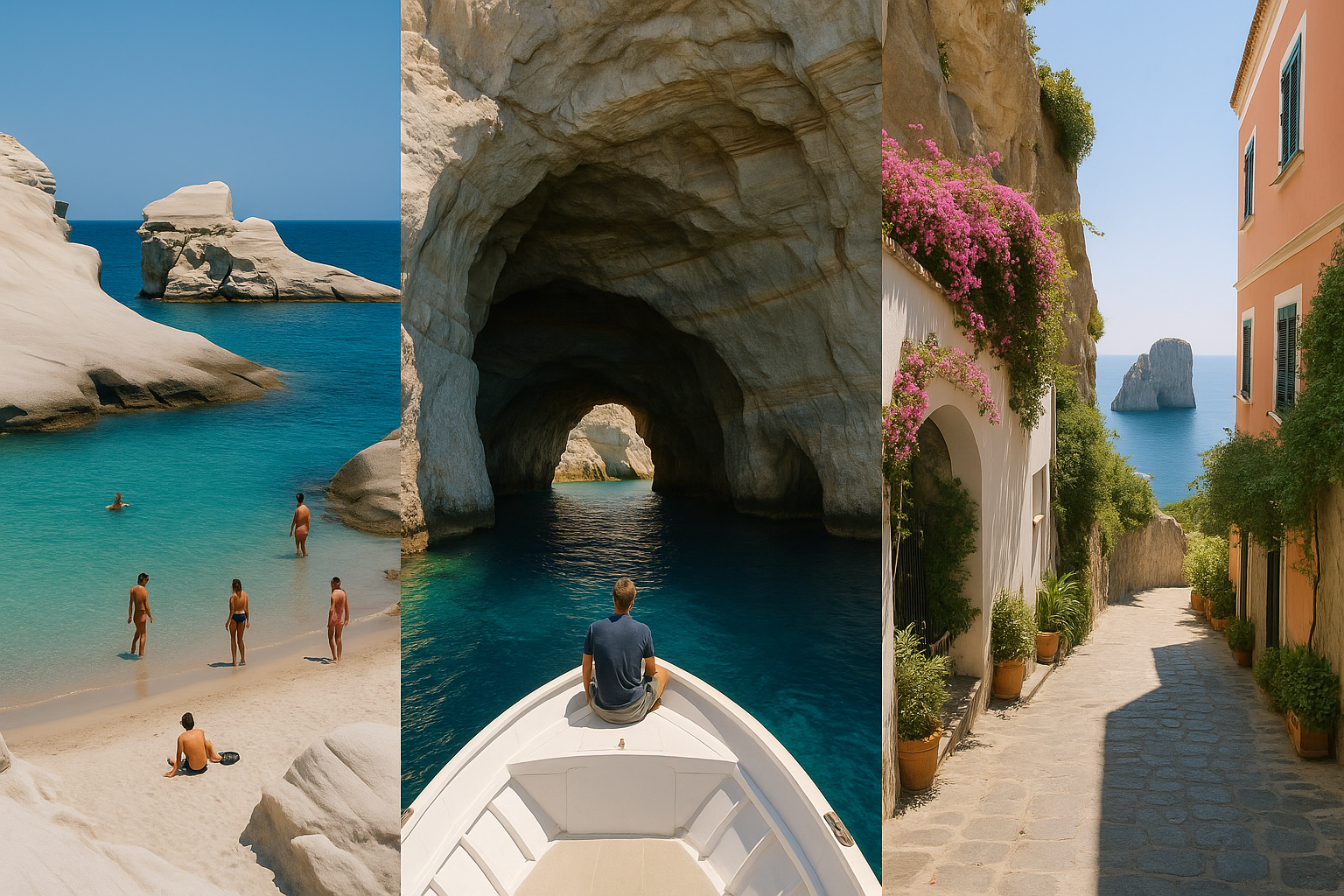
What sets Milos apart from other Greek islands isn’t just the scenery — it’s the texture of the place. Port towns lined with tavernas where fishing boats bob a few meters away. Moon-rock beaches that look like they belong on another planet. Private coves tucked between volcanic cliffs where you might be the only person swimming. This is the kind of landscape that makes you forget your phone exists, which is saying something.
Exploring Milos Without the Crowds
The key to experiencing Milos authentically is simple: don’t follow the crowd. The island’s most photographed spots are stunning, and yes, you should see them. But if you arrive at a famous beach at midday in peak summer, you’ll spend more time navigating sunbeds than actually enjoying the water. Go early. Go late. Or better yet, rent a small boat for the day and reach the coastline from the sea, which is how the locals have always done it.
Milos rewards the curious. The island has a volcanic geology that creates genuinely bizarre and beautiful formations — rock arches, colored cliffs, sea caves you can swim into if the conditions are right. Many of these spots aren’t listed anywhere. You find them by talking to the person who runs your accommodation, by following a path that doesn’t seem to lead anywhere obvious, or by asking at a taverna over a slow lunch. That conversation is often the best part of the trip.
- Hire a scooter or ATV to reach the less-accessible parts of the island’s coastline
- Visit popular beaches in the early morning or late afternoon to avoid the peak midday rush
- Ask locals — genuinely ask, in person — where they swim and where they eat
- Stay in one of the smaller villages rather than the main tourist hubs for a completely different experience
- Consider arriving in late spring or early September, when the island is quieter but the weather is still excellent
The port town of Adamas is a good base, but don’t let it be your whole experience of Milos. Walk the narrow streets of Plaka in the evening, when the day-trippers have gone and the village returns to itself. Eat where the tables are full of people speaking Greek, not where the menu is printed in six languages and displayed outside on a stand.
Capri, Italy: Finding the Quiet Side of a Famous Island
Capri has a reputation. It’s glamorous, it’s beautiful, and for a few months of the year it’s also extraordinarily busy. Day-trippers arrive in their thousands from the Amalfi Coast and Naples, flooding the main piazzas and the famous shopping streets before heading back to the mainland by evening. This rhythm — frantic by day, peaceful by night — is actually one of Capri’s best-kept secrets. Stay overnight and you’ll experience an entirely different island.
According to tours-italy.com, Capri has quieter corners and hidden gems that most visitors never find because they simply don’t stay long enough or venture far enough from the obvious landmarks. The island is small enough to explore on foot, and that’s exactly what you should do — not with a map, but with a general direction and a willingness to get a little lost.
Capri Beyond the Main Piazza
The Piazzetta is Capri’s famous central square, and it’s worth seeing — the architecture is beautiful, the energy is lively, and the people-watching is genuinely entertaining. But sitting down for a coffee there will cost you significantly more than it would anywhere else on the island. That’s the trade-off of the most famous spot in any tourist destination. Enjoy it, take it in, then move on.
Walk uphill toward Anacapri, the island’s second town, and the atmosphere changes noticeably. The streets are quieter, the restaurants are less performative, and the views from the higher elevation are extraordinary. Anacapri has its own character — more local, less curated — and it’s a reminder that even the most visited destinations contain multitudes if you’re willing to look.
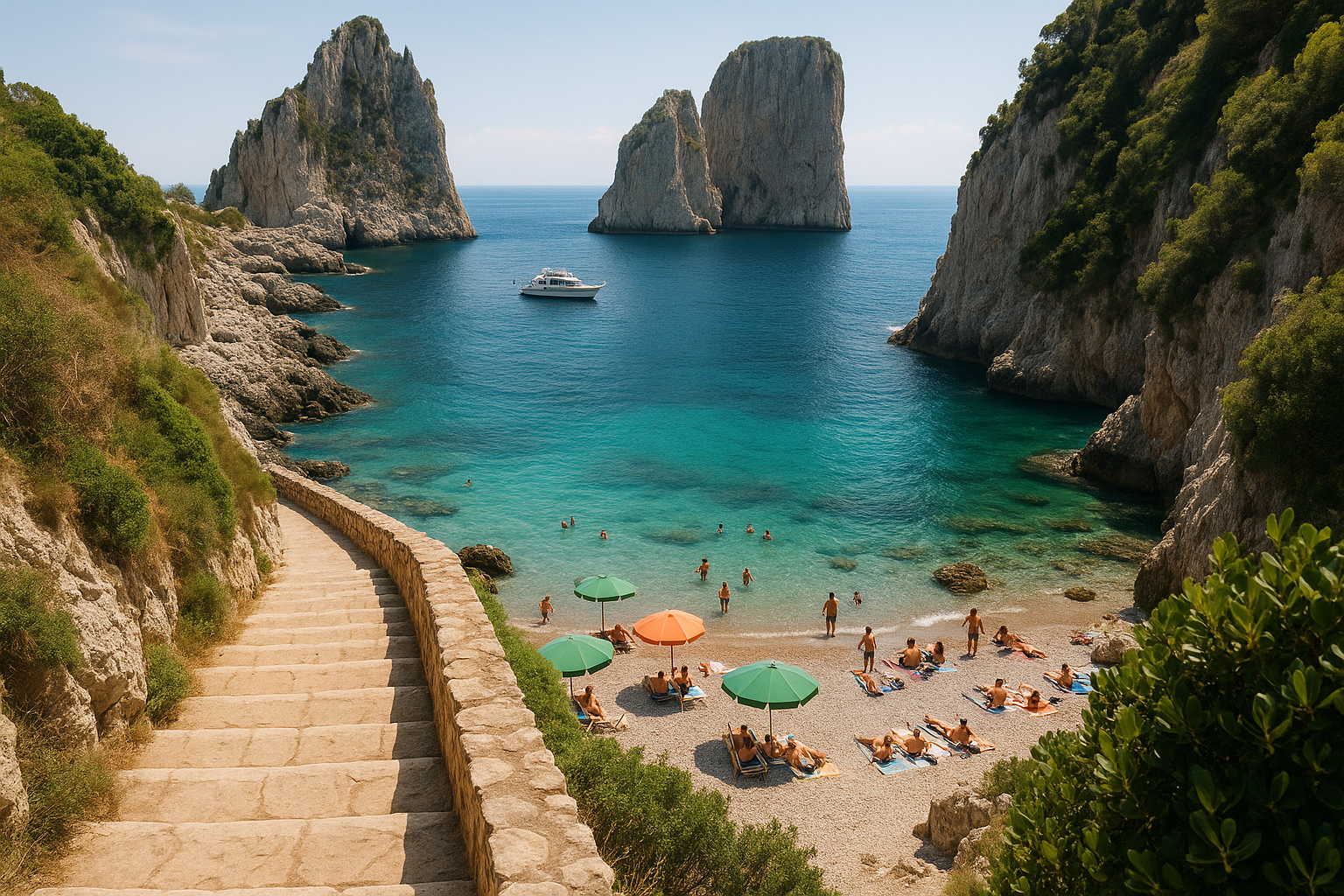
Capri’s coastline is also best experienced from the water. Boat tours of the famous Blue Grotto are popular for good reason, but they can feel rushed and transactional. If you want a more personal experience, consider hiring a small boat independently and exploring the island’s sea caves and hidden coves at your own pace. The southern cliffs, in particular, are dramatic and relatively quiet even during peak season.
Eating Well Without Paying Tourist Prices
One of the most practical pieces of advice for any Mediterranean destination — and Capri is no exception — is to walk. Just walk. A few blocks away from the main tourist drag, prices drop, menus get shorter (which is usually a good sign), and the food gets better. This isn’t a myth; it’s consistent advice from experienced travelers and locals alike. The restaurants that invest heavily in signage, multilingual menus, and prime real estate are often not the ones investing as heavily in the kitchen.
Look for places where you can’t immediately see the menu from the street. Look for places where the specials are written on a chalkboard and change daily. Look for places that are full of people who live on the island. These are the spots that will stay with you long after you’ve forgotten the name of the famous square you walked through.
Mediterranean Travel Strategy: How to Avoid Tourist Traps Wherever You Go
Milos and Capri are two very different islands, but the principles for experiencing them authentically are largely the same — and they apply across the entire Mediterranean. Whether you’re exploring the Greek islands, the Italian coast, the Croatian archipelago, or the Spanish Balearics, the following strategies will help you avoid tourist traps in the Mediterranean and find the version of each place that’s worth the journey.
Timing Is Everything
The Mediterranean’s peak season runs roughly from late June through August. During these months, the most popular destinations are at their busiest, their most expensive, and — in some cases — their least enjoyable. The sea is at its warmest, yes, and the atmosphere is lively, but the trade-off in terms of crowds and prices is significant.
Late spring — May and early June — is one of the best times to visit most Mediterranean islands. The weather is warm and settled, the sea is swimmable, the flowers are out, and the crowds haven’t arrived yet. Early autumn, particularly September, offers similar conditions with the added benefit of slightly cooler temperatures that make hiking and exploring much more comfortable. If you have flexibility in your travel dates, use it.
Stay Longer, Go Deeper
One of the biggest mistakes young travelers make in the Mediterranean is trying to cover too much ground too quickly. Spending two nights on an island and then rushing to the next one means you’re always arriving, never settling. You see the surface of each place but never get beneath it.
Give yourself at least four or five nights somewhere before moving on. By day three, you’ll have found your café. By day four, you’ll know which beach to go to in the morning and which path to walk in the evening. By day five, the person at the taverna will remember your order. That’s when travel stops being tourism and starts being something more meaningful.
Ask the Right People the Right Questions
Your accommodation host is one of the most valuable resources you have. Not the front desk of a large hotel — the owner of a small guesthouse, the person who runs the apartment you’ve rented, the woman who brings you breakfast. These people know the island. They know which beach gets crowded and which one doesn’t. They know which restaurant is good and which one is coasting on its location. Ask them directly: where do you eat? Where do you swim? What should I not miss?
Most people are genuinely happy to share this kind of knowledge with a curious, respectful traveler. The key word is respectful — approach the conversation with genuine interest rather than treating it as a transaction.
Read the Signs (Literally)
In many Mediterranean destinations, the difference between a tourist trap and a great local spot is visible before you even sit down. Menus displayed outside in multiple languages, photographs of every dish, aggressive staff inviting you in from the street — these are all signs that the business model is based on volume rather than quality. That’s not always a disaster, but it’s worth being aware of.
Contrast that with a place that has no sign outside, a handwritten menu in the local language, and a small number of tables that are clearly in demand. These spots require a little more effort to find and a little more confidence to walk into, but they almost always deliver something more memorable.
The Mindset That Changes Everything
Ultimately, knowing how to avoid tourist traps in the Mediterranean comes down to one thing: being willing to trade convenience for experience. The tourist infrastructure exists because it works — it’s easy, it’s predictable, and it’s everywhere. But easy and predictable are rarely the things you remember.
The memory you’ll carry home from Milos won’t be the beach you saw on Instagram. It’ll be the one you found by accident after taking a wrong turn on a rented scooter. The memory from Capri won’t be the famous grotto you queued for — it’ll be the meal you had at a table with no view, where the pasta was so good you ordered it twice. These moments don’t come with a booking confirmation. They come from showing up with curiosity, patience, and a willingness to go a little further than the obvious.
The Mediterranean is one of the most beautiful, historically rich, and culturally vibrant regions on the planet. It can also be one of the most over-touristed. The difference between those two experiences isn’t the destination — it’s the approach. Slow down, walk further, ask more, and trust that the best version of any place is always just a little off the beaten path. That’s where your story actually starts.
This article was produced with AI assistance and reviewed editorially.


New Zealand’s Geothermal Wonders: Rotorua & Where to Stay for Adventure & Maori Culture

Adventure Beyond the Beach: Things to Do in Jeju, South Korea & Tayrona Park, Colombia


