
North America
North American Road Trips: Montreal-to-Quebec City vs. San Francisco-to-San Diego (2026 Comparison)
Compare two iconic North American road trips: Montreal to Quebec City along the St. Lawrence River or San Francisco to San Diego on the Pacific Coast. Choose the route th

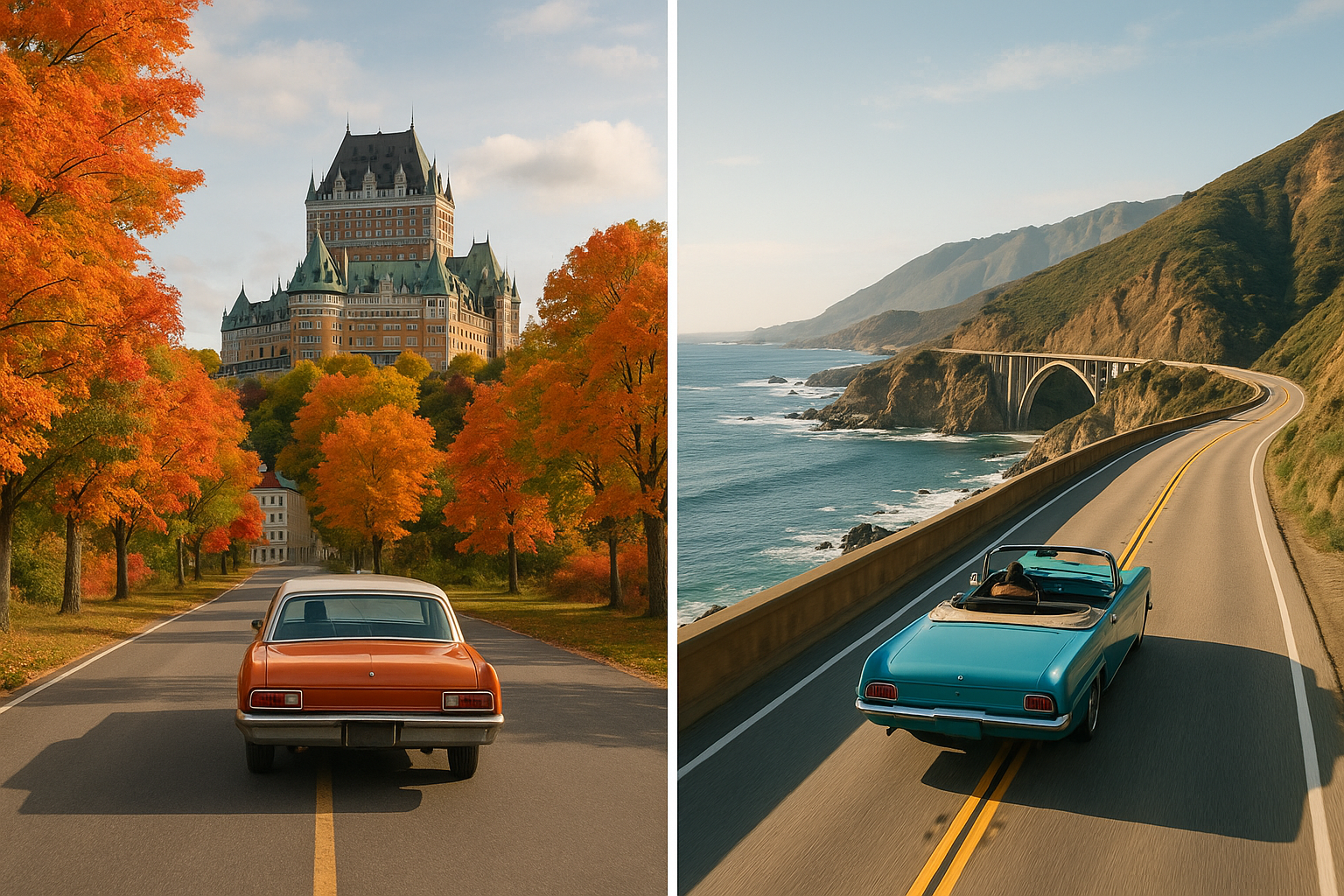
Two Classic North American Road Trips, One Big Decision
Some journeys stay with you long after you’ve returned home. North American road trips have a way of doing that — the kind where you’re still thinking about a roadside diner, a cliffside view, or a cobblestone street weeks later. Two routes in particular keep coming up in conversations among young travelers: the drive from Montreal to Quebec City along the St. Lawrence River, and the legendary Pacific Coast run from San Francisco down to San Diego. Both are iconic. Both are genuinely worth doing. But they offer completely different experiences, and choosing the right one for your travel style matters more than you’d think.
This guide breaks down both routes honestly — what makes each one special, what to expect on the road, and how to decide which one belongs on your calendar first.
Montreal to Quebec City: A Drive Through Living History
At roughly 250 km (about 155 miles), the Montreal-to-Quebec City route is the shorter of the two. Don’t let that fool you into thinking it’s a quick trip. This drive rewards slowness. It rewards curiosity. And if you take the scenic road instead of the highway, it rewards you with one of the most culturally rich stretches of road in all of North America.
The Fast Route vs. The Beautiful Route
You have two main options here. Highway 20 is the direct shot — fast, efficient, and it gets you from Montreal to Quebec City in roughly two hours and forty-five minutes to three hours depending on traffic. It’s fine. But honestly, you’d be missing the point.
The alternative is Route 138, also known as the Chemin du Roy. This is the oldest road in the province of Quebec, running along the north shore of the St. Lawrence River. It passes through small villages, historic churches, local farms, and riverside viewpoints that feel completely removed from the modern world. The Chemin du Roy isn’t just a road — it’s a heritage route that tells the story of French Canada in a way that no museum can fully replicate.
If you have the time, take Route 138. Wake up early in Montreal, grab a coffee from a neighborhood café in the Plateau-Mont-Royal, and let the city fade into the countryside as you follow the river east. Stop wherever something catches your eye. That’s the whole point.
What to Expect Along the Way
The villages along the Chemin du Roy each have their own personality. You’ll find local bakeries, roadside stands selling regional produce, and small churches that have stood for centuries. The St. Lawrence River itself is a constant presence — wide, dramatic, and quietly impressive. On a clear morning, the light on the water is something you’ll want to photograph badly and fail to capture fully.
Trois-Rivières sits roughly halfway between Montreal and Quebec City and makes a natural stopping point. It’s one of the oldest cities in North America, with a compact historic district that’s easy to explore on foot. Grab lunch here, wander the old streets, and then continue east toward Quebec City.
When you finally arrive in Quebec City, the contrast is striking. The fortified walls of Old Quebec rise above the river, and the narrow streets of the Lower Town feel genuinely medieval. This is one of the few walled cities in North America, and walking through it for the first time is one of those travel moments that actually lives up to the anticipation.
Best Season for This Route
Autumn is when this drive becomes something close to magical. The forests of Quebec turn vivid shades of orange, red, and gold from roughly late September through mid-October, and the riverside scenery along the Chemin du Roy is at its most dramatic. Summer is also excellent — long days, outdoor festivals, and warm enough to enjoy the terraces and riverside spots. Winter is beautiful if you’re prepared for the cold and genuinely want to experience Quebec in its most atmospheric season. Spring can be unpredictable, but the landscapes coming back to life have their own quiet appeal.
For 2026, the sweet spot for most travelers will be late August through October. The summer crowds begin to thin, the foliage starts building toward its peak, and Quebec City’s cultural calendar stays active well into the fall.
San Francisco to San Diego: The Pacific Coast Classic
This is one of those north american road trips that has its own mythology. People talk about it before they go, during the drive, and for years afterward. The route runs roughly 500 miles down the California coast, and nearly every mile offers something worth slowing down for.
Understanding the Two Endpoints
San Francisco and San Diego are both extraordinary cities, but they feel like they belong to different worlds. San Francisco averages temperatures between 55 and 65 degrees Fahrenheit with frequent fog rolling in off the bay — it’s a city of hills, cable cars, and a certain moody, cinematic atmosphere. San Diego, at the other end of the drive, is warm and sun-drenched, averaging between 72 and 78 degrees in summer, with around 266 sunny days per year. Its beaches — La Jolla, Coronado, Mission Beach — are genuinely warm and swimmable, unlike San Francisco’s Baker Beach and Ocean Beach, which are better suited to long walks than swimming.
Starting in San Francisco and driving south means you’re moving from fog and urban energy toward warmth, beach culture, and a more relaxed pace. That directional shift feels satisfying in a way that’s hard to explain until you’ve done it.
The Drive Itself
The route south from San Francisco offers real flexibility. You can push straight down the coast on Highway 1, which hugs the cliffs above the Pacific and delivers some of the most dramatic coastal scenery you’ll find anywhere on the continent. Or you can mix in stretches of US-101 for variety and speed when you need it.
Big Sur is the undeniable highlight of the northern stretch. The cliffs drop sharply into the ocean, the road curves through redwood groves, and the whole landscape feels enormous and wild. It’s the kind of place where you pull over not because you planned to, but because you simply have to. Allow at least half a day here — more if you can manage it.
Further south, the Central Coast opens up around San Luis Obispo and Santa Barbara. These are genuinely lovely towns with great food scenes, walkable downtowns, and a slower pace that makes them ideal overnight stops. Santa Barbara in particular — with its Spanish colonial architecture and palm-lined streets — feels like a destination in its own right rather than just a waypoint.
Los Angeles sits roughly two-thirds of the way down the route. You can spend as much or as little time here as you like. If it’s your first time, a day or two is worth it. If you’ve been before and you’re more interested in the coastal journey, it’s perfectly reasonable to pass through and keep moving south.
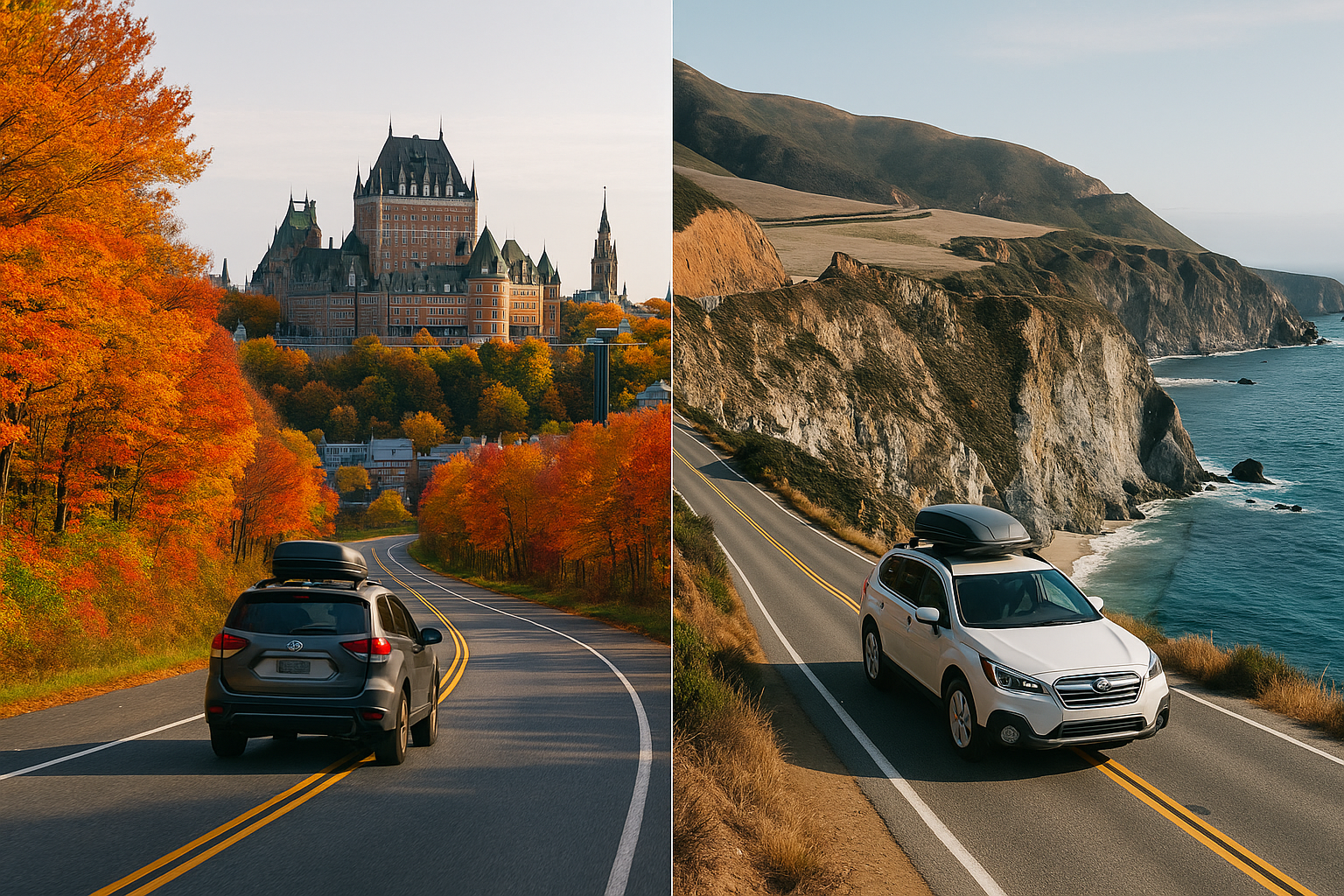
The final stretch from LA to San Diego passes through beach communities like Laguna Beach and Carlsbad, each with its own character. By the time you roll into San Diego, you feel like you’ve earned the sunshine.
Best Season for This Route
Late spring and early fall are the sweet spots for this drive. May and June offer pleasant temperatures and manageable crowds before the peak summer rush. September and October are arguably even better — the summer crowds thin out, the weather stays warm, and the light along the coast takes on a golden quality that photographers chase specifically during these months.
Summer is perfectly doable, but July and August bring heavier traffic along popular stretches and higher accommodation prices, especially near Big Sur and Santa Barbara. If you’re planning your 2026 trip and have flexibility, aim for September — it’s consistently one of the best months on this entire stretch of coastline.
Comparing the Two Routes: Which One Is Right for You?
These are both genuinely great north american road trips, but they appeal to different kinds of travelers. Here’s how to think about the choice honestly.
Go Montreal to Quebec City If…
- You’re drawn to history, architecture, and living culture rather than beach scenery.
- You want a route where the journey itself — the villages, the river, the heritage road — is as compelling as the destination.
- You’re planning a shorter trip and want something manageable in two to four days without feeling rushed.
- You’re traveling in autumn and want to experience fall foliage in one of its most dramatic North American settings.
- You want to practice or immerse yourself in French language and culture — Quebec is genuinely bilingual, but French is the heartbeat of both cities.
- You prefer urban exploration and café culture to beach days and outdoor sports.
Go San Francisco to San Diego If…
- Coastal scenery and wide-open Pacific views are what you’re after.
- You want a longer drive with more varied stops and a genuine sense of covering ground.
- You’re planning to mix beach time, hiking, and city exploration across a week or more.
- You’re traveling in spring or fall and want warm, sunny weather by the end of the drive.
- You want the classic American road trip experience — diners, scenic overlooks, beach towns, and the feeling of the open highway.
- You’d like to end your trip somewhere warm enough to actually swim in the ocean.
Practical Planning: What to Know Before You Go
Budget Considerations
Both routes can be done on a range of budgets, and your biggest variables will be accommodation and how often you eat out versus self-catering. The San Francisco-to-San Diego route is longer and passes through some high-cost areas — Big Sur accommodation in particular tends to be expensive, and Los Angeles isn’t cheap. Booking ahead for popular stretches is genuinely important, especially in summer.
The Montreal-to-Quebec City route is more compact, which means lower fuel costs and fewer nights on the road if you’re keeping it tight. Quebec City has a good range of accommodation options from budget hostels in the Lower Town to mid-range hotels within walking distance of the historic sites. Montreal is a student city with a strong hostel culture, so your first and last nights don’t need to break the bank.
For either route, keeping accommodation costs down through hostels, guesthouses, or camping where available will make the biggest difference to your overall spend. Food costs are more manageable if you’re willing to eat where locals eat rather than in tourist-facing restaurants — which, conveniently, also tends to produce better meals.
Getting a Car
For the California route, renting in San Francisco and dropping off in San Diego is a standard one-way rental — widely available and usually straightforward to arrange. Book in advance for better rates, especially for summer travel.
For the Quebec route, Montreal is the natural starting point for a rental. If you’re already in Canada, this is simple. If you’re crossing from the US, check your rental agreement for cross-border permissions — most major rental companies allow it, but it’s worth confirming.
Useful Resources
For more detail on the Montreal-to-Quebec City route, including the Chemin du Roy heritage road, the official Quebec City tourism site is an excellent starting point. For a broader look at planning a week-long Quebec road trip, Authentik Canada’s road trip guide offers well-organized itinerary suggestions worth exploring.
Why Both Routes Deserve a Place on Your List
Here’s the honest truth: you don’t have to choose forever. These are two of the most rewarding north american road trips available to young travelers right now, and they complement each other beautifully. One is compact, culturally immersive, and historically layered. The other is expansive, scenically dramatic, and endlessly varied. If you do one this year, you’ll almost certainly start planning the other before you’ve even unpacked.
The real question isn’t which route is better — it’s which one matches where you are right now, what you’re hungry for, and what kind of story you want to come home with. Both will give you something worth telling. That’s a promise the road makes to everyone who takes it seriously.
Start planning, pick your route, and go. The highway is waiting — and so is the version of yourself that only shows up when you’re moving.
This article was produced with AI assistance and reviewed editorially.


City Guides for Young Travelers: Buenos Aires, Quito, and Trujillo (Culture, Food & Adventure)

Where to Stay in Southern Africa: Botswana, Namibia & Madagascar for First-Time Visitors


