
United Kingdom
Isles of Scilly: The UK’s Best-Kept Island Secret—12 Must-Visit Spots (2026)
Discover the Isles of Scilly, a remote UK archipelago 30 miles off Cornwall with pristine beaches, wildlife, and five inhabited islands. Complete travel guide inside.

Why the Isles of Scilly Belong on Every Young Traveler’s Radar
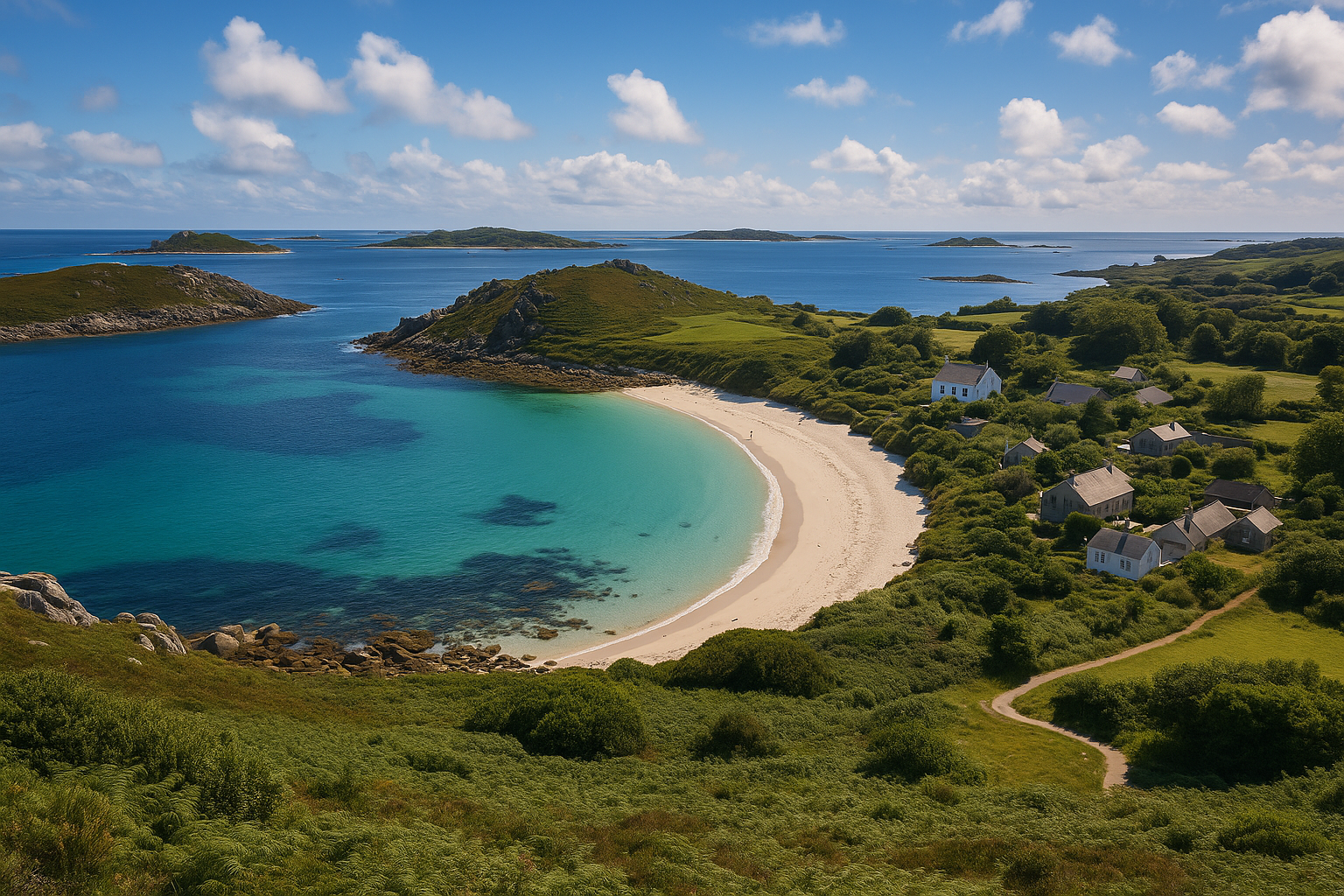
Picture turquoise water so clear you can see the seabed from ten metres up. White sand beaches with barely another person in sight. Puffins bobbing offshore, dolphins cutting through the waves, and a night sky so dark it feels like the whole universe has opened up above you. Now imagine all of this is in the UK, just a short hop from the Cornish coast. That’s exactly what the Isles of Scilly offer — and most people your age have no idea they exist.
Sitting roughly 30 miles off the coast of Cornwall, this extraordinary archipelago of 140 islands feels genuinely worlds away from the mainland. Only five of those islands are inhabited — St Mary’s, Tresco, Bryher, St Martin’s and St Agnes — which means the rest are left to the birds, the seals, and the wild Atlantic. Over 35 beaches are scattered across the islands, and the pace of life here is unlike anywhere else in Britain. No traffic jams. No crowds. Just salt air, open water, and the kind of slow, deliberate travel that reminds you why you started exploring in the first place.
This guide covers everything you need to know before you go: the best spots to visit, how to get there, where to stay, and what time of year actually makes sense for a trip. Let’s get into it.
Getting to the Isles of Scilly: Your Options Explained
Getting to Scilly is part of the adventure. You’ve got a few different ways to make the crossing, and each one comes with its own kind of magic.
By Ferry from Penzance
The classic option is the ferry crossing from Penzance, which takes around three hours to reach St Mary’s. It’s not the fastest route, but it’s genuinely one of the most atmospheric ways to arrive. You watch the Cornish coast shrink behind you, the ocean opens up, and by the time the islands appear on the horizon, you’re already in a different headspace. If you tend to get seasick, take precautions — the Atlantic crossing can be choppy, especially outside summer. But for most travelers, the ferry is a rite of passage worth doing at least once.
By Plane from the Mainland
If you’re short on time or just want to get there fast, flying is the obvious choice. Regular flights operate from Exeter, Newquay, and Land’s End, with some routes taking as little as 20 minutes. The flight from Newquay takes around half an hour, while Exeter clocks in at under an hour. These are small propeller aircraft flying low over the ocean — which sounds nerve-wracking but is actually one of the coolest travel experiences you can have in Britain. The views on the approach to St Mary’s Airport are stunning.
By Helicopter to Tresco
For something genuinely special, helicopter flights run from Penzance directly to Tresco. It’s a short hop but the aerial perspective of the islands — that patchwork of beaches, heathland, and shimmering water — is unforgettable. Worth budgeting for if you can swing it.
The Sleeper Train Option
If you’re coming from London and want to keep things low-impact and adventurous, consider taking the sleeper train down to Cornwall as part of your journey. You board in London in the evening, wake up in Cornwall, and then connect onward to Penzance for your ferry or flight. It’s a brilliant way to start a trip — practical, scenic, and a lot more interesting than a budget flight at 5am.
One more thing worth knowing: UK visitors don’t need a passport to travel to Scilly. A driver’s license is sufficient for flying. It’s technically part of the UK, just very far out to sea.
The Five Inhabited Islands: What Each One Offers
Each of the five inhabited islands has its own distinct personality. Choosing which ones to visit — or whether to base yourself on one and day-trip to the others — is one of the most enjoyable parts of planning a Scilly trip.
St Mary’s: The Gateway Island
St Mary’s is the largest and most populous island, and it’s where most visitors arrive first. Hugh Town, the main settlement, has a good selection of cafés, pubs, and independent shops. The island is big enough to spend a full day exploring on foot or by bike, with coastal paths that wind past prehistoric burial mounds, sandy coves, and dramatic cliff edges. It’s a strong base for island-hopping, with regular boat services connecting to all the other inhabited islands throughout the day.
The beaches on St Mary’s are genuinely impressive. Porthcressa Beach sits just below Hugh Town and is perfect for an evening swim, while Porth Hellick on the eastern side is quieter and wilder, backed by heathland and often home to wading birds. The Garrison, a historic fortification on the southwestern headland, offers sweeping views across the whole archipelago and is well worth the walk.
Tresco: Gardens, Beaches, and Absolute Calm
Tresco is the island that tends to stop people in their tracks. It’s privately managed, which means it’s immaculately kept but also genuinely peaceful — no cars, no noise, just footpaths winding between some of the most beautiful beaches in the UK. Appletree Bay on the western coast is a particular highlight: a long curve of pale sand with shallow, warm water that genuinely rivals what you’d expect in the Mediterranean.
The Abbey Garden on Tresco is one of the most extraordinary gardens in Britain, built in the shelter of ancient abbey ruins and home to plants from all over the world. Even if you’re not particularly into gardens, it’s worth a visit — the combination of subtropical plants, ruined stone walls, and ocean views creates an atmosphere unlike anywhere else. On the northern tip of the island, Cromwell’s Castle stands on a rocky promontory above the water, a 17th-century fortress that feels like it belongs in a different century entirely.
Bryher: The Wild One
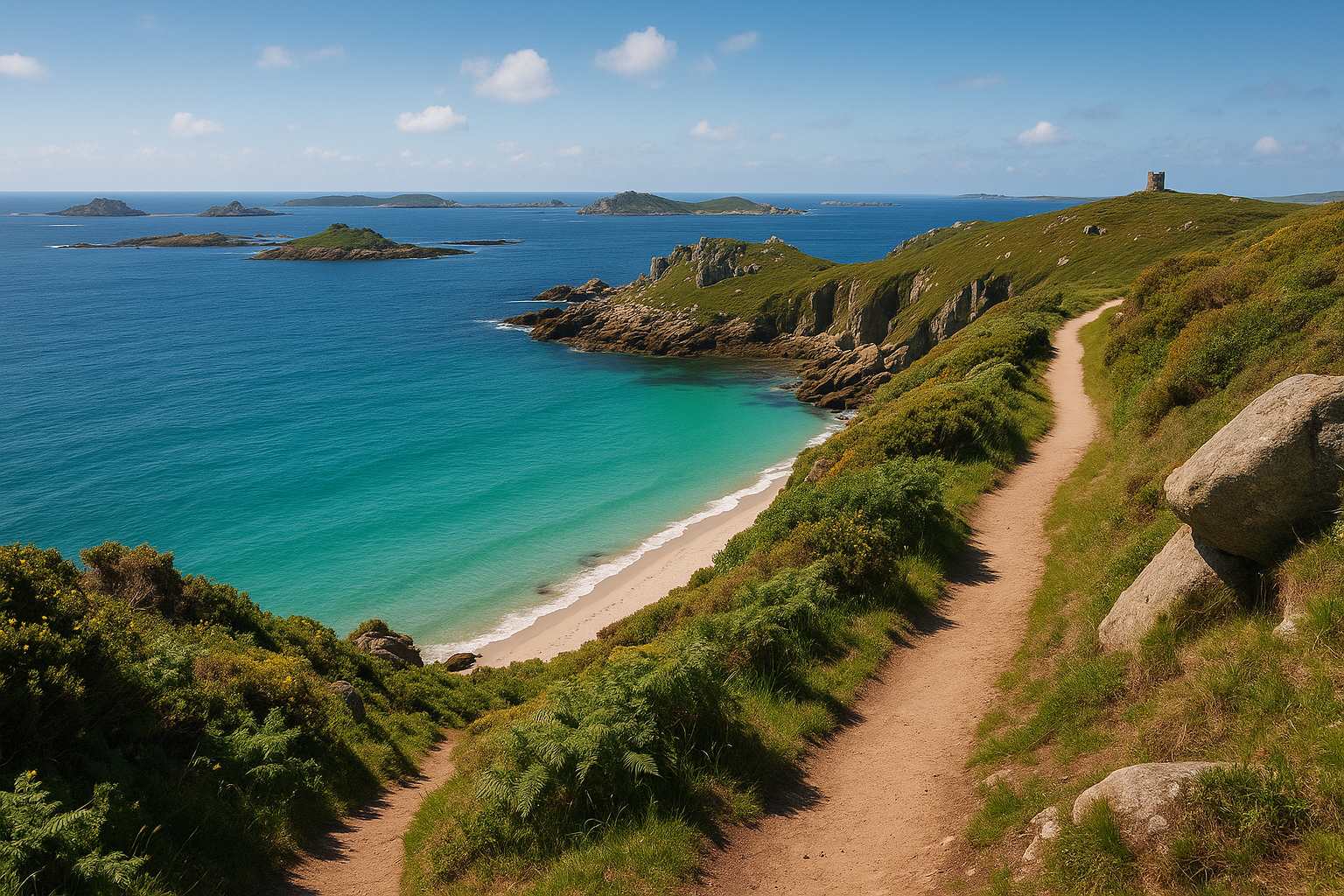
Bryher is the smallest of the inhabited islands and arguably the most dramatic. The western coast faces the full force of the Atlantic, and on a rough day, the waves crashing against Hell Bay are genuinely awe-inspiring. The eastern side, by contrast, is sheltered and calm, with the narrow channel between Bryher and Tresco creating a tranquil lagoon that’s brilliant for kayaking.
Rushy Bay on the southern tip is one of those beaches that makes you stop walking and just stand there for a moment. It’s sheltered, sandy, and often completely empty. The views across to St Agnes and beyond are extraordinary. Bryher rewards slow exploration — bring a picnic, take your time, and let the island reveal itself at its own pace.
St Martin’s: Beaches That Defy Expectations
St Martin’s is widely regarded as having the finest beaches in the entire archipelago, which is saying something given the competition. The north-facing beaches along the island’s top edge — Great Bay, Lawrence’s Bay, and the stretch around the eastern point — are long, flat, and backed by dunes, with water that shifts from pale green to deep blue depending on the light. On a clear summer day, it’s genuinely hard to believe you’re in England.
The island is also a good spot for wildlife watching. The waters around St Martin’s are excellent for snorkeling, with clear visibility and a surprising amount of marine life. Look out for grey seals, which are a common sight hauled out on the rocks or bobbing curiously in the shallows near the shore.
St Agnes: The Southernmost Point
St Agnes is the most southerly inhabited island in the UK, and it has a wonderfully remote, end-of-the-world feeling. The island is connected to the tiny islet of Gugh by a sand bar called The Bar, which you can walk across at low tide — one of those simple, slightly magical experiences that stays with you. Periglis Cove on the western side is a sheltered, rocky beach that’s popular with sea kayakers, while Covean Beach is calm and sandy enough for swimming.
St Agnes is also one of the best places in the archipelago for stargazing. The Isles of Scilly are home to some of the darkest night skies in the country, and on a clear night away from the few lights of the settlement, the Milky Way is clearly visible. If you’re visiting in summer, stay out late and look up.
Wildlife Watching in the Isles of Scilly
The islands are a genuinely exceptional destination for wildlife. Dolphins are regularly spotted in the waters around the archipelago — sometimes from the ferry crossing itself, sometimes from the coastal paths on the western islands. Puffins nest on several of the uninhabited islands and can often be seen from boat trips during the spring and early summer breeding season.
Grey seals are a constant presence, curious and surprisingly unbothered by human visitors. Birdwatching is taken seriously here — the islands sit on important migration routes and attract rare species that draw enthusiasts from across the UK and beyond. Even if you’re not a dedicated birder, it’s hard not to be captivated by the sheer variety of birds you’ll encounter just walking the coastal paths.
For more information on wildlife in the area, the official Visit Isles of Scilly website is an excellent resource, with up-to-date information on what’s in season and where to look.
Best Time to Visit
The islands are at their most vibrant between late spring and early autumn, roughly May through September. Summer brings the longest days, the warmest water temperatures, and the best conditions for swimming and boat trips. The islands can get busy in July and August, particularly on weekends, so if you want a quieter experience, early June or September tends to hit a sweet spot — warm enough to enjoy the beaches, calm enough to feel like you have the place to yourself.
Spring is worth considering if you’re primarily interested in wildlife. Puffins and other seabirds are active during the nesting season, and the wildflowers across the heathland are spectacular. The weather is less predictable, but the islands have a raw, windswept energy in spring that feels genuinely exciting rather than uncomfortable.
Winter visits are possible but require a certain kind of traveler — someone who appreciates dramatic skies, crashing waves, and the feeling of being somewhere genuinely remote. Ferry services are reduced, and some accommodation closes for the season, so planning ahead is essential.
Where to Stay
Accommodation across the five islands ranges from self-catering cottages and guesthouses to a handful of small hotels. St Mary’s has the widest range of options, which makes it a practical base for first-time visitors. Tresco has its own self-contained accommodation offering, managed as part of the island’s private estate. Bryher, St Martin’s, and St Agnes all have smaller, more intimate options — often family-run and deeply connected to the local community.
Camping is available on some of the islands and is a genuinely brilliant way to experience Scilly on a tighter budget. Waking up to the sound of the ocean, stepping outside to a view of the water, and spending the evening under those extraordinary dark skies — it’s one of those travel experiences that costs relatively little but gives back enormously.
Book as early as you can, particularly for summer. Accommodation is limited across all five islands, and popular spots fill up months in advance. National Geographic’s guide to island-hopping in Scilly is a great starting point for understanding how to structure a multi-island trip.
Practical Tips Before You Go
- Cash still matters. Some smaller businesses and stalls on the islands operate cash-only, so carry some with you.
- Bring layers. Even in summer, the Atlantic wind can be brisk. A lightweight waterproof and a warm mid-layer will serve you well.
- Hire a bike on St Mary’s. It’s the best way to explore the island in a single day, and the coastal paths are well-suited to cycling.
- Book boat trips in advance. Inter-island ferries and wildlife boat trips can fill up quickly during peak season.
- Leave your schedule loose. Weather and tides affect boat services. Build flexibility into your plans and you’ll enjoy the spontaneity rather than stress about it.
- Bring snorkeling gear. The water clarity around St Martin’s and Tresco in particular is exceptional, and it costs nothing once you’re there.
- Respect the wildlife. Keep a respectful distance from seals and nesting birds. The islands’ ecosystems are fragile and worth protecting.
Why the Isles of Scilly Are Worth the Journey
There’s a particular kind of travel that doesn’t require a long-haul flight or a thick stack of currency. It just requires the willingness to look somewhere unexpected and commit to the journey. The Isles of Scilly are exactly that kind of destination — overlooked, underrated, and genuinely extraordinary once you arrive.
You’ll come back with sand in your shoes, a phone full of photos that don’t quite do justice to the light, and a quiet certainty that you’ve found something most people your age haven’t discovered yet. That feeling — of being somewhere real, somewhere unhurried, somewhere that asks nothing of you except your attention — is exactly what travel is supposed to feel like.
The islands will still be there when you get home. But the version of yourself that walks those beaches, watches the sun set over the Atlantic, and falls asleep to the sound of the ocean — that’s the version worth chasing. Start planning your trip to the Isles of Scilly and see where the journey takes you.
This article was produced with AI assistance and reviewed editorially.


City Guides for Young Travelers: Buenos Aires, Quito, and Trujillo (Culture, Food & Adventure)

Where to Stay in Southern Africa: Botswana, Namibia & Madagascar for First-Time Visitors


