
Mexico
Guanajuato: Mexico’s Most Beautiful City You’ve Never Heard Of (2026)
Discover Guanajuato, Mexico’s most beautiful colonial city with vibrant architecture, underground tunnel system, and rich cultural heritage in central Mexico.

Why Guanajuato, Mexico Should Be on Every Young Traveler’s Radar
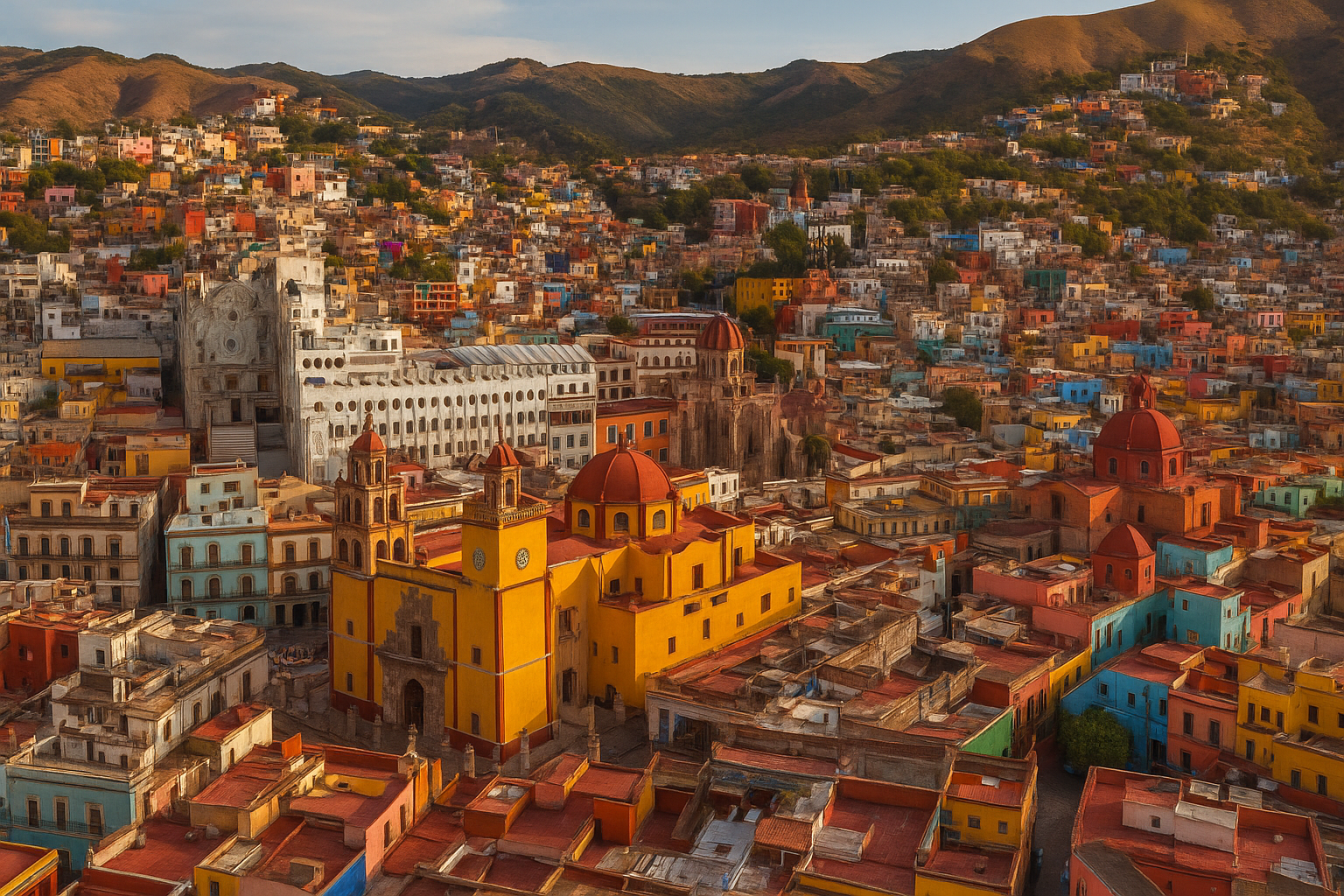
There’s a moment, somewhere between descending into a tunnel carved beneath an entire city and emerging onto a hillside painted every color imaginable, when Guanajuato, Mexico stops feeling real. It looks like someone sketched a dream and then decided to build it anyway — fuchsia pink walls next to saffron yellow, lime green balconies dripping with bougainvillea, cobblestone alleys twisting upward into the sky. And yet, most travelers flying into Mexico head straight for the coast or the capital, completely missing one of the most extraordinary cities in the entire country. That’s starting to change, but for now, Guanajuato still feels like a discovery. Here’s why you should make it yours.
A City With a Story Worth Knowing
Before you wander the streets, it helps to understand what shaped them. Guanajuato was founded by the Spanish in the early 16th century, and for much of its early history, it was defined by one thing: silver. By the 18th century, it had become the world’s leading silver-extraction centre — a fact that explains the grandeur you’ll see everywhere. The wealth pulled from the earth beneath the city funded baroque churches, ornate plazas, and an architectural legacy that still stops people in their tracks today.
In 1988, UNESCO recognized what locals had always known. The city was designated a UNESCO World Heritage Site, acknowledging its exceptional colonial architecture and its role in the cultural history of the Americas. That designation matters because it’s helped preserve the city’s character while it continues to grow and evolve. Guanajuato isn’t a museum piece — it’s the capital of the state of Guanajuato, home to a thriving university population, a buzzing arts scene, and a community of people who actually live here. That energy is part of what makes it so magnetic.
The Underground City Beneath Your Feet
Here’s the thing that genuinely surprises most first-time visitors: a significant portion of Guanajuato’s road network runs underground. The city was built vertically into a ravine, and what are now tunnels used to be rivers. Over time, these subterranean channels were converted into a road system that allows traffic — and curious pedestrians — to move beneath the city itself.
Walking through these tunnels for the first time is a strange and thrilling experience. The walls are rough stone, the lighting is dim, and the sound of the city above you disappears entirely. Then you resurface somewhere else entirely, blinking in the sunlight, surrounded by colorful buildings and the smell of street food. It’s the kind of thing that makes you feel like you’ve slipped into another dimension — or at least another century.
The underground network is just one layer of a city that rewards exploration at every level. Above ground, the callejones — narrow alleyways that wind between buildings and up steep hillsides — are equally worth getting lost in. Some are barely wide enough for two people to pass each other. Others open unexpectedly onto small plazas where someone is always playing guitar or selling something delicious. You don’t need a map. You just need to keep walking.
Color, Architecture, and the Art of Looking Up
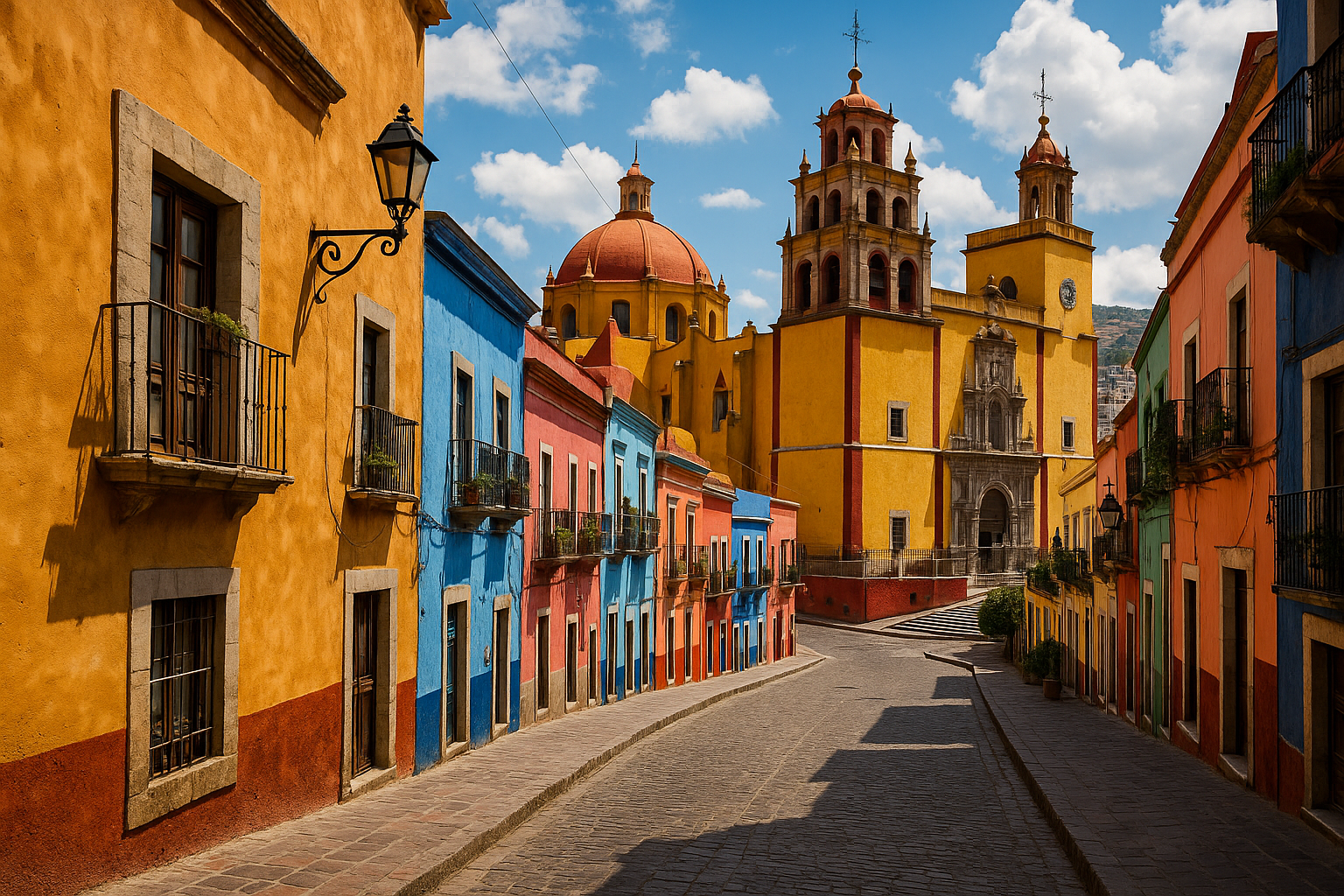
Guanajuato, Mexico is one of those places where the architecture itself is the attraction. The city’s houses are painted in an extraordinary range of colors — pillar box red, baby blue, saffron yellow, fuchsia pink, lime green — stacked against each other on hillsides so steep that some buildings seem to be climbing on top of their neighbors. Wrought-iron balconies jut out from upper floors, and bougainvillea cascades down walls in shades of purple and magenta. The overall effect is vivid and layered, something that photographs beautifully but feels even better in person.
The colonial architecture isn’t just decorative. It tells a story of ambition, wealth, and craftsmanship. Baroque churches dominate certain plazas, their facades carved with an intricacy that makes you want to stand still and just look. The interiors are equally impressive — cool, quiet, and often unexpectedly moving even if you’re not religious. These are spaces designed to inspire awe, and they still do.
What makes Guanajuato different from other colonial Mexican cities is the topography. Because it’s built into a ravine, there’s almost no flat ground. Streets rise sharply, stairs appear where you’d expect a road, and the city constantly reveals new angles. Every few steps, there’s a new view — a church tower framed by a narrow alley, a rooftop terrace covered in flowering plants, a staircase leading somewhere you haven’t been yet. It’s a city that genuinely rewards curiosity.
Plazas, People, and the Rhythm of Daily Life
If you want to understand how Guanajuato actually lives, spend time in its plazas. These open squares are the social heart of the city — places where students sit with coffee, couples share food, and musicians perform without any particular schedule. The atmosphere shifts throughout the day. Mornings are quiet and unhurried. Afternoons fill with vendors and conversation. Evenings bring out everyone, and the energy becomes something you want to be part of rather than just observe.
The local food scene is worth exploring seriously. Street food here is excellent — look for local specialties that you won’t find in tourist-heavy coastal resorts. Markets are a good starting point, especially in the morning when they’re busiest and most alive. Sit at a communal table, order what someone nearby is eating, and let the day take shape around you. That kind of spontaneous experience is exactly what Guanajuato does best.
The city is also home to a large student population, which gives it an intellectual and creative energy that you might not expect from a colonial town. There are independent bookshops, small galleries, live music venues, and cafés where conversations seem to go on for hours. It’s a place where culture is genuinely lived rather than performed for visitors, and that distinction matters.
The Cervantino Festival: October in Guanajuato
If you can time your visit for October, do it. The Festival Internacional Cervantino is one of the most celebrated cultural events in Latin America, drawing performers, artists, and audiences from around the world for several weeks of theatre, music, dance, and visual arts. The city transforms during this period — stages appear in plazas, performances spill into streets, and the already vibrant atmosphere intensifies into something genuinely electric.
For young travelers especially, this is an extraordinary time to visit. Many events are free or very affordable, and the mix of international and local artists means you’re experiencing something genuinely diverse and culturally rich. Even if you arrive knowing nothing about the festival’s history, you’ll leave with memories of performances you didn’t expect and conversations you couldn’t have planned. That’s the best kind of travel.
Outside of October, the city maintains its own cultural calendar with regular events, exhibitions, and performances. But the Cervantino is something special — a reminder that Guanajuato isn’t just beautiful to look at, it’s alive with creative energy that’s been cultivated over centuries.
Getting There and Getting Around
Guanajuato is located in central Mexico, which makes it accessible from several major cities. León, the nearest large city, has an international airport that connects to destinations across Mexico and beyond, making it a practical entry point. From there, the journey to Guanajuato is manageable and straightforward. Mexico City is another natural starting point for travelers arriving internationally, and the road between the two cities passes through some genuinely beautiful central Mexican landscape.
Once you’re in Guanajuato, the best way to explore is on foot. The city’s steep cobblestone streets and narrow alleys aren’t really designed for vehicles, and walking is how you discover the details that make it special. Wear comfortable shoes — this cannot be overstated. The terrain is uneven and often sharply inclined, and you’ll cover more ground than you expect simply because you’ll want to keep exploring.
Local transport options exist for getting between neighborhoods, and taxis are available for longer distances. But honestly, the underground tunnels and the hillside callejones are best experienced at a walking pace. Slow down, look around, and let the city reveal itself gradually. That’s the approach that makes Guanajuato memorable rather than just ticked off a list.
How Long Should You Stay?
Locals recommend around seven days to really experience Guanajuato properly. That might sound like a lot for a single city, but it reflects how layered the place actually is. A weekend gives you a taste; a week gives you something closer to understanding. With more time, you can explore beyond the central neighborhoods, visit nearby towns that share the region’s colonial heritage, and settle into the rhythm of daily life rather than rushing between highlights.
That said, even two or three days in Guanajuato will leave a lasting impression. If you’re building a broader Mexico itinerary, it fits naturally between Mexico City and destinations further north or west. It’s the kind of stop that ends up becoming the part of the trip everyone talks about afterward — not because it was the most dramatic or the most famous, but because it was genuinely surprising.
Practical Things Worth Knowing Before You Go
- Wear good walking shoes. The cobblestone streets and steep inclines are beautiful but demanding. Your feet will thank you.
- Learn a little Spanish. Guanajuato is not as heavily oriented toward English-speaking tourists as coastal resorts. Even basic phrases go a long way and open doors.
- Explore early and late. The light in the morning and evening is extraordinary, and the streets are quieter. This is when the city feels most itself.
- Don’t over-plan. Some of the best experiences here come from following a staircase to see where it leads, or sitting in a plaza long enough for something interesting to happen.
- Budget thoughtfully. Guanajuato is generally affordable by international standards, especially for food and local transport. Accommodation varies — book ahead if you’re visiting during the Cervantino Festival.
- Respect the community. This is a city where real people live and work. Engage with curiosity and respect, and you’ll be welcomed warmly.
The Case for Going Off the Beaten Path in Mexico
Mexico is a country that rewards travelers who look beyond the obvious. The beaches are real and the resorts are fun, but the interior of the country holds a different kind of depth — one built over centuries of history, culture, and human creativity. Guanajuato, Mexico is one of the clearest expressions of that depth. It’s a city that has survived conquest, fueled empires with silver, fought for independence, and emerged as a living, breathing cultural centre that continues to evolve.
When you walk its tunnels and climb its alleys and sit in its plazas, you’re not just sightseeing. You’re connecting with something that has layers — architectural, historical, cultural, and human. That kind of connection is what travel at its best actually feels like. It’s what you remember when the photos have faded and the tan has gone.
Guanajuato is the kind of place that changes how you think about travel in Mexico — and possibly about travel in general. It’s a reminder that the most rewarding experiences often come from the detour you almost didn’t take, the city you’d never quite heard of, the street you followed simply because it looked interesting. Go with an open schedule, comfortable shoes, and a genuine sense of curiosity. The city will do the rest.
This article was produced with AI assistance and reviewed editorially.


City Guides for Young Travelers: Buenos Aires, Quito, and Trujillo (Culture, Food & Adventure)

Where to Stay in Southern Africa: Botswana, Namibia & Madagascar for First-Time Visitors


