
North America
Backpacking North America’s West Coast: Chicago and San Francisco on a Budget
Explore budget backpacking North America with insider tips for Chicago and San Francisco—cheap hostels, local food, free attractions, and transit hacks.

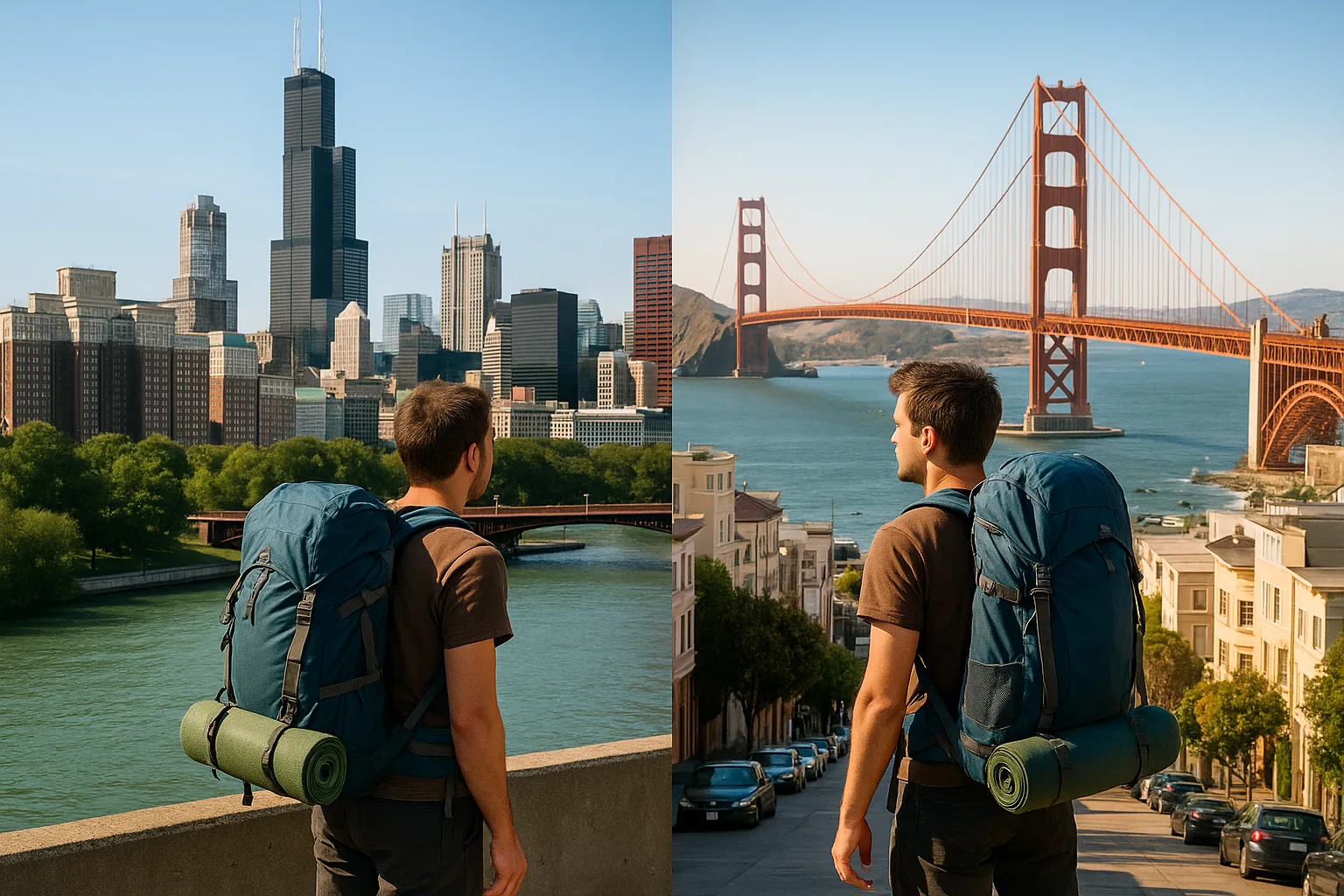
If you’re serious about budget backpacking North America, two cities belong near the top of your list — and they couldn’t feel more different from each other. Chicago hits you with its skyline, its deep-dish debates, its blues bars, and a lakefront that stretches so far it looks like an ocean. San Francisco wraps you in fog, steep hills, and a neighborhood culture so distinct that crossing a single street can feel like entering a different city entirely. Together, they make one of the most rewarding routes on the continent — and with the right approach, you can do both without draining your account.
Why These Two Cities Work as a Budget Backpacking Route
On the surface, Chicago and San Francisco might seem like expensive choices for a budget trip. Both are major metropolitan cities with high costs of living. But cost of living and cost of travel are two very different things, and backpackers who know where to look will find that both cities reward the curious, the flexible, and the resourceful.
Chicago tends to be slightly more forgiving on the wallet — accommodation options are broader, and the city’s free cultural offerings are genuinely impressive. San Francisco is famously expensive, but it also has some of the most walkable, explorable neighborhoods in North America, where the best experiences cost nothing at all. The key in both places is the same: stay close to local life, not tourist infrastructure.
And the journey between them? That’s a whole experience in itself. There are multiple ways to travel from Chicago to San Francisco — by plane, by Greyhound bus, by car, or by train. The most legendary option is the California Zephyr, an Amtrak route that takes roughly 52 hours to cross the American interior, passing through the Rockies, the Nevada desert, and the Sierra Nevada before arriving in the Bay Area. It’s not the fastest option, but for a backpacker, it might be the most unforgettable one. You’ll wake up to landscapes that most people only see in photographs.
Getting to Know Chicago as a Backpacker
Chicago rewards people who walk. The city is laid out on a grid, the public transit system — known locally as the L — connects most neighborhoods efficiently, and many of the best experiences here require nothing more than a transit card and a sense of direction.
When it comes to where to stay, the neighborhoods you choose matter as much as the accommodation itself. Areas like Wicker Park, Logan Square, and Pilsen tend to attract younger travelers and offer a more authentic slice of city life than staying right downtown in the Loop. These neighborhoods have independent coffee shops, music venues, murals, and food scenes built around local communities rather than tourist footfall. Hostels and budget guesthouses in these areas put you within reach of the city’s real character.
The Loop itself is worth exploring during the day — Millennium Park is completely free, and the famous reflective sculpture known as Cloud Gate (or “the Bean,” as locals call it) is one of those rare tourist landmarks that genuinely lives up to its reputation. The Art Institute of Chicago, one of the great art museums in the world, often offers reduced or free admission for younger visitors, so it’s worth checking their current policy before you go.
Chicago’s lakefront is another asset that costs nothing. Lake Michigan stretches along the eastern edge of the city, and the Lakefront Trail gives you access to beaches, parks, and skyline views that rival anything you’d pay for elsewhere. On a warm afternoon, the locals come out in force — and that energy is exactly what budget travel is all about.
👉 Read also: Backpacking Urban USA: Chicago and San Francisco Travel Guides for Independent Explorers
Eating Well in Chicago Without Overspending
You don’t need to spend much to eat well in Chicago. The city has a strong culture of neighborhood restaurants, food markets, and street food that serves locals first and visitors second. Pilsen, for example, has a vibrant Mexican food scene rooted in the community that’s lived there for generations. Chinatown, one of the oldest in the Midwest, offers filling, affordable meals that won’t dent your daily budget.
Deep-dish pizza is a Chicago institution, and while some of the famous spots can be pricey, plenty of local pizzerias serve the same style at much more reasonable prices — especially if you’re eating during lunch hours or sharing with fellow travelers. The city’s food halls and covered markets are also worth exploring for a mix of cuisines at accessible price points.
Navigating San Francisco on a Tight Budget
San Francisco has a reputation that scares some budget travelers away before they even arrive. It’s not entirely undeserved — the city is genuinely expensive, and accommodation in particular requires some planning. But the backpacker community here is well-established, and the city has a long history of welcoming travelers who are more interested in experience than comfort.
The neighborhoods of the Mission, the Haight, and the Tenderloin have traditionally been home to budget accommodation options, though availability and conditions vary. Booking in advance is strongly recommended, especially in summer when the city fills up. Hostels in San Francisco tend to be social, well-located, and a good source of local knowledge from other travelers who’ve already figured out where to eat and what to skip.
The city’s geography is both its challenge and its gift. Those famous steep hills can be exhausting, but they also mean that every neighborhood has its own distinct personality. The Castro feels entirely different from Chinatown, which feels nothing like the Mission, which bears little resemblance to the Marina. Walking between them is how you understand San Francisco — not from a cable car window or a tour bus, but on foot, pausing when something catches your eye.
Free and Low-Cost Experiences in San Francisco
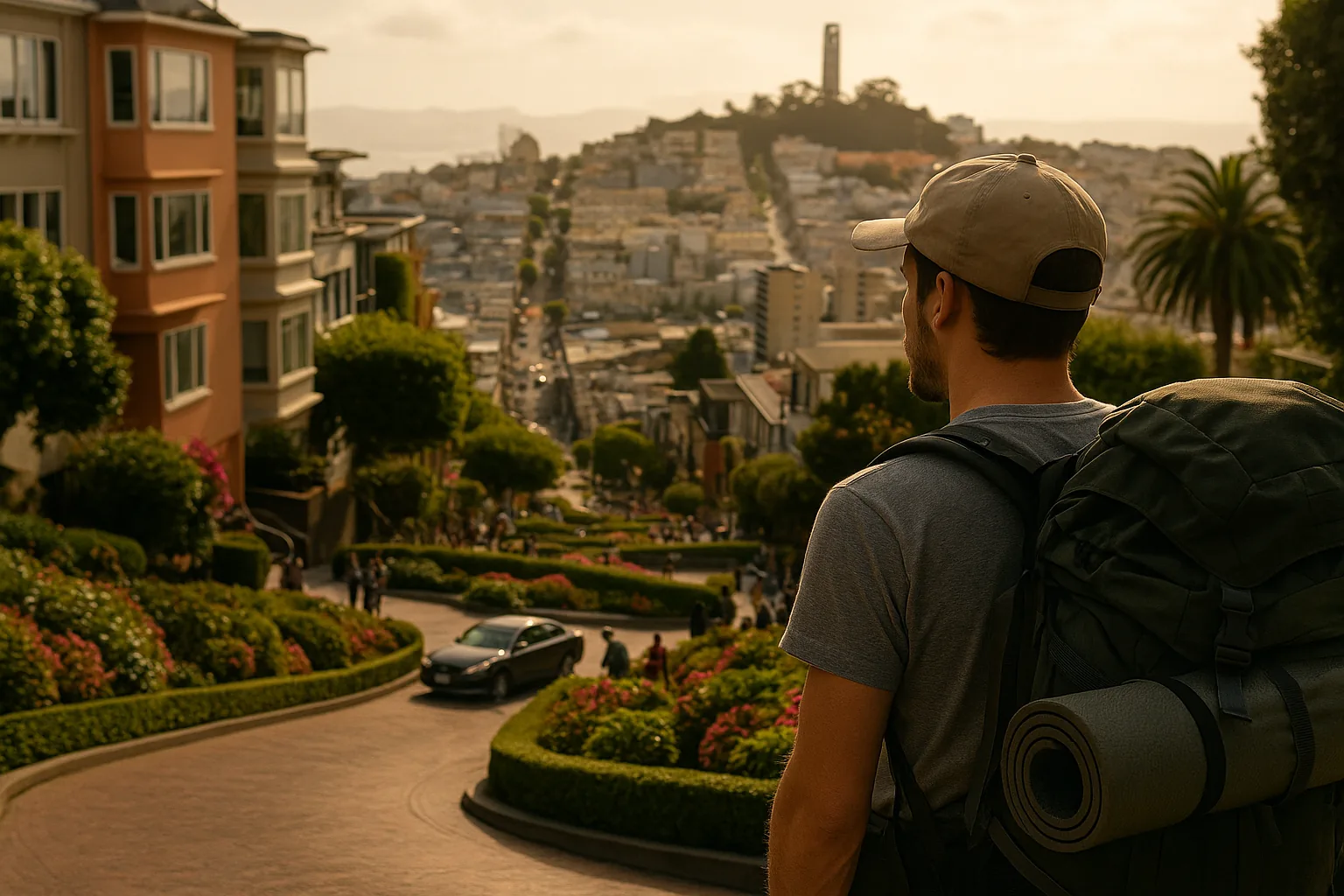
San Francisco’s most iconic landmarks are surprisingly accessible. The Golden Gate Bridge can be walked across for free, and the views from both the Marin Headlands side and the city side are among the most photographed in the world — for good reason. Walking the bridge early in the morning, before the crowds arrive and while the fog is still rolling through, is one of those travel moments you’ll carry with you for years.
The city’s cable cars are a genuine piece of living history and a practical way to get around certain hills — though they do come with a fare. If you’re watching your budget, the city’s bus and metro system covers most areas effectively and costs considerably less per ride. A multi-day transit pass is worth considering if you plan to move around a lot.
Fisherman’s Wharf draws crowds for a reason — the waterfront energy, the sea lions at Pier 39, and the views across the bay are all genuinely worth experiencing. But it’s also one of the more tourist-heavy areas of the city, and prices for food and activities reflect that. Use it as a starting point, then explore further along the Embarcadero toward the Ferry Building, where a weekend farmers’ market brings out a more local crowd.
Alcatraz, the former federal prison sitting on an island in the middle of San Francisco Bay, is one of the most compelling historical sites in North America. The audio tour is remarkably well done and genuinely atmospheric. It does require a ferry ticket and an entry fee, so it’s not free — but for many travelers, it’s worth budgeting for as a one-time experience. Book in advance, because it sells out regularly.
👉 Read also: North American Road Trips: Montreal-to-Quebec City vs. San Francisco-to-San Diego (2026 Comparison)
Golden Gate Park is one of the great urban green spaces in the world, and most of it is completely free. The park contains museums, gardens, lakes, and open meadows where locals run, cycle, and gather on weekends. The de Young Museum and the California Academy of Sciences both sit within the park and offer free admission on certain days — again, check current schedules before you go.
Public Transport: Getting Around Both Cities
One of the most practical things you can do in both Chicago and San Francisco is lean heavily on public transit from day one. Both cities have systems that cover the areas most backpackers want to reach, and both are significantly cheaper than relying on ride-share apps for every journey.
In Chicago, the L train network is the backbone of the city’s transit system. It’s easy to navigate, runs frequently, and connects the airport to the city center directly — which saves you money the moment you arrive. Transit cards are reloadable and available at every station. The bus network fills in the gaps, and together they make a car entirely unnecessary for most backpackers.
San Francisco’s Muni system covers buses, streetcars, and the metro, while BART (Bay Area Rapid Transit) connects the city to the wider Bay Area, including Oakland and the airport. If you’re arriving from San Francisco International Airport, BART is the most budget-friendly option into the city center. Within the city, Muni gets you most places you need to go. Cable cars are fun but expensive for daily use — treat them as an experience rather than a transport strategy.
The Journey Between Cities: Choosing Your Route
How you get from Chicago to San Francisco is a decision worth thinking about carefully, because each option offers a genuinely different experience. Flying is the fastest and often the cheapest option if you book early, but it skips the landscape entirely. The Greyhound bus is slower and less comfortable, but it’s a window into a cross-section of American life that most travelers never see.
Then there’s the California Zephyr. This Amtrak train route is one of the great rail journeys in North America — 52 hours from Chicago’s Union Station to Emeryville (just outside San Francisco), passing through some of the most dramatic scenery on the continent. The Rocky Mountains, the Colorado River canyon, the Nevada high desert, the Sierra Nevada range — all of it unfolds outside your window over two days and two nights. Coach seats are affordable, and the observation car gives you panoramic views that no plane window can match. It’s slow travel at its finest, and for many backpackers, the journey becomes one of the highlights of the entire trip.
You can check schedules and book directly through the Amtrak official website — booking in advance usually secures the best fares, and the experience is worth every hour.
Practical Tips for Keeping Costs Down in Both Cities
A few habits will make a real difference to your daily spend across both cities:
- Cook when you can. Most hostels have shared kitchens. Grocery stores in both cities stock affordable basics, and even one or two home-cooked meals a day adds up to significant savings over a week.
- Eat where locals eat. In Chicago, that means exploring neighborhood spots away from the tourist center. In San Francisco, the Mission District’s taquerias and Chinatown’s dim sum spots are both famous among locals for good reason.
- Walk first, transit second, ride-share last. Both cities are walkable in ways that reward slow exploration, and you’ll discover things on foot that you’d never find from a car window.
- Check museum free days. Both cities have world-class museums that offer free or reduced admission on specific days or for specific age groups. A little research before you arrive pays off.
- Talk to your hostel staff. The best local tips — the taco spot three blocks away, the free outdoor concert this weekend, the shortcut to the best viewpoint — rarely appear in travel guides. They come from people who live and work in the city.
- Be flexible with timing. Both cities are significantly more affordable in the shoulder seasons — late autumn and early spring — when crowds thin out and accommodation prices drop.
Budget backpacking North America isn’t about suffering through bad experiences to save money. It’s about making smarter choices so that your money goes toward the things that actually matter — the meals that become stories, the neighborhoods that surprise you, the conversations with strangers that stay with you long after you’ve moved on. Chicago and San Francisco, for all their differences, both offer that kind of travel in abundance. You just have to show up ready to explore.
This article was produced with AI assistance and reviewed editorially.


Adventure Beyond the Beach: Things to Do in Jeju, South Korea & Tayrona Park, Colombia

Where to Stay in 2026: Budget Accommodation Guides for Vancouver, Wellington, Bruges & Andorra


