
North America
Backpacking Urban USA: Chicago and San Francisco Travel Guides for Independent Explorers
Explore Chicago’s neighborhoods and San Francisco’s culture on a budget. Find affordable hostels, free attractions, transit tips, and local experiences for independent ba

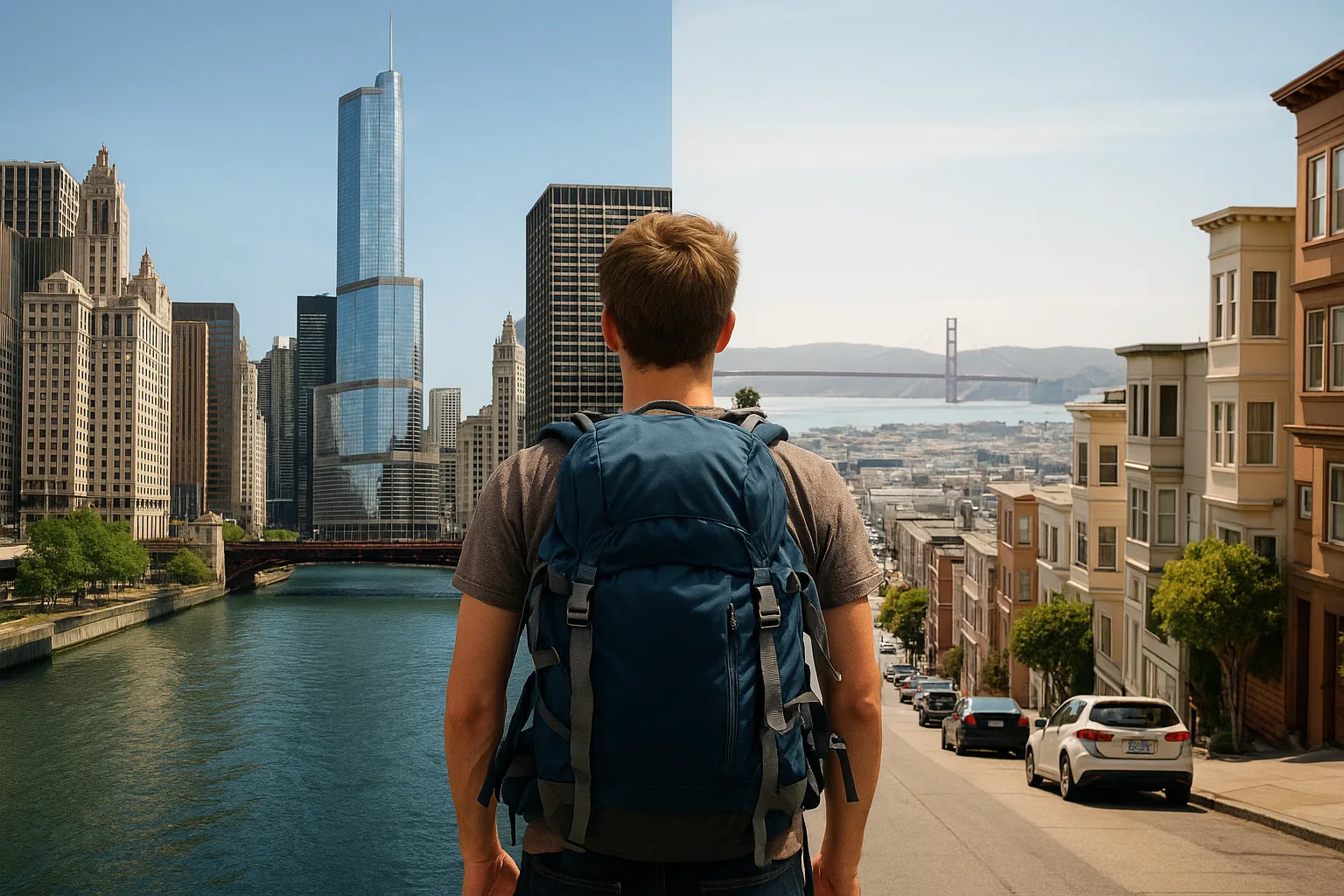
There’s a certain kind of freedom that comes with throwing everything you need into a backpack and landing in a city you’ve only ever seen in photos. Backpacking Chicago and San Francisco back to back is one of the most rewarding urban adventures you can have in the United States — two cities, two completely different personalities, and enough culture, food, and street-level energy to fill months of stories. Whether you’re planning a coast-to-coast journey or simply choosing between these two icons, this guide is here to help you experience both cities the way they deserve: from the ground up, at your own pace, and without spending a fortune.
Why These Two Cities Belong on Every Backpacker’s Radar
Not every American city rewards slow, curious exploration. Some are built for drive-throughs. But Chicago and San Francisco are different — they’re cities that reveal themselves in layers, and the deeper you go, the more interesting they get.
Chicago offers big-city attractions with a surprisingly approachable feel, making it one of the best destinations in the country for independent explorers. It has the skyline and the scale of a world-class metropolis, but it moves at a pace that doesn’t overwhelm you. People are genuinely friendly. The neighborhoods feel like distinct villages stitched together under one name. You can spend a week here and still feel like you’ve only scratched the surface.
San Francisco, on the other hand, is one of the most diverse and culturally layered cities in the United States. It’s known for its counter-culture roots, its eclectic music scene, booming immigrant communities, and a startup energy that buzzes just beneath the surface of its historic streets. It’s also, honestly, one of the most expensive cities in the country — but that doesn’t mean it’s off-limits for budget travelers. It just means you need to be smart.
Both cities consistently rank among the best backpacker destinations in the USA, and for good reason. They’re walkable, transit-connected, packed with free experiences, and full of the kind of authentic local culture that makes travel feel meaningful rather than performative.
Getting to Know Chicago Beyond the Postcard
Most first-time visitors to Chicago do the obvious things: they walk the Magnificent Mile, stare up at the Bean, maybe catch a view from a tall building. And look — those things are worth doing. But if you stop there, you’re missing what makes Chicago genuinely special.
The real city lives in its neighborhoods. Wicker Park is where you’ll find independent record shops, vintage clothing stores, and coffee spots where local artists are always working on something. It has an energy that’s creative and a little rough around the edges in the best possible way. Pilsen, on the lower west side, is one of the most vibrant arts districts in the Midwest — murals cover entire building facades, and the food scene here reflects a rich Mexican-American cultural heritage that you won’t find anywhere near downtown.
Logan Square has become a hub for young locals who want good food, live music, and a neighborhood that actually has personality. If you want to understand what Chicago looks and feels like for the people who actually live there, spend a few hours wandering these streets rather than staying glued to the tourist map.
For architecture lovers — and you don’t have to be an expert to appreciate this — Chicago’s built environment is genuinely extraordinary. The city essentially invented the modern skyscraper, and walking along the Chicago River gives you a front-row seat to over a century of architectural ambition. The Chicago Architecture Center offers both ticketed tours and free self-guided options, so you can engage with this history at whatever level suits your budget.
👉 Read also: Barcelona & London: Urban Exploration for Young Travelers (2025–2026 Local Guides)
Getting Around Chicago Without a Car
Chicago’s public transit system, known as the CTA (Chicago Transit Authority), is one of the most reliable in the US. The L train — the city’s elevated rail network — connects most of the major neighborhoods you’ll want to explore, and it runs around the clock. That last point matters more than you’d think when you’re backpacking and don’t want to worry about missing the last train.
The city is also remarkably flat, which makes cycling a genuinely practical option. A bike-share system operates across the city, and many neighborhoods have dedicated lanes. If you’re staying for more than a couple of days, a short-term bike-share pass can save you money and give you a completely different perspective on the city’s geography.
Walking is underrated here too. The distance between neighborhoods like the Loop, River North, and Wicker Park is more manageable than it looks on a map, and the streets themselves are worth exploring on foot.
Eating Well in Chicago Without Burning Through Your Budget
Chicago has a food culture that punches well above its weight, and the good news for backpackers is that some of the best eating happens at the most affordable end of the spectrum.
The city’s deep-dish pizza is the obvious starting point, and yes, it’s worth trying at least once — it’s a genuinely different experience from any other pizza you’ve had. But don’t stop there. The taco spots in Pilsen and Little Village offer some of the most satisfying, honest food in the city. Maxwell Street Market, a weekend open-air market with deep historical roots, is one of the best places to eat cheaply and well while absorbing real Chicago culture.
Grocery stores and local supermarkets are your friends when you’re watching your spending. Chicago has plenty of both, and picking up breakfast or lunch supplies before a full day of exploring can dramatically reduce your daily costs without sacrificing the experience.
San Francisco: How to Experience a Legendary City on a Real Budget
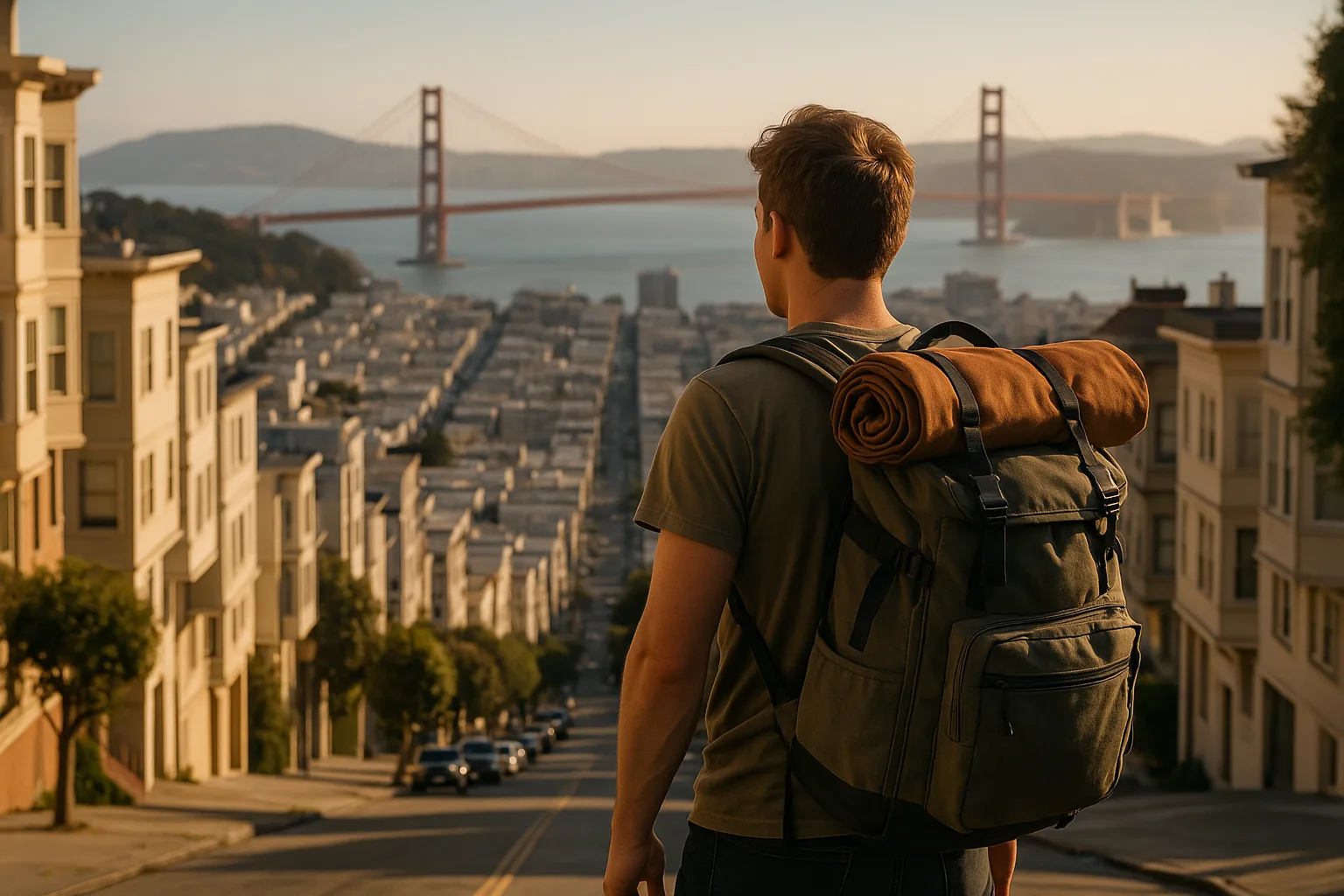
Let’s be honest about something: San Francisco is expensive. It’s one of the priciest cities in the entire country, and that reality shapes how you need to approach it as a backpacker. But here’s the thing — a huge portion of what makes San Francisco extraordinary costs absolutely nothing.
The city is built on hills, and those hills offer some of the most dramatic urban views you’ll ever see. Twin Peaks gives you a panoramic sweep of the entire city and the bay beyond it. Dolores Park in the Mission District is where locals gather on sunny afternoons — bring a snack, sit on the grass, and watch the city do its thing. The Golden Gate Bridge is, of course, one of the great man-made marvels in the world, and walking or cycling across it is free and genuinely unforgettable.
San Francisco’s counter-culture roots run deep, and you can feel them in neighborhoods like the Haight-Ashbury, where the spirit of the 1960s still lingers in the independent bookshops, vintage stores, and murals. North Beach, the city’s Italian-American neighborhood, was the birthplace of the Beat Generation literary movement — wander through here and you’re walking through literary history. City Lights Bookstore, still standing and still independently owned, is worth a visit even if you don’t buy anything.
Chinatown is one of the oldest and most historically significant in North America, and it’s a genuinely immersive experience to walk through. The Ferry Building on the Embarcadero hosts a farmers’ market on weekends that showcases Northern California’s extraordinary produce — it’s a great place to eat well without spending much. And Alcatraz, the famous former island prison, requires a ferry ticket and advance booking, but it’s one of the most compelling historical experiences in the city if it fits your budget.
👉 Read also: North American Road Trips: Montreal-to-Quebec City vs. San Francisco-to-San Diego (2026 Comparison)
Navigating San Francisco’s Hills and Transit
San Francisco’s geography is part of its charm and part of its challenge. The hills are real, and they’re steep — but they’re also what give the city its dramatic character. If you’re in good shape, walking between neighborhoods is genuinely rewarding, and you’ll see things from street level that no tour bus will ever show you.
The city’s public transit network — MUNI — covers most of the areas you’ll want to reach, including buses, light rail, and the iconic cable cars (which are more practical than they look, especially for climbing the steepest hills). Day passes and multi-day transit cards offer good value if you’re planning to move around a lot. The San Francisco Municipal Transportation Agency publishes current route maps and fare information, and it’s worth checking before you arrive.
BART, the Bay Area’s rapid transit rail system, connects San Francisco to the wider region, including Oakland and Berkeley — both of which are worth a day trip if you have the time. Oakland in particular has a thriving arts and food scene that many backpackers overlook entirely.
Where to Sleep: Finding Affordable Accommodation in Both Cities
Both cities have hostel scenes that cater specifically to backpackers and independent travelers. In Chicago, you’ll find options in and around the Loop as well as in neighborhoods like Lincoln Park and Wicker Park — staying slightly outside the absolute center often gets you better value and puts you closer to where locals actually spend their time.
In San Francisco, the hostel options tend to cluster in areas like Union Square, the Tenderloin, and the Fisherman’s Wharf area. The Tenderloin has a complicated reputation, but it’s also centrally located and home to some genuinely interesting food and culture. As with any city, use common sense, read recent reviews, and book ahead — San Francisco accommodation fills up fast, especially in summer.
Both cities also have a strong Couchsurfing community and various short-term rental options that can work out cheaper than hotels, especially if you’re traveling with a friend or two. Flexibility on dates can also make a significant difference to what you pay.
Connecting the Two Cities: Planning Your Route
One of the great things about backpacking in the US is that the country’s infrastructure makes getting between cities relatively straightforward, even without a car. Chicago and San Francisco are connected by multiple flight options, and budget airlines often offer competitive fares if you book in advance and stay flexible with timing.
If you have more time and want the full cross-country experience, an Amtrak train journey between the two cities is one of the most scenic rail trips in North America. The California Zephyr route takes you through the Rocky Mountains and the Sierra Nevada — it’s a long journey, but it’s the kind of experience that becomes a story in itself.
Greyhound and other coach services also connect the two cities, though the journey time is significant. For most backpackers working with limited time, flying makes the most sense, but the train is worth considering if the journey itself is part of what you’re after.
Practical Tips Before You Go
- Travel light. Both cities involve a lot of walking, and San Francisco’s hills will make you grateful for every pound you didn’t pack.
- Book accommodation early, especially for San Francisco. Both cities see high demand, and last-minute options are expensive.
- Get a transit card as soon as you arrive in each city — it simplifies everything and usually saves money compared to paying per journey.
- Eat where the locals eat. Markets, food halls, neighborhood taquerias, and lunch specials at sit-down restaurants are almost always better value than anything near the main tourist attractions.
- Layer your clothing. San Francisco’s weather is famously unpredictable — sunny mornings can turn cold and foggy by afternoon. Chicago has its own extreme weather patterns, especially in autumn and spring. Pack accordingly.
- Use your feet. The best discoveries in both cities happen when you wander without a specific destination in mind. Leave time in your itinerary for getting genuinely lost.
- Look for free museum days. Many cultural institutions in both cities offer free or discounted admission on certain days of the week or month. A little research before you arrive can unlock experiences that would otherwise stretch your budget.
Backpacking Chicago and San Francisco in the same trip gives you something rare: the chance to experience two cities that are genuinely, fundamentally different from each other, yet equally alive with the kind of energy that makes you want to stay longer than you planned. Chicago will surprise you with its warmth and its depth. San Francisco will challenge you with its hills and its cost, but reward you with views, culture, and a spirit of curiosity that feels woven into the city’s DNA. Go with an open mind, a willingness to wander, and the sense that the best moments are the ones you didn’t plan — and both cities will give you more than you came looking for.
This article was produced with AI assistance and reviewed editorially.


Adventure Beyond the Beach: Things to Do in Jeju, South Korea & Tayrona Park, Colombia

Where to Stay in 2026: Budget Accommodation Guides for Vancouver, Wellington, Bruges & Andorra


