
Asia
Japan’s Sacred Trails: Nikko and the Kumano Kodo Pilgrimage Route
Discover the kumano kodo pilgrimage trail through Japan’s Kii Peninsula. Explore spiritual walking routes, authentic lodging, and how to experience these sacred paths wit

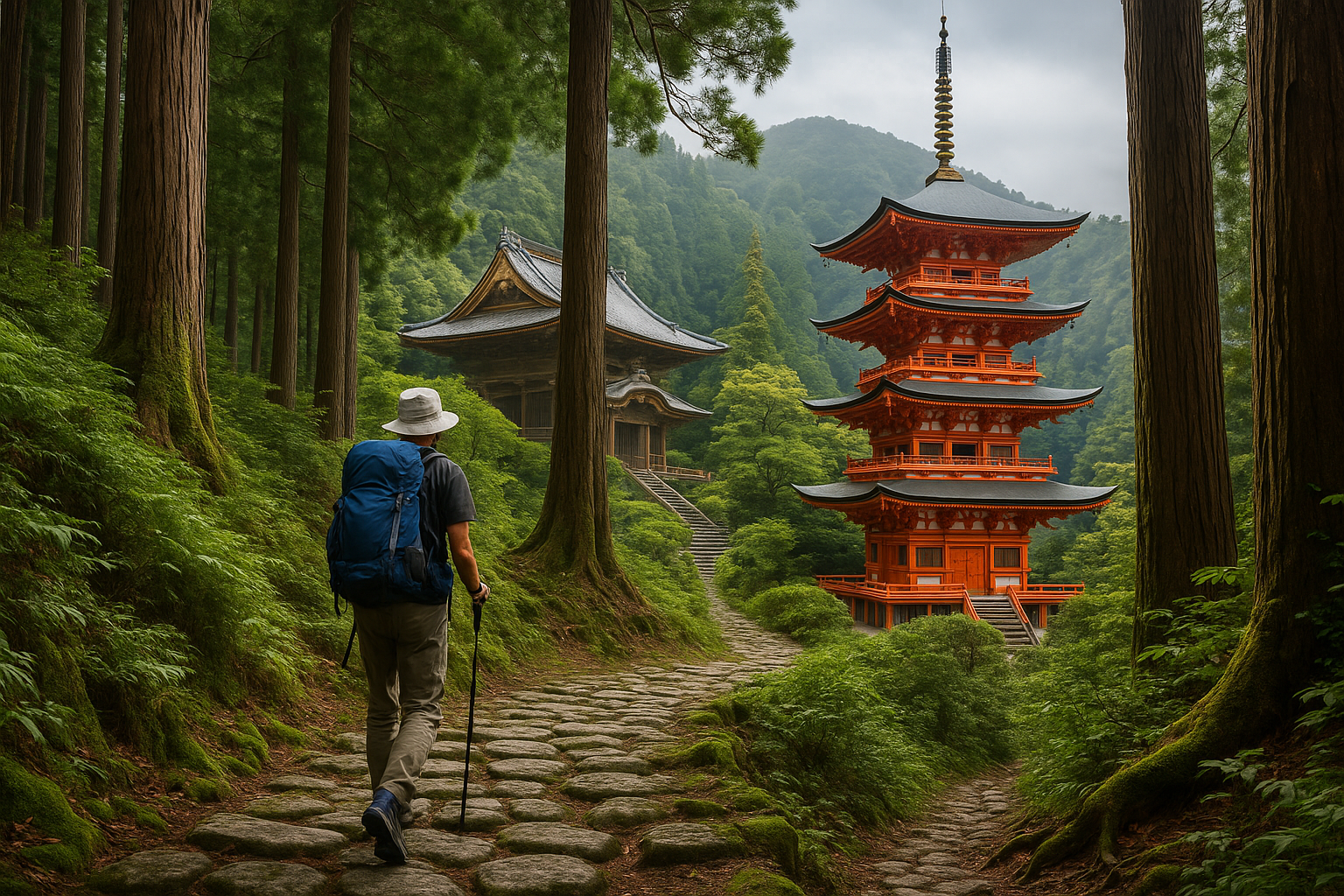
Walking Japan’s Sacred Heart: Nikko, the Kumano Kodo, and the Art of Slow Travel
Some journeys are about covering ground. Others are about something deeper — the kind of travel that changes how you think, how you breathe, how you move through the world. Japan has two destinations that offer exactly that kind of experience: the mountain temple complex of Nikko, nestled in forested hills north of Tokyo, and the ancient kumano kodo pilgrimage trail network threading through the dense wilderness of the Kii Peninsula. Neither of these places will rush you. Both of them will stay with you long after you’ve gone home.
This guide is for the traveler who wants more than a photo in front of a famous gate. It’s for the person who’s willing to walk a little further, stay a little longer, and sit quietly with something they don’t entirely understand — and find that’s exactly the point.
Nikko: Where Mountains Become Shrines
About two hours north of Tokyo by train, Nikko feels like a different world entirely. The air changes as you climb toward it — cooler, quieter, thick with cedar. The town itself is modest, but the sacred complex above it is extraordinary. Elaborate shrines and temples have been built into the mountainside here over centuries, and the effect is one of layered history: stone lanterns half-covered in moss, wooden carvings painted in deep reds and golds, stone staircases rising into mist.
Nikko is genuinely manageable as a day trip from Tokyo, which makes it one of the most accessible spiritual destinations in the country. But if you arrive early, you’ll notice something important: the crowds haven’t yet arrived. That first hour or two in the morning, when the light is low and the incense is just starting to drift through the courtyard, is when Nikko reveals itself properly. You’re not a tourist watching a spectacle. You’re a visitor inside something still alive.
Making the Most of Nikko Without the Crowds
The key to experiencing Nikko authentically is timing. Most day-trippers from Tokyo arrive mid-morning and leave by late afternoon. If you take an early train and arrive by opening time, you’ll have the main sites largely to yourself. Equally, staying overnight in the town shifts your entire experience — you’re there for the quiet evening hours and the early morning, which are genuinely different from the midday rush.
Accommodation in Nikko ranges from budget-friendly guesthouses to traditional Japanese inns where you sleep on futons and eat multi-course meals served in your room. Staying in a traditional inn is one of those experiences that sounds like a cliché until you actually do it — then you understand immediately why people keep recommending it. It’s not luxury in the Western sense. It’s something more interesting than that: a ritual, a pace, a way of inhabiting a place rather than just passing through it.
- Take the earliest train you can manage from Tokyo — the difference in atmosphere is significant.
- Wear comfortable walking shoes; the terrain is uneven and often steep.
- Bring cash — smaller shrines, local food stalls, and guesthouses often don’t accept cards.
- Consider staying at least one night to experience the site outside of peak visitor hours.
- Walk beyond the main complex into the surrounding forest paths — the quieter trails reward curiosity.
Autumn and spring are the most visually dramatic seasons in Nikko. Autumn brings deep reds and golds that frame the temple rooftops in a way that feels almost theatrical. Spring brings cherry blossoms and a gentler light. Summer is lush but humid, and winter can be cold enough for snow — which, if you’re prepared for it, makes the whole place look like a painting. Every season has its own argument for being the right one.
The Kumano Kodo Pilgrimage Trail: A Journey Through Living History
If Nikko is a destination, the kumano kodo pilgrimage trail is a journey — in every sense of the word. This ancient network of paths winds through the Kii Mountains of the Kii Peninsula, connecting the old capital cities of Nara and Kyoto to three grand sacred shrines, including the sacred site of Yoshino. People have been walking these routes for more than a thousand years. The mountains here have been considered home to Shinto and Buddhist deities for millennia. When you step onto the path, you’re stepping into something that carries all of that weight — lightly, quietly, but unmistakably.
The trail consists of six distinct pilgrimage routes, together documenting more than 1,200 years of intertwined Shinto and Buddhist history. It was inscribed on the UNESCO World Heritage list over two decades ago, one of very few pilgrimage routes in the world to hold that designation. Walking it today, you’ll understand why. The path doesn’t feel preserved. It feels continuous — as if the people who walked it centuries ago and the people walking it today are part of the same unbroken line.
The Landscape: Dense Forest, Ancient Stone, and Komorebi
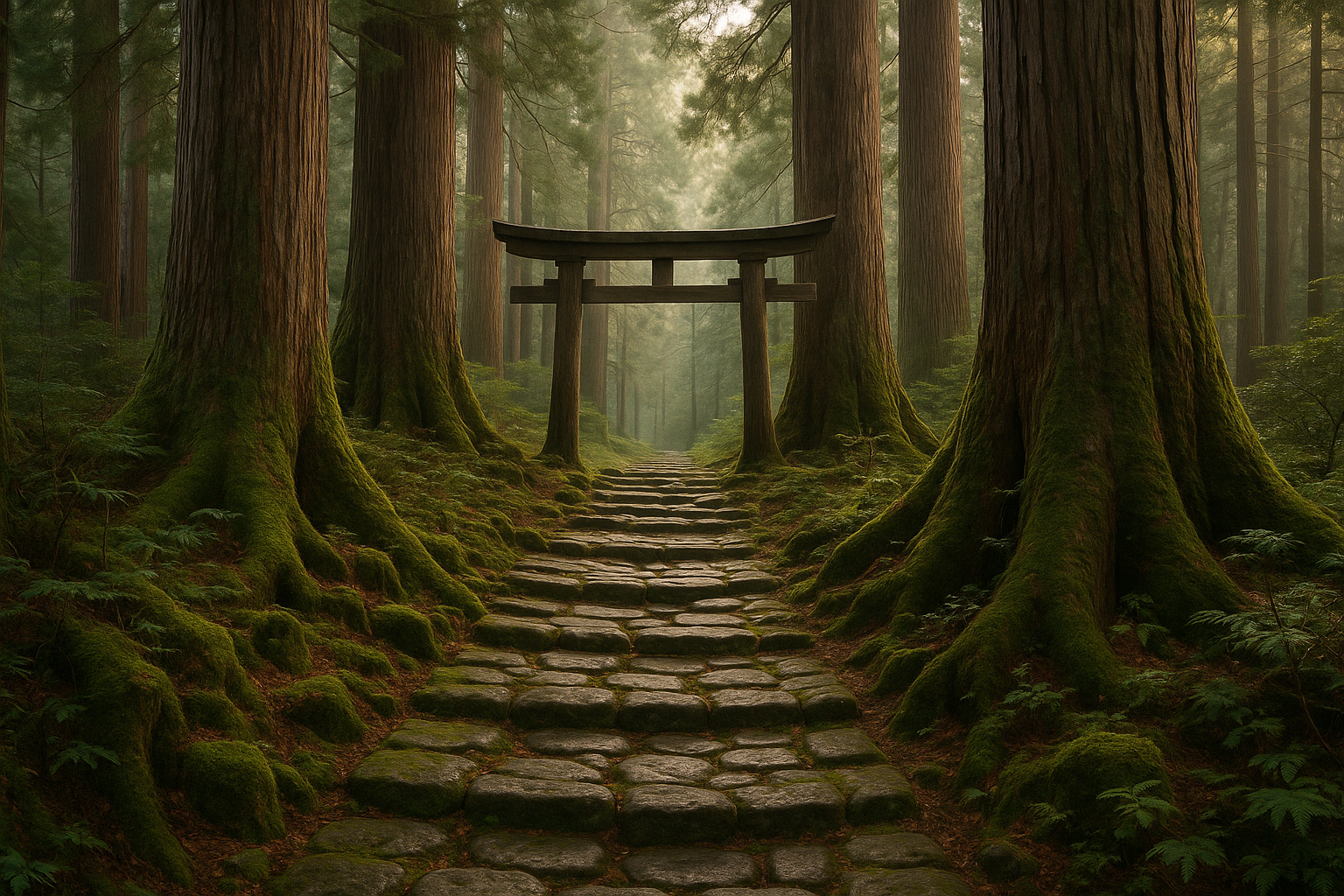
The Kii Mountains are genuinely wild. The forest here is dense and old, the kind of forest that feels like it has its own interior weather. Mist moves through the cedar trees in the morning. Streams cut across the path. Stone torii gates appear unexpectedly around bends, marking transitions between the ordinary world and something else.
There’s a Japanese word — komorebi — that describes the way sunlight filters through leaves and creates dancing patterns of light and shadow on the ground. Walking the kumano kodo pilgrimage trail, you’ll see komorebi constantly. It’s one of those experiences that’s almost impossible to photograph properly, but that you’ll remember with unusual clarity. The light moves. The forest breathes. You slow down whether you intend to or not.
The paths themselves vary in difficulty. Some sections are relatively gentle, following old stone-paved roads that pilgrims have worn smooth over centuries. Others climb steeply through the mountains, requiring proper footwear and a reasonable level of fitness. None of it requires technical hiking experience, but you should come prepared for uneven terrain, variable weather, and long days on your feet.
Planning Your Kumano Kodo Experience: Routes, Time, and Budget
One of the first things to understand about the Kumano Kodo is that there’s no single “right” way to walk it. The network offers six routes, each with its own character, difficulty level, and scenery. The most popular among international visitors is the Nakahechi route, which connects the coastal town of Tanabe to the three grand shrines at the trail’s heart. It’s well-marked, well-serviced, and genuinely beautiful — a solid starting point if this is your first time on the trail.
A meaningful experience on the Kumano Kodo requires at least several days. Rushing it defeats the purpose. Most independent travelers spend between four and seven days walking the core sections, staying in small guesthouses and traditional inns along the route. These accommodations are typically simple and warm — futons, communal baths, home-cooked meals. They’re often run by families who have been hosting pilgrims for generations. That context matters. You’re not just sleeping somewhere. You’re participating in a tradition of hospitality that’s as old as the trail itself.
If you’d prefer a guided experience, operators like Walk Japan offer structured tours — their nine-day, eight-night Kumano Kodo Pilgrimage runs between Osaka and Ise, with departures available from March through June and again from September through December. For those who want a more comprehensive hiking journey through Japan, there are also longer tours that combine the Kumano Kodo with time in Kyoto, though these come at a higher price point.
Independent vs. Guided: Which Works for You?
Walking independently gives you freedom — the ability to linger at a shrine that moves you, to take a detour down an unmarked path, to eat when and where you want. It requires more preparation: booking accommodation in advance (especially in peak seasons), downloading offline maps, and having some basic Japanese or a translation app handy. The trail is well-marked and the local tourism infrastructure has improved significantly, but you’ll still encounter moments where you’re genuinely on your own in the forest, and that’s part of the appeal.
A guided tour removes the logistical stress and adds context. A good guide can tell you what you’re looking at — the significance of a particular shrine, the history of a stone lantern, the meaning of a ritual you’d otherwise observe without understanding. For first-time visitors to Japan, or for anyone who finds the planning process overwhelming, a guided tour can be the difference between a confusing experience and a transformative one.
- Book accommodation along the trail well in advance, particularly for spring and autumn travel.
- The trail is accessible from Osaka or Kyoto — both cities make good bases for arrival and departure.
- Download offline maps before you go; mobile signal can be unreliable in the mountains.
- Pack layers — mountain weather changes quickly, and mornings can be significantly cooler than afternoons.
- Respect the trail’s sacred nature: keep noise low near shrines, follow posted guidelines, and leave no trace.
- A basic rain jacket is essential regardless of season.
When to Go: Seasons and the Rhythm of the Trail
The Kumano Kodo is walkable year-round, but the experience shifts dramatically with the seasons. Spring brings fresh green growth and mild temperatures — ideal walking conditions, and visually stunning as the forest comes back to life after winter. Autumn is arguably the most popular season, when the mountain forests turn amber and red and the light takes on a particular warmth that makes every photograph look deliberate. Both seasons attract more visitors, so accommodation books up faster and the trail feels livelier.
Summer is hot and humid in the Kii Mountains — genuinely challenging if you’re not prepared for it. The forest canopy provides shade, but the humidity is real, and you’ll need to carry more water and pace yourself carefully. That said, summer has its own magic: the forest is at its most lush, the streams run full, and the mist that rises from the valleys in the early morning is extraordinary.
Winter is the quietest season. The trail is largely empty, the air is sharp and clear, and the occasional snowfall transforms the forest into something almost otherworldly. Some guesthouses close during the coldest months, so check availability carefully if you’re planning a winter walk. But for the traveler who values solitude and doesn’t mind cold, winter on the Kumano Kodo is an experience that’s hard to find anywhere else.
Nikko follows a similar seasonal rhythm. Autumn and spring are the most visited, summer is humid but lush, and winter brings snow that makes the temple complex look genuinely magical. If you’re combining both destinations in a single Japan trip, aim for the shoulder seasons — late April to early May, or October to early November — when both places are at their most beautiful and the crowds are manageable.
Combining Nikko and Kumano Kodo: A Journey Through Japan’s Spiritual Geography
These two destinations aren’t just geographically distinct — they’re spiritually and aesthetically different in ways that complement each other beautifully. Nikko is concentrated and ornate: a dense accumulation of sacred architecture in a relatively compact space. The Kumano Kodo is expansive and elemental: a journey through wild nature where the sacred is embedded in the landscape itself rather than built upon it.
Visiting both in a single trip gives you a fuller picture of how Japan thinks about the relationship between the human and the divine. At Nikko, that relationship is expressed through extraordinary craftsmanship — carvings, lacquerwork, painted gates. On the Kumano Kodo pilgrimage trail, it’s expressed through the act of walking itself: the slow, deliberate movement through ancient forest, the accumulation of miles and hours, the way the body eventually quiets the mind.
A practical itinerary might look like this: arrive in Tokyo, spend a day or two in the city, take an early train to Nikko for one or two nights, return to Tokyo and fly to Osaka, then travel to the Kii Peninsula to begin the Kumano Kodo. Allow at least four to five days for the trail, then finish in Kyoto or return to Osaka for your departure. It’s a journey that moves from the urban to the wild, from the elaborate to the elemental — and that arc feels right.
What You’ll Carry Home
The travelers who remember Japan most vividly aren’t always the ones who saw the most. They’re often the ones who slowed down enough to notice something small: the sound of a temple bell fading into forest, the weight of a wooden stamp pressed into a pilgrim’s notebook, the particular quality of morning light on ancient stone. These are the memories that last.
The Kumano Kodo pilgrimage trail has been drawing people into its forests for over a thousand years. Emperors walked it. Ordinary people walked it. They came seeking healing, clarity, connection to something larger than themselves. The reasons people walk it today aren’t so different. You don’t need to be religious to feel what the trail offers. You just need to be willing to walk slowly, pay attention, and let the forest do its work.
Japan rewards that kind of traveler more than almost anywhere else on earth. Come curious, come patient, and come ready to be surprised by how much you find in the quiet.
This article was produced with AI assistance and reviewed editorially.


New Zealand’s Geothermal Wonders: Rotorua & Where to Stay for Adventure & Maori Culture

Adventure Beyond the Beach: Things to Do in Jeju, South Korea & Tayrona Park, Colombia


