
Asia
Southeast Asia Slow Travel: Luang Prabang & Saigon Day Trips for First-Time Visitors
Discover how to travel Southeast Asia at a sustainable pace. Explore Luang Prabang’s spiritual culture and five day trips from Saigon for meaningful connections.

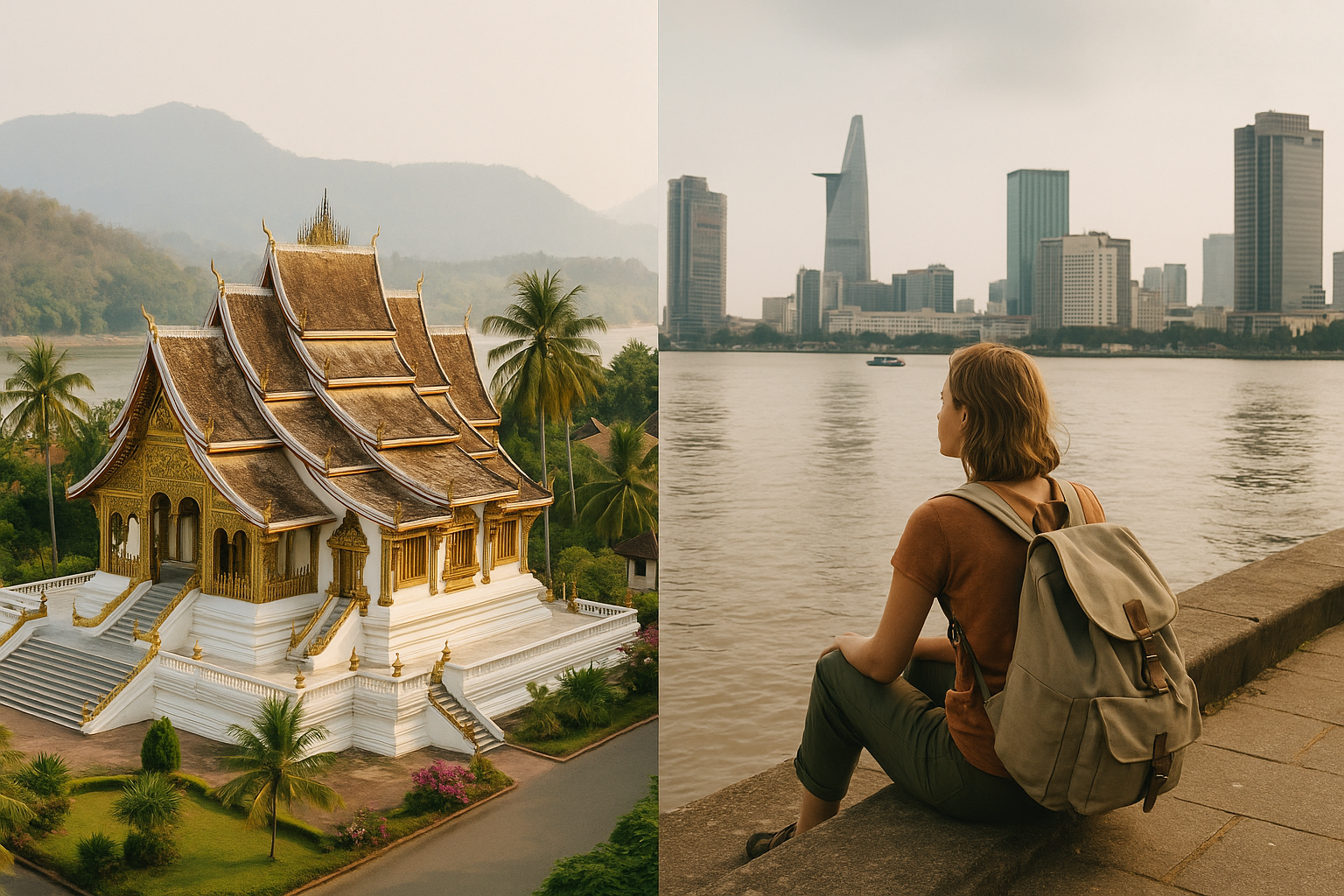
Why Slow Travel Southeast Asia Is the Trip You Actually Need
There’s a version of Southeast Asia travel that looks great on paper: twelve countries in thirty days, a new hostel every other night, passport stamps stacking up like trophies. And then there’s the version that actually stays with you. Slow travel Southeast Asia isn’t about doing less — it’s about going deeper. It’s choosing to wake up in the same place twice, learning the name of the woman who makes your morning noodles, and letting a place reveal itself to you instead of ticking it off a list.
This guide focuses on two destinations that reward exactly that kind of traveler: Luang Prabang in Laos, one of the most quietly beautiful cities in the region, and Ho Chi Minh City (still called Saigon by almost everyone who lives there) in Vietnam, a city so alive it can overwhelm you if you don’t know how to breathe through it. Together, they offer a perfect contrast — stillness and energy, reflection and curiosity — and both become infinitely richer when you give them real time.
Luang Prabang: Where the River Slows Everything Down
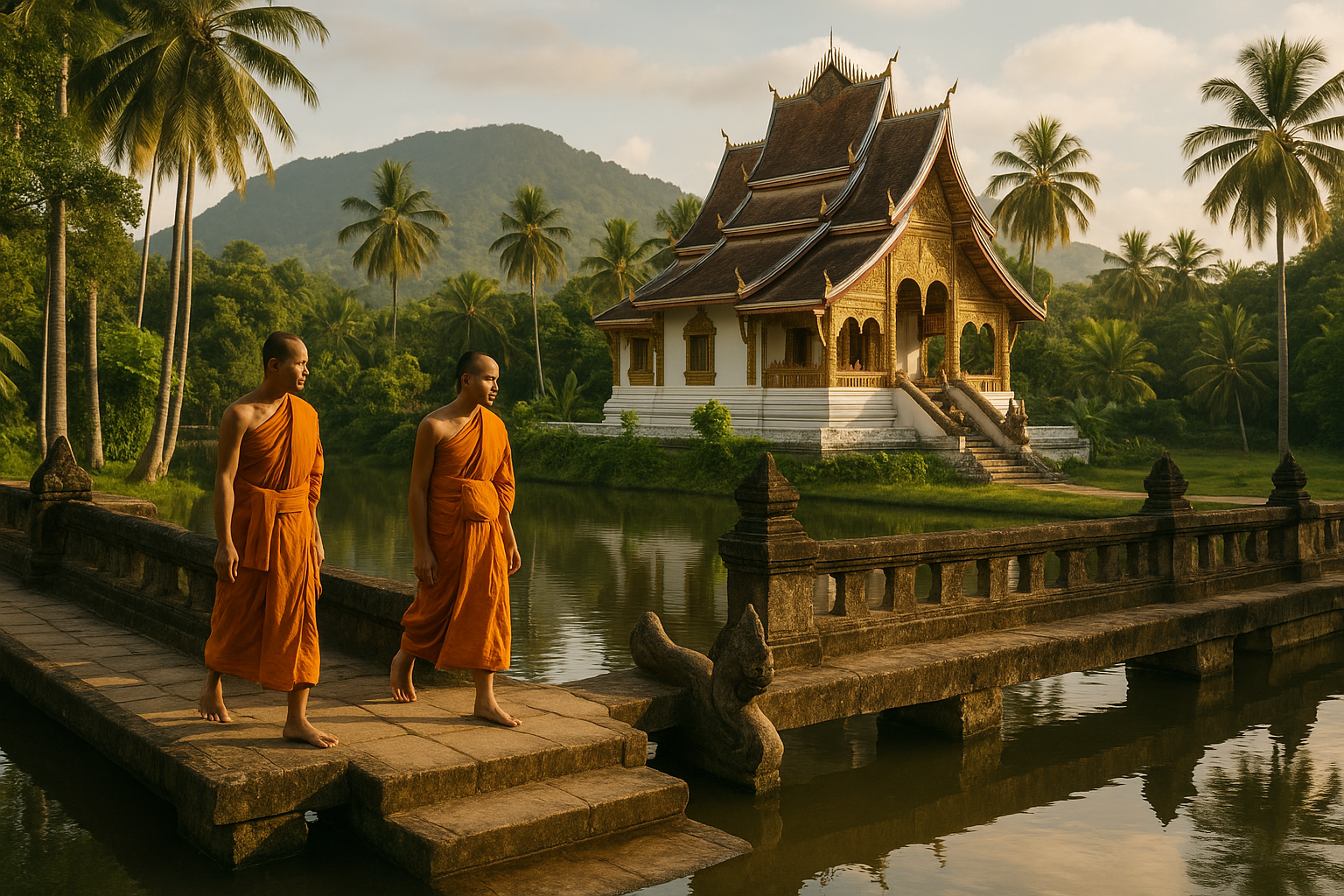
Luang Prabang is the kind of place that makes you want to cancel your next flight. Nestled on a narrow peninsula where the Mekong River and the Nam Khan River meet, it has a geography that feels almost intentional — as if the land itself decided to hold the city in place. It’s a UNESCO World Heritage City, and that status protects not just its architecture but its atmosphere: the low-rise streets, the saffron-robed monks, the silence that settles over the town at night.
For first-time visitors to Southeast Asia, Luang Prabang is one of the gentlest entry points imaginable. It’s small enough to explore on foot, welcoming enough that you’ll feel comfortable within hours, and layered enough that three or four days will still leave you feeling like you’ve only scratched the surface.
Settling Into the Old Town
A typical three to four day itinerary in Luang Prabang starts exactly where it should: the Old Town. Walk the main street in the early morning and you might catch the alms-giving ceremony, where monks move silently through the streets collecting offerings from locals. It’s one of those moments that feels genuinely removed from the pace of modern life — not a performance, just a ritual that has continued here for generations.
The Old Town is compact, which is part of what makes it so good for slow travel. You’re not rushing between sites on a tuk-tuk schedule. You wander. You find a café tucked behind a temple. You sit by the Mekong as the sun drops and the sky turns colors that no filter on your phone will quite capture. The town has a rhythm, and if you stay long enough, you start to move with it.
In the evenings, the night market stretches along the main road, selling handwoven textiles, silverwork, and street food that deserves more attention than most travelers give it. Don’t rush through it. Stop, taste, talk to the vendors. That’s the whole point.
Day Trips That Go Beyond the Obvious
One of the best things about using Luang Prabang as a base is that the surrounding landscape is extraordinary. The most famous day trip is to Kuang Si Falls — a multi-tier waterfall system about an hour outside the city. The turquoise water is genuinely that color in real life, not just in photos, and the falls are surrounded by forested trails that most visitors skip in favor of the main pool. Take the upper trail. You’ll likely have it almost to yourself.
Beyond Kuang Si, the region offers villages accessible by slow boat along the Mekong, caves that hold centuries of Buddhist offerings, and rice paddy landscapes that look like they belong in a painting. None of these require a rigid tour schedule. Many can be arranged through guesthouses the morning you decide to go. That flexibility is the whole spirit of slow travel in Southeast Asia — showing up with curiosity rather than a minute-by-minute itinerary.
Practical Notes for First-Time Visitors
- Give yourself at least four days in Luang Prabang. Three is possible but you’ll leave wishing you’d stayed longer.
- Renting a bicycle is one of the best ways to explore — the town is flat, the roads are quiet, and you can cover more ground while still moving at a human pace.
- The best temples are free to enter, but dress respectfully: shoulders and knees covered.
- Book accommodation in the Old Town if you can. Staying within the historic area means you’re already immersed before you’ve even left your guesthouse.
- Learn a few words of Lao. Even a simple greeting will earn you genuine smiles and better conversations.
Ho Chi Minh City: Learning to Love the Chaos
Arriving in Ho Chi Minh City for the first time is a full sensory event. A population of eight million people generates a particular kind of energy — motorbikes weaving through every available gap in traffic, street food vendors working at full speed, towering skyscrapers rising above colonial-era buildings that somehow survived the decades. It’s a lot. It’s also completely magnetic.
The key to enjoying Saigon, especially as a first-time visitor, is not to fight its intensity but to find your rhythm within it. The city rewards people who slow down and look closely. Behind the main boulevards are quieter alleys where locals eat lunch, kids play, and elderly residents sit in the shade of old trees. That’s the city that stays with you.
Getting to Know Saigon Before You Leave It
Before thinking about day trips, spend at least two or three days getting genuinely comfortable in the city itself. Walk Districts 1 and 3 in the early morning when the heat is manageable and the streets are just waking up. Find a local café — the kind with plastic stools on the pavement and iced coffee that arrives in a glass bigger than your expectations — and just sit for a while. Watch the motorbikes. Listen to the city.
The War Remnants Museum is essential, not because it’s easy, but because it’s honest. The Reunification Palace gives you a window into a very specific moment in history. Ben Thanh Market is chaotic and touristy, but the streets surrounding it are full of local vendors selling food that’s far better and half the price. These aren’t hidden secrets — they’re just the parts of the city you find when you’re not rushing.
Day Trips From Saigon: Breathing Room When the City Gets Loud
Even if you love Ho Chi Minh City, there will come a moment — usually around day three — when you need to get out. The good news is that the surrounding region offers a genuinely diverse range of escapes, all reachable within a couple of hours.
The Mekong Delta is the most obvious choice, and it earns that reputation. Taking a boat through the waterways, stopping at floating markets and fruit orchards, feels like stepping into a completely different version of Vietnam. The contrast with the urban energy of Saigon is almost comic — suddenly everything is green and quiet and moving at the pace of water. Half-day tours leave early in the morning and get you back to the city by late afternoon, which is a perfectly paced day.
Cu Chi Tunnels are another frequently visited option, and rightly so. The tunnel network used during the Vietnam War is a remarkable piece of history, and experiencing it in person — crawling through sections, understanding the scale and ingenuity of what was built — is genuinely moving. It’s not a comfortable visit, but it’s an important one.
For something softer, the town of Vung Tau sits on a peninsula a couple of hours from the city and offers beaches, seafood, and a pace of life that feels almost Mediterranean by comparison. It’s a popular weekend destination for locals, which means the food is excellent and the atmosphere is relaxed in an authentic way — people are actually on holiday, not just performing it for tourists.
The province of Tay Ninh, northwest of the city, is home to the Cao Dai Holy See — the central temple of Caodaism, a Vietnamese religion that blends elements of Buddhism, Christianity, Taoism, and Confucianism into something completely its own. The architecture is extraordinary, the ceremonies are open to respectful visitors, and the whole experience is unlike anything else in the region. If you go, time your visit around the midday ceremony.
For travelers who want to combine nature and history, the Can Gio Mangrove Forest offers boat trips through dense waterways where wildlife is genuinely present — monkeys, birds, and the quiet of a landscape that has regenerated remarkably after being heavily damaged in previous decades. It’s a reminder that nature is resilient, which feels like an important thing to be reminded of.
Making the Most of Day Trips Without Losing the Slow Travel Spirit
- Join small-group tours rather than large buses where possible — you’ll have more flexibility and better conversations.
- Leave early. Most day trips are significantly better in the morning before the heat peaks and crowds build.
- Build in unscheduled time. If you arrive somewhere and want to stay longer, stay longer. That’s the whole point.
- Eat where locals eat, especially on day trips. A plastic stool and a bowl of something you can’t name is almost always the best meal of the day.
- Don’t try to combine too many destinations in one day. One place, explored properly, is worth more than three places seen from a bus window.
Connecting the Two: Building a Slow Travel Itinerary That Actually Works
If you’re planning a trip that includes both Luang Prabang and Ho Chi Minh City, the natural flow is to visit Laos first. Luang Prabang’s gentle pace is a wonderful way to ease into Southeast Asia — it calibrates your expectations, slows your nervous system down, and reminds you that the best travel experiences don’t require a packed schedule. From there, arriving in Saigon feels like a deliberate gear change: you bring the calm with you, and it helps you engage with the city’s energy rather than being flattened by it.
Two weeks across both destinations is a comfortable minimum if you want to actually experience slow travel Southeast Asia rather than just pass through it. Four days in Luang Prabang, including at least one or two day trips, followed by five or six days in Ho Chi Minh City with time for both the city itself and a couple of excursions, gives you a trip that feels genuinely full without ever feeling rushed.
Flying between the two is the most practical option — the journey overland is long, and your time is better spent in the places themselves. Budget airlines connect the region well, and flights between Laos and Vietnam are generally affordable and frequent.
The Mindset That Makes It All Work
Slow travel Southeast Asia isn’t a specific route or a fixed number of days. It’s a way of moving through the world. It means choosing depth over breadth, presence over productivity, and genuine connection over a highlight reel. It means being willing to sit somewhere long enough to actually see it — not just photograph it.
Both Luang Prabang and Ho Chi Minh City reward this approach in different ways. One asks you to be still; the other asks you to be curious. Together, they offer something that a two-week rush through ten countries never could: the feeling that you actually know a place, even a little. That you’ve eaten its food, heard its sounds, and walked its streets at a pace that let you notice what was actually there.
That’s the kind of travel that changes how you see things — not just while you’re there, but long after you’ve come home. And that’s exactly what’s worth chasing.
This article was produced with AI assistance and reviewed editorially.


Nepal’s Mountain Gateway: Kathmandu Neighborhoods, Street Food & Where to Stay for Authentic Exploration

Luang Prabang, Laos: Why This Sacred City Is Perfect for Solo Travelers Seeking Solitude


