
Work & Travel
Digital Nomad Essentials: eSIMs, Insurance & Tools That Actually Work (2026)
Stay connected and protected while traveling. Discover digital nomad essentials including eSIM plans, insurance coverage, and tools that actually work for remote workers.

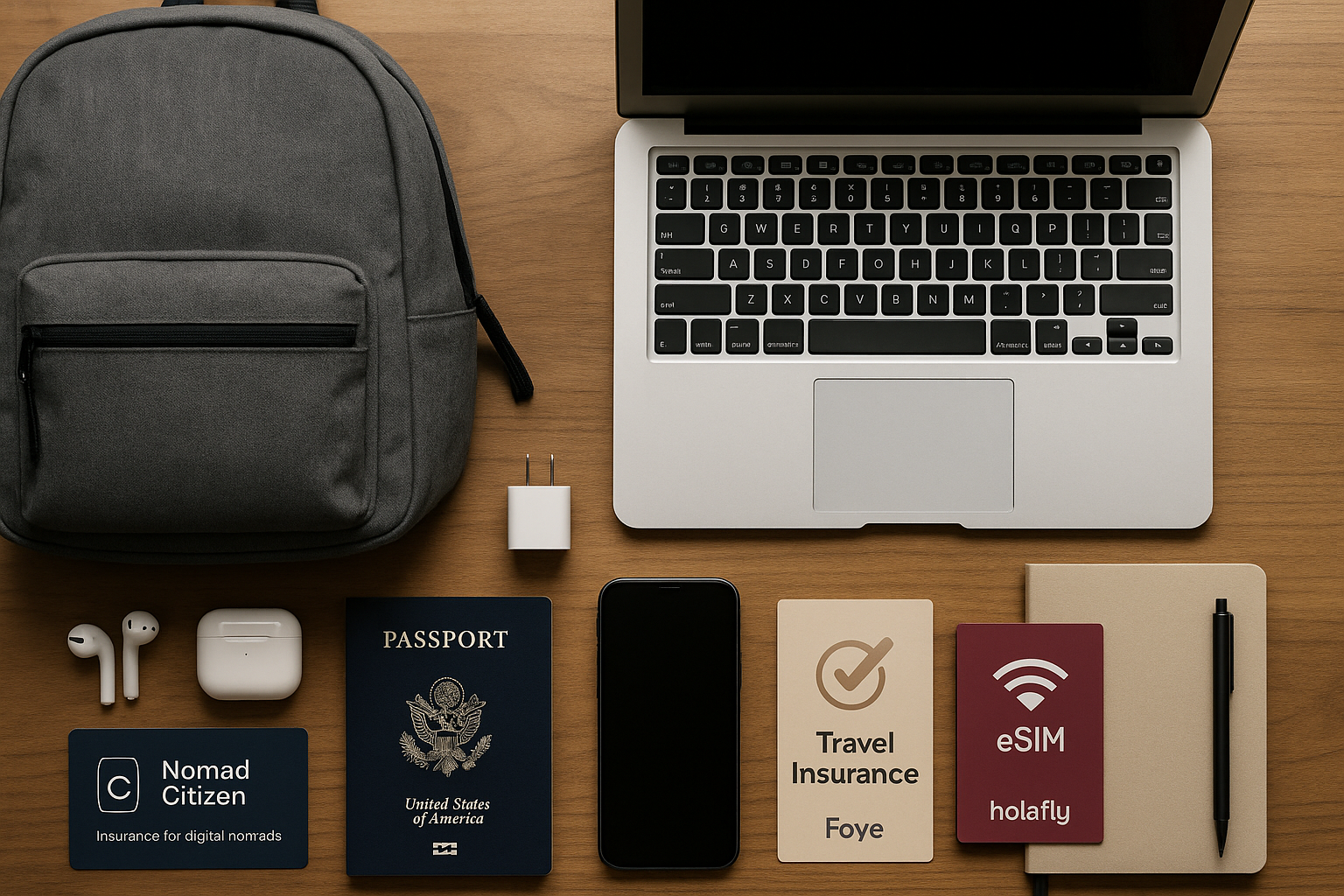
What Every Long-Term Traveler Actually Needs in 2026
Packing light is one thing. Packing smart is another. If you’re planning to work and travel at the same time — or you’re already doing it — you know that the real digital nomad essentials have nothing to do with the perfect backpack or the most aesthetic laptop sleeve. They’re the invisible infrastructure that keeps you connected, protected, and moving without constant friction. And in 2026, with the global nomad workforce having surpassed 40 million professionals worldwide, the tools available have never been better — or more overwhelming to choose from.
This guide cuts through the noise. Whether you’re three months into your first remote work adventure or you’ve been living out of a carry-on for years, here’s what actually matters: reliable connectivity, proper insurance coverage, and the right digital tools to keep everything running smoothly. Let’s get into it.
Staying Connected: Why eSIMs Have Become Non-Negotiable
There was a time when arriving in a new country meant hunting down a local SIM card, fumbling with a tiny tray pin in an airport bathroom, and hoping the plan you bought actually covered the cities you planned to visit. That era is fading fast. eSIMs — embedded digital SIM cards — have become essential infrastructure for anyone living the nomadic lifestyle in 2026.
The appeal is straightforward. You can activate a data plan before your plane even lands. No physical card, no language barrier at a phone shop, no roaming fees quietly draining your account in the background. You scan a QR code, follow a few steps, and you’re online. For a lifestyle built on flexibility, that kind of frictionless setup matters more than most people realize.
How to Choose the Right eSIM Provider
Not all eSIM providers are created equal, and picking the wrong one can mean paying for coverage that barely works in rural areas or discovering mid-trip that your plan doesn’t include the country you just spontaneously decided to visit. Here’s what to actually look for:
- Coverage breadth: Does the plan cover the regions you’re traveling through, not just the major cities? Some providers offer regional plans for Europe, Southeast Asia, or Latin America; others offer genuinely global coverage.
- Data caps and throttling: Understand what happens when you hit your data limit. Does the speed drop to something unusable, or does the provider offer easy top-ups?
- Device compatibility: Most modern smartphones support eSIM, but double-check before you commit — especially if you’re using an older device or one purchased in a region where eSIM was locked by the carrier.
- Customer support: When your connection drops in the middle of a client call in Lisbon, you need support that responds in hours, not days.
Holafly is one of the most widely recognized names in the eSIM space for travelers, offering data plans across a large number of destinations. Their model is built around simplicity — you pick your destination and duration, and the setup is designed to be fast even for people who aren’t particularly tech-savvy. For short trips or country-specific stays, that kind of straightforward approach works well. Providers like Ubigi are also worth exploring, particularly for travelers who move between multiple regions frequently and want a single plan rather than juggling destination-specific ones.
The broader point is this: your internet connection is your income when you’re working remotely. Treating it as an afterthought — or relying entirely on café Wi-Fi — is a risk you don’t need to take. A quality eSIM plan is one of the most practical digital nomad essentials you can invest in before your trip even begins. You can explore a detailed breakdown of current eSIM options at Simuno’s 2026 eSIM comparison guide.
The Insurance Gap Nobody Talks About
Here’s an uncomfortable truth: most standard travel insurance policies are designed for vacationers, not for people who live abroad for months at a time. They assume you have a fixed home base, a return flight booked, and a trip that lasts a few weeks at most. The moment your lifestyle stops fitting that template, the coverage gaps start to appear — and they can be significant.
Think about what a long-term traveler actually needs from an insurance policy. You need coverage that doesn’t expire after 30 or 60 days. You need protection that works across multiple countries without requiring you to declare each one in advance. You need health coverage that goes beyond emergency evacuation and actually covers doctor visits, prescriptions, and ongoing care. And if you’re working while you travel — which is the whole point — you may need some form of protection for your equipment or even liability coverage depending on your profession.
What to Look for in Nomad-Specific Insurance
Platforms built specifically for digital nomads — such as Nomad Citizen — are designed to address exactly these gaps. Rather than retrofitting a tourist policy for a lifestyle it wasn’t built for, nomad-focused insurance platforms typically offer flexible, longer-term coverage that travels with you. Before committing to any policy, ask these questions:
- What’s the maximum trip duration? Many standard policies cap coverage at 30–90 days. If you’re planning a six-month stint in Southeast Asia, that’s a problem.
- Does it cover pre-existing conditions? This varies enormously between providers and is worth understanding clearly before you need to make a claim.
- Is remote work covered? Some policies explicitly exclude coverage if you’re working during your trip. Read the fine print carefully.
- What’s the claims process like? A policy is only as good as its ability to pay out when something goes wrong. Look for reviews from people who have actually made claims, not just bought coverage.
- Does it cover gear? Your laptop, camera, and other equipment are your livelihood. Some nomad-focused policies include electronics coverage; standard travel insurance often doesn’t.
Faye Travel Insurance is another option that has been gaining attention among younger travelers for its app-first approach and relatively transparent claims process. The appeal of platforms like Faye lies partly in the user experience — managing your coverage through an intuitive app rather than calling a hotline and navigating hold music when you’re already stressed about a medical situation abroad.
Whatever provider you choose, the key is to read the policy document — the actual one, not just the marketing summary — before you purchase. Coverage gaps are almost always buried in the details, not announced on the homepage.
The Digital Tools That Keep Everything Running
Beyond connectivity and insurance, the day-to-day reality of working remotely across time zones requires a small but carefully chosen stack of tools. The goal isn’t to load yourself down with subscriptions; it’s to identify the handful of things that genuinely remove friction from your workflow and life.
Communication and Collaboration
Your clients, colleagues, or team members are probably scattered across multiple time zones. A reliable video calling setup matters — and that means not just the platform you use, but your audio and video quality. A decent USB microphone or a pair of earbuds with a good mic makes a bigger difference to your professional reputation than most people expect. Pair that with a lightweight ring light or simply learn to position yourself near natural light, and your remote presence immediately feels more polished.
For project management and async communication, the specific tools matter less than the habit of using them consistently. Whatever your team uses — whether that’s Notion, Trello, Slack, or something else — the discipline of updating your status and documenting your work becomes more important when you’re not physically present in an office.
Money and Banking
This is one of the most underrated categories of digital nomad essentials, and one of the most practical. Traditional bank accounts often charge foreign transaction fees on every purchase and ATM withdrawal, which adds up fast over months of travel. A multi-currency account or a card designed for international use can save you a meaningful amount over the course of a long trip.
Beyond the card itself, having a clear system for tracking your income and expenses across currencies is worth setting up early. It makes tax season significantly less painful, and it gives you a realistic picture of your actual cost of living in each place you stay — which helps you make smarter decisions about where to go next.
Backup Power and Connectivity
A portable power bank is obvious. A travel adapter that works across multiple socket types is obvious. What’s less obvious — until you’ve experienced the alternative — is having a backup connectivity option. Even with a great eSIM plan, there will be moments when a signal drops, a café’s Wi-Fi is unusable, or a power outage takes out the coworking space you were counting on for a deadline. A mobile hotspot device or a secondary eSIM from a different provider gives you a fallback that can save a client relationship when things go sideways.
Health and Wellbeing
Long-term travel is genuinely exciting, but it also puts your body through more than a two-week holiday does. Irregular sleep, new foods, different climates, and the low-grade stress of constant logistical decisions all take a toll. Building some basic health habits into your routine — whether that’s a fitness app you actually use, a meditation practice, or simply committing to cooking your own meals a few times a week — makes the lifestyle more sustainable over months and years, not just weeks.
Building a Setup That Lasts
The most common mistake new nomads make is trying to replicate their home office setup on the road. You don’t need a standing desk in every Airbnb. You need a setup that’s lightweight, reliable, and adaptable — something you can deploy in a café in Medellín, a coworking space in Chiang Mai, or a rented room in Porto without spending an hour getting organized.
That means being ruthless about what you actually use versus what you carry out of habit. It means investing in quality where it counts — your laptop, your headphones, your internet connection — and being willing to let go of the rest. And it means accepting that some days the setup won’t be perfect, and that’s fine. The freedom of working from anywhere comes with the occasional imperfect Wi-Fi signal, and learning to work around it gracefully is part of the skill set.
The digital nomad essentials that genuinely matter are the ones that give you stability within a life that’s deliberately unstable. Connectivity that works before you land. Insurance that covers the life you’re actually living. A financial setup that doesn’t quietly drain your savings in fees. And a work routine that keeps you productive even when the view out the window is spectacular enough to be distracting.
Starting Smart, Staying Flexible
If you’re just getting started, don’t try to build the perfect system before you leave. You’ll figure out what you actually need after your first month on the road — and that knowledge is more valuable than any packing list. Start with the non-negotiables: a solid eSIM plan for your first destination, a travel insurance policy that genuinely covers long-term nomadic travel, and a bank account that won’t charge you every time you withdraw cash in a new country.
Everything else can be refined as you go. That’s the beauty of this lifestyle — it rewards adaptability. The travelers who thrive long-term aren’t the ones with the most elaborate setups. They’re the ones who’ve learned to move efficiently, solve problems quickly, and keep their focus on the experiences rather than the logistics.
Your next adventure is already closer than it looks. Get the foundations right, and the rest tends to follow.
This article was produced with AI assistance and reviewed editorially.


Adventure Beyond the Beach: Things to Do in Jeju, South Korea & Tayrona Park, Colombia

Where to Stay in 2026: Budget Accommodation Guides for Vancouver, Wellington, Bruges & Andorra


