
Asia
Burning Season in Chiang Mai: What to Expect + 7 Safety Tips (2026)
Learn what to expect during Chiang Mai’s burning season from February to May, including air quality impacts and practical safety tips for travelers.

What Is the Chiang Mai Burning Season — and Why Does It Matter?
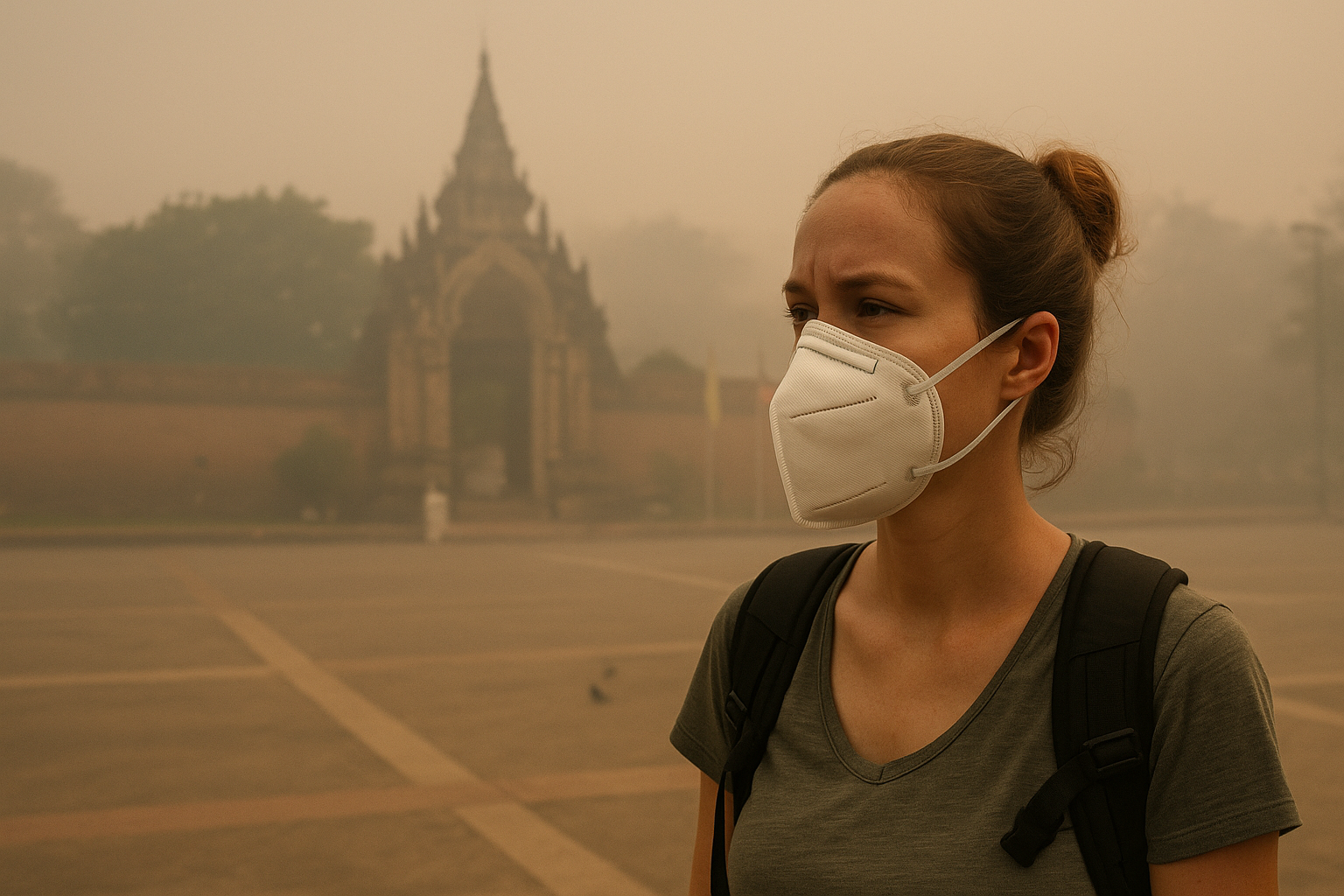
If you’re planning a trip to Northern Thailand, there’s one seasonal reality you need to know about before you book your flights: the Chiang Mai burning season. Every year, from late February through May, the air quality across Northern Thailand deteriorates dramatically as agricultural burning, forest fires, and land-clearing practices fill the skies with thick grey smoke. It’s not a hidden secret — it’s one of the most talked-about travel challenges in Southeast Asia — and understanding it properly can make or break your experience in one of Thailand’s most beloved cities.
Chiang Mai is genuinely one of those places that stays with you. The ancient moat city, the temple-dotted mountains, the night bazaars buzzing with energy, the coffee shops tucked into century-old buildings — it’s a city that rewards slow exploration. But during burning season, all of that comes wrapped in a haze that can feel suffocating, literally and figuratively. Knowing what to expect, when to go, and how to protect yourself if you do visit during this period is essential.
This guide covers everything you need: what the burning season actually is, when it peaks, what it looks like on the ground, and seven practical safety tips for navigating it if you decide to go anyway.
Understanding the Burning Season: What’s Actually Happening
The burning season in Chiang Mai and across Northern Thailand isn’t a single event — it’s a recurring annual phenomenon driven by a combination of agricultural practices, seasonal weather patterns, and geography. Farmers across Northern Thailand, Myanmar, and Laos burn crop residue and clear land at the end of the dry season. This burning, combined with naturally occurring forest fires and limited rainfall to wash the air clean, creates a toxic cocktail of particulate matter that settles over the region for weeks at a time.
Chiang Mai sits in a valley surrounded by mountains, which means that smoke and pollutants get trapped rather than dispersed. The mountains that make the city so visually stunning during the cool season become a natural bowl that holds the haze in place during burning season. On the worst days, you can barely see the hills that ring the city. Doi Suthep temple — the golden landmark visible from almost anywhere in Chiang Mai on a clear day — disappears entirely behind a thick grey curtain of smoke.
According to IQAir’s reporting, Chiang Mai ranks among the top ten most polluted cities in the world during Thailand’s burning season — a sobering fact that puts the situation in real perspective. This isn’t mild urban smog. On peak days, the air quality reaches levels that health authorities classify as genuinely dangerous, particularly for people with respiratory conditions, children, and the elderly.
The burning season runs from late February through May, with March identified as particularly severe — not just in Chiang Mai but across Northern Thailand and Northern Laos as well. April can bring some relief as pre-monsoon rains begin, but conditions remain unpredictable until the wet season fully arrives.
What It Actually Feels Like to Be There
Reading about air quality indices is one thing. Being in Chiang Mai during burning season is another experience entirely. The haze isn’t just a visual inconvenience — you can smell it, taste it, and after a few hours outside, feel it in your throat and chest. The sky turns a flat, milky white or a dull orange. Sunsets look apocalyptic. The mountains vanish. The city feels smaller, more claustrophobic, stripped of the dramatic landscape that makes it so photogenic the rest of the year.
Outdoor activities that define the Chiang Mai experience — hiking in Doi Inthanon National Park, cycling through the old city, exploring the Sunday Walking Street, taking a cooking class in a garden — become genuinely uncomfortable or outright inadvisable on high-pollution days. Even a short walk from your guesthouse to a café can leave you with irritated eyes and a scratchy throat.
That said, the city doesn’t shut down. Locals continue their lives. Restaurants stay open. Temples remain accessible. The indoor food scene, the café culture, the markets — all of it keeps going. But the quality of experience is undeniably diminished compared to visiting during the cool season (November to February), when Chiang Mai is at its most spectacular.
Should You Actually Go During Burning Season?
This is the honest question, and it deserves an honest answer. If you have the flexibility to visit Chiang Mai outside the burning season window, do it. November through February offers cooler temperatures, clear skies, and the full visual drama of the surrounding mountains. That’s when the city is at its best, and it’s when your outdoor adventures will actually feel like adventures.
But travel rarely works out perfectly. Maybe your schedule only allows a trip in March or April. Maybe you’re passing through on a longer Southeast Asia journey and Chiang Mai is on the route. Maybe you’re already booked. In all of these cases, you can still have a meaningful time in the city — you just need to go in with realistic expectations and a solid plan for protecting your health.
The key is preparation. Don’t arrive hoping the air quality will be fine and discover on day one that it isn’t. Assume it will be challenging, plan accordingly, and build your itinerary around activities that keep you comfortable. Here’s how to do that.
7 Safety Tips for Navigating the Chiang Mai Burning Season
1. Track Air Quality Before and During Your Trip
Knowledge is your first line of defense. Download a reliable air quality monitoring app before you travel — IQAir’s app is widely used and provides real-time data for Chiang Mai specifically. Check the Air Quality Index (AQI) each morning before planning your day. On days when levels are particularly high, adjust your plans to favor indoor activities. On days when conditions improve slightly, take advantage and get outside. Don’t guess — check.
2. Invest in a Proper Respirator Mask
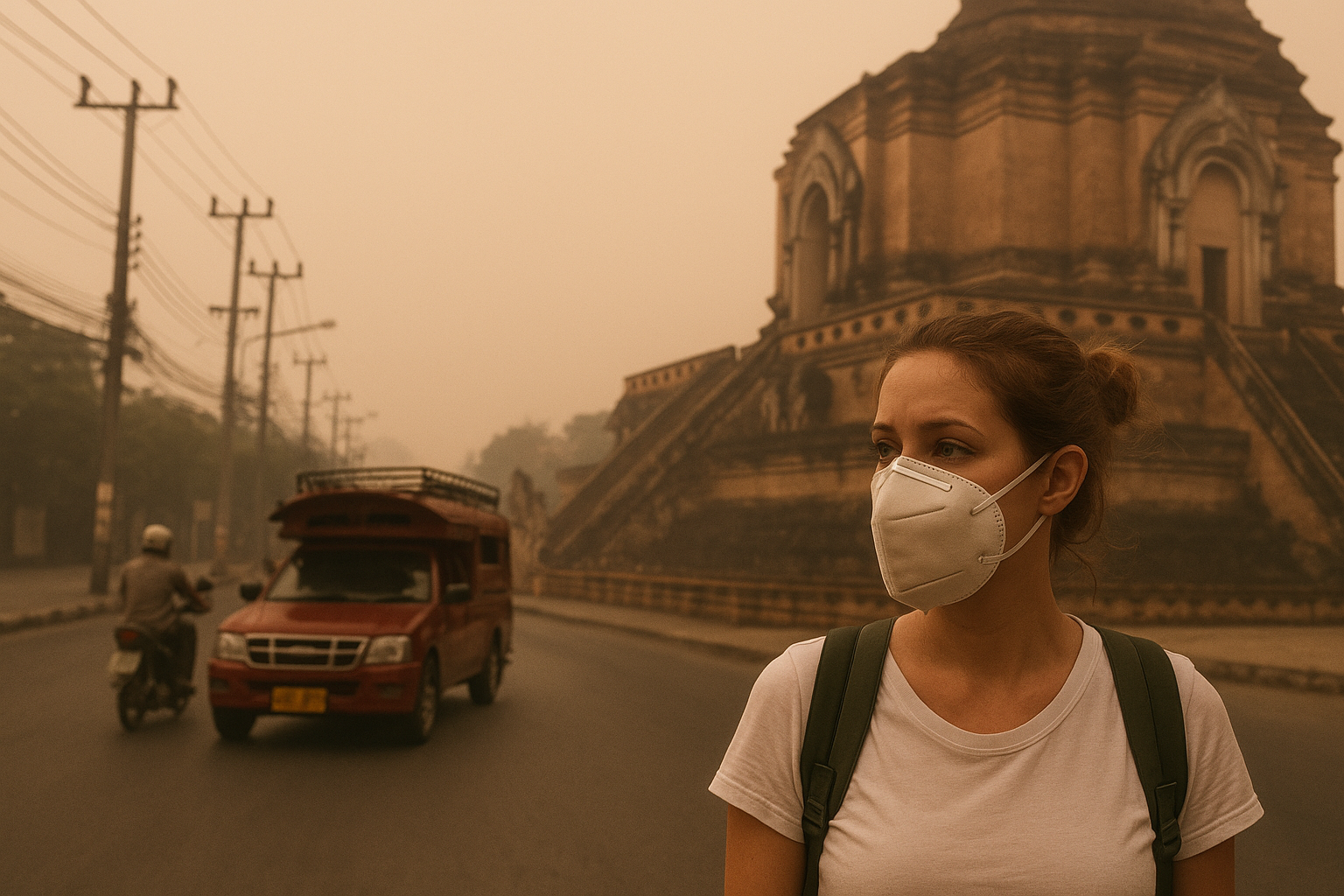
A standard surgical mask or a thin cloth face covering won’t protect you from fine particulate matter (PM2.5), which is the specific type of pollution most prevalent during burning season and the most harmful to your respiratory system. You need an N95 or KN95 respirator mask at minimum. Bring several from home, because supply and quality can vary once you’re on the ground. Wear one whenever you’re outside for more than a few minutes, even if the haze looks lighter than usual — PM2.5 is invisible at lower concentrations but still damaging with prolonged exposure.
3. Choose Accommodation Wisely
Where you sleep matters more than usual during burning season. Look for accommodation that has air conditioning with proper filtration, or better yet, a dedicated air purifier in the room. Many guesthouses and hotels in Chiang Mai now advertise air purifiers as a feature specifically because of the seasonal smoke issue — it’s worth prioritizing this when booking. Keeping your windows closed and running filtered air while you sleep gives your body a chance to recover from whatever outdoor exposure you had during the day.
4. Shift Your Outdoor Time to Early Morning
Air quality in Chiang Mai during burning season tends to be slightly better in the early morning hours before temperatures rise and wind patterns shift smoke into the valley. If you want to explore outdoor markets, temple grounds, or the moat area, aim to do it before 9 or 10 in the morning. By midday, conditions are typically at their worst. Plan your outdoor activities accordingly and retreat indoors during peak afternoon hours.
5. Stay Hydrated and Support Your Respiratory System
Smoke exposure causes your body to work harder to filter air, and staying well-hydrated helps your mucous membranes do their job more effectively. Drink more water than you normally would. Avoid alcohol in large quantities, as it dehydrates you and adds unnecessary strain. If you experience persistent coughing, eye irritation, or headaches — common reactions to smoke exposure — take them seriously as signals to rest indoors and reduce outdoor time. Don’t push through symptoms just to stick to your itinerary.
6. Embrace the Indoor Culture
Here’s the reframe that makes burning season more manageable: Chiang Mai has an extraordinary indoor culture, and burning season is actually a good excuse to slow down and experience it properly. The city has a thriving café scene — independent coffee shops with specialty brews, quiet reading corners, and creative spaces that could keep you occupied for days. The food halls and covered night markets are exceptional. Cooking classes held in indoor kitchens, Thai massage sessions, art galleries, and the incredible variety of restaurants all offer full experiences without requiring you to breathe outdoor air. Some of the most memorable Chiang Mai experiences happen inside.
7. Plan a Strategic Day Trip Escape
If you’re in Chiang Mai for more than a few days during burning season, consider planning at least one day trip that takes you to higher elevation or a different microclimate. Conditions at altitude can sometimes differ from the valley floor, though this isn’t guaranteed — burning season affects the entire region. Alternatively, a short trip to a nearby town or coastal area of Thailand can give your lungs a break and add variety to your journey. Think of it as building flexibility into your itinerary rather than being locked into the city every day.
What You’ll Miss — and What You Won’t
Let’s be real about the trade-offs. During the Chiang Mai burning season, you’ll miss the mountain views. You’ll miss the dramatic sunsets over Doi Suthep. You’ll miss the full joy of renting a scooter and riding through the surrounding countryside without a mask on. Outdoor trekking, waterfall hikes, and elephant sanctuary visits in open jungle settings will be less comfortable than they should be.
What you won’t miss is the city’s soul. The warmth of the people, the extraordinary food, the layered history visible in every temple and old city wall, the creative energy of a place that blends traditional Thai culture with a thriving international community — none of that disappears with the air quality. Chiang Mai is still Chiang Mai, even through the haze.
If you’re a photographer or someone who came specifically for landscape and outdoor adventure, burning season will genuinely frustrate you. If you’re a food traveler, a culture explorer, or someone who moves slowly and finds joy in sitting in a beautiful café for three hours — you might actually have a surprisingly good time.
When to Go Instead
If you’re still in the planning phase, the simplest advice is to aim for November through February. This is Chiang Mai’s cool season: temperatures are comfortable, skies are clear, and the surrounding mountains are fully visible in all their green, dramatic glory. It’s also the most popular time to visit, so expect more fellow travelers and slightly busier guesthouses — but for good reason.
If your trip falls in the shoulder months of late May or early June, you’ll catch the beginning of the wet season. Rain clears the air quickly, temperatures are warm, and the city feels lush and green. It’s an underrated time to visit. The crowds thin out, prices tend to be friendlier, and the air quality improves dramatically once the monsoon rains arrive consistently.
For a broader look at regional travel planning around burning season in Southeast Asia, resources like Southeast Asia Backpacker’s burning season guide offer useful context on how the phenomenon affects the wider region, including Northern Laos and Myanmar.
The Bottom Line
The Chiang Mai burning season is a real, recurring annual challenge that deserves honest attention — not panic, but not dismissal either. If you go in prepared, with a quality mask, an air quality app on your phone, filtered accommodation, and an itinerary that leans into the city’s extraordinary indoor culture, you can still come away with genuine memories and a meaningful experience. If you have the flexibility to visit between November and February, take it. But if burning season is when you find yourself in Northern Thailand, don’t write the city off entirely. Go in with open eyes, protect your health, adjust your expectations, and let Chiang Mai surprise you in the ways it always does — through its food, its warmth, and the quiet depth of a city that has been welcoming curious travelers for centuries.
This article was produced with AI assistance and reviewed editorially.


How to Actually Fund a Year of Travel: Real Jobs, Real Numbers, Real Stories

Funding Long-Term Travel: Real Stories of Working While Traveling


