
Asia
Thailand Island Hopping on a Budget: Where to Stay in Koh Lanta & Why It Beats Overcrowded Alternatives (2026)
Find affordable places to stay on Koh Lanta with daily costs from 1,050 THB. Beach-by-beach accommodation guide for budget travelers seeking quiet, authentic Thailand.

Why Koh Lanta Should Be on Every Budget Traveler’s Radar Right Now
If you’ve been scrolling through Thailand travel content lately and wondering where all the actually chill islands went, the answer is Koh Lanta. While the rest of the country is dealing with packed beaches, overpriced hostels, and ferry queues that stretch past your patience, this long, quiet island in Krabi Province is still doing its own thing — barefoot, unhurried, and genuinely welcoming. Finding solid Koh Lanta budget accommodation is not only possible, it’s easier here than almost anywhere else in southern Thailand. Daily costs for budget travelers start around 1,050 THB (roughly $30), making it one of the most accessible island destinations in the region. That’s not a typo. That’s your accommodation, food, and transport for the day.
This guide breaks down exactly where to stay, which beaches suit which travel styles, how to get there, what to do beyond lying in a hammock, and why Koh Lanta quietly outpaces its more famous — and more crowded — neighbors.
Koh Lanta at a Glance: The Island That Didn’t Sell Out
Koh Lanta is one of Thailand’s largest islands, stretching roughly 25 kilometers long and about 6 kilometers wide. It sits south of both Krabi and Phuket, forming part of Krabi Province and the broader Mu Ko Lanta National Park area. Geographically, it’s well-positioned for island hopping, diving, and day trips — but its real appeal is harder to map.
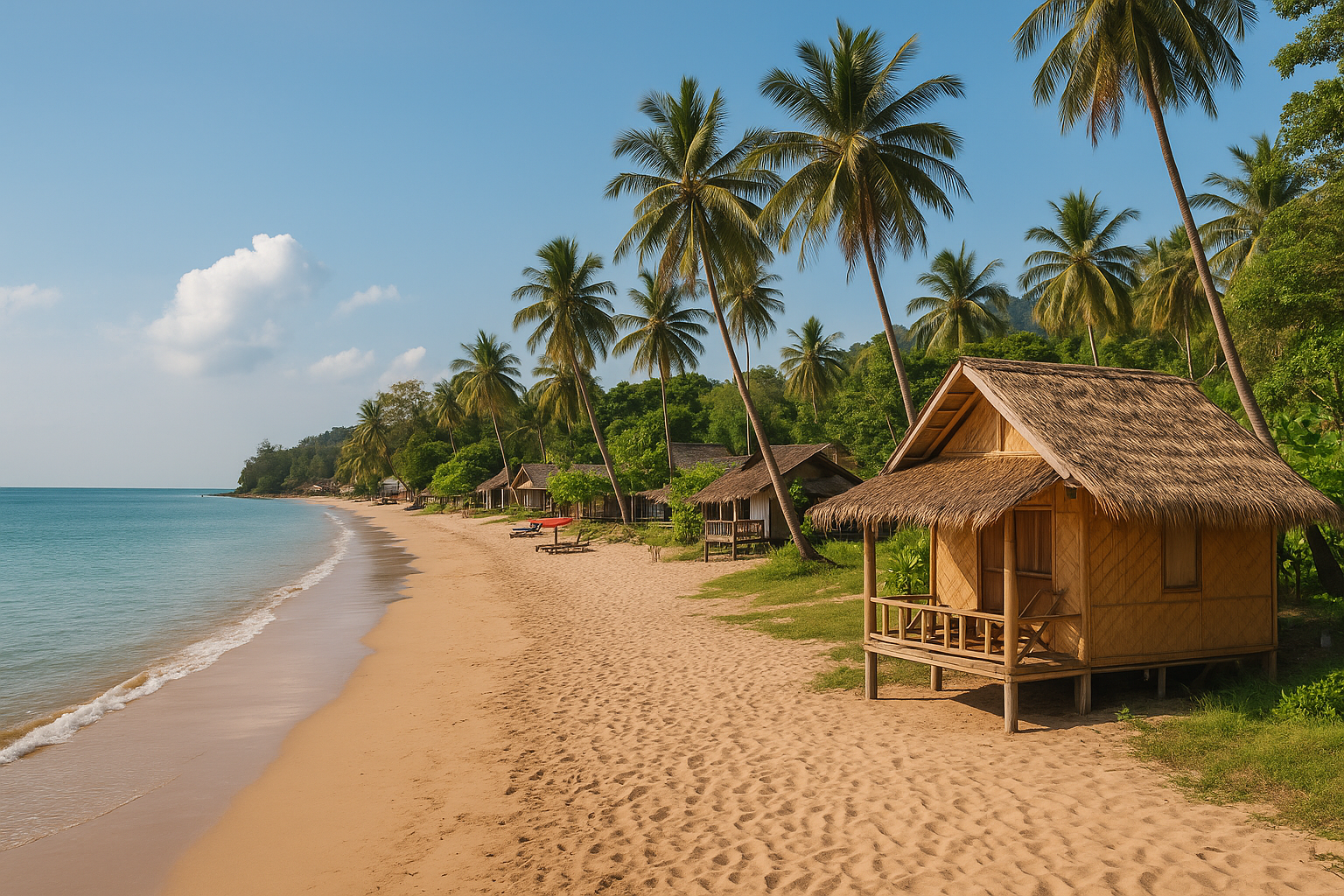
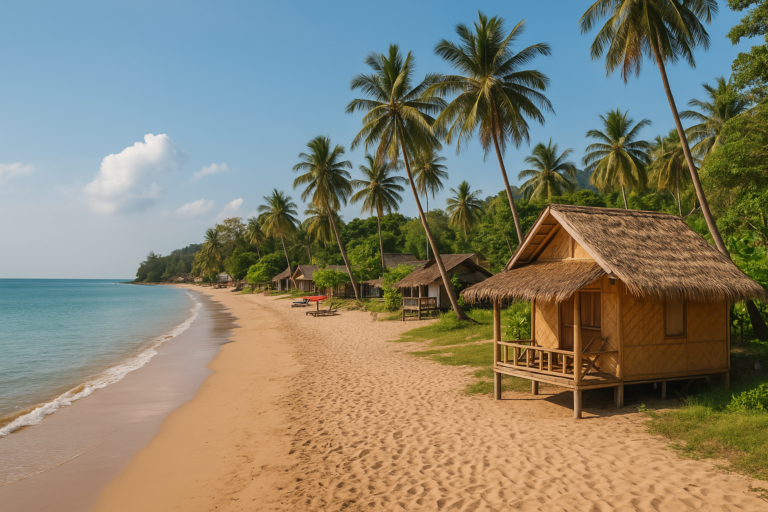
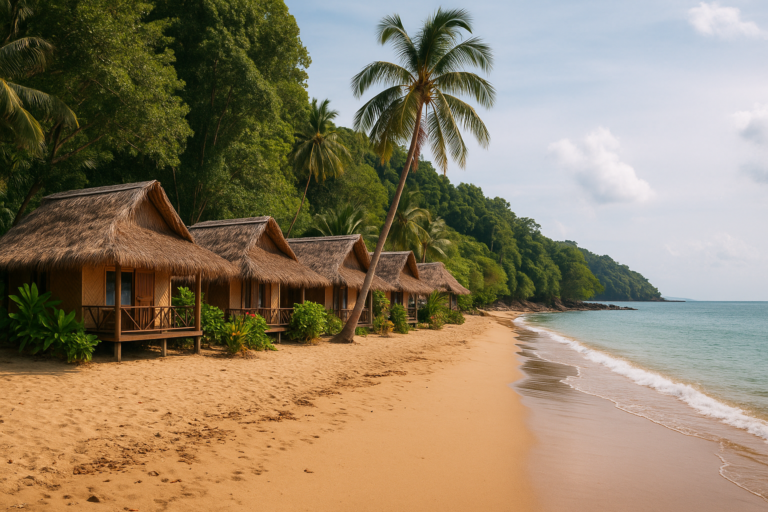
The island has managed to keep its laid-back character without being swallowed by massive resort developments. You won’t find a strip of neon-lit clubs or a beach lined wall-to-wall with sun loungers rented out at inflated prices. Instead, you get wooden bungalows half-hidden by palm trees, small family-run restaurants with plastic chairs and extraordinary food, and a pace of life that actually lets you decompress.
Locals describe it as having a bohemian, barefoot energy — and that’s not marketing language, it’s just accurate. The island has a mixed community of Thai Muslims, sea nomad descendants, and a long-established expat community, which gives it a cultural texture that’s genuinely interesting to explore. Old Town Koh Lanta, on the east coast, is one of the few remaining traditional stilt-house fishing villages in Thailand and well worth an afternoon wander.
Koh Lanta vs. the Overcrowded Alternatives
Let’s be honest about what you’re comparing this to. In 2026, Thailand’s high season has pushed tourism demand to a level where flights fill up months in advance and hotels at popular destinations are charging peak prices that feel more like Europe than Southeast Asia. Koh Phi Phi, beautiful as it is, has become a victim of its own fame — day-tripper boats arrive in waves, the main beach can feel more like a festival than a shoreline, and budget options have shrunk as demand has spiked.
Phuket tells a similar story at a larger scale. It’s a great base, but it’s significantly more expensive than Koh Lanta, and the atmosphere in the main tourist zones has drifted a long way from the authentic Thai experience most young travelers are actually looking for.
Koh Lanta is verifiably cheaper than both. It’s significantly cheaper than Phuket and slightly cheaper than Koh Phi Phi — and crucially, it offers something those islands are struggling to provide right now: space, quiet, and a sense that you’ve actually discovered something rather than just followed the crowd.
Understanding Koh Lanta Budget Accommodation by Beach Area
The west coast of Koh Lanta is where most travelers base themselves, and it’s divided into distinct beach zones, each with its own personality. Knowing which one suits you will save you the hassle of realizing you’ve booked in the wrong spot after you arrive.
Klong Dao Beach: Best for First-Timers
Klong Dao is the northernmost main beach and the most developed in a good way — meaning it has a solid range of accommodation, easy access to restaurants and shops, and a beach that’s wide, clean, and calm enough for swimming. It’s the most accessible area for travelers arriving by ferry, and it suits people who want comfort without paying resort prices.
Budget accommodation here ranges from fan bungalows starting around 350 THB per night to mid-range guesthouses that sit comfortably in the 800–1,500 THB range. The trade-off is that it’s the busiest part of the island, so if you’re after total seclusion, you’ll want to look further south. But for a first trip to Koh Lanta, it’s a reliable and well-connected base.
Long Beach (Klong Nin): The Sweet Spot
Long Beach stretches out south of Klong Dao and is widely considered the island’s most scenic stretch of sand. It’s long enough that you can always find a quiet corner, and the accommodation options here span the full spectrum — from simple bamboo bungalows to small boutique guesthouses that punch well above their price point.
This is the area that tends to attract independent travelers and backpackers who want a bit more atmosphere without sacrificing value. You’ll find small bars, good food, and the kind of evening vibe where conversations happen naturally. It’s the kind of beach where you arrive planning to stay two nights and end up booking a fifth.
Klong Khong Beach: For the Bohemian Crowd
If you’re drawn to the barefoot, creative, slow-travel end of the spectrum, Klong Khong is your beach. It’s quieter than the northern stretches, with a mix of small guesthouses, bungalow clusters, and a handful of low-key beach bars that feel genuinely local rather than tourist-facing.
Koh Lanta budget accommodation here leans toward simple but characterful — think open-air bungalows with mosquito nets, communal hammock areas, and owners who actually know their guests by name. It’s not for everyone, but for travelers who value atmosphere over amenities, it’s hard to beat.
Southern Koh Lanta: Off the Beaten Path
The southern end of the island is less developed and harder to reach without your own transport, but it rewards the effort. The landscape gets more rugged, the beaches are less crowded, and you start to feel the edge of the national park territory. Accommodation options are fewer and more spread out, but the sense of discovery is real.
If you’re renting a scooter and want to explore the whole island at your own pace, basing yourself in the south for a night or two gives you a completely different perspective on Koh Lanta. Just make sure you’ve sorted transport before you commit, because options for getting around are limited once you’re out there.
What Does a Day Actually Cost?
Numbers matter when you’re traveling on a real budget, so here’s what you’re actually looking at. Budget travelers can get by on around 1,050 THB per day (approximately $30), covering a fan bungalow, meals at local restaurants, and basic transport. Comfortable mid-range travel — better accommodation, the occasional activity, and a few cold drinks — runs higher, up to around 8,750 THB per day ($250) if you’re going full resort mode.
Food is where Koh Lanta really shines for budget travelers. Local restaurant dishes cost between 80 and 150 THB — that’s a full meal for less than $5. Street food and market stalls bring it down even further. Eating like a local here isn’t a compromise; it’s genuinely one of the best parts of the trip. Fresh seafood, Thai curries, noodle soups, and grilled dishes are all available at prices that feel almost absurdly reasonable compared to what you’d pay anywhere in Europe or even in Bangkok’s tourist zones.
For accommodation, the range is wide. Fan bungalows start at around 350 THB per night at the budget end, while resort villas can reach 20,000 THB. The sweet spot for most young travelers is somewhere in the 500–1,200 THB range — basic but clean, often with a fan or air conditioning, and usually within walking distance of the beach.
Diving, Snorkeling, and Getting Underwater
Koh Lanta’s location makes it one of the best bases for diving in southern Thailand. The island sits close to some genuinely spectacular dive sites, including Hin Daeng — a submerged pinnacle known for strong currents, large pelagic fish, and occasional whale shark sightings. A two-dive day at Hin Daeng costs between 1,800 and 2,500 THB, which is competitive for the quality of the experience on offer.
For snorkelers and beginner divers, the reefs closer to shore and around the nearby smaller islands offer clear water and good visibility during the dry season. Dive shops along the main beach roads offer everything from introductory courses to advanced open water certification, and the instructors at most established operations are experienced and multilingual.
If you’re not into diving, kayaking through the mangroves on the east coast is a genuinely different kind of adventure — quieter, slower, and surprisingly beautiful. The contrast between the open west coast beaches and the sheltered, jungle-edged east coast waterways is one of the things that makes Koh Lanta feel more layered than a typical beach destination.
Getting to Koh Lanta: Practical Routes
The most common approach is to fly into either Krabi Airport or Phuket International Airport, both of which are well-connected to major international hubs. From Krabi, the journey to Koh Lanta typically involves a combination of road and ferry transport, and the route is well-traveled enough that you’ll find plenty of shared minivan and ferry services catering to independent travelers.
From Phuket, the journey is longer but manageable, again via a combination of road transport to the ferry crossing points. During high season, it’s worth booking transfers in advance rather than assuming you’ll find space on the day — demand has increased significantly, and last-minute availability isn’t always guaranteed.
Once on the island, renting a scooter is the most flexible and affordable way to explore. The road running down the west coast connects all the main beach areas, and the island is compact enough that you can cover a lot of ground in a day without it feeling like a road trip. Just ride sensibly, wear a helmet, and take the southern mountain road slowly — it’s beautiful but it demands attention.
For more detailed transport planning, resources like Indie Traveller’s Koh Lanta guide and Travel Guides Tip’s budget breakdown are genuinely useful starting points with current route information.
When to Visit: Timing Your Trip
Koh Lanta’s weather follows the pattern typical of southern Thailand’s Andaman Coast. The dry season, which generally runs from roughly November through April, brings calm seas, clear skies, and the best conditions for diving and beach time. This is peak season, and while accommodation prices rise accordingly, Koh Lanta remains more affordable than most comparable islands even at its busiest.
The shoulder months — October and May — can offer a good balance of quieter beaches and reasonable prices, though you should be prepared for some rain and occasionally choppy sea conditions. The deep wet season, roughly June through September, sees many smaller guesthouses close and ferry services reduce, so it’s worth checking current conditions before committing to a visit in those months.
For 2026 specifically, the pattern of high demand across Thailand’s most popular destinations makes Koh Lanta’s relative quietness even more appealing during peak season. Booking accommodation a few weeks in advance during November through February is sensible — the best budget guesthouses fill up faster than you’d expect.
Beyond the Beach: Culture and Community
One of the things that sets Koh Lanta apart from more resort-heavy islands is that there’s actually a local culture worth engaging with. The Old Town on the east coast — a cluster of traditional wooden shophouses and stilt homes built over the water — offers a glimpse of what the island looked like before tourism arrived. It’s a peaceful, photogenic place to spend a morning, with a few small cafes and craft shops run by locals who’ve been here for generations.
The island’s Muslim fishing community adds another dimension to the cultural mix. Mosques sit alongside Buddhist temples, and the food scene reflects this diversity in interesting ways. Respecting local customs — dressing modestly away from the beach, being mindful of prayer times — goes a long way and is simply the right approach when you’re a guest in someone else’s community.
Markets, cooking classes, and community-run tours are all available and worth seeking out. They give you a connection to the place that no amount of beach time can replicate, and they put money directly into local hands rather than large operators.
Making the Most of Your Koh Lanta Budget
The practical reality of traveling on a budget in Koh Lanta is that the island works in your favor at almost every turn. Eat at local restaurants rather than beachfront tourist spots. Rent a scooter for a day or two rather than relying on taxis. Book accommodation directly with guesthouses when you can — many small operations offer better rates for direct bookings than through third-party platforms.
Don’t overschedule. One of the genuine pleasures of Koh Lanta is that it rewards slowness. A day with no plan beyond a morning swim, a market lunch, and an afternoon dive can easily become one of your best travel memories. The island isn’t trying to sell you anything — and that, more than anything else, is what makes it worth the trip.
Koh Lanta budget accommodation options are genuinely good across multiple beach areas, the food is affordable and excellent, the diving is world-class, and the atmosphere is the kind that’s increasingly rare in Thailand’s most visited destinations. If you’re planning a Thai island trip in 2026, this is the one that will still feel like a discovery rather than a destination — and that difference matters more than you might think until you experience it.
This article was produced with AI assistance and reviewed editorially.


Vietnam Uncovered: Beyond the Chaos, Into the Real Story

Beyond the Guidebook: What Hanoi Actually Feels Like


