
North America
Southeast US Road Trip Essentials: Memphis, Pigeon Forge & Orlando—Where to Stay & What to Do
Plan your southeast US road trip through Memphis, Pigeon Forge, and Orlando. Discover music venues, mountain access, budget stays, and local food across three unforgettab

Why a Southeast US Road Trip Should Be Your Next Big Adventure
There’s something about loading up a car, rolling down the windows, and watching the landscape shift from city skylines to mountain ridges to coastal flatlands that just makes you feel alive. A southeast US road trip delivers exactly that kind of freedom — and then some. Stretching through Tennessee, Georgia, and Florida, this route connects three wildly different destinations: Memphis, Pigeon Forge, and Orlando. Each one brings something completely its own. Together, they make for one of the most varied, memorable journeys you can take in the American South.
Whether you’re a first-time road-tripper or someone who’s been doing this for years, the Southeast has a way of surprising you. The food hits differently. The people are genuinely warm. The landscapes keep changing. And the stories you collect along the way? Those stick with you long after you’ve driven home.
Memphis, Tennessee: Where the Music Lives in the Streets
Memphis isn’t a city you just visit. It’s a city you feel. From the moment you arrive, there’s an energy here that’s hard to describe — part history, part heartache, part celebration. This is the city that gave the world blues, soul, and rock and roll, and it hasn’t forgotten that for a single day.
The Music Scene
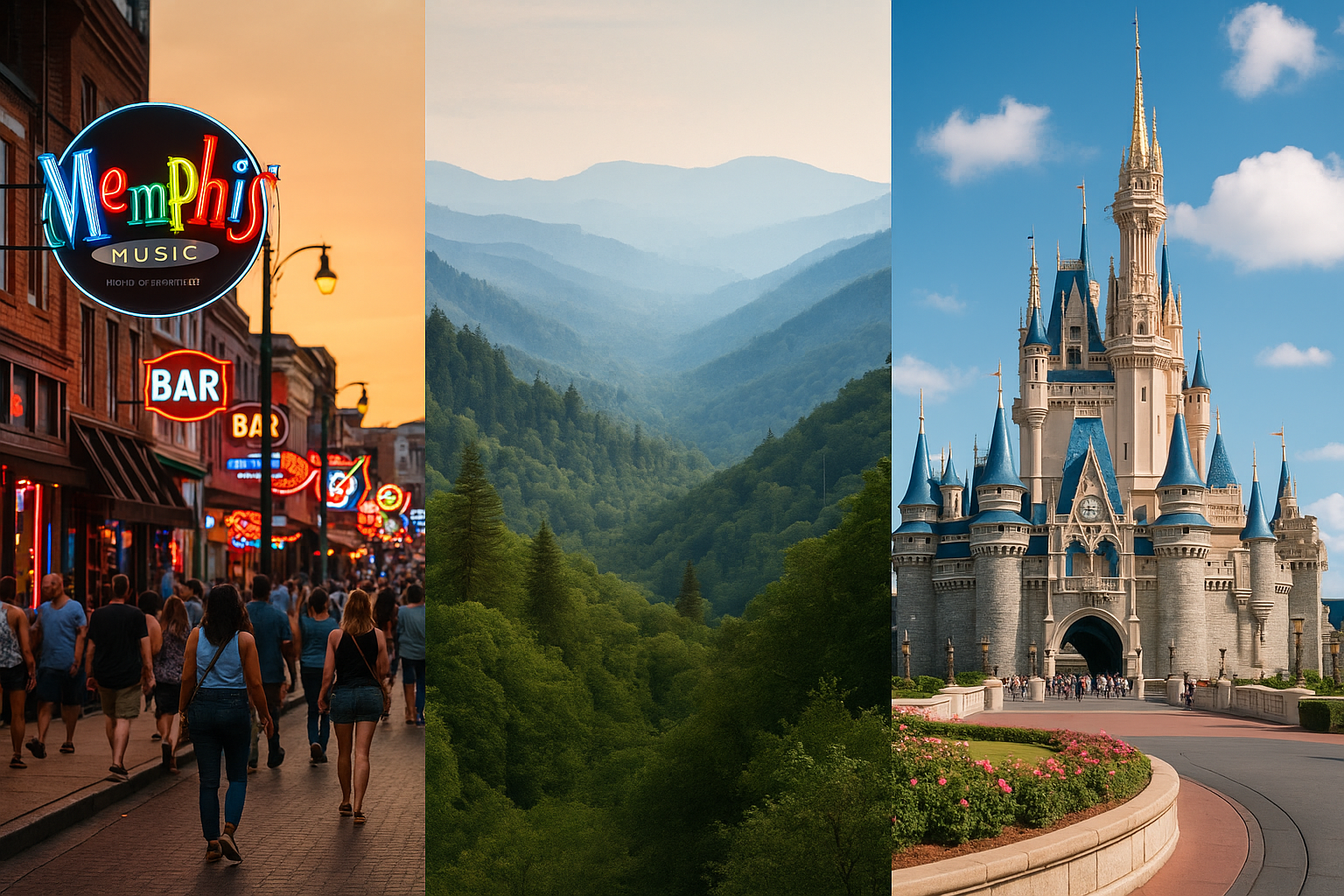
The music in Memphis doesn’t stay inside concert halls. It spills out onto the streets, through open bar doors, and into the humid evening air. Beale Street is the obvious starting point — a stretch of live music venues, bars, and restaurants that comes alive after dark. But don’t stop there. Dig a little deeper and you’ll find local spots in neighborhoods away from the tourist trail where musicians play because they love it, not because there’s a crowd watching.
The city’s connection to blues music runs deep, and exploring that history gives your visit real texture. Walk through neighborhoods where the genre was born, visit the museums dedicated to the artists who shaped American music, and talk to locals who’ll point you toward the real gems. Memphis rewards curiosity. The more questions you ask, the better it gets.
Local Culture and Food
Memphis barbecue is its own religion. Slow-smoked, pulled, and piled high — the city takes serious pride in its food culture. Look for the places that have been around for decades, the ones with no-frills interiors and lines out the door at lunchtime. That’s where you want to eat. Beyond barbecue, the local food scene has been quietly evolving, with neighborhood spots serving everything from Southern comfort food to creative menus inspired by the city’s multicultural roots.
Spend a morning wandering through local markets, grab coffee somewhere the regulars go, and let the day unfold without a strict plan. Memphis is one of those cities that rewards slow exploration. The more you wander, the more you discover.
Where to Stay in Memphis on a Budget
Memphis has a solid range of budget-friendly accommodation options. Hostels and affordable hotels cluster around the downtown area, putting you within walking distance of Beale Street and the main cultural sites. Look for places that offer free parking — essential on a road trip — and check reviews specifically mentioning noise levels if you’re planning to sleep before midnight. Booking a few days in advance usually gets you better rates, especially on weekends when the city fills up with visitors.
Pigeon Forge, Tennessee: Your Gateway to the Smoky Mountains
About six hours east of Memphis, Pigeon Forge feels like a completely different world. The drive itself is worth it — rolling through Tennessee’s green hills, the landscape gradually rising as you get closer to the mountains. By the time you arrive, you’re already in a different headspace.
Pigeon Forge sits right at the edge of the Great Smoky Mountains National Park, one of the most visited natural spaces in the entire country. And for good reason. The park is genuinely spectacular — ancient peaks draped in forest, rivers cutting through valleys, and hiking trails that range from easy morning walks to full-day summit challenges.
Getting Into the Great Smoky Mountains
The park is free to enter, which makes it one of the best value outdoor experiences you’ll find anywhere in the Southeast. From Pigeon Forge, you can reach the park entrance in under twenty minutes. Once inside, the options are almost overwhelming in the best possible way.
Hike to a waterfall. Drive the scenic ridge road and pull over at every overlook. Wake up early and watch the famous morning mist roll through the valleys — that’s where the park gets its name, and seeing it in person is one of those moments that makes you put your phone away and just look. Wildlife is abundant too; keep your eyes open on the roads and trails and you’re likely to spot deer, wild turkeys, and if you’re lucky, black bears going about their day.
For hikers, the park offers trails at every level. If you’re short on time, shorter loop trails near the visitor centers give you a genuine taste of the forest without requiring a full day. If you have more time, push further in and find the quieter corners of the park where you might go hours without seeing another person.
Pigeon Forge Beyond the Park
Pigeon Forge itself has a lively, slightly quirky character — a mix of family attractions, outlet shopping, and local restaurants lining the main strip. It’s the kind of place that surprises you. Yes, there are tourist traps, but there are also genuinely good spots for local food, craft breweries, and live music venues that fill up on weekend nights with a mix of locals and visitors.
The town also makes a great base for exploring the wider region. The nearby town of Gatlinburg is a short drive away and has its own distinct atmosphere — more artisan shops, local galleries, and mountain charm. Between the two towns and the national park, you could easily fill three or four days without running out of things to do.
Budget Accommodation in Pigeon Forge
Good news for budget travelers: Pigeon Forge has some of the most affordable accommodation options on this entire route. Hotels in the area start from around $48 per night according to listings on TripAdvisor, making it one of the more accessible stops on a southeast US road trip. Cabin rentals are also popular here and can be surprisingly affordable when split between a group — and waking up in a mountain cabin is a very different experience from a standard hotel room.

Look for places slightly off the main strip for better value, and consider staying mid-week if your schedule allows. Weekend rates in peak seasons can jump significantly, especially in autumn when the fall foliage draws large crowds.
Orlando, Florida: More Than Theme Parks
From Pigeon Forge, the road south takes you through Georgia and eventually into Florida. It’s a long drive — plan for a full day behind the wheel, or break it up with a night somewhere along the way. The landscape transforms as you go: mountains give way to Georgia’s rolling farmland, then the flat, wide-open spaces of northern Florida, and finally the subtropical sprawl of the Orlando area.
Most people think of Orlando purely in terms of its famous theme parks, and those are absolutely part of the picture. But the city has a whole other side that younger travelers often miss entirely — and that’s where things get interesting.
Orlando’s Neighborhoods and Local Culture
The neighborhoods around downtown Orlando have been quietly building a genuinely cool local scene over the past several years. Areas like Thornton Park and the Mills 50 district are full of independent restaurants, coffee shops, vintage stores, and local bars that feel nothing like the resort-zone version of the city. This is where Orlando actually lives, and spending time here gives you a completely different impression of the place.
The local arts scene is more active than most visitors expect. Street art, independent galleries, and live music venues scatter through the city’s residential neighborhoods. Check local listings when you arrive — there’s almost always something happening on any given evening that has nothing to do with a theme park.
Outdoor Spaces and Natural Florida
Florida’s natural environment is one of its most underrated assets. Orlando sits in a region dotted with freshwater springs, state parks, and lakes that offer kayaking, paddleboarding, and swimming in some of the clearest water you’ll ever see. Day trips to natural springs in the surrounding area are popular with locals and give you a completely different experience of Florida — one that feels wild, quiet, and genuinely beautiful.
Wekiwa Springs State Park, just a short drive from the city, is one example of the kind of outdoor escape that’s right on Orlando’s doorstep. You can rent a kayak, paddle through cypress-lined waterways, and feel completely removed from the city in under an hour. It’s the kind of experience that stays with you.
Food, Nightlife, and Budget Stays in Orlando
Orlando’s food scene extends well beyond resort dining. The city has a genuinely diverse culinary landscape shaped by its multicultural population — Cuban food, Puerto Rican cuisine, Vietnamese restaurants, and Southern comfort food all coexist within a few miles of each other. Eating your way through the city’s neighborhoods is one of the most enjoyable ways to spend your time here.
For nightlife, the downtown area and surrounding neighborhoods offer everything from relaxed rooftop bars to live music venues and late-night spots that fill up on weekends. It’s a college city in many ways, which means the social scene is energetic and the options are plentiful without being overwhelming.
Budget accommodation in Orlando ranges from affordable chain hotels to a growing number of hostels catering specifically to younger travelers. Staying outside the immediate resort zone significantly reduces costs and puts you closer to the local neighborhoods worth exploring. Look for places with good public transport links or that offer bike rentals — Orlando is more navigable than it looks once you get off the main tourist corridors.
Road Trip Logistics: Making the Route Work
The route connecting Memphis, Pigeon Forge, and Orlando flows naturally through the Southeast. From Memphis, the drive east toward the Smoky Mountains takes you through the heart of Tennessee — a genuinely scenic stretch that’s worth taking slowly. From Pigeon Forge, heading south through Georgia on I-75 eventually brings you into Florida and down toward Orlando.
The full route covers significant ground, so building in flexibility is key. Don’t try to rush any of the three stops. Each destination deserves at least two to three days to do it justice. A ten to fourteen day trip gives you enough time to actually experience each place rather than just passing through.
- Car rental or your own vehicle: This route isn’t well-served by public transport between cities, so having your own wheels is essential. Split rental costs with travel companions to keep it affordable.
- Fuel and snacks: Budget for fuel costs across the full route. Stock the car with snacks and a cooler — it saves money and makes long drives more enjoyable.
- Accommodation strategy: Book ahead for peak seasons (summer and autumn), but leave some flexibility for spontaneous detours. Some of the best stops on any road trip are the unplanned ones.
- Packing for variety: You’ll need hiking gear for the Smoky Mountains, comfortable walking shoes for city exploration, and lighter clothing for Florida’s heat. Pack smart and pack light.
- Georgia detour: The drive through Georgia offers its own rewards. Cities like Atlanta or Savannah make excellent overnight stops if you want to add more depth to the journey.
Tips for Making the Most of Your Southeast Road Trip
A southeast US road trip rewards travelers who stay curious and keep their plans loose. Here are a few principles that make the difference between a good trip and a genuinely great one:
- Talk to locals. Every city has people who know the best spots that never make it onto travel lists. Ask your hotel staff, the person behind the counter at a coffee shop, or whoever’s sitting next to you at a bar. The best recommendations almost always come from conversations.
- Get up early. Cities and natural spaces both look and feel different in the early morning. You’ll see a different side of Memphis before the crowds arrive, and the Smoky Mountains are at their most magical just after sunrise.
- Embrace the detours. Some of the most memorable moments on a road trip happen when you take the exit you weren’t planning to take. If something looks interesting, follow that instinct.
- Document the journey, not just the destinations. The drive itself is part of the experience. The roadside diners, the small towns, the unexpected views — those details are what make your version of this trip different from everyone else’s.
- Travel sustainably. Respect the natural spaces you visit, especially in the Smoky Mountains. Stay on marked trails, pack out your rubbish, and leave every place better than you found it.
For more inspiration on planning your route, resources like Our Escape Clause’s Southern USA road trip guide offer useful itinerary frameworks to build from.
The Southeast Is Waiting for You
A southeast US road trip through Memphis, Pigeon Forge, and Orlando is one of those journeys that gives you a genuine cross-section of American life — the music and history of Tennessee, the wild beauty of the Appalachian mountains, and the sun-drenched energy of Florida. These three places sit comfortably on the same route but feel completely different from each other, which is exactly what makes the combination so compelling. You drive out of the mountains and into the subtropics, from blues bars to hiking trails to rooftop bars by a city lake, and somehow it all makes sense. That’s the magic of the American South. Pack the car, pick a starting point, and let the road do the rest.
This article was produced with AI assistance and reviewed editorially.


Vietnam Uncovered: Beyond the Chaos, Into the Real Story

Beyond the Guidebook: What Hanoi Actually Feels Like


