
Asia
Sri Lanka in 10 Days: Hitting the Big Sights Without the Tourist Crowds
Plan your 10 day Sri Lanka itinerary with strategies to visit Sigiriya, Kandy, Ella, and beaches while avoiding tourist crowds. Includes timing tips and budget guidance.

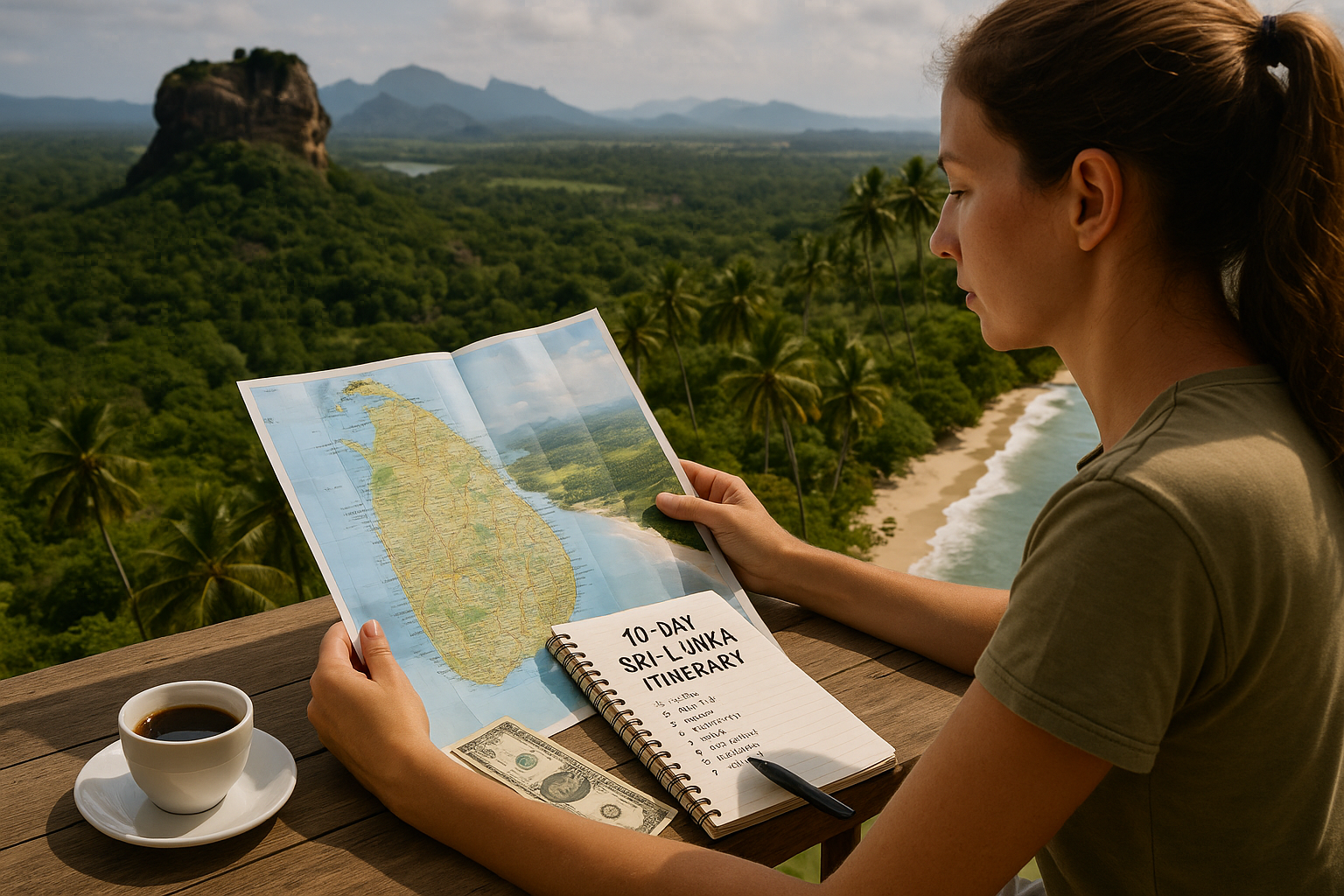
Why Sri Lanka Should Be Your Next Big Adventure
There’s a reason Sri Lanka keeps showing up on everyone’s travel radar. In just ten days, you can climb a ancient rock fortress, ride one of the most scenic train routes in the world, wander through misty tea-covered hills, and fall asleep to the sound of ocean waves. A well-planned 10 day Sri Lanka itinerary gives you exactly enough time to experience the country’s wildly different landscapes without burning out or rushing through everything.
Sri Lanka is compact enough to cover serious ground but rich enough that every region feels like a different world. Temples, beaches, mountains — it’s all here, and it’s all genuinely extraordinary. The challenge isn’t finding things to do. It’s figuring out how to do them without spending half your trip stuck in tourist queues or arriving at a viewpoint to find a hundred other people already there.
This guide breaks down a practical, experience-first approach to ten days in Sri Lanka — one that hits the iconic spots while giving you real strategies to experience them on your own terms.
Before You Go: Timing Your Trip Wisely
Sri Lanka doesn’t have a single “best time” to visit because the island has two distinct monsoon seasons that affect different coasts at different times of year. The west and south coasts tend to be driest from roughly December through March, while the east coast sees its best weather from around April through September. The central highlands and cultural triangle destinations like Sigiriya and Kandy are generally accessible year-round, though you’ll want to factor in rainfall patterns when planning your beach days.
For crowd management, the general principle is simple: avoid school holiday windows from major tourist-sending countries and the peak Christmas-to-New-Year period if you can. Visiting during shoulder seasons — the weeks just before or just after peak — often means noticeably fewer people at the major sites while conditions are still very good. Early mornings are your single most powerful tool for crowd avoidance at any time of year. Arriving at Sigiriya at opening time versus mid-morning is a completely different experience.
Check the Sri Lanka Tourism Development Authority for official guidance on entry requirements and seasonal conditions before booking.
Your 10 Day Sri Lanka Itinerary: A Region-by-Region Breakdown
Days 1–2: Colombo — Get Your Bearings
Most international flights land in Colombo, and rather than treating it as a stopover, give yourself a day and a half to actually explore the city. Colombo is often underrated by travelers who rush straight to the cultural triangle, but it rewards curiosity.
Spend your first afternoon in the Pettah district, where the markets are loud, colorful, and completely alive. You’ll find street food, spice sellers, and fabric shops all crammed into a few chaotic blocks — it’s the kind of place that immediately makes you feel like you’ve arrived somewhere real. In the evening, head to Galle Face Green, the long oceanfront promenade where locals gather at sunset. Grab some kottu roti from a street vendor and watch the city unwind.
On your second morning, visit a few of Colombo’s temples and colonial-era buildings before catching an afternoon train or bus north toward the cultural triangle. The train network in Sri Lanka is genuinely one of the best ways to travel — slow by some standards, but the views and the atmosphere make it worth every minute.
Days 3–4: Sigiriya and Dambulla — The Ancient Heart of the Island
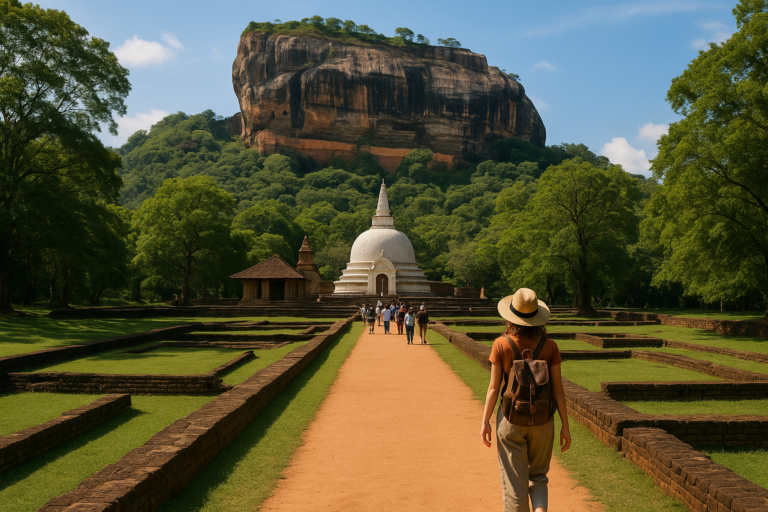
Sigiriya is one of those places that earns its reputation. The rock fortress rises dramatically from the surrounding jungle, and climbing it feels like a proper adventure rather than a tourist checklist item — especially if you get there early. The site opens at dawn, and if you’re there for the first hour, you’ll have a genuinely different experience from the midday crowds. The frescoes partway up the rock and the mirror wall have been there for over a millennium. Standing at the summit and looking out over the flat jungle canopy is the kind of moment you’ll still be describing years later.
Nearby Dambulla is home to a remarkable cave temple complex carved into a granite outcrop. The painted interiors are stunning, and the site tends to feel more contemplative than Sigiriya — fewer visitors, more atmosphere. Pair these two sites across your two days in the region and you’ll leave with a real sense of Sri Lanka’s ancient cultural depth.
Stay in a guesthouse in the town of Dambulla or the villages nearby rather than the more expensive resort-style accommodation. You’ll eat better, pay less, and meet more interesting people.
Days 5–6: Kandy — Culture, Ceremony, and the Sacred Temple
Kandy sits in the central highlands and serves as the cultural capital of Sri Lanka. The city is built around a lake and feels noticeably cooler than the coast, which is a welcome change if you’ve been traveling in the heat.
The Temple of the Tooth — Sri Dalada Maligawa — is the most sacred Buddhist site in the country and one of the most important in the entire Buddhist world. It houses a relic believed to be a tooth of the Buddha, and the ceremonies held here, particularly the evening puja, are genuinely moving to witness. Arrive early for the morning puja if you want a more intimate experience.
Beyond the temple, Kandy rewards slow exploration. The market area is full of life, the botanical gardens at Peradeniya are a lovely half-day escape, and the surrounding hills have tea estates you can visit on foot. If you’re lucky enough to be in Kandy during the Esala Perahera festival period, the processions through the city streets are one of the most spectacular cultural events you’ll encounter anywhere in Asia — though this does draw significant crowds, so plan accommodation well in advance.
Days 7–8: Ella — Mountains, Mist, and the Most Famous Train Ride
The train journey from Kandy to Ella is, without exaggeration, one of the most beautiful rail routes on the planet. The tracks wind through tea plantations, over viaducts, and through tunnels cut into the hillside. The light changes constantly. Waterfalls appear and disappear. Tea pickers in bright saris move across the green slopes. Book a seat in advance if possible, but even standing in the doorway of a second-class carriage — which many travelers do — gives you an unobstructed view that you won’t forget.
Ella itself is a small hill town that’s become a genuine hub for young travelers, and for good reason. The main hikes — Little Adam’s Peak and Ella Rock — are accessible without a guide and offer spectacular views over the surrounding valleys. The Nine Arch Bridge, one of Sri Lanka’s most photographed landmarks, is a short walk from town and looks especially dramatic in the early morning mist or when a train crosses it.
Ella can get busy, particularly on weekends. If you want the Nine Arch Bridge relatively to yourself, go at sunrise on a weekday. The effort of getting up early is absolutely worth it.
For a deeper look at what makes Ella such a compelling stop, the Broke Backpacker’s Sri Lanka guide covers the region in useful detail.
Days 9–10: The South Coast — Beaches Without the Rush
From Ella, make your way south toward the coast. The south coast of Sri Lanka stretches from Galle in the west through Unawatuna, Mirissa, and Tangalle toward the wilder beaches of the far south. Each has a distinct character, and choosing where to spend your final two days depends on what you’re looking for.
Galle itself is worth at least a few hours. The Dutch fort that surrounds the old town is a UNESCO World Heritage Site, and wandering the streets inside the walls — past old churches, boutique cafes, and colonial-era buildings — feels genuinely atmospheric rather than just picturesque. The fort walls at sunset are one of those classic Sri Lanka moments.
If you want beach time, Mirissa is popular and lively, with good food and a social scene that suits solo travelers well. For something quieter, push further east toward Tangalle or the beaches around Rekawa, where the crowds thin out considerably and the coastline feels more like a discovery than a destination.
Whale watching is possible off the south coast during certain seasons — blue whales and sperm whales are spotted in these waters — but check current conditions and choose responsible operators who maintain appropriate distances from the animals.
Getting Around: Transport Tips for Sri Lanka
Sri Lanka’s transport options are varied, and part of the adventure is figuring out the combination that works for you.
- Trains are the most scenic and often the most enjoyable way to travel between major destinations. The Kandy to Ella route is unmissable. Book observation car seats in advance through the official railway booking system or via a guesthouse — they sell out quickly.
- Buses connect almost everywhere and are extremely affordable. They can be crowded and the driving style takes some getting used to, but for shorter hops or destinations without train access, they’re reliable and give you a real local travel experience.
- Tuk-tuks are everywhere and are the default option for short distances within towns. Always agree on a price before you get in, or use a metered tuk-tuk where available. For longer journeys between regions, they’re possible but less practical.
- Private drivers are worth considering if you’re traveling in a small group and want flexibility. Splitting the cost between three or four people can make it surprisingly affordable, and a good driver can share local knowledge that no guidebook covers.
- Renting a scooter is an option in some areas, particularly along the coast, but road conditions vary significantly and traffic can be challenging. If you’re comfortable and experienced, it can be a great way to explore at your own pace.
Budget Realities: What to Expect in 2026
Sri Lanka sits in a comfortable middle ground for budget travelers. It’s not the cheapest destination in Asia, but it offers genuinely good value — particularly if you eat where locals eat, use public transport, and stay in guesthouses rather than boutique hotels.
Your biggest costs will typically be accommodation and entrance fees to the major cultural sites, which can add up. The Cultural Triangle sites like Sigiriya have tiered pricing for international visitors that’s noticeably higher than domestic rates — this is standard practice across South and Southeast Asia and worth factoring into your planning.
Food is one of Sri Lanka’s great pleasures and one of its best budget advantages. A proper rice and curry meal from a local restaurant or roadside spot costs very little and is often far better than anything you’d find in a tourist-oriented restaurant at several times the price. Street food — kottu roti, hoppers, samosas — is both delicious and incredibly affordable.
As a general approach: set a daily budget that accounts for accommodation, transport, food, and one or two entrance fees, then add a buffer for the days you’re visiting major paid sites. Traveling slowly and staying in each region for two nights rather than one reduces the cost and stress of constant movement, and gives you time to actually settle into a place rather than just passing through it.
Practical Tips for Making the Most of Your 10 Days
- Book train tickets early. The Kandy to Ella train in particular sells out its observation seats well in advance, especially during peak periods. Sort this before you leave home if possible.
- Dress respectfully at religious sites. Cover shoulders and knees when visiting temples. Many sites have sarongs available to borrow or buy, but carrying a light scarf saves time and money.
- Carry cash. While card payments are increasingly available in tourist areas, many guesthouses, local restaurants, and transport options are still cash-based. ATMs are available in major towns but less common in rural areas.
- Go early, always. Whether it’s Sigiriya, the Nine Arch Bridge, or a popular beach, arriving at or near opening time consistently gives you a better experience with fewer people.
- Stay flexible. Weather, transport delays, and unexpected discoveries are all part of traveling in Sri Lanka. Build buffer days into your itinerary if you can, or at least keep your final day or two relatively unscheduled.
- Try the local food. Sri Lankan cuisine is one of the most underrated in Asia. Don’t default to international options — the rice and curry, the hoppers, the fresh seafood on the coast — these are experiences in themselves.
- Learn a few words in Sinhala or Tamil. Even a basic greeting goes a long way and is almost always met with genuine warmth.
What This Trip Actually Feels Like
Ten days in Sri Lanka moves fast, but not in a way that leaves you exhausted. The rhythm of the trip — moving from the ancient sites of the cultural triangle, through the cool highland air of Kandy and Ella, down to the warmth and ease of the south coast — feels natural. Each region has its own pace and its own atmosphere, and the transitions between them are part of the experience.
You’ll probably arrive home with a slightly different sense of what travel can be. Sri Lanka has a way of doing that. The people are genuinely welcoming, the landscapes shift dramatically from day to day, and the culture has a depth that rewards curiosity rather than just sightseeing. A thoughtfully planned 10 day Sri Lanka itinerary isn’t just a list of places — it’s a journey that connects all of those experiences into something that actually makes sense.
Whether you’re climbing Sigiriya in the early morning light, watching the jungle slide past from a train window somewhere between Kandy and Ella, or sitting on a quiet stretch of south coast beach as the sun goes down, you’ll find yourself thinking the same thing: I’m really glad I came here.
That’s the thing about Sri Lanka. It doesn’t need to oversell itself. It just needs you to show up — and the rest takes care of itself. Start planning your 10 day Sri Lanka itinerary now, and give yourself the trip that’s genuinely worth the journey.
This article was produced with AI assistance and reviewed editorially.


Hiking Kamikochi: Your Guide to Japan’s Most Stunning Alpine Adventure

First Time in Japan: What Actually Happens When You Get There


