
Oceania
New Zealand’s Geothermal Wonders: Rotorua & Where to Stay for Adventure & Maori Culture
Discover Rotorua, New Zealand’s geothermal wonders, from erupting geysers to vibrant hot springs. Explore Māori culture, adventure activities, and where to stay for an au

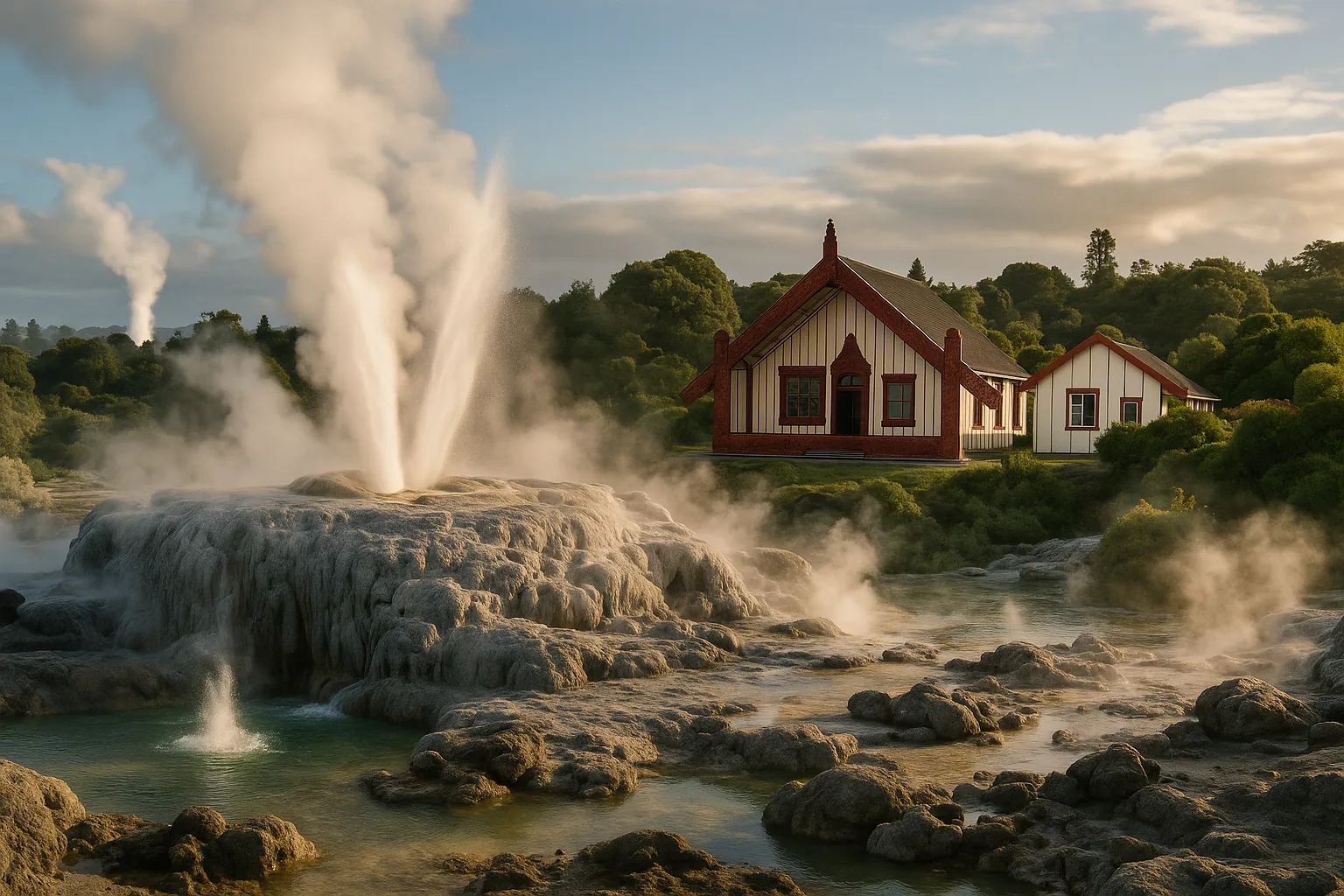
There’s a moment, somewhere between watching boiling mud bubble at the surface of the earth and hearing a haka echo across a valley that has been home to the same people for centuries, when Rotorua, New Zealand stops feeling like a destination and starts feeling like something you’ll spend years trying to explain to people who weren’t there. Set on the southern shores of Lake Rotorua on the North Island, this city sits at the beating heart of the Taupo Volcanic Zone — one of the most geothermally active regions on the planet — and it pairs that raw geological drama with a depth of living Māori culture that you simply won’t find anywhere else. If you’re a young traveler looking for something that goes beyond Instagram-worthy scenery and actually moves you, Rotorua is worth more than a rushed overnight stop.
Why Rotorua Hits Differently
Most travelers arrive expecting geysers. They leave having experienced something much harder to categorize. Rotorua is one of those places that works on multiple levels simultaneously: it’s visually spectacular, culturally layered, physically adventurous, and genuinely humbling. The landscape feels alive because it literally is — steam rises from cracks in the pavement, the air carries the faint scent of sulfur, and the ground beneath your feet has been shaping human history here for a very long time.
Lake Rotorua, covering 79.8 km², is the second-largest lake on New Zealand’s North Island by surface area. It sits at the center of a caldera, which tells you everything you need to know about the forces that formed this place. But geography alone doesn’t explain the pull. What makes Rotorua genuinely special is the way the land and the people who have called it home for over 600 years are inseparable. The Te Arawa iwi have lived here for generations, and their presence isn’t a museum exhibit — it’s alive, ongoing, and central to everything the city is.
The Geothermal Landscape: What You’re Actually Looking At
Before you dive into the attractions, it helps to understand what you’re standing on. Rotorua, New Zealand sits at the centre of the Taupo Volcanic Zone, a rift system that stretches across the North Island and produces some of the most dramatic surface geothermal activity on earth. That means geysers, hot springs, boiling mud pools, silica terraces, and steaming vents — sometimes all within walking distance of each other.
Wai-O-Tapu: Color You Won’t Believe Is Real
Wai-O-Tapu Thermal Wonderland is one of the most visually arresting geothermal sites in the country. The colors here — acid greens, deep ochres, vivid oranges — come from mineral deposits left by centuries of geothermal activity. It’s the kind of place that makes you question whether you’re on earth or somewhere else entirely.
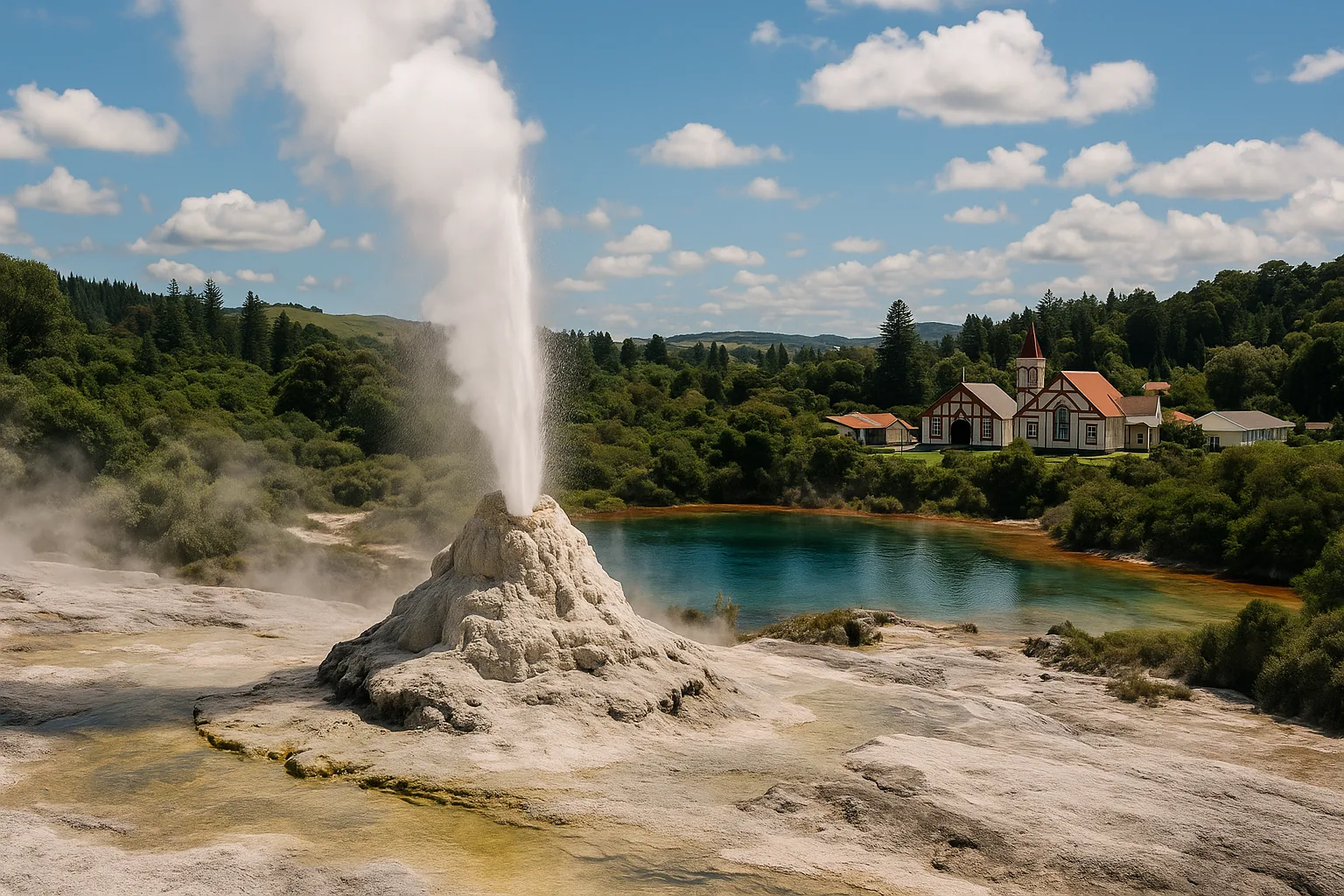
The headline act is the Lady Knox Geyser, which erupts daily at 10:15am. It’s a reliable, spectacular show, and arriving early means you get a good position without the crowd pressing in around you. But don’t rush away afterward — the walking trails through the rest of the park reveal features that are just as impressive and far less crowded once the geyser crowd disperses.
Te Puia and the Southern Hemisphere’s Largest Active Geyser
Te Puia is where geothermal wonder and living Māori culture genuinely intersect. The site is home to Pōhutu Geyser, the largest active geyser in the Southern Hemisphere, which erupts frequently throughout the day — sometimes reaching heights that stop you mid-sentence. Unlike some geothermal sites that feel purely geological, Te Puia frames the landscape within its cultural context, connecting the earth’s activity to the stories and traditions of Ngāti Whakaue, one of the local iwi.
Te Puia also houses the New Zealand Māori Arts and Crafts Institute, where you can watch whakairo (wood carving) and raranga (weaving) being practiced by students learning living traditions. It’s a reminder that culture isn’t something that happened in the past — it’s something people are actively choosing to carry forward.
Kuirau Park: Geothermal Features in the Middle of Town
One of the best things about Rotorua is that its geothermal character isn’t confined to ticketed parks. Kuirau Park, right in the heart of the city, features mud pools and geothermal features that you can wander around freely. There’s something wonderfully surreal about watching boiling mud bubble away in what is essentially a public park, with people walking their dogs nearby. It’s a good reminder that for locals, this is simply the landscape they live in.
Māori Culture: How to Engage Respectfully and Meaningfully
This is where Rotorua asks something of you as a traveler. The Māori cultural experiences available here are genuinely extraordinary, but they deserve more than a passive, tourist-at-a-show approach. Te Arawa has called this region home for over 600 years, and the communities you’ll encounter aren’t performing for your benefit — they’re sharing something real. The difference matters.
👉 Read also: Where Young Travelers Stay: 15 Hidden Gem Destinations Across Europe, Asia & Beyond (2026)
Whakarewarewa: A Village Still Living on Geothermal Ground
Whakarewarewa is one of the most remarkable places you’ll visit anywhere in the world. It’s a genuine living village where Māori people have been continuously inhabiting geothermally active ground for centuries. Residents cook in geothermal pools, bathe in natural hot springs, and go about their daily lives in a landscape that most people would consider extreme. Visiting here isn’t like going to a heritage site — you’re walking through someone’s community.
The guided tours here are led by village residents, which means the stories you hear come from people with a direct personal connection to the place. Listen more than you photograph. Ask questions when it’s appropriate. That kind of genuine curiosity and respect is what turns a visit into a real exchange rather than a transaction.
Mitai Maori Village: Traditional Performances and Hangi
Mitai Maori Village offers a different kind of immersive experience, centered around traditional performances and an authentic hangi meal. A hangi is food cooked underground using geothermal heat or heated stones — it’s one of the oldest cooking methods in Māori culture, and eating one in Rotorua, where the ground itself provides the heat, feels entirely right.
The performances include waiata (song), haka (the powerful ceremonial dance that’s far more complex and meaningful than its reputation in international sports coverage suggests), and poi. Go in curious rather than expecting a show, and you’ll leave with a much richer understanding of what you witnessed.
A few general principles worth keeping in mind: always ask before photographing people or sacred spaces, follow the guidance of your hosts, and be willing to participate when invited — declining can sometimes read as disinterest. Most importantly, remember that you’re a guest in a living culture, not an observer of a historical one.
Adventure Activities: Getting Into the Landscape
If you’re the kind of traveler who needs to move through a place rather than just look at it, Rotorua, New Zealand has you covered in ways that will genuinely challenge you.
Cycling Through Geothermal Country
One of the most memorable ways to experience the region is on two wheels. A 16km guided cycle trail takes you through geothermal areas, across Māori land, and through native bush — and it’s officially recognized as one of New Zealand’s Great Rides. That designation isn’t handed out casually; it means the trail offers a combination of scenery, cultural significance, and cycling experience that ranks among the best in the country.
You don’t need to be an experienced cyclist to enjoy it, but you do need to be willing to slow down and actually take in what you’re riding through. The combination of steaming vents, native pōhutukawa and fern landscapes, and the knowledge that you’re crossing land with deep cultural significance makes this a ride that stays with you.
Hiking, Water, and More
Beyond cycling, the region around Rotorua offers a wide range of outdoor experiences. Hiking trails wind through volcanic terrain and native forest, with varying levels of difficulty to suit different fitness levels. The lake itself opens up options for kayaking and other water-based activities, letting you experience the caldera from the water rather than the shore.
Mountain biking has a strong presence in the area, with trail networks designed for different skill levels — from gentle rides through forest to more technical terrain for those who want a real workout. If you’re visiting with an adventurous group, it’s worth looking into what’s available locally and choosing based on your actual experience level rather than ambition alone. The terrain here is beautiful but it deserves respect.
👉 Read also: USA Road Trip Stays: 8 Underrated Towns From Portland Maine to New Mexico
Where to Base Yourself and How to Move Around
The city of Rotorua itself is compact and navigable, which makes it a good base for exploring both the urban geothermal features and the surrounding sites. The central area puts you within easy reach of Kuirau Park and the city’s restaurants and cafés, while many of the major geothermal parks and cultural sites are a short drive away.
For young travelers on a budget, hostels in and around the central city offer the usual combination of social atmosphere and practical convenience. Staying centrally means you can walk to some features and arrange transport to others without needing a car — though having access to a vehicle, whether rented or as part of a campervan trip, opens up significantly more flexibility for reaching sites like Wai-O-Tapu and the trails further from town.
If you’re doing a North Island road trip — which is one of the best ways to experience New Zealand if you have the time — Rotorua sits in a position that makes it a natural stop between Auckland to the north and Wellington to the south, with Taupo and the volcanic plateau within easy day-trip distance. The surrounding region rewards slower travel; rushing through to tick off the geysers misses most of what makes this place genuinely worth visiting.
Day Trips and Wider Explorations
The area around Rotorua extends the adventure well beyond the city limits. The broader Bay of Plenty region offers coastline, smaller towns, and natural features that complement what you find in the city itself. Lake Taupo, roughly an hour’s drive south, sits inside a massive volcanic caldera and offers its own dramatic scenery, including the famous Huka Falls where the Waikato River narrows dramatically before dropping into a turquoise pool.
Heading toward the coast brings you to the Bay of Plenty’s beaches — warmer and more relaxed than much of New Zealand’s coastline, and worth a half-day if you need to balance the intensity of geothermal exploration with some time by the water. The region also has smaller geothermal sites and walking tracks that see far fewer visitors than the major parks, which can make for a more personal experience if you’re willing to do a little research and explore independently.
For those with more time, Tongariro National Park — home to the famous Tongariro Alpine Crossing, one of the great day hikes in the world — is accessible from Rotorua as a longer day trip or an overnight stop. The volcanic landscape there echoes what you see in Rotorua but on a dramatically larger and more exposed scale.
Practical Things Worth Knowing Before You Go
New Zealand’s weather is famously changeable, and the North Island is no exception. Layers are your friend, even in summer. For geothermal sites, comfortable walking shoes with good grip are important — some surfaces can be uneven, wet, or slippery near active features. Always stay on marked paths around geothermal areas; the ground in active zones can be unstable, and the water in geothermal pools can reach temperatures that cause serious burns.
If you’re planning to visit multiple geothermal parks and cultural sites, spreading them across two or three days rather than trying to see everything in one rush gives you time to actually absorb what you’re experiencing. The sites here aren’t theme parks — they’re places with real depth, and they reward the traveler who arrives with curiosity and patience rather than a checklist.
For more information on planning a visit, Cooee Tours’ Rotorua travel guide offers a solid overview of the region’s major attractions and practical considerations.
Rotorua is one of those places that has a way of recalibrating your sense of what travel is for. You arrive expecting geysers and you leave with something harder to name — a feeling of having stood somewhere genuinely ancient, in the presence of a culture that has shaped the land and been shaped by it in return, in a landscape that reminds you how small and temporary we all are. That’s not a bad thing to carry home.
This article was produced with AI assistance and reviewed editorially.


New Zealand’s Geothermal Wonders: Rotorua & Where to Stay for Adventure & Maori Culture

Adventure Beyond the Beach: Things to Do in Jeju, South Korea & Tayrona Park, Colombia


