
Asia
Southeast Asia City Guides 2026: Kuala Lumpur, Singapore, Vung Tau & Hat Yai for First-Time Visitors
Explore Southeast Asia’s best cities for first-time visitors. This guide covers Singapore, Kuala Lumpur, Vung Tau, Hat Yai, and Bandung with practical tips.

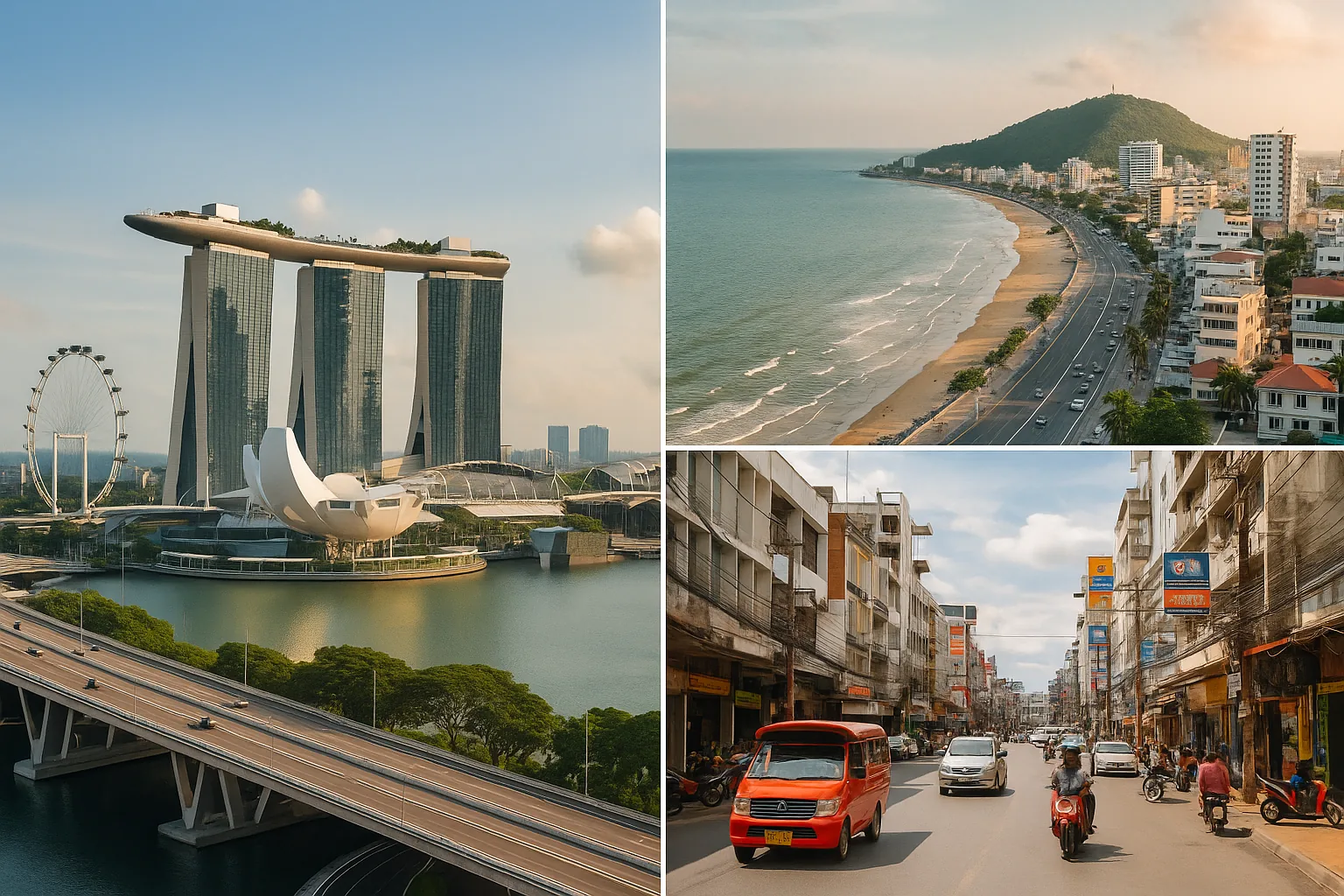
If you’ve been thinking about your first trip to Southeast Asia and you’re not sure where to start, you’re not alone — and honestly, that feeling of being overwhelmed is part of the excitement. This southeast asia city guide is built for exactly that moment: when you’ve got the wanderlust but need something concrete to work with. From the gleaming skyline of Singapore to the chaotic, colorful streets of Kuala Lumpur, the coastal calm of Vung Tau, the underrated energy of Hat Yai, and the creative buzz of Bandung — Southeast Asia offers more variety, flavor, and adventure than most regions twice its size, and it does it at a cost that makes a weekend in New York look wildly overpriced by comparison.
Why Southeast Asia Still Hits Different in 2026
Every year, travelers discover Southeast Asia for the first time and come back wondering why they waited so long. The region packs an extraordinary range of experiences into a relatively compact geography. You can be in a glass-and-steel metropolis on Monday and eating fresh seafood on a quiet beach by Thursday — without blowing your entire travel budget.
What makes the region so compelling for young travelers isn’t just the price point. It’s the density of culture. Ancient temples sit beside street food markets. Colonial architecture blends into neon-lit night bazaars. You don’t need a curated itinerary to have a meaningful trip — sometimes the best moments come from following a smell down an alley or accepting a stranger’s invitation to try something you can’t pronounce.
The cities in this guide were chosen because they each offer something distinct. They’re not interchangeable stops on a highlight reel. Each one has its own rhythm, its own flavor, its own reason to visit — and together, they give you a real cross-section of what Southeast Asia actually feels like on the ground.
Singapore: The City That Runs on Precision
Singapore is unlike anywhere else in Southeast Asia — and that’s both its greatest strength and, depending on your travel style, its one caveat. This is a city that works. The public transit system is world-class, the streets are clean, the signage is clear, and you’ll rarely feel lost or unsafe. For first-time solo travelers or anyone nervous about navigating a new continent, Singapore is a genuinely reassuring entry point.
But don’t mistake “structured” for “boring.” Singapore is a city of extraordinary contrasts. You can spend a morning in the colonial grandeur of the Civic District, grab lunch in one of the famous hawker centres — open-air food complexes where locals eat daily — and spend the afternoon in the futuristic Gardens by the Bay. The food scene alone is worth the trip: Singaporean cuisine is a living archive of Chinese, Malay, Indian, and Peranakan influences, and it’s available at every price point.
The honest trade-off is cost. Singapore is significantly more expensive than its neighbors. Accommodation, dining out at restaurants, and attractions can add up quickly. The smart move is to eat where locals eat — hawker centres are affordable, delicious, and culturally essential — and to use the MRT to get everywhere rather than taxis or ride-shares.
- Stay in Bugis or Little India for a more local feel and better value accommodation
- Eat at hawker centres like Maxwell Food Centre or Lau Pa Sat for authentic, budget-friendly meals
- Explore Kampong Glam for street art, independent boutiques, and excellent Middle Eastern food
- Use the MRT — it’s fast, cheap, and covers almost everything you’ll want to see
Singapore rewards curious, observant travelers. The more you look beyond the obvious landmarks, the more interesting it gets.
Kuala Lumpur: Chaotic, Colorful, and Completely Addictive
If Singapore is the city that runs like clockwork, Kuala Lumpur is the city that runs on energy. It’s louder, messier, cheaper, and in many ways more immediately exciting for travelers who want to feel immersed in something genuinely alive. The traffic is chaotic, the streets are vibrant, and the cultural mix — Malay, Chinese, Indian, and everything in between — makes every neighborhood feel like a different world.
Start with the icons. The Petronas Twin Towers are as dramatic in person as you’d expect, and the surrounding KLCC Park is a surprisingly peaceful escape from the city noise. The KL Tower offers panoramic views, and Merdeka 118 — one of the tallest buildings in the world — has reshaped the city’s skyline in a way that still feels new and striking.
But the real Kuala Lumpur lives in its neighborhoods. Chinatown (Petaling Street) is a sensory overload in the best possible way — street stalls, incense smoke, the sound of vendors, and some of the best cheap eats in the city. Bukit Bintang is where you’ll find the city’s main shopping and nightlife strip, including the famous Jalan Alor food street, which comes alive at night with grilled meats, seafood, and cold drinks at plastic tables. Changkat, just a short walk away, is the area for bars and a more relaxed evening crowd.
👉 Read also: Singapore & Kuala Lumpur: How to Navigate Southeast Asia's Modern Metropolises
Beyond the city center, Batu Caves is a must — a Hindu temple complex built into a limestone hill, reached by a steep climb of colorful steps. It’s striking, spiritually significant, and genuinely photogenic. If you want to push further, Genting Highlands offers a completely different experience: a cool-air resort town perched above the clouds, reachable by cable car.
- Chinatown is ideal for budget accommodation, street food, and a real neighborhood feel
- The Thean Hou Temple is one of the largest Chinese temples in Southeast Asia and worth a visit, especially at dusk
- KL Sentral is the main transport hub — easy to reach from the airport and well-connected to the rest of the city
- Kuala Lumpur is significantly more affordable than Singapore — your money goes much further here
Kuala Lumpur is the kind of city that doesn’t try to impress you — it just does. Give it a few days and it’ll get under your skin.
Vung Tau: Where the Coast Slows Everything Down
Vung Tau sits on a small peninsula a few hours from Ho Chi Minh City, and it offers something that’s genuinely hard to find in Southeast Asia’s busier destinations: space to breathe. This is a coastal town with a long history as a seaside escape — first for French colonists, then for Vietnamese city-dwellers looking for a weekend by the water.
It’s not a party destination. It’s not a backpacker hub. What Vung Tau is, is authentic in a way that’s increasingly rare. Fishing boats still come in at dawn. Local restaurants serve fresh seafood that was in the ocean hours before it reaches your plate. The pace of life here is genuinely slower, and that’s the whole point.
The town has two main beaches — Bãi Trước (Front Beach) and Bãi Sau (Back Beach) — each with a different atmosphere. Front Beach is calmer and more local; Back Beach is longer and better for swimming. The Christ the King statue on the hill above town is a striking landmark, reached by a long staircase with views across the South China Sea.
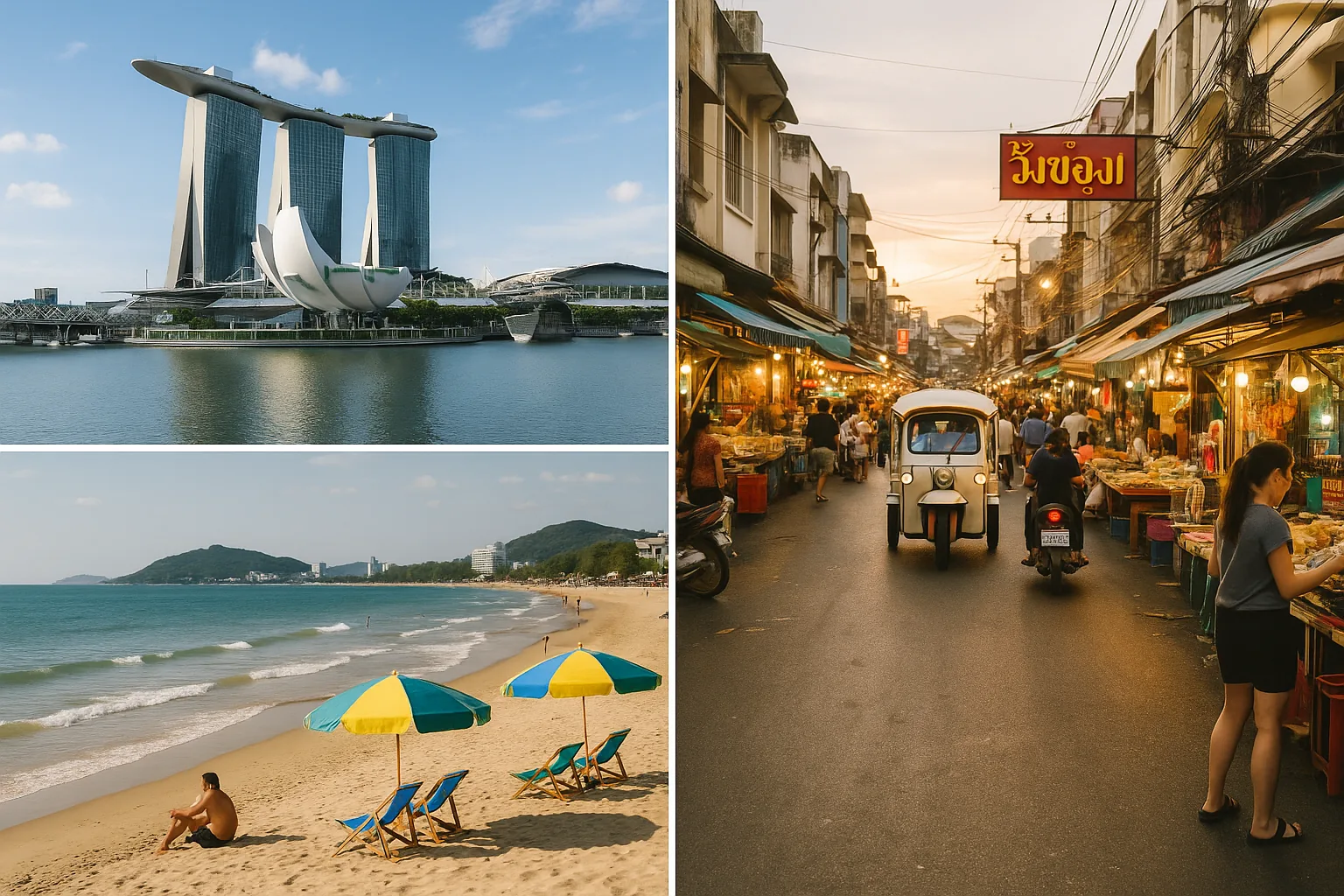
For food, follow the locals. The markets and small family-run restaurants near the harbor serve some of the freshest and most affordable seafood you’ll find anywhere in Vietnam. Look for bánh khọt — small savory rice pancakes that are a Vung Tau specialty — and eat them the way locals do: wrapped in fresh herbs and dipped in a light fish sauce.
Vung Tau works beautifully as a two or three-day detour from Ho Chi Minh City. It’s the kind of place that reminds you why you travel: not for the sights, but for the feeling of being somewhere real.
Hat Yai: The Southern Thai City Worth Staying For
Most travelers pass through Hat Yai on their way somewhere else — and that’s a genuine mistake. This city in southern Thailand has quietly built one of the most interesting food, culture, and nightlife scenes in the region, and it does it without the tourist crowds that have changed places like Phuket or Krabi.
Hat Yai sits close to the Malaysian border and has a cultural identity shaped by that proximity — you’ll notice a strong Malay-Thai-Chinese blend in the food, the architecture, and the daily rhythms of the city. The markets here are extraordinary. The Kim Yong Market is a labyrinth of stalls selling everything from fresh produce to street food to clothing, and it’s the kind of place you can spend hours in without planning to.
The food scene is one of Hat Yai’s strongest arguments. Hat Yai fried chicken — crispy, golden, served with sticky rice and a sweet garlic sauce — has become almost legendary among travelers who’ve been here. But the city’s food goes far beyond that one dish. Muslim-Thai cuisine, Chinese-influenced noodle shops, and fresh southern Thai curries are all within easy walking distance of each other.
In terms of timing, Hat Yai is best visited between January and April, when rainfall is minimal and the weather is at its most comfortable. The rest of the year can bring significant rain, particularly from October onward, which can affect your experience considerably.
👉 Read also: Southeast Asia's Underrated Cities: Bandung, Malang, and Luang Prabang Beyond the Guidebook
Evenings in Hat Yai have a distinct energy. The night markets fill up, the restaurants stay busy late, and there’s a social atmosphere that feels genuinely local rather than performed for visitors. This is a city living its own life — and you’re welcome to join it.
Bandung: Java’s Creative City Beyond the Tourist Trail
Bandung is the kind of destination that experienced Southeast Asia travelers mention with a knowing look. It’s not on every first-timer’s radar, and that’s exactly why it’s worth going. Located in the highlands of West Java, Indonesia, Bandung sits at an elevation that keeps it cooler than Jakarta, surrounded by volcanic landscapes, tea plantations, and a creative urban culture that’s been quietly flourishing for years.
While Yogyakarta gets most of the attention as Java’s cultural hub — and deservedly so, given its proximity to Borobudur and Prambanan — Bandung offers a different kind of experience. This is a city of art, design, and independent culture. The Dago area is lined with cafés, galleries, and independent clothing brands that have made Bandung a genuine center of Indonesian streetwear and design. The factory outlet shopping culture here is famous across Indonesia — you can find well-made clothing at prices that are hard to believe.
The natural surroundings are a major draw. The Tangkuban Perahu volcano is reachable on a day trip and lets you walk right up to active craters — it’s the kind of experience that stays with you. The surrounding tea plantations and crater lakes add to a landscape that feels completely different from the coastal cities most travelers associate with Indonesia.
Bandung’s food scene leans heavily on Sundanese cuisine — the traditional food of West Java — which is fresh, herb-forward, and often served with a dramatic spread of small dishes. Eating here is an experience in itself.
If you’ve already done Bali and Yogyakarta and you’re looking for the next layer of Indonesia, Bandung is the answer. It’s a city that rewards travelers who are willing to go slightly off the well-worn path.
How to Build Your Southeast Asia Route
One of the best things about this region is how well the cities connect. A practical route might look something like this: fly into Singapore as your entry point, take the train or bus up to Kuala Lumpur, then continue overland or by budget flight to Hat Yai in southern Thailand. From there, loop back and fly into Vietnam to explore Vung Tau as a coastal detour from Ho Chi Minh City. If you’re extending into Indonesia, Bandung makes a logical addition after Bali or alongside Yogyakarta.
Budget airlines make this kind of multi-city routing genuinely affordable. The key is flexibility — having a rough shape to your trip without locking every day into a fixed schedule. Southeast Asia rewards spontaneity. The best experiences often come from the unplanned moments: the market you stumbled into, the family who invited you to share their meal, the viewpoint you found by accident.
For a first-time southeast asia city guide, the most important advice is this: don’t try to see everything. Pick three or four destinations that genuinely interest you, give each one enough time to actually feel it, and leave room for the unexpected. That’s when the region really opens up.
You can find practical entry requirements and visa information for most of these destinations through Asia Experiences’ first-timer’s guide to Southeast Asia, which covers the logistics side in useful detail.
Southeast Asia in 2026 is as vibrant, welcoming, and full of possibility as it’s ever been. The cities in this guide aren’t just places to visit — they’re places to experience, to get lost in, to eat your way through, and to leave with stories you’ll still be telling years from now. Start with one. You’ll be back for the rest.
This article was produced with AI assistance and reviewed editorially.


Nepal’s Mountain Gateway: Kathmandu Neighborhoods, Street Food & Where to Stay for Authentic Exploration

Luang Prabang, Laos: Why This Sacred City Is Perfect for Solo Travelers Seeking Solitude


