
Spain
Madrid in 5 Days: Culture, Food & Real Local Life (Not Tourist Traps)
Discover a practical 5 day Madrid itinerary balancing iconic sights with authentic neighborhoods, local food, and real Madrid culture beyond tourist traps.

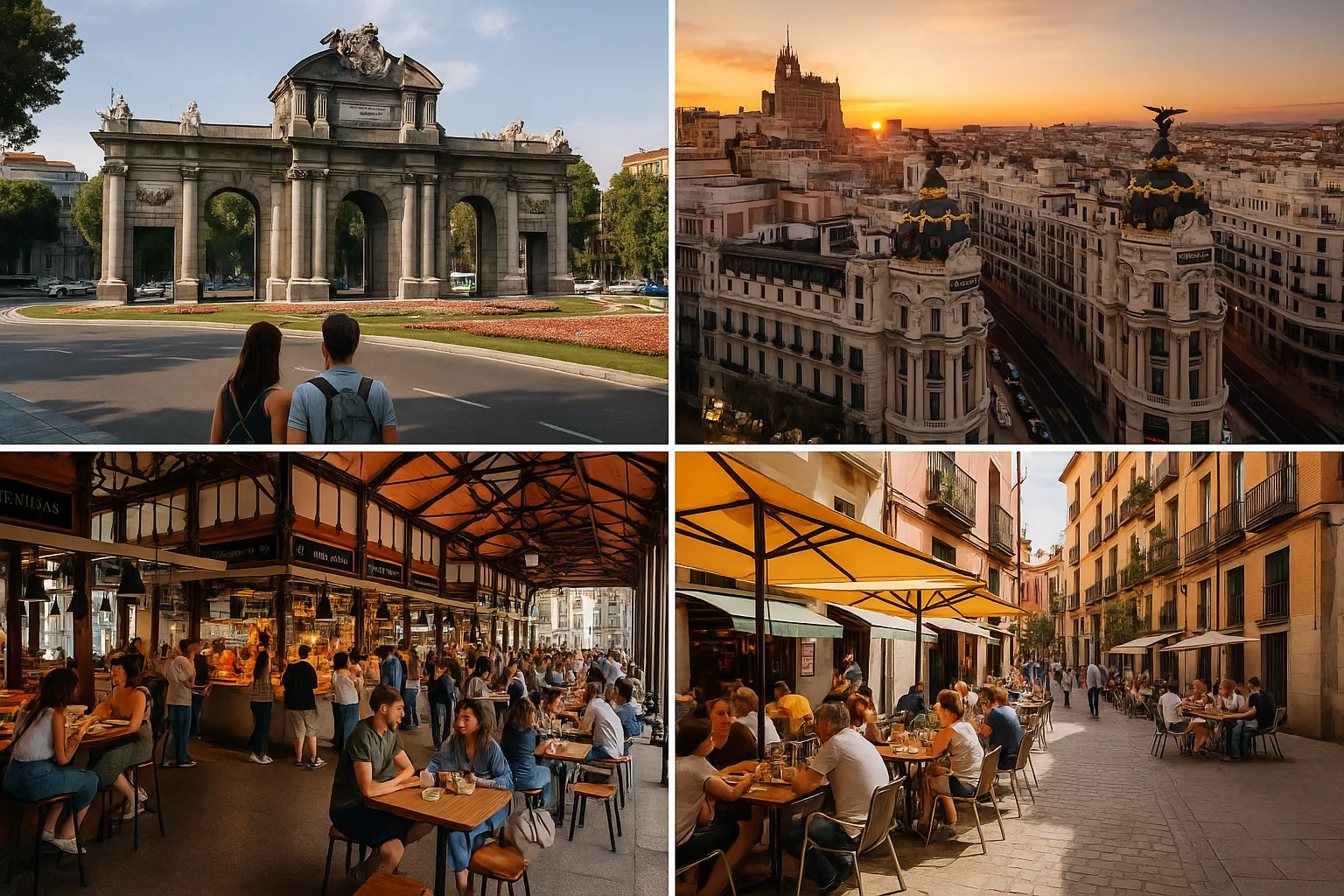
Why Madrid Deserves More Than a Weekend
Madrid has a way of surprising you. You think you know what to expect — grand museums, tapas bars, a buzzing nightlife scene — and then the city quietly reveals something deeper. A sun-drenched courtyard tucked behind a busy street. A neighbourhood market where nobody speaks tourist English. A rooftop at golden hour that makes you forget you had a flight to catch. If you’re putting together a 5 day Madrid itinerary, you’re giving yourself exactly the right amount of time to scratch beneath the surface and actually feel the city rather than just photograph it.
Madrid is one of the most visited cities in Europe, and it earns that reputation honestly. Perched around 2,000 feet above sea level on the high plateau of central Spain, it’s a city with real altitude and real character. The streets carry centuries of history without feeling like a museum piece. The architecture is a glorious hodgepodge — baroque palaces next to modernist buildings next to neighbourhood squares where old men play chess and kids chase pigeons. It’s vibrant, unpredictable, and genuinely alive in a way that makes five days feel both generous and not quite enough.
This guide is built for travelers who want to do Madrid properly. Not the sanitised, selfie-stick version. The real one — neighbourhood walks, market breakfasts, late lunches that become early dinners, and evenings that stretch well past midnight. Here’s how to spend five days in Madrid without wasting a single one of them.
Day One: Arriving and Getting Your Bearings in the Historic Centre
Your first day in Madrid should be slow on purpose. You’ve just arrived, you’re probably tired, and the worst thing you can do is immediately sprint toward a museum queue. Instead, drop your bags, find a café, and order a cortado. Watch the city move around you. This is how Madrid actually starts.
Once you’re ready, head toward the historic centre. Plaza Mayor is one of Madrid’s essential landmarks — a sweeping, arcaded square that has been the heartbeat of the city for centuries. It can feel touristy during peak hours, but arrive early in the morning or late in the afternoon and it transforms. The light changes, the crowds thin, and you start to understand why this place has drawn people for so long.
From Plaza Mayor, wander without a fixed plan. The streets around it — particularly heading toward the older, more tangled parts of the city — reward curiosity. Stumble into a small church. Peer through the doorway of a courtyard. Buy a bag of roasted nuts from a street vendor. This is how you start to read a city.
For dinner on your first night, resist the temptation of anywhere with a picture menu or a host standing outside waving you in. Walk a few blocks further, find somewhere that’s clearly feeding local workers, and order whatever’s on the chalkboard. Madrid’s evenings start late — don’t be surprised if the restaurant is half-empty at 8pm and packed by 10pm. Lean into the rhythm.
Day Two: The Museum Triangle — Art Without the Exhaustion
Madrid’s museum scene is genuinely world-class, and the Prado and Reina Sofía are the two anchors you shouldn’t skip. But here’s the thing: trying to do both in a single day is a recipe for cultural overload. Give each museum the time it deserves.
Morning at the Prado
The Prado is one of the great art museums of the world, full stop. Arrive when it opens to beat the worst of the crowds. Don’t try to see everything — nobody can, and nobody should. Pick two or three rooms that genuinely interest you and spend real time with them. Stand in front of a painting for five minutes instead of thirty seconds. Notice the details. Let the art actually land.
The Prado’s collection spans centuries of European painting, with particular depth in Spanish masters. Even if you don’t consider yourself an art person, there’s something here that will stop you in your tracks. Give yourself two to three hours and then step outside before your brain switches off.
👉 Read also: 7 Days in Madeira: A Local's Itinerary Beyond the Guidebook (2026)
Afternoon at the Reina Sofía
After lunch — and lunch matters in Madrid, so don’t rush it — make your way to the Reina Sofía. Where the Prado is classical, the Reina Sofía is modern and often confrontational in the best possible way. The permanent collection includes some of the most significant works of 20th-century Spanish art, and the building itself, a converted 18th-century hospital, is worth exploring as a space.
Spend the late afternoon here, then walk back through the Retiro park as the day cools down. The park is enormous, beautifully maintained, and full of Madrileños doing exactly what you should be doing — wandering, sitting, watching the world go by.
Day Three: Neighbourhood Deep Dive — Where Madrid Actually Lives
This is the day your 5 day Madrid itinerary really earns its keep. Madrid has evolved as a city of neighbourhoods, each with its own distinct personality, architecture, and energy. The key is to pick one or two and go deep rather than skimming across several.
Morning: Markets and Breakfast Culture
Start your morning the way locals do — at a market. Madrid’s covered markets are social spaces as much as shopping destinations. You’ll find fresh produce, local cheeses, cured meats, and usually a bar or two serving breakfast to the people who’ve just finished their shopping. Order a tostada with olive oil and tomato, a glass of fresh orange juice, and take your time. There’s no rush.
Afternoon: Explore a Neighbourhood on Foot
Madrid’s neighbourhoods each tell a different story. Some are grand and historic, lined with ornate buildings and wide boulevards. Others are scrappier, more creative, full of independent bookshops, vintage clothing stores, and small galleries that come and go with the seasons. The city has hidden gems tucked into almost every corner — a tiled courtyard, a neighbourhood square with a terrace bar, a street mural that stops you mid-stride.
The best approach is to pick a direction and walk. Get lost in a deliberate way. If something looks interesting, follow it. If a café looks like it’s full of people who actually live nearby, go in. The neighbourhoods with the most distinctive character are often the ones slightly removed from the main tourist drag — and they’re almost always worth the extra ten minutes of walking.
- Look for neighbourhood squares with terraces where locals gather in the afternoon
- Seek out independent food shops, delis, and bakeries over tourist-facing restaurants
- Pay attention to street art, tiled facades, and architectural details that reveal the neighbourhood’s history
- If you find a bar that looks like it hasn’t changed in forty years, go in — those are often the best ones
Evening: Tapas the Right Way
Madrid’s food culture is built around sharing, grazing, and taking your time. An evening of tapas shouldn’t feel like a structured meal — it should feel like a conversation that happens to involve food. Move between two or three bars, order a couple of things at each, and let the evening unfold naturally. The best tapas experiences in Madrid happen in places that aren’t trying to impress you. They’re just feeding people, the way they always have.
Day Four: Beyond the Obvious — Hidden Gems and Local Rhythms
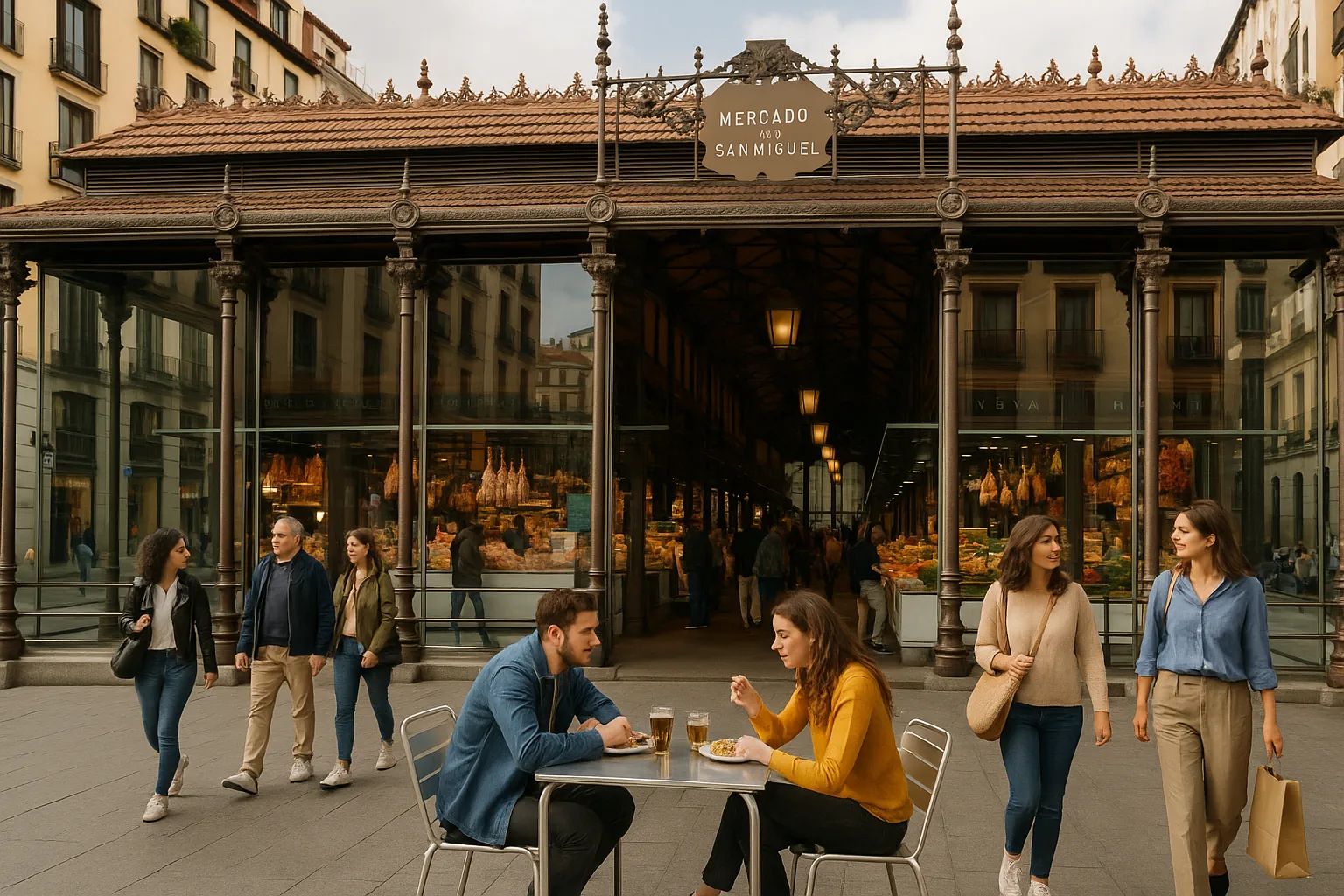
By day four of your 5 day Madrid itinerary, you’ve earned the right to go properly off-script. Madrid has a wealth of non-touristy experiences and neighbourhoods worth exploring beyond its major landmarks — and this is the day to find them.
Morning: A Different Kind of Sightseeing
Consider spending your morning somewhere that doesn’t appear in the top ten lists. Madrid has flea markets, antique districts, community gardens, and neighbourhood festivals that happen with little fanfare and enormous charm. Check what’s happening locally during your visit — a neighbourhood fair, an outdoor film screening, a morning market that only runs on certain days. These are the experiences you’ll actually remember.
If you’re drawn to architecture, Madrid rewards slow walking with your eyes up. The city’s buildings are a genuine mix — grand 19th-century facades, art deco details, modernist experiments, and old tiled shopfronts that have survived decades of change. You don’t need a tour guide to appreciate them. You just need to slow down and look.
Afternoon: Food Markets and Culinary Exploration
Madrid’s food scene is one of its genuine strengths, and the best way to experience it is by grazing rather than committing to a single restaurant. The city’s covered food markets have evolved significantly in recent years, offering everything from traditional Spanish produce to contemporary small plates. Arrive hungry, order slowly, and talk to the people serving you if you can — they almost always have opinions about what you should be eating.
👉 Read also: Madeira 2026: 7-Day Itinerary with Local Insights
Spanish cuisine varies significantly by region, and Madrid draws from all of them. You’ll find seafood brought in from the coast, cured meats from the interior, cheeses from the north, and wines from across the country. A good food market lets you taste your way through all of it without committing to a single menu.
Evening: Rooftops and the Madrid Skyline
Madrid’s rooftop culture is one of its most underrated pleasures. The city sits high enough that the air is clear, and on a summer evening the light lingers long after you’d expect it to. Find a rooftop bar — not necessarily the most famous one, but one with a view you can actually enjoy — and watch the city transition from afternoon to evening. Order something cold. Don’t rush. This is what five days in a city is actually for.
Day Five: Slow Morning, Last Discoveries, and a Proper Goodbye
Your last day should never be a mad dash to tick off everything you missed. That’s a stressful way to end what should have been an inspiring week. Instead, wake up without an alarm, have a long breakfast, and spend the morning revisiting something you loved rather than chasing something new.
A Return Visit Worth Making
Is there a neighbourhood you walked through on day three that you wanted to explore more? A café you passed on day one that you meant to go back to? A square where you sat for twenty minutes and didn’t want to leave? Go back. The best travel memories often come from returning to a place with fresh eyes — you notice different things, you feel more comfortable, you belong to the city a little more.
Practical Tips for Your Last Day
- Store your luggage at your accommodation or at a luggage storage service near the city centre so you can keep exploring after checkout
- Use your last morning for a slow walk rather than a museum — you’ll absorb it better
- Buy something to take home from a local shop rather than an airport gift store — a jar of olive oil, a bottle of local wine, a book from a neighbourhood bookshop
- Have your final meal somewhere you’d genuinely recommend to a friend — not the most famous restaurant, but the most honest one you found
- Leave yourself more time than you think you need to get to the airport — Madrid’s transport is reliable, but departure days have a way of expanding
Practical Essentials: Getting Around and Staying Smart
Madrid is an extremely walkable city, and for a well-structured 5 day Madrid itinerary, your feet will be your best tool. The historic centre is compact enough that many of the major sights are within walking distance of each other. For longer distances, the metro is efficient, clean, and easy to navigate even without Spanish.
A multi-day transport card is worth buying if you plan to use public transport regularly. It covers the metro, buses, and some suburban rail connections, and it saves you the friction of buying individual tickets each time.
For planning and deeper local context, resources like The New York Times Madrid travel guide offer well-researched perspectives on the city’s current cultural landscape. For a more experience-driven, local angle, Spain Revealed’s Madrid guide is particularly useful for understanding the city beyond its headline attractions.
A few other things worth knowing before you go:
- Madrid runs on a late schedule — lunch is typically between 2pm and 4pm, dinner rarely before 9pm
- Many smaller shops and some restaurants close during the early afternoon, particularly outside the tourist centre
- Sundays can feel quieter in some neighbourhoods — plan accordingly, or embrace the slower pace
- The city is high altitude and can be surprisingly hot in summer and cold in winter — dress in layers and stay hydrated
- Spanish is genuinely appreciated even in broken form — a few words go a long way
What Makes a 5-Day Madrid Itinerary Worth It
Five days is the sweet spot for Madrid. Three days gives you a taste but leaves you wanting more. A week risks the kind of fatigue that makes every city start to blur together. Five days lets you do the essential things properly, discover something unexpected, fall into the city’s rhythm, and leave feeling like you actually knew the place rather than just passed through it.
Madrid rewards curiosity above everything else. The travelers who get the most out of it are the ones who put down the map occasionally, follow a street that looks interesting, say yes to the dish they’ve never heard of, and stay out later than they planned because the conversation was too good to end. That’s not a guidebook approach. That’s just good travel.
The city has been drawing people for centuries — not because it’s perfect, but because it’s alive. It has rough edges and grand gestures and quiet corners and loud squares, and all of them are worth your time. Whether you’re arriving for the first time or coming back after years away, Madrid has a way of making you feel like you’re exactly where you’re supposed to be. That’s the kind of city worth five full days of your life.
This article was produced with AI assistance and reviewed editorially.


Hidden Gems You’ve Never Heard Of: Guanajuato, Capri Without Crowds, and UK’s Isles of Scilly

The Best Travel Backpacks for 2026: Honest Reviews of Tortuga, Matador & More


