
Greece
Greek Islands Beyond the Crowds: Discovering Milos’ Beaches, Caves & Hidden Corners
Discover Milos Greece beaches beyond the crowds. Explore over 70 beaches, dramatic caves, turquoise waters, and volcanic rock formations in the Cyclades.

Greek Islands Beyond the Crowds: Discovering Milos Greece Beaches, Caves and Hidden Corners
There’s a moment — usually somewhere between stepping off the ferry and catching your first glimpse of the coastline — when you realize Milos is something different. Not louder or more dramatic than the other Greek islands, just more itself. Tucked into the Cyclades in the Aegean Sea, this volcanic island has been quietly doing its thing for centuries, and the Milos Greece beaches are a huge part of why people who find it keep coming back. Over 70 beaches. Volcanic rock formations carved into shapes that look almost impossible. Waters that shift from pale turquoise to deep sapphire depending on the hour. If you’ve been circling the Greek islands trying to decide where to go next, Milos deserves your full attention.
What Makes Milos Different from the Rest of the Cyclades
You already know the Cyclades. Santorini with its caldera views and crowds, Mykonos with its nightlife and price tags. Milos shares some of that volcanic DNA — it’s a volcanic island, just like Santorini — but it wears it differently. The geology here is wilder, more raw, and less packaged for mass tourism. The landscape feels like it’s still in the middle of becoming something.
That volcanic history has shaped everything: the beaches, the cliffs, the colors of the rock. You’ll find whites so bright they almost glow, deep reds, dusty yellows, and blacks all within the same stretch of coastline. It’s the kind of place where geology and beauty are completely inseparable. And unlike some of the more famous Cycladic islands, Milos still has that feeling of space — the kind where you can actually hear the waves.
Getting there is straightforward. Milos has a port that connects directly from Athens, so you’re not looking at complicated multi-leg journeys. A ferry from Piraeus and you’re in. That accessibility makes it an easy addition to a wider Greece itinerary, or a standalone destination if you want to plant yourself somewhere and actually breathe for a week.
Sarakiniko: The Beach That Stops You in Your Tracks
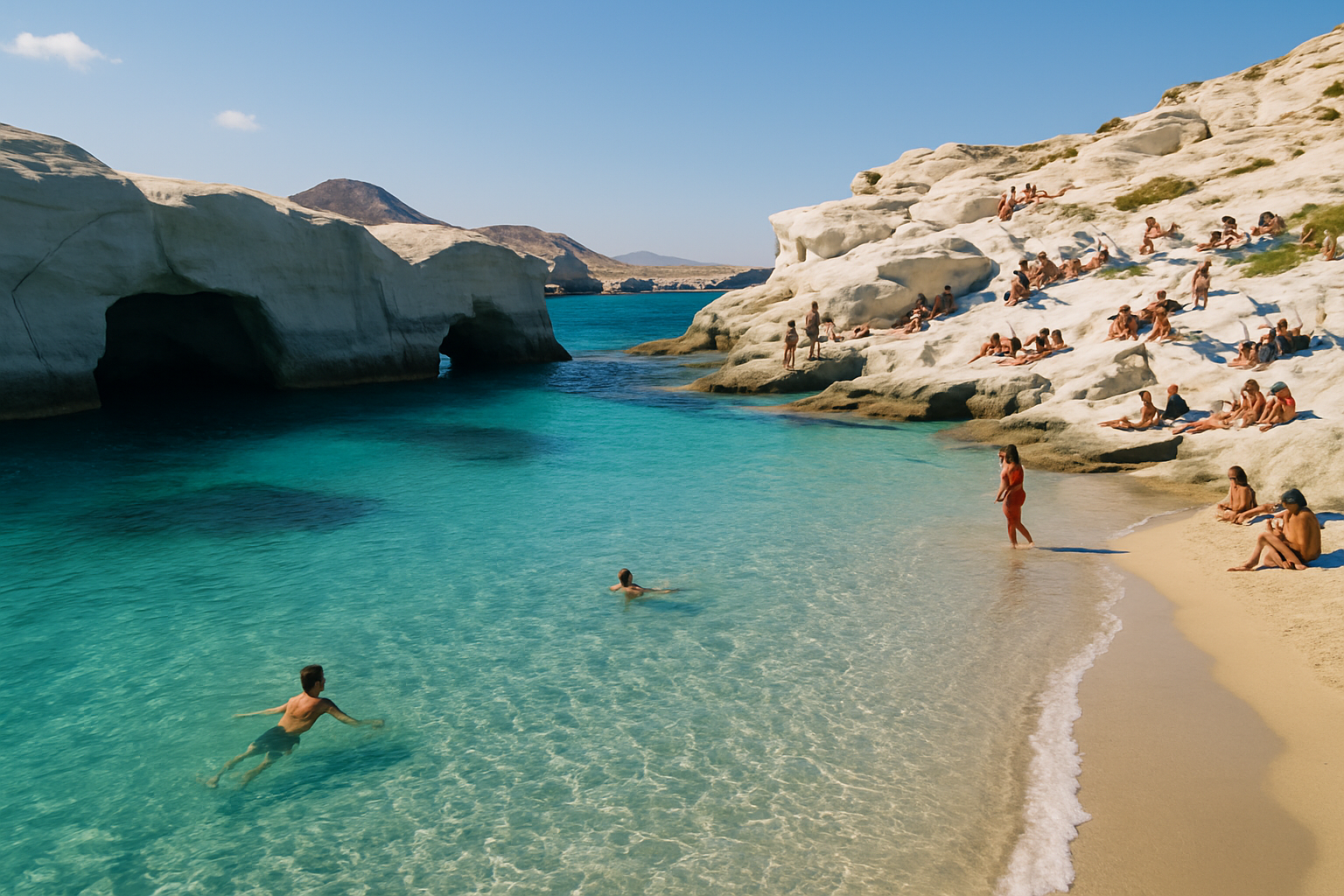
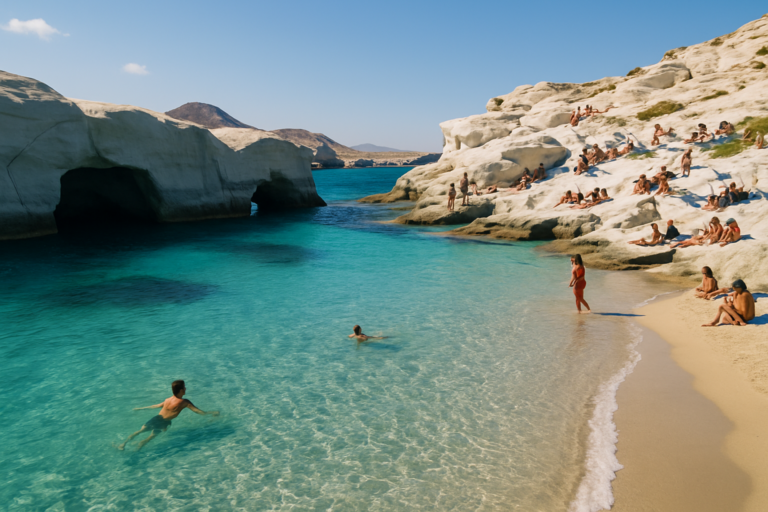
If you only hear one name before visiting Milos, it’ll probably be Sarakiniko. And the reputation is earned. This is one of those places that genuinely looks different from every angle, in every light. The landscape is described as otherworldly for good reason — the bleached white volcanic rock formations curve and dip in shapes that feel more like something from a science fiction film than a beach on a Greek island.
Sarakiniko is iconic among the Milos Greece beaches, and it’s the kind of iconic that actually lives up to the label. The rock formations create natural pools, ledges, and hollows that people use for jumping, swimming, and simply sitting and staring at the water. Early morning is the best time to explore it — the light is softer, the crowds are thinner, and the white rock takes on a warm golden tone that disappears once the sun gets high.
Don’t just photograph it from the top. Climb down, get into the water, find a ledge to sit on. The experience of being inside that landscape is completely different from looking at it from a distance. Sarakiniko rewards curiosity.
Kleftiko: Crystal Clear Waters and a Sense of Discovery
Kleftiko is harder to reach than most of the Milos Greece beaches, and that’s exactly what makes it worth the effort. Located on the southwestern coast, this spot is best accessed by boat — which means most people experience it as part of a boat tour around the island. The journey itself is part of the appeal.
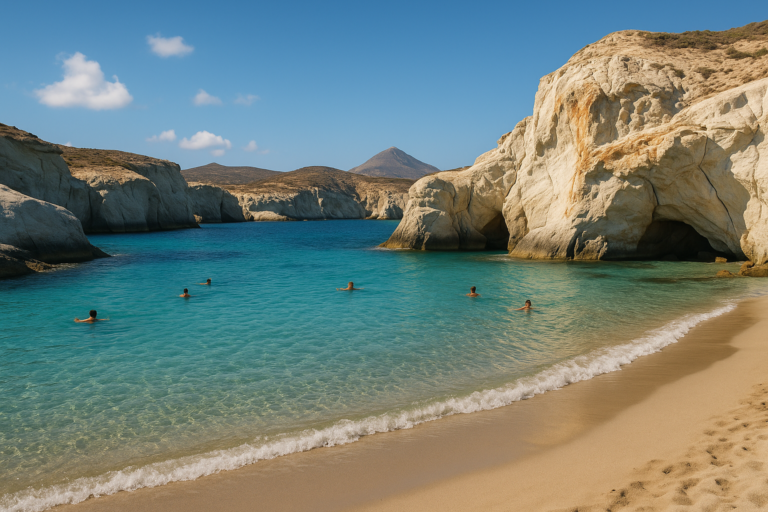
What you find when you get there is a cluster of dramatic rock formations rising from the sea, with crystal clear waters that make snorkeling feel like floating over glass. The rock arches and sea caves create a natural labyrinth that you can swim through, explore, and get genuinely lost in. The light plays differently in there — filtering through gaps in the rock, shifting color depending on the angle and the time of day.
Kleftiko has a history tied to pirates who supposedly used the caves as hideouts, which adds a layer of atmosphere to an already dramatic location. Whether or not you’re into the history, the physical experience of swimming through those formations is something you won’t forget quickly. Book a boat tour from the main port — they run regularly and it’s one of the best ways to see the western coastline in a single day.
Tsigrado and Firopotamos: Two Beaches Worth Seeking Out
Milos has over 70 beaches. That number sounds almost impossible until you start exploring the coastline and realize that the island’s volcanic geography has created an extraordinary variety of coves, inlets, and stretches of sand that most visitors never reach.
Tsigrado is one of those beaches that asks a little more of you before it gives you anything. Access involves a rope and ladder descent down the cliff face — not dangerous, but enough of a commitment that it keeps the crowds away. What you find at the bottom is a small, sheltered cove with calm, clear water and the kind of quiet that feels genuinely earned. It’s the sort of place where you’ll arrive, look around, and feel like you found something that wasn’t meant to be found.
Firopotamos is a different vibe entirely. It’s a small fishing village with colorful boat garages — called syrmata — built directly into the rock face along the waterfront. The beach itself is calm and relatively sheltered, with the kind of relaxed atmosphere that makes it easy to spend an entire afternoon there without noticing the time passing. It’s a good place to eat, swim, and watch the light change over the water as the day winds down.
Between these two alone, you get a sense of how varied the Milos Greece beaches experience really is. One demands effort and rewards solitude; the other offers ease and authentic local character. Both are worth your time.
How to Actually Explore the Island
Milos is not a walk-everywhere island. The beaches are spread out, the terrain is varied, and some of the best spots require a bit of navigation. Renting a car or a scooter gives you the freedom to move at your own pace — which, on an island with over 70 beaches, is the only pace that makes sense.
A few things worth knowing before you go:
- Some beaches require short hikes or climbs to access — wear proper footwear when you’re exploring, not just flip-flops.
- Boat tours from the main port are one of the best ways to reach the western and southern coastlines, including Kleftiko.
- The island is volcanic, which means the rock can get extremely hot in the middle of the day — especially at Sarakiniko, where the white rock absorbs and radiates heat intensely.
- Water shoes are useful at beaches where the volcanic rock extends into the sea.
- Many of the smaller coves have no facilities — bring water, snacks, and sun protection.
The island is small enough to feel manageable but varied enough that you could spend a week and still feel like you hadn’t covered everything. That balance is rare and genuinely valuable.
When to Visit Milos
The Greek island season runs roughly from late spring through early autumn, and Milos follows that rhythm. If you want warm water, reliable sunshine, and full access to the beaches and boat tours, the summer months deliver. But summer also brings more visitors, and on an island where the appeal is partly the sense of space and quiet, timing matters.
Late spring — roughly May and early June — offers warm temperatures, clear water, and significantly fewer people. The island is fully open for the season but hasn’t yet hit peak capacity. Early September has a similar quality: the summer crowds have started to thin, the water is still warm from the season, and the light has a slightly softer quality that makes everything look a little more cinematic.
If you have flexibility, these shoulder periods are worth prioritizing. You’ll get more of what makes Milos special — the quiet coves, the unhurried pace, the feeling that you’ve found something — without having to compete for it.
What to Eat and Where to Find It
Milos has a strong local food culture built around fresh seafood, local cheese, and simple preparations that let the ingredients speak. The island’s most famous product is its cheese — a fresh, soft variety that shows up in local restaurants and markets. Look for it. It’s the kind of thing you’ll want to bring home if you can.
Eat near the water where the fishing boats come in. The small tavernas in places like Firopotamos and around the port area tend to serve straightforward, honest food — grilled fish, local salads, fresh bread. Skip the places with laminated menus and photographs of the food. Find the spots where the menu is handwritten, the tables are close together, and the owner is also the cook. That’s where the good meals happen.
Food in Milos, like everything else on the island, rewards a little curiosity and a willingness to wander away from the obvious.
Practical Things You Should Know Before You Go
Milos connects directly from Athens via ferry from Piraeus, which makes the logistics relatively simple. Ferry crossings vary in duration depending on the type of boat you choose — high-speed options are faster but more expensive, while standard ferries take longer but give you more time to settle into the journey.
Accommodation ranges from small guesthouses and studios to larger hotels, spread across the island’s main towns and villages. Booking ahead is important in summer — the island is popular enough that good options fill up quickly during peak season.
A few final practical notes:
- Milos is a volcanic island, which means some beaches have dark sand or volcanic rock rather than the classic white sand you might expect.
- The island has over 70 beaches — don’t try to see all of them. Pick a handful, go slowly, and actually experience them.
- Cash is useful for smaller tavernas and local markets, even though cards are widely accepted elsewhere.
- Respect the natural environment — the volcanic formations at places like Sarakiniko are fragile and irreplaceable.
- Check local boat tour schedules in advance, especially for Kleftiko, as availability can vary by season and weather.
Why Milos Stays With You
There’s a particular kind of travel experience that doesn’t announce itself loudly. Milos is that kind of place. The Milos Greece beaches don’t compete for your attention with overproduced marketing or manufactured experiences — they just exist, in all their volcanic, sun-bleached, crystal-watered reality, and let you decide what to do with them.
You’ll swim through rock formations at Kleftiko and feel genuinely small in the best possible way. You’ll sit on the white rock at Sarakiniko as the sun gets low and watch the color of the water change through about fifteen different shades of blue. You’ll find a cove you didn’t plan to find, eat a meal you didn’t plan to eat, and end up staying somewhere longer than you intended because leaving feels like a mistake.
That’s what Milos does. It earns its place in your memory not through spectacle but through accumulation — one quiet, beautiful, unhurried moment after another. If you’re building a Greek islands itinerary and trying to decide where to spend your time, give Milos the days it deserves. You’ll understand why the moment you arrive.
This article was produced with AI assistance and reviewed editorially.


Quito, Ecuador: From Stopover to 10-Day Adventure in the Andes

Ecuador & South America’s Gateway: Quito as a Base for Adventure


