
Roaming Around the World
Travel Fails and How They Became My Best Stories
Travel fails and how they became my best stories — discover why missed trains, wrong bookings, and chaotic detours lead to the most unforgettable travel memories.


Travel Fails and How They Became My Best Stories
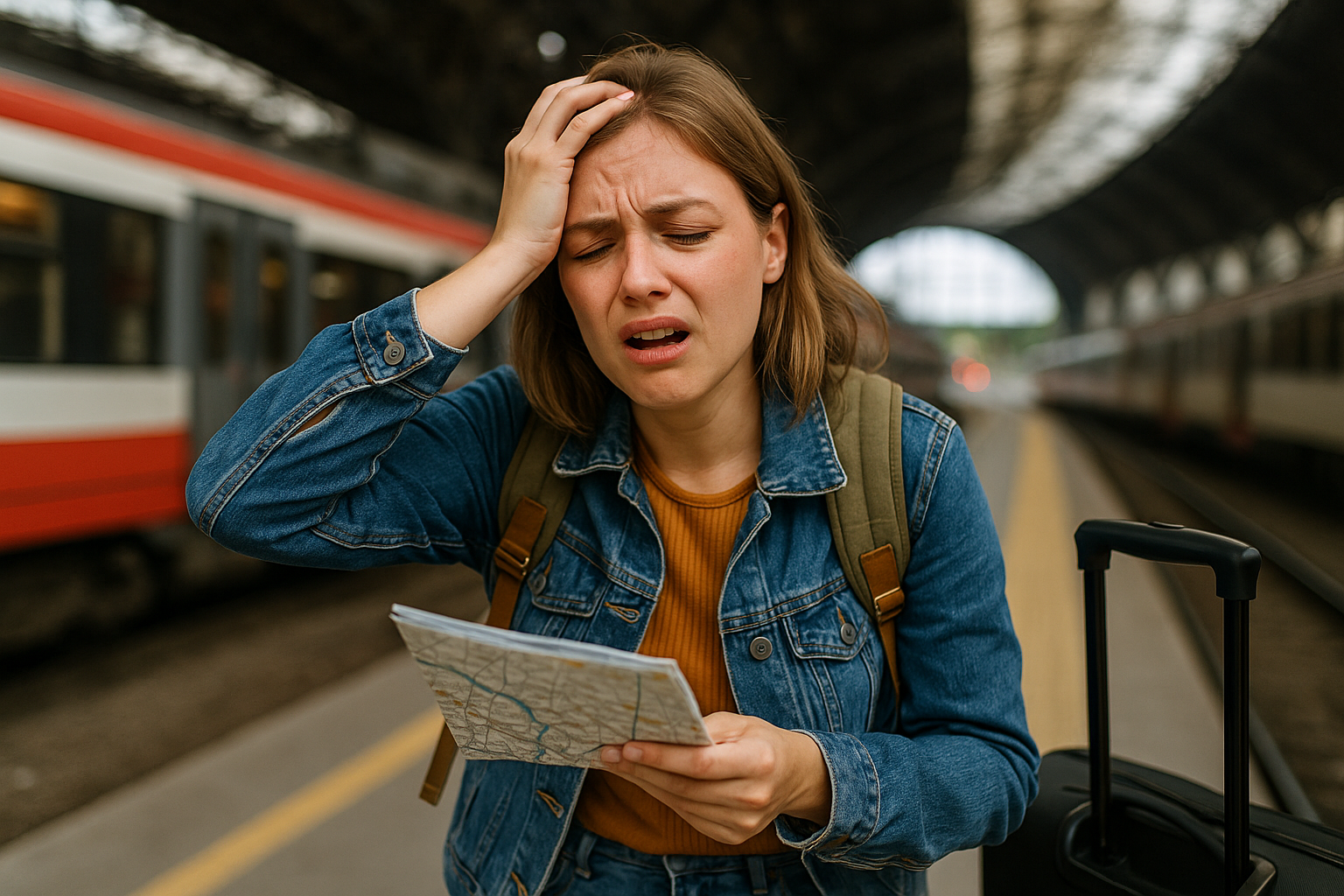
Every seasoned traveler has a collection of travel fails — the missed trains, the wrong buses, the hostel bookings that somehow landed them in the wrong city. And here’s the thing nobody tells you before your first big trip: those chaotic, unplanned moments are the ones you’ll be talking about for years.
The perfectly smooth vacation where everything went according to plan? You barely remember it. But the night you got stranded at a rural bus station in Portugal and ended up sharing dinner with a local family? That one lives rent-free in your memory forever.
Travel fails don’t just make great stories — they shape who you become as a traveler. Once you understand why, you’ll never dread a travel disaster quite the same way again.
Why Your Brain Loves a Good Disaster
Psychologists have long studied how we form and retain memories, and the findings are pretty fascinating. Experiences that involve novelty, emotional intensity, and problem-solving tend to stick far longer than routine ones. When something goes wrong during a trip, your brain shifts into high gear — you’re alert, engaged, and fully present in a way that smooth travel rarely demands.
According to research on how memory works from Psychology Today, emotionally charged events are encoded more deeply in the brain. A delayed flight that forces you to sleep on an airport floor feels terrible in the moment. But it also activates a level of awareness and adaptability that creates a genuinely unforgettable memory.
In other words, chaos is your brain’s favorite teacher.
The Stories That Define Your Journey
Think about the last time someone asked you about a trip. Did you lead with the hotel breakfast buffet? Probably not. You led with the story about the language barrier that accidentally got you invited to a stranger’s wedding. Or the time your GPS sent you down a mountain road that turned into a hiking trail.
Travel fails have a narrative structure that smooth trips simply don’t. There’s a problem, a moment of panic, a creative solution, and a resolution that usually involves something unexpected and wonderful. That’s a story worth telling. That’s the kind of memory that shapes how you see yourself as a traveler — and as a person.
My Travel Fails and How They Became My Best Stories
Sometimes the best way to understand why travel disasters are secretly gifts is to hear them straight from the road. These are the kinds of stories travelers share around hostel common rooms and campfires — the ones that always start with “okay, so everything went completely wrong, but…”
The Wrong Train to the Right Place
Imagine boarding what you’re convinced is the express train to Florence, settling in with your headphones, and looking up an hour later to see a sign for a tiny Tuscan village you’ve never heard of. Panic sets in. Then curiosity takes over. You step off, wander into a piazza, and spend the afternoon eating the best ribollita of your life at a trattoria that doesn’t have a single review online. You miss Florence entirely. You don’t care at all.
That wrong train became one of the most authentic afternoons of the entire trip — and a story that still gets told at every dinner party.
The Hostel That Didn’t Exist
You arrive in Lisbon at midnight, exhausted, only to discover the hostel you booked closed down months ago. The address leads you to a shuttered door. A neighbor spots your confusion, makes a phone call, and twenty minutes later you’re checked into a family-run guesthouse two streets away — cheaper, quieter, and with a host who brings you homemade pastéis de nata in the morning. The booking fail becomes the highlight of the trip.
It’s one of those travel fails that turned into a best story precisely because it forced a detour from the plan — and the detour was better than anything you’d booked.
Lost in Translation, Found in a Kitchen
Pointing confidently at a menu item in rural Japan and receiving something completely unrecognizable is a rite of passage. But here’s what usually happens next: the owner notices your bewildered expression, laughs warmly, and proceeds to give you an impromptu tour of the kitchen. You end up eating three more dishes you couldn’t name and leaving with a handwritten recipe you’ll treasure forever.
👉 Read also: The Art of Getting Lost: Why Wandering Without a Plan Leads to the Best Stories
These aren’t edge cases. Talk to any experienced traveler and you’ll hear versions of these stories on repeat. The details change. The shape of the story — chaos, adaptation, unexpected joy — stays exactly the same.
The Rained-Out Beach Day That Became Everything
You planned the perfect beach day. You woke up to a grey sky and a downpour that wasn’t stopping. So you ducked into the nearest café, ordered something warm, and ended up spending four hours talking to a group of locals who showed you a side of the town no travel guide had mentioned. The beach was still there the next day. The conversation wasn’t something you could have planned.
That’s the thing about travel fails and the best stories they become — the unplanned moments are often the most real ones.
Common Travel Fails (and What They Actually Taught Us)
Let’s be honest about the classics. Every traveler has faced at least one of these — and every single one has a lesson hidden inside it:
- Missing a train or bus — Frustrating in the moment, but often the reason you discovered a town you weren’t planning to visit.
- Language barriers gone wrong — Ordering something completely unrecognizable from a menu and ending up with the best meal of the trip.
- Booking errors — Arriving at a hostel that doesn’t have your reservation and somehow ending up in a better place around the corner.
- Getting lost — Wandering off the planned route and stumbling across a market, a viewpoint, or a conversation that no guidebook could have sent you to.
- Weather disruptions — The beach day that got rained out and turned into an afternoon in a local café where you met people you’re still friends with today.
- Tech failures — Your phone dying or your maps app going offline, forcing you to ask for directions and actually talk to someone who points you toward a hidden gem you’d have scrolled straight past.
- Overpacked bags — Lugging a suitcase that’s way too heavy teaches you, fast, what you actually need — and sets you free on every trip after that.
None of these feel good when they’re happening. All of them become stories you’ll tell with a grin on your face.
How Travel Fails Become Your Best Stories: The Pattern Behind the Chaos
Here’s something worth noticing: the travel fails that become the best stories almost always follow the same arc. Something goes wrong. You feel a spike of panic or frustration. You’re forced to improvise. And then — almost without exception — something unexpected and genuinely good happens.
That arc isn’t a coincidence. When your plan falls apart, you stop moving on autopilot. You start paying attention. You ask for help, which means you talk to people you’d never have spoken to otherwise. You end up somewhere you’d never have chosen, which means you discover something you’d never have found.
The fail is the door. What’s on the other side is the story.
Why Unplanned Moments Feel More Authentic
There’s a reason the stories from your most chaotic travel days feel more vivid than the ones from your most carefully planned ones. Authenticity lives in the unscripted. When you’re following a tight itinerary, you’re experiencing a version of a place that’s been packaged for visitors. When something goes wrong and you have to figure it out on the fly, you’re experiencing the place as it actually is — unpredictable, human, and real.
That’s the kind of travel that changes you. Not the highlight reel. The outtakes.
Flexibility Isn’t a Backup Plan — It’s the Whole Point
One of the most valuable skills you can develop as a traveler isn’t knowing which apps to download or how to pack light. It’s flexibility. The ability to let go of the plan, adapt to what’s actually in front of you, and find the opportunity inside the inconvenience.
Travel resilience — the capacity to recover quickly and creatively from disruptions — is something experienced travelers develop over time. And the only way to build it is to actually experience the disruptions. The first time you miss a connection, it feels catastrophic. By the fifth time, you’re already scanning the departures board for your next option while mentally rewriting your itinerary.
The travel tips from Lonely Planet for beginners consistently emphasize one thing above all else: leave room in your plans. An over-scheduled trip doesn’t just remove spontaneity — it removes your ability to recover gracefully when something shifts.
How to Embrace the Chaos Without Losing Your Mind
Embracing travel fails doesn’t mean being reckless or unprepared. It means building a mindset that treats disruption as part of the journey rather than a failure of the journey. Here are a few ways to get there:
👉 Read also: Travel Burnout Is Real: How to Avoid It and Actually Enjoy Your Adventure
- Document everything. Take a photo of the wrong bus stop. Write down the name of the café where you waited out the storm. These details become the texture of your best stories.
- Talk to people. When things go wrong, you’re suddenly in the same boat as other travelers or relying on locals for help. Some of the most authentic connections happen in these moments.
- Give yourself buffer time. Not because you expect things to go wrong, but because having a loose schedule means a missed train is an inconvenience, not a crisis.
- Reframe the narrative early. The moment you catch yourself thinking “this is a disaster,” try shifting to “this is going to be a great story.” It sounds simple, but it genuinely changes how you experience the moment.
- Travel with curiosity, not a checklist. When you’re not racing to tick off every attraction, an unexpected detour feels less like a setback and more like a discovery.
How to Turn Your Travel Fails Into Stories Worth Telling
There’s something quietly powerful about sharing the moments when things went sideways. In a world where travel content is often filtered, polished, and carefully curated, a genuine travel fail story cuts through the noise. People connect with it instantly — because everyone has been there.
If you’re building a travel journal, a blog, or even just posting for your own memories, lean into the disasters. Write down what went wrong, how you felt in the moment, and what happened next. The more specific the detail — the name of the street, the expression on the ticket inspector’s face, the exact dish you accidentally ordered — the more vivid and memorable the story becomes.
Here’s a simple framework for turning any travel fail into a story worth sharing:
- Set the scene. Where were you? What was the plan?
- Describe the fail. What went wrong, and how did it feel in the moment?
- Show the pivot. What did you do next? Who helped you? What surprised you?
- Land on the unexpected win. What did you discover, experience, or feel that you never would have if things had gone smoothly?
That structure works every time — because it mirrors what actually happens when travel goes sideways and somehow turns into something better.
And if you’re nervous about your first solo trip or your first time traveling somewhere unfamiliar, reading other people’s travel fail stories is genuinely one of the most reassuring things you can do. It reminds you that everyone gets lost, everyone makes mistakes, and everyone figures it out. The road has a way of working things out.
The Moments That Become the Memories
Here’s what nobody posts on their highlight reel but everyone remembers: the three-hour train delay that turned into a card game with strangers from four different countries. The wrong turn that led to the best sunset you’ve ever seen. The hostel mix-up that introduced you to the person who became your travel companion for the next two weeks.
Travel fails aren’t just entertaining — they’re evidence of your adaptability, your openness, and your willingness to engage with the world as it actually is rather than how you planned it to be. They’re proof that you showed up, stayed curious, and found your way through.
And honestly? That’s what travel is really about. Not the perfect itinerary. Not the flawless photos. But the unscripted, unplanned, slightly chaotic moments that remind you why you left home in the first place — to feel alive, to connect with something real, and to come back with stories worth telling.
So the next time something goes sideways on a trip, take a breath, look around, and pay attention. You’re probably standing right in the middle of your best story yet.
Frequently Asked Questions About Travel Fails
How do travel fails become your best stories?
Because they force you off the script. When something goes wrong, you stop moving on autopilot and start actually engaging with your surroundings — asking for help, making unexpected decisions, and stumbling into experiences you’d never have planned. That combination of emotion, improvisation, and surprise is exactly what makes a memory stick. The fail is rarely the end of the story. It’s usually the beginning of the best part.
Are travel fails actually common, or does it just feel that way?
They’re extremely common — and far more universal than social media makes it seem. Missed connections, booking errors, language mix-ups, and unexpected weather happen to every traveler at every experience level. The difference between a stressful disaster and a great story is usually just a bit of time and perspective.
How do I stay calm when something goes wrong while traveling?
Start by giving yourself a moment to breathe before reacting. Most travel problems have a solution — it just might not be the one you planned. Focus on what you can control right now: finding information, asking for help, or simply finding somewhere comfortable to sit while you figure out the next step. Experienced travelers will tell you that the panic fades fast once you start moving toward a solution.
What’s the best way to avoid travel fails in the first place?
You can’t avoid all of them — and honestly, you wouldn’t want to. But a few practical habits help: always screenshot your bookings and save them offline, build buffer time between connections, carry some local currency as a backup, and research basic phrases in the local language. Beyond that, travel light, stay flexible, and trust that you’re more capable of handling the unexpected than you think.
Can travel fails actually ruin a trip?
Rarely, and almost never permanently. The situations that feel catastrophic in the moment — a lost bag, a missed flight, a wrong booking — are almost always solvable. Travel insurance helps with the practical side, but the bigger safety net is your own adaptability. Most travelers look back on their worst moments abroad and recognize them as the experiences that taught them the most.
Where can I read more travel fail stories from other travelers?
Travel communities on Reddit (especially r/travel and r/solotravel) are full of honest, funny, and genuinely helpful stories shared by real people. Travel blogs and platforms like ours are also great places to find relatable experiences — especially if you’re preparing for your first big adventure and want to know what to expect when things don’t go to plan.
This article was produced with AI assistance and reviewed editorially.


Planning Your First Solo Trip: A Step-by-Step Blueprint for Unforgettable Travel

Teaching English Abroad in 2026: Top Countries, Visa Requirements & Real Salaries


