
Colombia
Central America’s Caribbean Coast: Where to Stay in Santa Marta, Bacalar & Tayrona
Discover where to stay on the Caribbean coast across three must-visit destinations: Santa Marta and Tayrona in Colombia, plus Bacalar in Mexico’s Yucatán Peninsula.

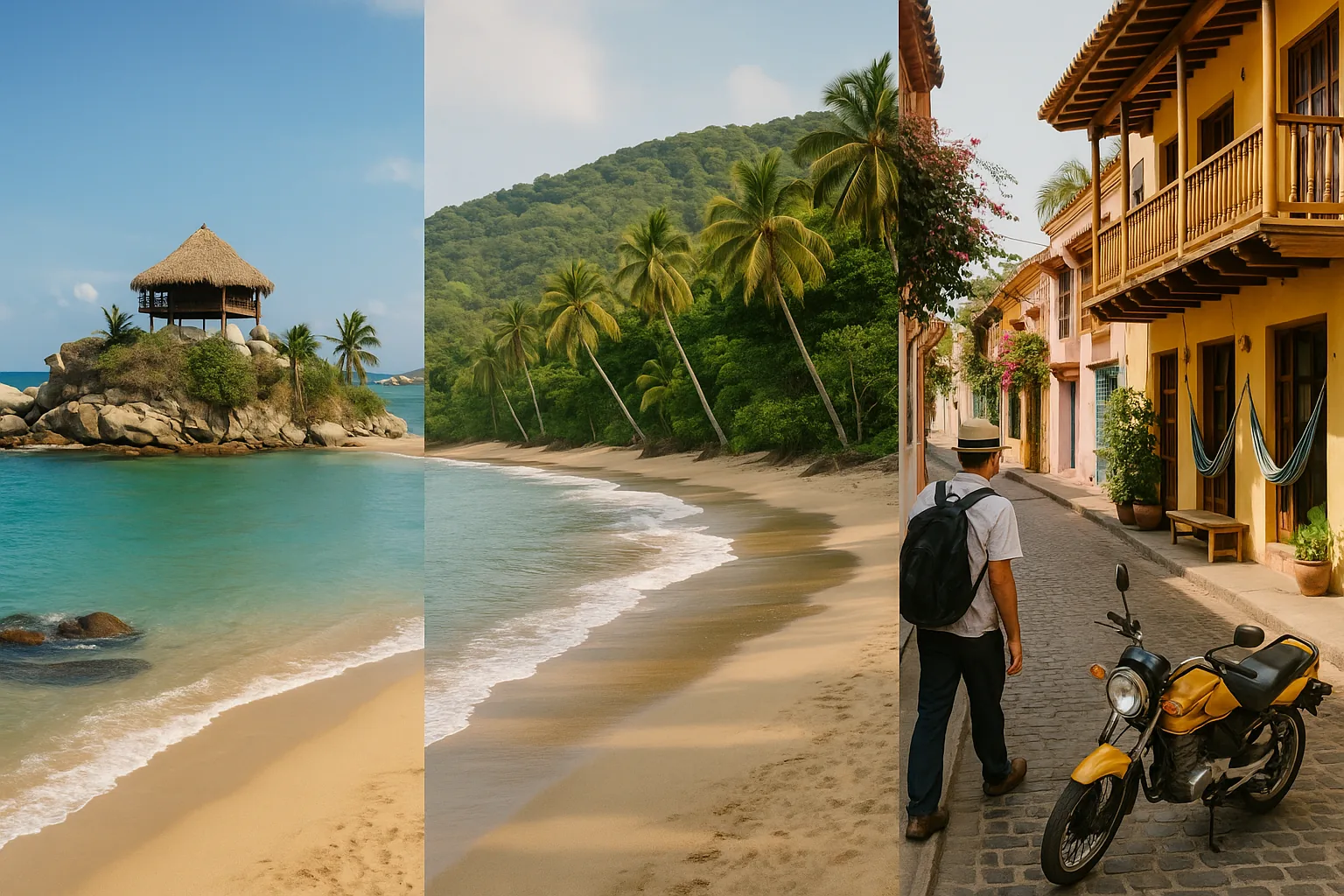
The Caribbean coast pulls you in before you even arrive — the heat, the colour, the sound of the sea mixing with cumbia drifting from an open window. If you’re trying to figure out where to stay on the Caribbean coast of Latin America, you’ve already made one of the best travel decisions of your life. This guide covers three destinations that sit at the sweet spot between beach access, jungle adventure, and genuine local culture: Santa Marta and Tayrona National Park in Colombia, and Bacalar in Mexico’s Yucatán Peninsula. Each one is different. All three are worth it.
Why These Three Destinations Belong on the Same Trip
At first glance, pairing Colombian and Mexican Caribbean destinations in one guide might seem like a stretch. But for young travelers building a longer Central and South American route, these three spots share a common thread: they’re all places where the landscape does the heavy lifting. You get jungle, sea, history, and community in one go. None of them are about luxury resorts or all-inclusive packages. They’re about waking up early, getting your feet dirty, and eating something you can’t pronounce — in the best possible way.
Santa Marta and Tayrona are natural companions — you can base yourself in the city and day-trip into the park, or flip it entirely and sleep inside the park itself. Bacalar, meanwhile, is the kind of place that earns its own chapter. The Laguna de Bacalar, with its seven shades of blue, is unlike anything else on the Caribbean circuit. Together, these three destinations give you a full picture of what the Caribbean coast of Latin America can look like when you travel slow and travel smart.
Santa Marta: Choosing Your Base in Colombia’s Oldest City
Santa Marta holds a remarkable piece of history: it was the first city founded by the Spanish in Latin America, in 1525. That’s not just a trivia fact — you feel it in the architecture, in the layered streets, in the way the old and new sit right next to each other. The city is the capital of the Magdalena department and sits between two extraordinary forces of nature: the Caribbean Sea and the Sierra Nevada de Santa Marta, the highest coastal mountain range in the world. That combination alone makes it one of the most geographically dramatic cities on the continent.
When it comes to figuring out where to stay, Santa Marta breaks down into a few distinct zones, and picking the right one shapes your whole experience.
The Historic Centre
If you want to wake up and immediately feel like you’re somewhere real, the Centro Histórico is your answer. The streets are narrow, the buildings are painted in faded pastels, and the Parque de los Novios fills up with locals in the evenings. Hostels here tend to be in colonial buildings with courtyard common areas — the kind of setup that makes it easy to meet other travelers over breakfast and plan the day together. It’s walkable, it’s social, and it puts you close to the bus terminals you’ll need for Tayrona day trips.
El Rodadero and the Beachfront
El Rodadero is Santa Marta’s main tourist hub, sitting just a few kilometres south of the city centre. It’s where you’ll find the widest range of accommodations — from budget guesthouses to mid-range hotels — and it’s the most beach-forward option if your priority is waking up and walking straight to the water. Playa El Rodadero is a proper beach with services, vendors, and a lively atmosphere, especially on weekends when locals come out in full force. It’s a little more commercial than the centre, but it’s energetic and convenient.
Taganga
Just north of the city centre, the fishing village of Taganga is a different pace entirely. Playa de Taganga is one of the beaches listed in the Santa Marta area, and the village itself has a backpacker energy that’s been there for decades. It’s quieter than Rodadero, more local in feel, and a solid choice if you want to be close to the water without the tourist-strip atmosphere. Accommodation here leans toward small guesthouses and independent hostels.
There’s also Playa Blanca in the mix — a calmer, less developed stretch that attracts people looking to escape the crowds. It’s worth a visit even if you don’t base yourself there.
👉 Read also: Hidden Gems in Mexico: Guanajuato, Bacalar & Sayulita for First-Time Explorers
Tayrona National Park: Sleeping Inside the Jungle
About an hour’s drive east of Santa Marta, Tayrona National Park covers roughly 15,000 hectares of Colombia’s Caribbean shoreline. It’s not a beach destination in the conventional sense — it’s a protected ecosystem where biodiverse rainforest meets volcanic coves and sandy beaches. The trails are real trails. The wildlife is genuinely wild. And the beaches — places like Cabo San Juan and La Piscina — are the kind that make you forget your phone exists.
Deciding where to stay when visiting Tayrona is one of the most important choices of this part of the trip. You have two main approaches.
Staying Inside the Park
Tayrona has limited accommodation inside its boundaries, ranging from ecohabs (elevated wooden cabins with views over the forest) to hammock camps right on the beach. Sleeping inside the park means you get the trails to yourself in the early morning and evening, when the light is extraordinary and the heat is manageable. Hammock camps are the budget option and they’re genuinely fun — you fall asleep to the sound of the sea and wake up to birds you’ve never heard before. Book ahead, especially in high season, because availability is limited by design. The park limits visitor numbers to protect the ecosystem.
Basing Yourself in Nearby Towns
If staying inside the park doesn’t appeal — or if it’s fully booked — the small town of El Zaino near the park entrance and the slightly larger town of Palomino further along the coast are both popular bases. Palomino in particular has a thriving hostel scene and a laid-back, community-driven atmosphere that a lot of young travelers fall in love with. You can spend your mornings in Tayrona and your evenings at a hostel fire pit in Palomino. It’s a rhythm that works.
Getting between Santa Marta and Tayrona is straightforward — shared minibuses and collectivos run regularly from the city, and the journey is part of the experience. You pass through small coastal communities, see the mountains getting closer, and by the time you arrive at the park gates, you’re already somewhere different.
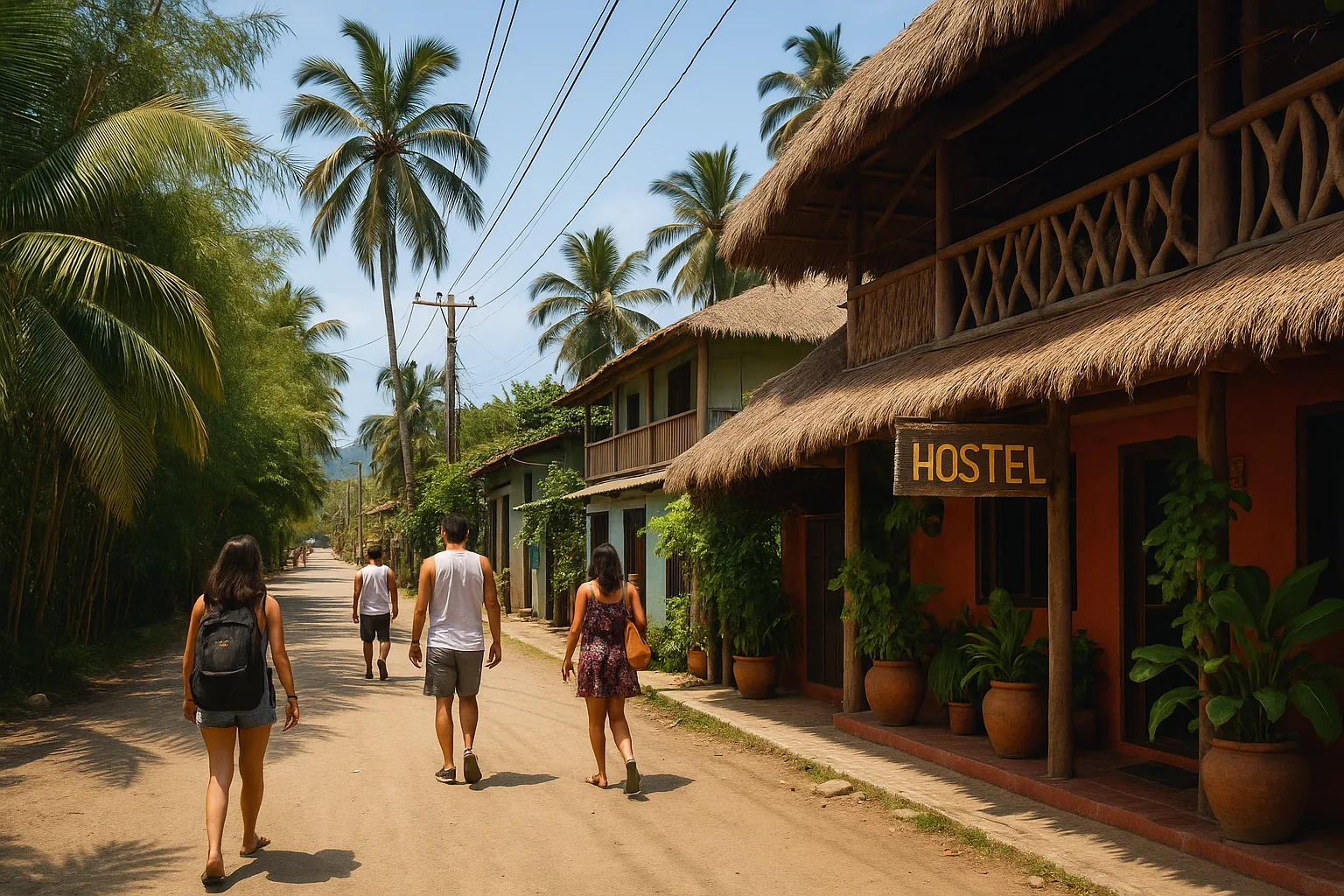
Bacalar, Mexico: The Lagoon Town That Changes Your Pace
Shift north to Mexico’s Yucatán Peninsula and you find Bacalar — a small lakeside town built around one of the most visually striking bodies of water in the Americas. The Laguna de Bacalar earns its nickname, the Lake of Seven Colors, honestly. Depending on the depth, the time of day, and the light, the water shifts from pale turquoise to deep navy blue, sometimes within the same glance. It’s the kind of place that genuinely stops you mid-sentence.
Bacalar sits far enough off the main tourist circuit to feel unhurried, but it’s connected enough to be accessible. The town itself is small and walkable, with a 17th-century fort — Fuerte de San Felipe — anchoring the main square and giving the place a sense of history that balances out the Instagram-friendly lagoon views.
Where to Stay Around the Lagoon
The best accommodations in Bacalar are the ones that put you right on or near the water. Lagoon-side hostels and guesthouses — many of them small, independently run operations — offer dock access, kayaks, and the kind of morning swim that recalibrates your entire nervous system. The hostel community here tends to be social and international, with travelers who’ve come from the ruins of Tulum and Palenque and are in no rush to leave.
If you’re thinking about where to stay on the Caribbean coast with cenote access, Bacalar is your answer for the Mexican side. The surrounding region has numerous cenotes — natural limestone sinkholes filled with crystal-clear freshwater — that you can visit on day trips from town. Some are a short bike ride away; others require a bit more planning. Either way, they’re worth building into your itinerary.
Getting the Most Out of Bacalar
Rent a bike. Seriously. The town is flat, the roads around the lagoon are scenic, and cycling gives you the freedom to stop whenever something catches your eye — a local food stall, a quiet dock, a stretch of water that looks too good to walk past. Boat tours of the lagoon are another essential, taking you to the Canal de los Piratas, the Cenote Azul, and the Banco Chinchorro area. Bacalar doesn’t demand a packed schedule. It rewards the people who slow down.
👉 Read also: Caribbean & Central America Escapes: Belize, Isla Mujeres & Island Life (2026)
Hostel Culture and the Community Vibe
One thing that connects all three of these destinations is a strong hostel culture built around genuine community rather than just cheap beds. The best hostels in Santa Marta, Palomino, and Bacalar share a common philosophy: create a space where travelers actually connect with each other and with the local area. That means communal dinners, organized day trips, local guides, and the kind of common room conversations that turn strangers into travel companions.
If you’re traveling solo, this circuit is one of the friendliest on the continent. It’s easy to find people heading in the same direction, and the hostel networks in each town tend to be well-informed about conditions, transport, and hidden spots worth discovering. Don’t underestimate the value of a good hostel recommendation — it’s often more useful than any app.
Practical Considerations: Safety, Transport, and Timing
A few things worth knowing before you go. Santa Marta is generally considered one of the safer cities in Colombia for travelers, and the tourist areas — the historic centre, El Rodadero, Taganga — are well-traveled and well-lit. As with any destination, basic awareness goes a long way: keep your phone out of sight in unfamiliar streets, use registered taxis or apps, and ask your hostel about current conditions when you arrive. Local knowledge is always more current than anything written online.
For Tayrona, the park has its own rhythms and rules. It closes periodically for ecological recovery — usually for a few weeks at a time — so check the current status before you build your itinerary around it. Entry requires a fee, and the trails can be muddy and steep depending on the season. Wear shoes you don’t mind getting dirty. Bring water. Start early.
In Bacalar, the town is safe and relaxed, but the surrounding area is rural, so plan transport in advance if you’re heading to more remote cenotes or coastal spots. Collectivos and shared taxis cover most routes, and locals are generally happy to point you in the right direction.
The best time to visit the Colombian Caribbean coast — including Santa Marta and Tayrona — is during the dry season, which broadly runs from December through April. Bacalar is good year-round, though the rainy season brings lush greenery and fewer crowds if you don’t mind occasional afternoon downpours.
Snorkeling, Islands, and Getting on the Water
The Caribbean coast isn’t just about beaches — it’s about what’s underneath the surface. From Santa Marta, boat trips to the Islas del Rosario and other nearby island clusters give you access to coral reefs and warm, clear water that’s genuinely worth exploring even if you’ve never snorkeled before. Local operators run day trips from the city and from Taganga, and the experience of floating over a reef in the Colombian Caribbean is one of those things that stays with you.
In Tayrona, some of the coves — particularly La Piscina — are calm enough for swimming and snorkeling without any equipment beyond a mask. The volcanic rock formations create natural pools and channels that feel prehistoric and completely alive at the same time.
Bacalar’s lagoon isn’t ocean snorkeling, but it has its own underwater world worth exploring. The Cenote Azul near town is one of the largest open cenotes in Mexico, and swimming in it — looking down into water that seems to have no bottom — is an experience that sits somewhere between thrilling and meditative. For ocean snorkeling on the Mexican Caribbean, the nearby Banco Chinchorro biosphere reserve is one of the most biodiverse marine areas in the region, though it requires a longer boat trip and advance planning.
Figuring out where to stay on the Caribbean coast ultimately comes down to what kind of traveler you are on any given day — the one who wants to move, or the one who wants to stay still. The beautiful thing about this route is that it makes space for both. You can push through the jungle trails of Tayrona, drift across the lagoon in Bacalar, and eat ceviche in Santa Marta’s historic centre all in the same week. Or you can pick one place, put your bag down, and let it surprise you. Either way, the Caribbean coast has a way of making sure you leave with more than you arrived with.
This article was produced with AI assistance and reviewed editorially.


Cusco and Peru’s Sacred Valley: Choosing the Right Hostel for Your Altitude Adventure

Colombia’s Caribbean Coast: Hostels, Beaches, and Adventures in Tayrona and the Rosarios Islands


