
Asia
Southeast Asia Slow Travel: Luang Prabang’s Spiritual Side & Day Trips from Saigon
Discover Southeast Asia slow travel through Luang Prabang’s spiritual temples and five day trips from Ho Chi Minh City. Perfect for 1–2 week itineraries.

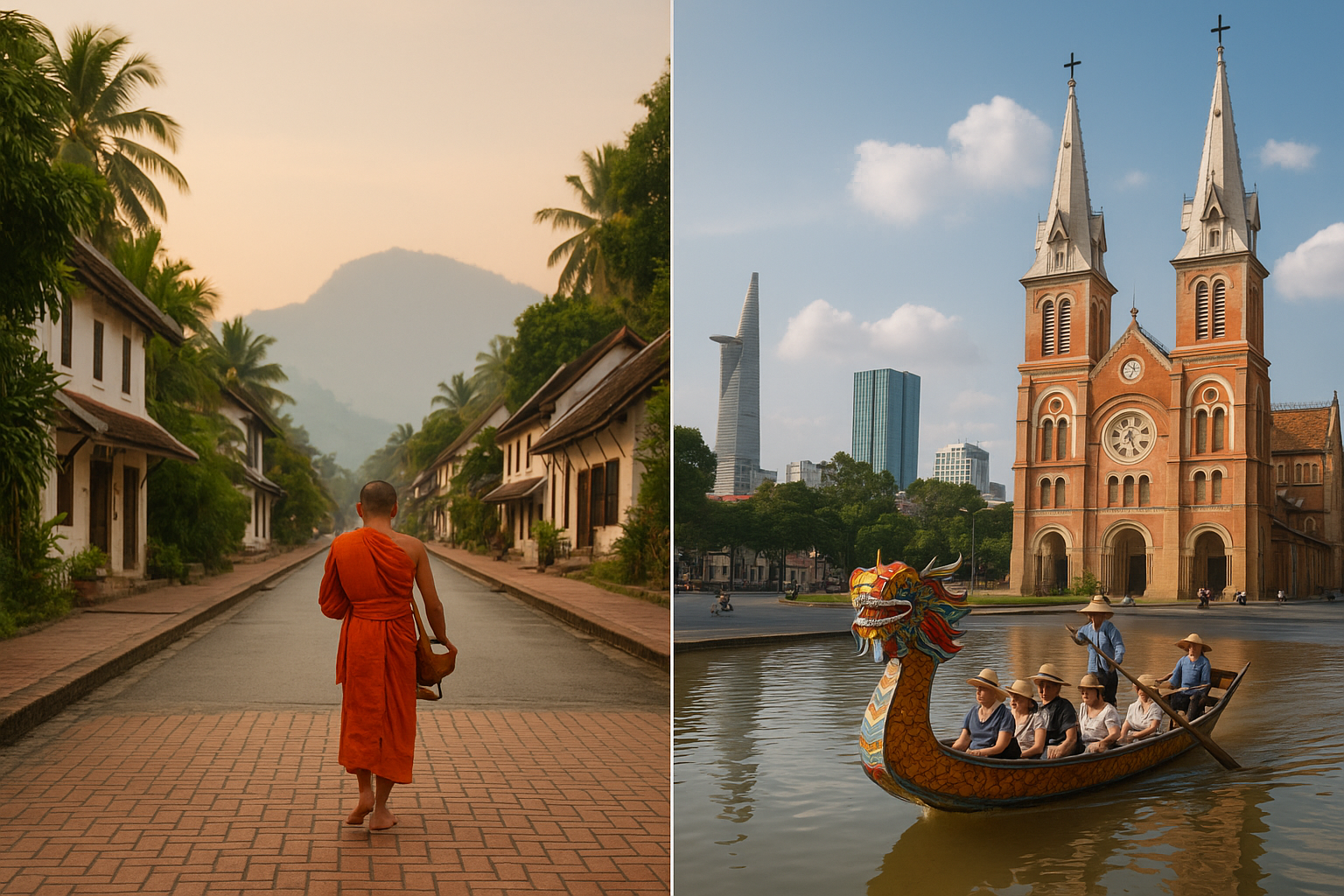
Slow Down, Look Around: A Young Traveler’s Guide to Southeast Asia’s Spiritual Side and Urban Escapes
There’s a particular kind of travel that doesn’t get talked about enough — the kind where you’re not rushing between landmarks with a checklist in hand, but actually living somewhere for a few days. Southeast Asia slow travel is exactly that: choosing depth over distance, connection over coverage, and presence over productivity. This guide takes you to two very different corners of the region — the serene, temple-lined streets of Luang Prabang in northern Laos, and the electric sprawl of Ho Chi Minh City (Saigon) in Vietnam, where day trips peel back the city’s noise to reveal something quieter and more meaningful just beyond the horizon.
Whether you’re building a one-week itinerary or stretching it to two, these two destinations offer a beautiful contrast. One asks you to slow down. The other rewards you for stepping outside. Both will leave you with stories you’ll still be telling years from now.
Luang Prabang: Where Time Moves Differently
Tucked into the mountains of northern Laos, Luang Prabang sits at the confluence of the Mekong and Nam Khan Rivers like a place the rest of the world forgot to rush. It’s the ancient capital of Laos — a city that held that title until the Communist revolution — and it carries its history with quiet dignity. Walk its streets and you’ll pass French colonial architecture alongside gilded temple rooftops, saffron-robed monks alongside backpackers with dog-eared guidebooks. It’s a UNESCO World Heritage Site, and once you arrive, you’ll understand exactly why.
What makes Luang Prabang so special isn’t any single attraction. It’s the pace. The air feels slower here. Mornings are cool and hushed. Evenings glow golden. And somewhere in between, you find yourself actually noticing things — the way light falls through temple doors, the smell of incense drifting from a courtyard, the sound of chanting before the city fully wakes up.
The Morning Alms Ceremony: A Ritual Worth Waking Up For
If you only do one thing in Luang Prabang, wake up before sunrise and witness the tak bat — the daily alms-giving ceremony. As dawn breaks, hundreds of monks in saffron robes walk silently through the streets, collecting offerings of sticky rice and food from local residents. It’s one of the most quietly powerful things you’ll see anywhere in Southeast Asia.
A word of respect here: this is an active religious ceremony, not a photo opportunity. Keep a respectful distance, stay quiet, and put your camera away unless you’re being genuinely discreet. The experience means more when you’re fully present for it rather than watching it through a screen.
Temples, Shrines, and the Art of Wandering Slowly
Luang Prabang has numerous temples and shrines woven into its streets, and exploring them is less about ticking boxes and more about letting yourself get absorbed. Wat Xieng Thong, near the northern tip of the peninsula, is considered one of the most beautiful temples in all of Laos. Its sweeping roof lines, intricate mosaics, and shaded courtyards invite you to sit, breathe, and take it all in.
Don’t try to see every temple in a single day. Pick two or three, spend real time in each one, and let the spaces do their work. That’s the whole philosophy of slow travel — and Luang Prabang practically teaches it to you.
You can explore more about the spiritual architecture of the region through resources like Travel the World Pages’ guide to Buddhist temples in Luang Prabang, which offers useful context before you arrive.
Kuang Si Falls: The Perfect Day Out
About 30 kilometres south of town, Kuang Si Falls is one of the most stunning natural sites in the whole of Laos. Tiered turquoise pools cascade down limestone terraces through lush jungle — the kind of scene that feels almost too beautiful to be real. It’s a popular day trip from Luang Prabang, and for good reason.
Go early. The falls are at their most peaceful in the morning before the crowds arrive. Bring a swimsuit — swimming in the lower pools is one of those simple joys you’ll be thinking about for weeks. And take the trail to the top of the falls if you have the energy; the view from above is worth every step.
You can find detailed practical information about visiting Kuang Si and other day tours from Luang Prabang at Orange Wayfarer’s guide to day tours from Luang Prabang.
Mekong River Cruises: Go Slow on the Water
If southeast asia slow travel has a perfect metaphor, it might be a boat drifting down the Mekong. River cruises are available from Luang Prabang, ranging from short sunset trips to full-day journeys that take you to riverside villages and caves. The pace is unhurried. The scenery — jungle-covered hills, stilted wooden houses, fishermen casting nets — unfolds like a film you don’t want to end.
A sunset cruise with a cold Beerlao in hand, watching the light turn the river gold, is one of those moments that doesn’t need a filter or a caption. It just needs you to be there.
The Night Market and Eating Like a Local
Every evening, the main street of Luang Prabang transforms into a vibrant night market. Vendors sell handmade textiles, silverwork, and crafts — but the real draw is the food. Look for the buffet-style stalls where you can fill a plate with a mix of local dishes for next to nothing. Sticky rice, spicy papaya salad, grilled meats, and herb-packed soups — eating here feels like a lesson in Lao culture, one bite at a time.
Skip the restaurants with laminated English menus and find the spots where locals are actually eating. You’ll eat better and spend less. That’s a rule that applies almost everywhere in Southeast Asia.
Day Trips from Ho Chi Minh City: Escaping the Energy
Ho Chi Minh City — still called Saigon by most people who live there — is one of the most alive cities on the planet. Motorbikes stream through every intersection. Street food vendors work from before dawn. The city hums with ambition and noise and movement. It’s thrilling. It’s also, after a few days, genuinely exhausting.
The good news: some of the most memorable experiences near Saigon are found by leaving it. Day trips from the city open up a completely different version of southern Vietnam — quieter, greener, and full of history and texture that the urban rush tends to drown out.
The Mekong Delta: Rivers, Rice, and Real Life
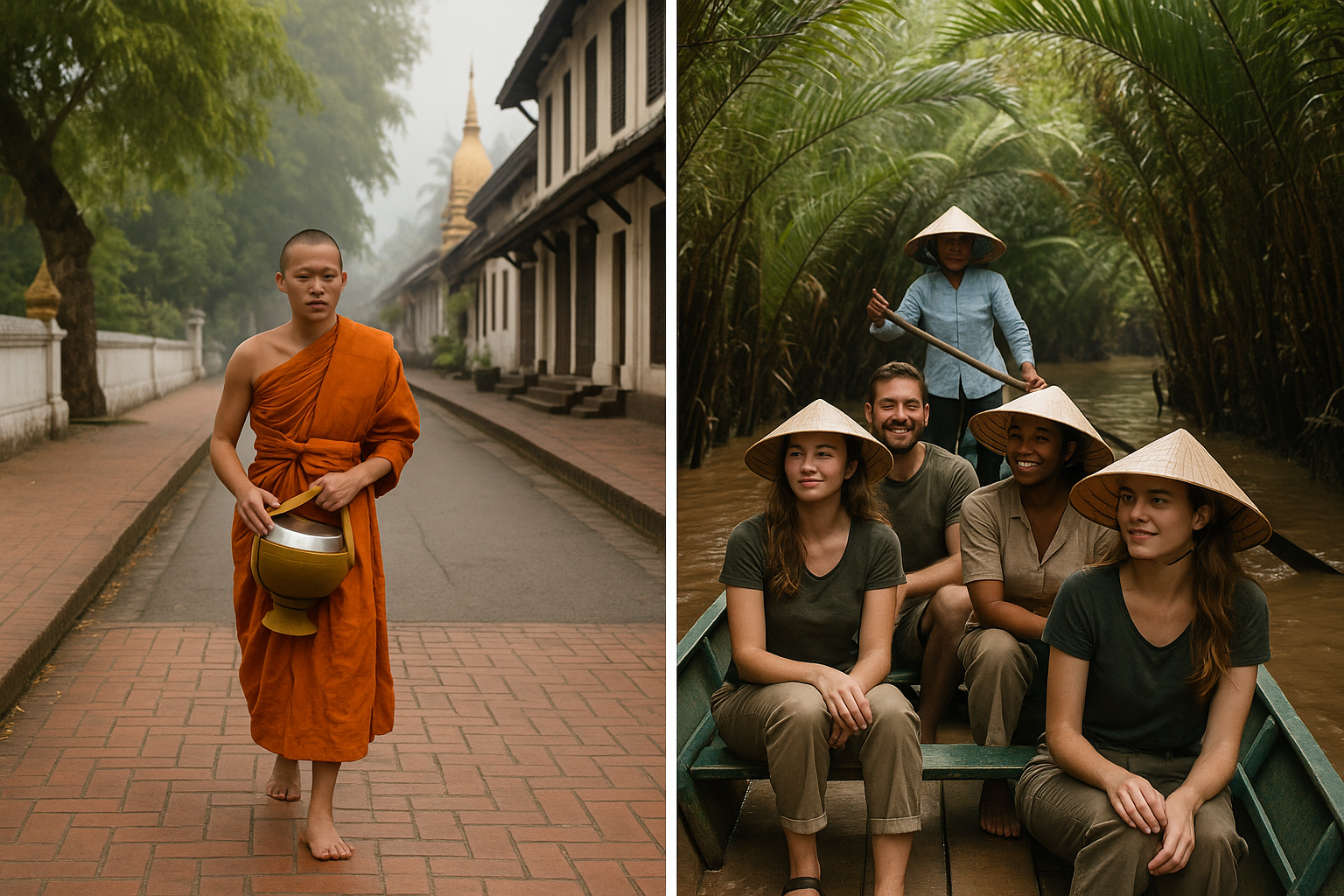
Head south from Ho Chi Minh City and within a couple of hours you’re in the Mekong Delta — a vast network of rivers, canals, and rice paddies that feeds much of Vietnam. Life here moves at a completely different rhythm. Narrow boats navigate waterways lined with coconut palms. Markets float on the river. Villages are connected by wooden bridges and winding paths.
A day trip to the delta typically includes a boat ride through the canals, a visit to a local workshop producing coconut candy or rice paper, and lunch at a family-run restaurant where the food is fresh, simple, and genuinely delicious. It’s one of the most grounding experiences you can have after the intensity of the city.
The Cu Chi Tunnels: History You Can Crawl Through
Northwest of Saigon, the Cu Chi Tunnels are one of the most sobering and fascinating historical sites in all of Vietnam. During the war, local guerrilla fighters built an extraordinary underground network stretching for hundreds of kilometres — tunnels used for shelter, communication, supply routes, and combat. Today, sections of the tunnels are open to visitors, and you can actually crawl through them.
It’s not comfortable. The tunnels are narrow, low, and dark. But that discomfort is part of the point. You come out with a visceral understanding of what people endured here that no museum exhibit could replicate. It’s a powerful, important experience — and one that stays with you long after you’ve dusted yourself off.
Mui Ne: Sand Dunes and Sea Breeze
Further from the city but worth the journey, Mui Ne is a coastal town known for its red and white sand dunes — a landscape that feels more like the Sahara than Southeast Asia. Watching the sunrise over the dunes is genuinely spectacular, and the town itself has a relaxed, sun-bleached character that’s the perfect antidote to urban overstimulation.
If you’re staying in Saigon for a week or more, consider an overnight trip rather than a day trip — Mui Ne rewards a slower pace. But even a long day visit gives you enough time to feel the sand between your toes and breathe in something that isn’t exhaust fumes.
Tay Ninh and the Cao Dai Temple
For something truly unlike anything else you’ll see on your travels, head northwest to Tay Ninh and the Great Temple of Cao Dai. The Cao Dai religion blends elements of Buddhism, Taoism, Confucianism, and Christianity into a uniquely Vietnamese spiritual tradition. The temple itself is an explosion of colour — pastel pinks and yellows, dragons coiling around columns, a giant divine eye gazing from the facade.
Noon ceremonies, when worshippers in white, blue, and yellow robes fill the temple for prayer, are open to respectful visitors. It’s one of those experiences that reminds you how wide and varied human spirituality really is. Come curious, come respectful, and come ready to have your assumptions gently rearranged.
Can Gio Mangrove Forest: Green and Wild
Closer to the city, the Can Gio Mangrove Biosphere Reserve offers a completely different kind of escape. This UNESCO-recognised reserve is one of the largest mangrove forests in Southeast Asia, home to monkeys, birds, and a dense, atmospheric ecosystem that feels a world away from Saigon’s concrete and noise.
Boat tours through the mangroves are the best way to explore. The forest is quiet in a way that city-dwellers often forget exists. Monkeys watch you from the branches. Egrets stand motionless in the shallows. It’s a reminder that wild, breathing nature is never as far away as it seems.
Planning Your Southeast Asia Slow Travel Itinerary
One of the biggest mistakes young travelers make in Southeast Asia is trying to cover too much ground. It’s tempting — the region is so rich, and everything sounds worth seeing. But hopping between five countries in ten days means you’re always arriving, never actually being somewhere.
A more satisfying approach: choose two or three destinations and give each one real time. Spend at least four or five days in Luang Prabang. Let the rhythm of the place settle into you. Use a few of those days to explore beyond the town itself — Kuang Si, the river, the surrounding villages. Then, if your itinerary takes you south to Vietnam, base yourself in Ho Chi Minh City for several days and use it as a hub for day trips rather than just a stopover.
- Give yourself at least two full mornings in Luang Prabang to experience the alms ceremony without rushing.
- Book the Kuang Si Falls trip for a weekday if possible — it’s quieter than weekends.
- In Ho Chi Minh City, alternate busy days with slower ones. One day in the tunnels, one day in the delta, one day doing absolutely nothing except eating banh mi and watching the city move.
- Pack light. Slow travel means staying longer, which means doing laundry. You don’t need as much as you think.
- Talk to people. Guesthouse owners, tuk-tuk drivers, fellow travelers at the night market. The best recommendations never come from an app.
The Best Time to Visit
Northern Laos, including Luang Prabang, is most pleasant between November and March, when temperatures are cooler and rainfall is low. The wet season (roughly May to October) brings lush green landscapes but can also mean flooded roads and reduced access to some attractions.
Southern Vietnam and Ho Chi Minh City have a more consistent tropical climate, with a dry season running from December to April. The shoulder months on either side of the dry season can be a good balance — fewer tourists, reasonable prices, and weather that’s manageable with the right mindset and a decent rain jacket.
Why Slow Travel Makes Southeast Asia Make Sense
Southeast Asia slow travel isn’t just a style preference — it’s genuinely the best way to understand a region this layered and complex. The temples of Luang Prabang mean more when you’ve sat in their courtyards long enough to feel the silence. The Mekong Delta makes more sense when you’ve spent an afternoon watching a family load their boat at sunrise. The Cu Chi Tunnels hit differently when you’ve already spent a few days walking the streets of Saigon and started to understand the city’s energy and resilience.
Speed strips context. Slowness restores it.
You don’t need to see everything. You need to actually experience something. And in this part of the world — where the food is extraordinary, the landscapes are staggering, the history is deep, and the people are genuinely warm — there’s more than enough to experience right where you are. So take your time. The next destination will still be there. But the moment you’re in right now? That one’s worth staying for.
This article was produced with AI assistance and reviewed editorially.


Southeast Asia Slow Travel: Luang Prabang’s Spiritual Side & Day Trips from Saigon

Vietnam Beyond Saigon: 5 Day Trips & Real Ecotourism Destinations in 2026


