
Asia
Southeast Asia’s Underrated Cities: Bandung, Malang, and Luang Prabang Beyond the Guidebook
Discover three underrated Southeast Asia cities worth exploring beyond the typical tourist circuit. Bandung, Malang, and Luang Prabang offer authentic local experiences a

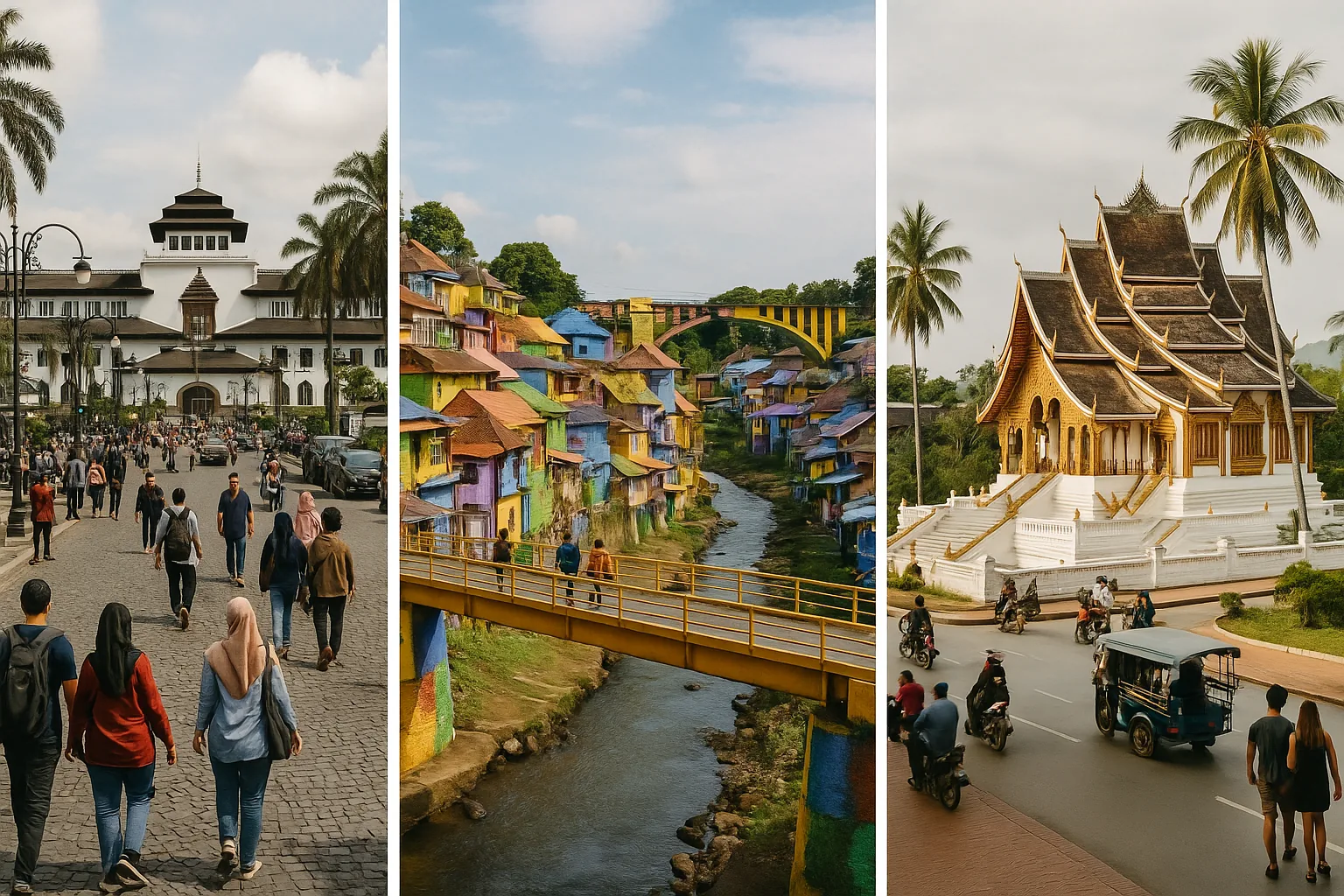
The Southeast Asian Cities Most Travelers Walk Right Past
Every year, thousands of young travelers land in Southeast Asia with roughly the same itinerary: Bangkok, Chiang Mai, Bali, Hoi An, maybe Siem Reap. These places are popular for good reason — they’re genuinely brilliant. But the well-worn circuit also means crowded hostels, inflated prices, and the slightly deflating feeling that you’re following a script someone else wrote. If you’re looking for something that feels more like discovery and less like a queue, the underrated southeast asia cities on this list deserve a serious look. Bandung, Malang, and Luang Prabang won’t show up on every highlight reel — and that’s exactly what makes them worth your time.
Why Travelers Keep Skipping These Cities
It’s not that these cities are hard to reach or dangerous or boring. It’s simpler than that: they don’t have the same marketing machine behind them. Most backpacker routes are shaped by word of mouth, and word of mouth tends to repeat itself. When every travel blog points you toward the same five destinations, the cities just off that path quietly go unnoticed.
There’s also a comfort factor. Travelers — especially first-timers — naturally gravitate toward places with established infrastructure, English-speaking locals, and a clear idea of what to do. The cities on the main circuit offer all of that. But once you’ve done a trip or two, you start craving something less predictable. That’s when places like Bandung, Malang, and Luang Prabang start to make a lot of sense.
These three cities sit at an interesting intersection: they have enough infrastructure to make independent travel manageable, but not so much that the experience feels packaged. You can still stumble onto something genuinely unexpected. You can still have a conversation with a local that doesn’t feel like a transaction. That’s increasingly rare in Southeast Asia’s most visited spots.
Bandung, Java: Where Creativity and Cool Air Collide
Bandung sits at elevation in West Java, which means the first thing you notice when you step off the bus or train from Jakarta is the temperature. It’s cooler here — genuinely, pleasantly cool — and that alone makes it feel like a different world from the coastal heat you’ve been sweating through.
The city has developed a creative, youthful energy over the years. It’s a university city, which means a large student population, a thriving local music and arts scene, and a street food culture that rewards wandering. The kind of city where you turn a corner and find a courtyard café full of people sketching, playing guitar, or just talking. Not performing for tourists — just living.
What to Actually Do in Bandung
- Explore the factory outlets and independent fashion districts. Bandung has a reputation across Indonesia for its fashion scene, and it earns it. You’ll find everything from locally designed streetwear to vintage finds, often at prices that make you want to buy a second bag just to carry it all home.
- Get into the surrounding landscape. The highlands around Bandung offer volcanic crater lakes, tea plantations, and hiking trails. Waking up early to catch mist over a crater lake is one of those travel moments that stays with you.
- Eat your way through the city. West Javanese cuisine is distinct and deeply satisfying. Look for local warungs — small family-run spots — rather than the tourist-facing restaurants. Point at whatever looks good. It usually is.
- Catch live music. The local indie music scene is active and genuinely good. Ask at your accommodation what’s on — you might end up at a small venue watching a band that deserves a much bigger audience.
The best time to visit Bandung is generally during the dry season, which runs roughly from May through September. The weather is more predictable, the crater lakes are clearer, and outdoor hiking is more comfortable. That said, Bandung’s indoor scene — the cafés, the markets, the music — means it’s worth visiting year-round if you’re flexible.
👉 Read also: Southeast Asia Slow Travel: Luang Prabang's Spiritual Side & Day Trips from Saigon
Malang, East Java: The Volcano Lover’s Base Camp
If Bandung is the creative city break, Malang is the adventure hub you didn’t know you needed. Sitting in the highlands of East Java, it’s a relaxed, walkable city with a colonial-era center, good food, and — most importantly — an incredible location for day trips and multi-day adventures into some of Java’s most dramatic landscapes.
The city itself has a calm, unhurried feel that’s rare in Java. Tree-lined streets, Dutch colonial architecture, local markets that start before sunrise — Malang rewards slow mornings and spontaneous afternoons. But what really draws adventurous travelers here is what surrounds it.
Using Malang as a Base for East Java’s Volcanoes
East Java is home to some of the most dramatic volcanic scenery in all of Southeast Asia. Mount Bromo is the most famous — a still-active volcano surrounded by a vast sea of sand, best experienced at sunrise when the light turns the whole landscape a shade of orange that feels almost unreal. From Malang, access to Bromo is straightforward, and many travelers combine the trip with a visit to the Ijen crater, where turquoise acidic water sits inside a caldera and blue flames sometimes appear in the early morning hours.
These aren’t easy hikes, and they’re not meant to be. You’ll be up before 3am, trekking in the dark with a headlamp, and the altitude and sulfuric air at Ijen require some preparation. But that’s part of it. The people you meet on those trails — fellow travelers who chose the harder, less-marketed path — tend to be exactly the kind of people worth knowing.
What Else to Do Around Malang
- Visit the Malang old town. The Dutch colonial architecture gives the city center a distinctive look. Wander without a plan and see what you find.
- Explore the local temples. The region around Malang has a number of ancient Hindu-Buddhist temples that see far fewer visitors than Borobudur or Prambanan. You might have them almost to yourself.
- Try the local food scene. Malang has its own culinary identity. Look for bakso (meatball soup) at local stalls — the city is particularly known for it — and explore the night markets when the temperature drops.
- Day trip to nearby waterfalls. The surrounding countryside hides a number of waterfalls tucked into lush green valleys. Renting a scooter and finding them yourself is half the adventure.
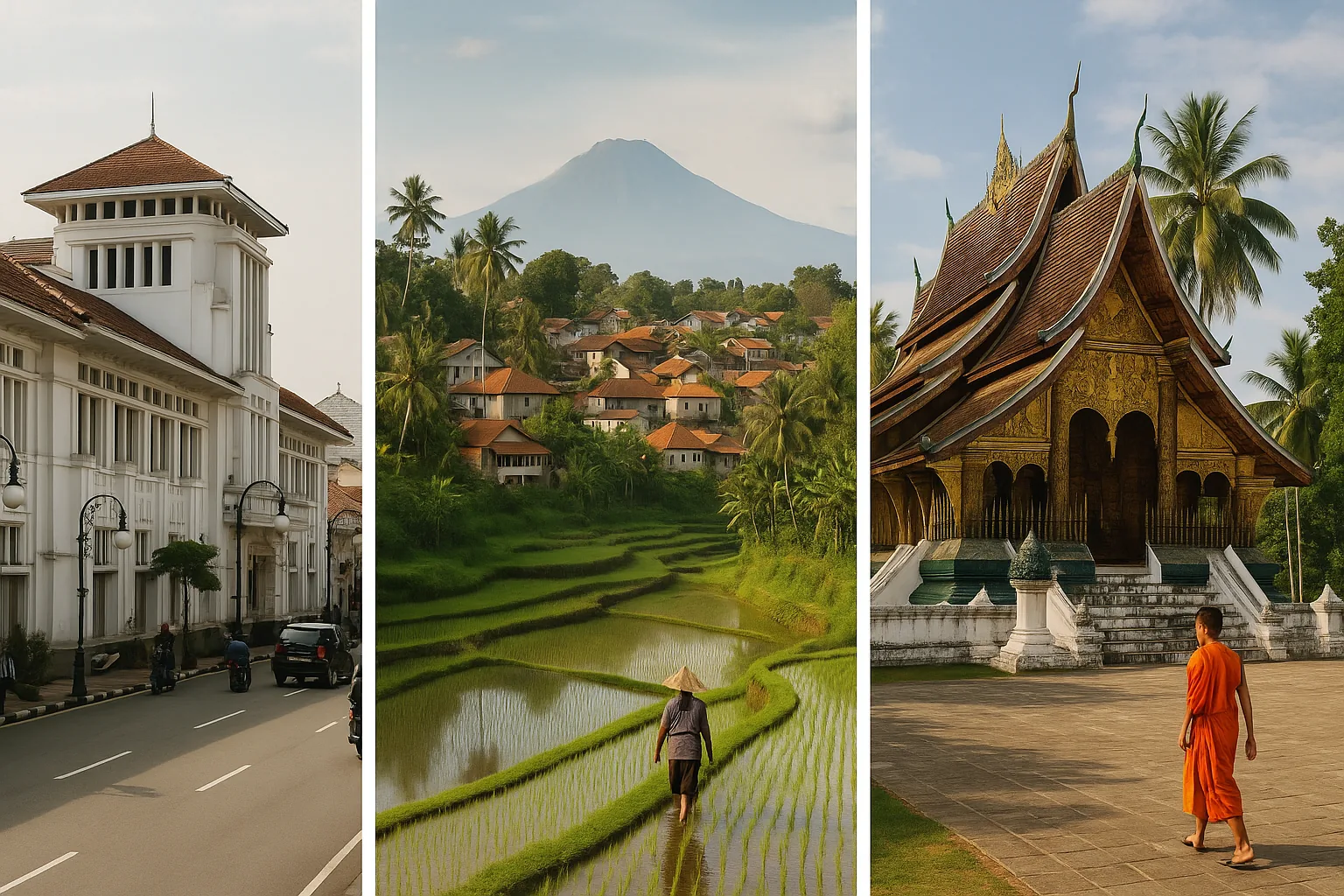
The dry season — broadly May to October — is the recommended window for volcano trekking around Malang. Trails can become slippery and dangerous during the wet season, and cloud cover can obscure the views you’ve woken up at 2am to see. If you’re planning a Bromo or Ijen trip, do your research and go prepared with layers, a good mask for the sulfur, and realistic expectations about the physical effort involved.
Luang Prabang, Laos: Spirituality, Silence, and a City Worth Slowing Down For
Luang Prabang occupies a complicated place in the world of Southeast Asian travel. It’s technically on the well-worn tourist trail — mentioned alongside Angkor Wat, Ha Long Bay, Bali, and the Thai islands as one of the region’s established stops. And yet, it still manages to feel like one of the more genuinely spiritual and contemplative destinations in the region, if you approach it with the right mindset.
It’s worth being honest here: tourism has changed Luang Prabang, and not always for the better. Some travelers find that the infrastructure built around tourism has altered the character of the city in ways that feel uncomfortable. The famous alms-giving ceremony, for example, has become a site of tourist observation that some find raises real questions about respect and cultural impact. As some travel writers have noted, the city’s place on the tourist circuit has come with trade-offs worth thinking about before you go.
👉 Read also: Southeast Asia Slow Travel: Luang Prabang, Saigon Day Trips, and Cusco Hostels for Real Backpackers
That said, Luang Prabang remains a genuinely beautiful and historically rich city. The old town sits between the Mekong and Nam Khan rivers, lined with temples, traditional Lao wooden houses, and the kind of quiet that’s hard to find in more heavily trafficked destinations. It’s widely recognized as one of Southeast Asia’s most spiritual destinations, and for good reason — the concentration of active Buddhist temples and monasteries gives the city a meditative quality that lingers.
How to Experience Luang Prabang Thoughtfully
- Wake up early and walk the old town. Before the day tours arrive, the city has a completely different atmosphere. Monks in saffron robes, mist on the river, temple bells — it’s the version of Luang Prabang that justifies the journey.
- Visit the temples with genuine curiosity. There are dozens of wats (temples) in the city. Take your time with them. Read about Theravada Buddhism before you go — context transforms what you’re seeing.
- Explore the night market. The city is known for its food and its night market, where local crafts, textiles, and street food create a genuinely lively evening atmosphere. Buy something handmade from the person who made it.
- Get out on the Mekong. A slow boat trip on the river — whether a short sunset cruise or a longer journey — gives you a perspective on the landscape and the life along the water that you simply can’t get from land.
- Respect the culture. Dress modestly when visiting temples, observe rather than photograph during religious ceremonies, and be mindful that this is a living community, not a theme park.
When to Visit Luang Prabang
The cool, dry season from roughly November through February is generally considered the most comfortable time to visit Luang Prabang. Temperatures are mild, the skies are clear, and the city feels at its most atmospheric. The wet season brings lush green landscapes and fewer tourists, which has its own appeal — but also significant rainfall that can affect travel plans. April is a particularly meaningful time culturally, as the Lao New Year (Pi Mai) brings celebrations to the streets, though it also brings larger crowds.
Making the Case for Going Off-Script
Here’s the honest truth about these three cities: none of them will give you the polished, Instagram-optimized experience that the most popular Southeast Asian destinations have perfected. And that’s the point. Bandung’s creative energy, Malang’s volcanic wilderness, and Luang Prabang’s spiritual quiet all require something from you — curiosity, patience, a willingness to figure things out as you go.
The underrated southeast asia cities that reward the most are almost always the ones that ask you to show up without a fully formed expectation. You have to be open to the version of the place that actually exists, not the one you’ve seen in a travel reel. When you do that, something shifts. You stop being a tourist moving through a destination and start being a traveler actually in a place.
These cities also tend to be more affordable than their famous counterparts, which matters when you’re traveling on a student budget or stretching a month’s savings across several weeks. Fewer tourists means less price inflation, more genuine interactions with locals, and accommodation options that haven’t been priced to match demand from package tour groups.
Practical Tips Before You Go
- Learn a few words of the local language. Even basic greetings in Indonesian or Lao go a long way. People notice the effort, and it changes the quality of your interactions immediately.
- Don’t over-plan. Leave space in your itinerary for things you haven’t anticipated. The best moments in cities like these tend to be unscheduled.
- Travel slowly. Spend at least three to five days in each city rather than rushing through. The character of a place reveals itself gradually.
- Use local transport where possible. Angkot (shared minibuses) in Bandung, becak (cycle rickshaws) in Malang, and tuk-tuks in Luang Prabang are all part of the experience — and significantly cheaper than private transfers.
- Check visa requirements well in advance. Requirements for Laos, Indonesia, and the rest of the region vary by nationality and change periodically. Verify current requirements through official government sources before booking anything.
- Pack for variable weather. Elevation means cooler temperatures in Bandung and Malang than you might expect from Indonesia. Layers are your friend.
Your Next Chapter Starts Somewhere Unexpected
The most memorable trips rarely follow the most obvious route. Bandung, Malang, and Luang Prabang represent something that’s getting harder to find in Southeast Asia: places where the experience still feels like yours. Where you’re not competing with fifty other travelers for the same viewpoint, or eating at a restaurant that exists purely because it showed up on a recommendation app. These are cities with their own rhythms, their own food, their own stories — and they’re waiting for travelers curious enough to show up and listen.
Exploring underrated southeast asia cities like these isn’t about being contrarian or avoiding popularity for its own sake. It’s about choosing depth over convenience, connection over comfort, and the version of travel that leaves you with something real. You’ll come back with stories that are genuinely yours — and that’s worth more than any highlight reel.
This article was produced with AI assistance and reviewed editorially.


Where to Stay in Southern Africa: Botswana, Namibia & Madagascar for First-Time Visitors

Southeast Asia’s Underrated Cities: Bandung, Malang, and Luang Prabang Beyond the Guidebook


