
Croatia
Where to Stay in Korcula, Croatia: Hidden Dalmatian Island Guide
Discover authentic accommodation on Korcula Island, from family-run guesthouses to waterfront stays. A quieter alternative to overcrowded Dubrovnik with genuine Dalmatian

Why Korčula Should Be Your Next Croatian Island Stop
If you’ve been scrolling through Croatia travel content and wondering where to stay in Korčula, Croatia without ending up in a tourist trap, you’re already asking the right question. Korčula (pronounced KOR-chew-lah, in case you want to sound like you’ve been here before) is the kind of place that makes you feel like you’ve discovered something the rest of the world hasn’t caught up to yet. And in a country where some islands have become almost too famous for their own good, that feeling is genuinely rare.
Sitting in the Adriatic as one of Croatia’s most beautiful Dalmatian islands, Korčula covers around 106 square miles of mountainous terrain packed with olive groves, pine forests, postcard-perfect vineyards, and clear turquoise bays. It’s Croatia’s second most populated island, yet it still manages to feel unhurried, local, and real. That’s the balance most young travelers are chasing — and Korčula delivers it.
Korčula vs. Dubrovnik: The Case for Going Quieter
Let’s be honest about Dubrovnik for a second. It’s stunning. The walls, the old town, the sea views — all of it. But it’s also one of the most visited places in Europe, and that comes with a price beyond just your wallet. Crowds in the narrow streets, long queues at every viewpoint, and a general sense that you’re sharing the experience with thousands of strangers can make it hard to feel like you’re actually connecting with a place.
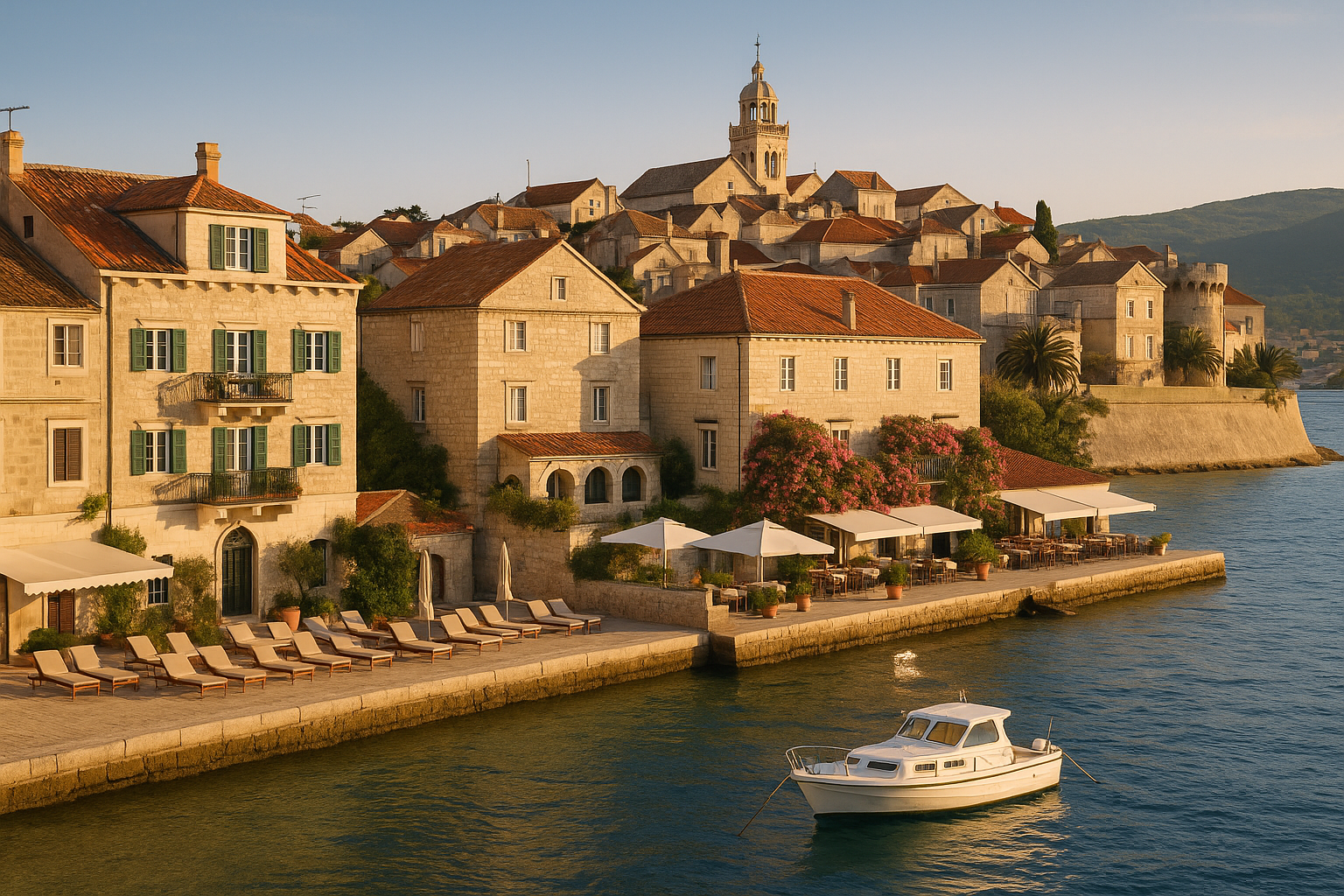
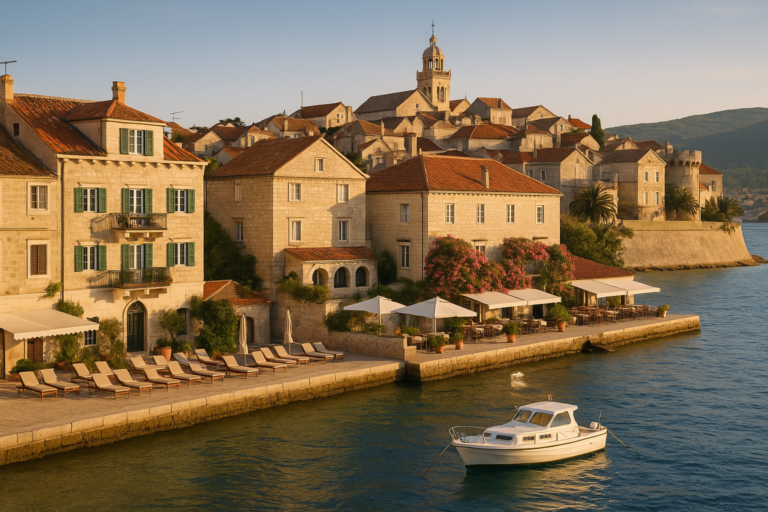
Korčula Town is often described as a miniature version of Dubrovnik — medieval stone streets, a walled old town, the same Adriatic light hitting the same golden limestone — but with a fraction of the visitors. You can actually wander. You can sit at a café table without competing for space. You can watch the sun drop into the sea from a quiet terrace and feel like the moment belongs to you.
This isn’t about dismissing Dubrovnik. It’s about knowing that the quieter version of an experience is sometimes the better one. Korčula gives you the soul of the Dalmatian coast without the overwhelm, and that’s a trade worth making.
Where to Stay in Korčula, Croatia: Your Best Base Options
Most visitors base themselves in Korčula Town, and for good reason. It’s the island’s main hub, it’s walkable, it’s beautiful, and it puts you within easy reach of everything the island has to offer. From there, day trips to beaches, villages, and vineyards are simple and satisfying.
Staying in the Old Town
If you want to wake up surrounded by medieval stone walls and step straight into the atmosphere of the island, look for accommodation inside or just beside the old town. Small guesthouses and family-run rooms are scattered throughout this area, often tucked into historic buildings that have been hosting travelers for generations. Staying here means you’re walking distance from the best restaurants, the waterfront, and the kind of evening atmosphere that makes you want to linger long after dinner.
The trade-off is that old town accommodation can fill up quickly in summer, so booking ahead is genuinely important. Prices tend to reflect the location, but compared to similar stays in Dubrovnik or Hvar, you’ll often find better value for what you’re getting. Look for family-run guesthouses rather than larger hotels — the hosts tend to know the island inside out and will point you toward spots you’d never find on your own.
Waterfront and Harbour Stays
Korčula Town’s harbour is one of those views that just doesn’t get old. Staying near the waterfront means you’re falling asleep to the sound of the Adriatic and waking up to fishing boats and morning light on the water. Several small hotels and apartments sit along or near the harbour, offering that connection to the sea that’s hard to replicate anywhere else on the island.
These stays work especially well if you’re planning to use the ferry connections for day trips to nearby islands or back to Split and Dubrovnik. Being close to the port keeps logistics easy and gives you more time for the actual exploring.
Staying Outside Korčula Town: Lumbarda and Vela Luka
If you want a quieter, more local experience, consider basing yourself in one of the island’s smaller settlements. Lumbarda, a short distance from Korčula Town, is known for its sandy beaches (a rarity on this stretch of the Dalmatian coast), its laid-back pace, and its excellent local wines. Staying here puts you in the heart of the island’s wine country, surrounded by vineyards and a community that hasn’t been reshaped entirely by tourism.
Vela Luka, on the western end of the island, is another option worth considering. It’s a working town rather than a tourist centre, which means you’ll find more authentic restaurants, local markets, and a genuine sense of everyday Croatian life. Accommodation here tends to be even more affordable, and the surrounding landscape — rolling hills, quiet bays, and pine-shaded paths — is excellent for hiking and cycling.
Getting to Korčula: Ferries, Buses, and the Journey Itself
Part of what makes Korčula feel like a discovery is the journey to get there. The island is accessible by ferry or bus from both Dubrovnik and Split, which makes it an easy and logical stop on any Dalmatian coast itinerary. The ferry crossing from the mainland is genuinely enjoyable — watching the coastline recede and the island come into view is one of those travel moments that reminds you why you chose this kind of trip.
From Split, you’re looking at a few hours depending on the route and the type of ferry. From Dubrovnik, the journey is shorter, making Korčula a natural next stop if you’re heading north along the coast. Check current timetables before you travel, as ferry schedules shift seasonally and it’s worth planning around them rather than scrambling at the last minute.
For more detailed transport information and current schedules, Adventurous Kate’s Korčula travel guide is a solid starting point with practical logistics covered in depth.
What to Do Once You’re There
Korčula isn’t a place you visit to sit still — though you’re absolutely welcome to do that too. The island rewards curiosity and rewards it well.
Explore Korčula Old Town
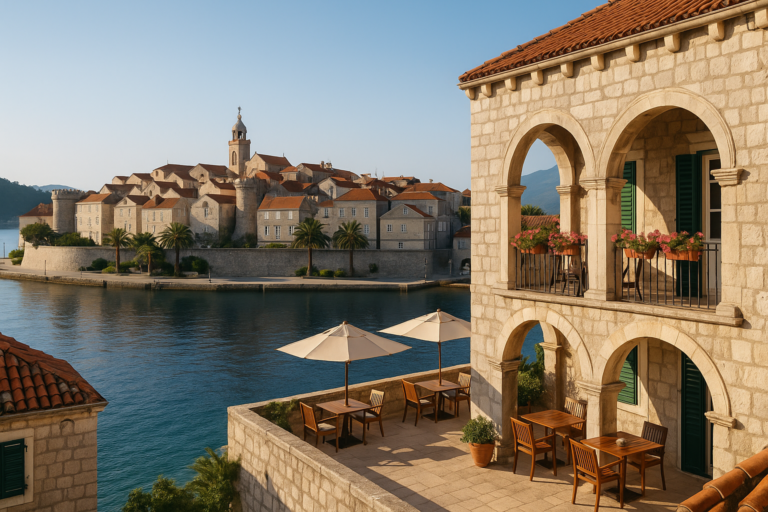
The old town is the obvious starting point, and it earns its reputation. Wander the herringbone-pattern streets (designed, it’s said, to slow the wind), discover quiet squares, and climb to any high point you can find for views over the rooftops and out to the Adriatic. Early morning is the best time — the light is soft, the streets are empty, and the whole place feels like it belongs to you.
Hike and Cycle the Interior
The mountainous interior of Korčula is genuinely underexplored by most visitors, which makes it exactly the kind of territory worth seeking out. Pine forests, olive groves, and hilltop views reward anyone willing to put in a bit of effort. Cycling routes cross the island in multiple directions, and the terrain suits everyone from casual riders to people who want a proper challenge. Renting a bike from Korčula Town is straightforward and opens up a completely different side of the island.
Hit the Beaches
Korčula’s beaches are pebbly rather than sandy for the most part, which actually makes the water cleaner and clearer than you’d find on many Mediterranean coastlines. Pupnatska Luka Beach is one of the island’s most celebrated spots — a sheltered bay with turquoise water and a peaceful atmosphere that makes it easy to lose a full afternoon there. The Skoji Islets, a small cluster of islands just off the coast, are also worth exploring by boat for snorkeling and swimming in near-pristine water.
Discover the Wines of Lumbarda
Croatia has a serious wine culture, and Korčula is one of the best places to explore it. The village of Lumbarda produces wines from local grape varieties that you genuinely won’t find anywhere else in the world. Visiting a small local winery, sitting in a vineyard, and tasting wines made by people who have been growing these grapes for generations is the kind of experience that stays with you. It’s not about being a wine expert — it’s about connecting with a place through what it produces.
Snorkel and Dive
The waters around Korčula are clear, warm (for a good chunk of the year), and full of marine life. Snorkeling is accessible from most beaches without any equipment beyond a mask and fins, and several operators on the island offer scuba diving for those who want to go deeper. The underwater landscape around the Skoji Islets is particularly rewarding.
For a broader look at the island’s activities and what makes it worth the visit, Condé Nast Traveler’s guide to Korčula covers the destination from multiple angles with well-researched detail.
When to Visit Korčula
Korčula is almost a year-round destination thanks to its generous sunshine, but the experience changes significantly depending on when you go. Summer (June through August) brings the warmest temperatures, the most active ferry connections, and the highest visitor numbers — though even at peak season, the island feels calmer than the big-name Croatian destinations. If you’re visiting in summer, book accommodation early and embrace the energy of the season.
Shoulder season — May, early June, September, and October — is genuinely excellent for younger travelers. Prices drop, crowds thin out, the sea is still warm enough to swim in, and the island settles into a rhythm that feels more authentic. You’ll meet more locals and fewer tour groups, and the hiking and cycling conditions are often better than in the height of summer heat.
Spring visits offer the island in bloom, with wildflowers across the hillsides and a freshness in the air that makes exploring the interior particularly rewarding. Even winter has its appeal if you’re after something truly off the beaten path — the old town takes on a different, quieter character, and you’ll have beaches and trails almost entirely to yourself.
Practical Tips Before You Go
- Book accommodation early in summer. The best family-run guesthouses and harbour-view rooms fill up fast, especially in July and August. Don’t leave it to chance.
- Bring cash. Smaller guesthouses, local markets, and village restaurants sometimes don’t accept cards. Having some Croatian kuna — or now euros, as Croatia joined the eurozone — keeps things smooth.
- Rent a bike or scooter. The island is large enough that walking everywhere isn’t practical, but small enough that a bike or scooter gives you real freedom to explore on your own schedule.
- Check ferry timetables before you plan day trips. Schedules vary by season and can be less frequent than you’d expect. Missing the last ferry back to the mainland is a real possibility if you’re not paying attention.
- Pack layers for evenings. Even in summer, evenings on the island can turn cool once the sun drops, especially if you’re near the water or higher up in the interior.
- Learn the pronunciation. It’s KOR-chew-lah. Locals appreciate the effort, and it’s a small thing that goes a long way in making genuine connections.
- Respect the old town. It’s a living community, not a theme park. Keep noise levels reasonable in the early morning and late evening, support local businesses over chains, and leave the place as you found it.
The Kind of Trip Korčula Gives You
There’s a version of Croatia that exists in travel brochures — polished, crowded, expensive, and somehow still beautiful despite all of it. And then there’s Korčula, which offers something closer to what most young travelers are actually looking for: a place that hasn’t been flattened by over-tourism, where the food tastes like it was made for the people who live there, where you can hike through pine forests in the morning and swim in turquoise water in the afternoon, and where the evenings feel genuinely alive rather than staged.
Knowing where to stay in Korčula, Croatia is really about knowing what kind of experience you want. Stay in the old town if you want atmosphere and convenience. Stay in Lumbarda if you want wine country and a slower pace. Stay in Vela Luka if you want to feel like a traveler rather than a tourist. All of it is the same island — mountainous, sun-soaked, and quietly extraordinary — and all of it is waiting for you to show up and explore it on your own terms. That’s the kind of trip worth planning for.
This article was produced with AI assistance and reviewed editorially.


Vietnam Uncovered: Beyond the Chaos, Into the Real Story

Beyond the Guidebook: What Hanoi Actually Feels Like


