
United Kingdom
London Walks & Hidden Gems: 8 Routes from Iconic Landmarks to Secret Spots (2026)
Discover 8 London walking routes that blend iconic landmarks with secret neighborhoods. Explore Westminster, the City, Clerkenwell, and more on foot.

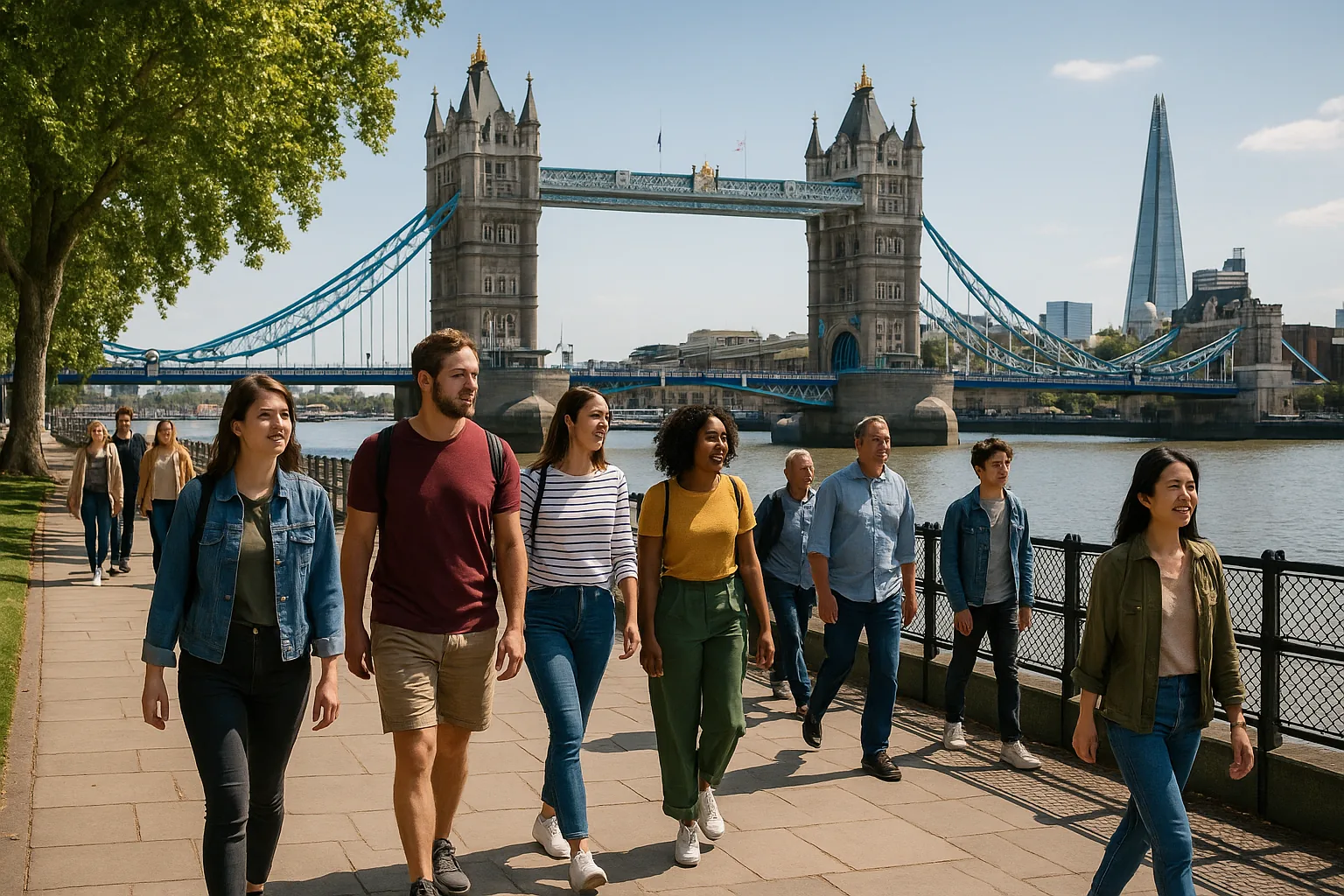
Why London Is Made for Walking
London doesn’t reveal itself from the window of a bus or the seat of a taxi. It opens up slowly, street by street, alley by alley, when you’re on foot and paying attention. The city is a layered place — centuries of history stacked beneath modern glass towers, quiet courtyards tucked behind busy high streets, murals splashed across walls you’d never find on a standard tourist map. That’s exactly why exploring london walking routes has become one of the most popular ways to experience the city, whether you’re visiting for the first time or you’ve lived here for years and still feel like there’s more to discover.
Walking here is genuinely practical too. Many of London’s most interesting areas are compact enough to cover on foot in a morning or afternoon. You save money on the Tube, you move at your own pace, and you stumble across things no app would ever suggest. So lace up something comfortable, charge your phone, and get ready to see a very different side of one of the world’s most iconic cities.
Route 1: Westminster to South Bank — The Classic Reimagined
Every visitor ends up in Westminster eventually. The Houses of Parliament, Westminster Bridge, Big Ben — these are landmarks for a reason. But instead of rushing through them, slow down. Cross the bridge on foot and take a moment to look both ways along the Thames. Early morning is genuinely magical here, before the crowds arrive and the city is still waking up.
Once you cross to the South Bank, the walk transforms completely. Head east along the riverside path and you’ll pass the Tate Modern, the Globe Theatre, and Borough Market — one of London’s oldest and most vibrant food markets. Grab a coffee, try something local, and let yourself wander. The South Bank is one of those places where the journey is the destination. The views back across the river toward St Paul’s Cathedral are some of the best in the city, and they’re completely free.
Route 2: The City of London — History Hidden in Plain Sight
The Square Mile, as it’s known, is London’s ancient heart. During the week it buzzes with finance and commerce. On weekends, it’s almost eerily quiet — and that’s exactly when it’s worth exploring. OneCity London features a range of walking trails through this area that reveal just how much history is packed into these narrow streets.
Start near St Paul’s Cathedral and head toward the Barbican, one of the most unusual architectural complexes in Europe — a brutalist residential estate that somehow feels like its own self-contained world. From there, weave through Smithfield, past the old meat market, and into the lanes around Cloth Fair, one of the oldest streets in London. You’ll find Roman walls, medieval churches, and hidden courtyards that most visitors walk straight past without noticing. This route rewards the curious.
Route 3: Farringdon to Clerkenwell — Creative London at Its Best
This is the route for anyone who wants to understand London’s creative energy. Farringdon and Clerkenwell sit just north of the City and have a long history as centers of craft, printing, and independent thinking. Today that spirit lives on in independent coffee shops, design studios, and some of the city’s best restaurants.
👉 Read also: London Beyond the Landmarks: 8 Walks from Tourist Icons to Hidden Neighborhoods (2026)
Walk through Exmouth Market, a pedestrianized street lined with food stalls and independent shops, then head toward Clerkenwell Green, a historic open space that’s been a gathering point for radicals and reformers for centuries. The area around St John’s Square contains the ruins of a medieval priory and a gate that dates back to the twelfth century. This part of London moves at a different pace, and the neighborhood routes mapped by My London Walks — which include dedicated Farringdon to Clerkenwell and Clerkenwell to Islington trails — are a great way to make sure you don’t miss anything.
Route 4: Paddington to Camden Market — North London’s Beating Heart
This route takes you through some of London’s most eclectic neighborhoods, and it’s one of the best ways to understand how the city shifts character block by block. Start at Paddington, a neighborhood that feels genuinely lived-in and multicultural, then head north through Little Venice — yes, London has its own version, complete with narrowboats and canal-side cafés.
Follow the Regent’s Canal towpath and you’ll walk one of the most scenic urban routes in the city. The canal cuts through Primrose Hill, past Regent’s Park, and eventually delivers you to Camden Market, one of London’s most famous destinations for street food, vintage clothing, and live music. The walk itself is flat, easy, and endlessly interesting. You’ll pass houseboats painted in every color, local dog walkers, and cyclists — a slice of everyday London life that feels a long way from the tourist trail.
Route 5: Tower Hill to Wapping — Along the Old Docklands
East London has changed dramatically over the past few decades, but the stretch from Tower Hill down to Wapping still carries the atmosphere of the old docklands. Start at the Tower of London, one of the city’s most iconic landmarks, then cross under the river via the Victorian-era foot tunnel at Wapping or head east along the riverbank.
Wapping itself is a fascinating neighborhood — old warehouse conversions, cobbled lanes, and riverside pubs that have been serving sailors and dockers for centuries. The Prospect of Whitby, one of London’s oldest riverside pubs, is worth a stop. As you walk, you’ll catch glimpses of Canary Wharf’s glass towers across the water, a striking visual contrast that tells the story of how this part of the city has reinvented itself. This is a route where every corner has a story, and the Thames keeps you company the whole way.
Route 6: Highgate and Hampstead — London’s Village Escape
When you need a break from the noise and density of central London, head north to Highgate and Hampstead. These hilltop neighborhoods feel like villages that somehow got absorbed into one of the world’s biggest cities, and they’ve never quite lost that quality. The streets are lined with Georgian and Victorian houses, independent bookshops, and the kind of cafés where people sit for hours with a book.

Highgate Cemetery is one of London’s genuine hidden gems — a Victorian garden cemetery that’s atmospheric, beautiful, and unlike anything else in the city. Tripadvisor lists it among London’s standout hidden attractions, and it’s easy to understand why once you’re walking among the overgrown monuments and ivy-covered tombs. From Highgate, head across the heath to Hampstead, where you can climb Parliament Hill for one of the best panoramic views of the London skyline. It’s the kind of view that makes you stop talking mid-sentence.
👉 Read also: Explore Like a Local: London Walks, Hidden Gems & Iconic Landmarks (2026)
Route 7: Leake Street and South London’s Street Art Scene
If you want to understand London’s contemporary creative culture, you need to spend time in South London. This route centers on Leake Street, a tunnel beneath Waterloo station that has become one of the city’s most celebrated street art spaces. Graffiti is legal here, which means the walls change constantly — what you see today might be completely different next week. It’s raw, colorful, and genuinely exciting.
From Leake Street, head south through Lambeth and into Brixton, a neighborhood with a rich cultural history and one of London’s most vibrant market scenes. Brixton Market and the surrounding arcades are packed with independent traders, record shops, and food stalls serving cuisine from across the Caribbean, West Africa, and beyond. This is the kind of walk that doesn’t just show you the city — it introduces you to the communities that make it what it is. Global Debauchery highlights Leake Street as one of the genuinely off-the-beaten-path experiences in London, and it absolutely belongs on your list.
Route 8: The Royal Parks and Thames Path — Green London
London has more green space than most people expect, and this route strings several of the city’s most beautiful parks together into a single long walk. Start in Hyde Park, cut through Kensington Gardens, and head south through Green Park toward St James’s Park — arguably the most beautiful of the royal parks, with its lake, pelicans, and views of Buckingham Palace.
From St James’s, make your way down to the Thames and join the Thames Path heading east. This riverside trail is one of London’s great long-distance routes, and even a short section of it rewards you with constantly changing views — from the Houses of Parliament to the South Bank arts complex to the historic bridges that span the river. 10Adventures covers this route with downloadable GPS maps, which makes it easy to follow even if you’re new to the city. It’s the kind of walk that reminds you why people have been coming to London for centuries.
Practical Tips for Walking London
What to Wear and Carry
- Comfortable, broken-in shoes are essential — London’s pavements are unforgiving over long distances.
- Layer up. London’s weather shifts quickly, and you’ll thank yourself for having a light jacket even in summer.
- A reusable water bottle saves money and keeps you going between stops.
- Download an offline map before you head out — signal can be unreliable in some areas.
- A portable charger is worth its weight when you’re navigating and photographing all day.
When to Walk
Early mornings are genuinely transformative in London. The streets are quieter, the light is better for photography, and you’ll see the city at its most peaceful. Weekends are ideal for the City of London, which empties of office workers and becomes a completely different place. Avoid central tourist areas on bank holidays if you want space to breathe.
Using Resources Wisely
There are some excellent resources available if you want more structure. London Walks offers guided unusual walks that go well beyond the standard tourist circuit, which is worth considering if you want local knowledge and storytelling built into the experience. For self-guided exploration, the range of neighborhood routes available through platforms like My London Walks gives you the flexibility to move at your own pace while still having a clear path to follow. GetYourGuide also lists hidden gems tours for those who prefer a group format with a knowledgeable guide.
Combining Routes
Several of these london walking routes connect naturally. The South Bank route flows into Tower Hill. Farringdon connects easily to the City of London. If you’re spending a full week in the city, you could realistically cover all eight routes without repeating yourself — and you’d come away with a genuinely deep understanding of how London works, feels, and lives.
London on Foot: The Only Way to Really Know It
There’s a version of London that exists only at street level, and it’s the most interesting version of all. The one with the hidden courtyards and the corner shops that have been there for fifty years. The one with the canal-side conversations and the unexpected murals. The one where you turn a corner and suddenly understand why this city has been drawing people in for centuries. The best london walking routes don’t just take you from point A to point B — they connect you to the living, breathing city underneath the landmarks. So pick a route, step outside, and see what you find. London has a way of surprising even people who think they already know it well. That’s the thing about a city this layered: there’s always another street worth exploring, another story waiting to be discovered, another reason to keep walking.
This article was produced with AI assistance and reviewed editorially.


London Walks & Hidden Gems: 8 Routes from Iconic Landmarks to Secret Spots (2026)

Beyond Capri: How to Experience Greek Islands & Italian Coastlines Without the Crowds (2026)


