
Itineraries
Thailand Planning Made Simple: 1-4 Week Itineraries & Where to Stay on Koh Lanta
Build your perfect Thailand itinerary with this modular planning guide covering 1-4 weeks, Northern routes, Southern coasts, and Koh Lanta island stays for every budget.

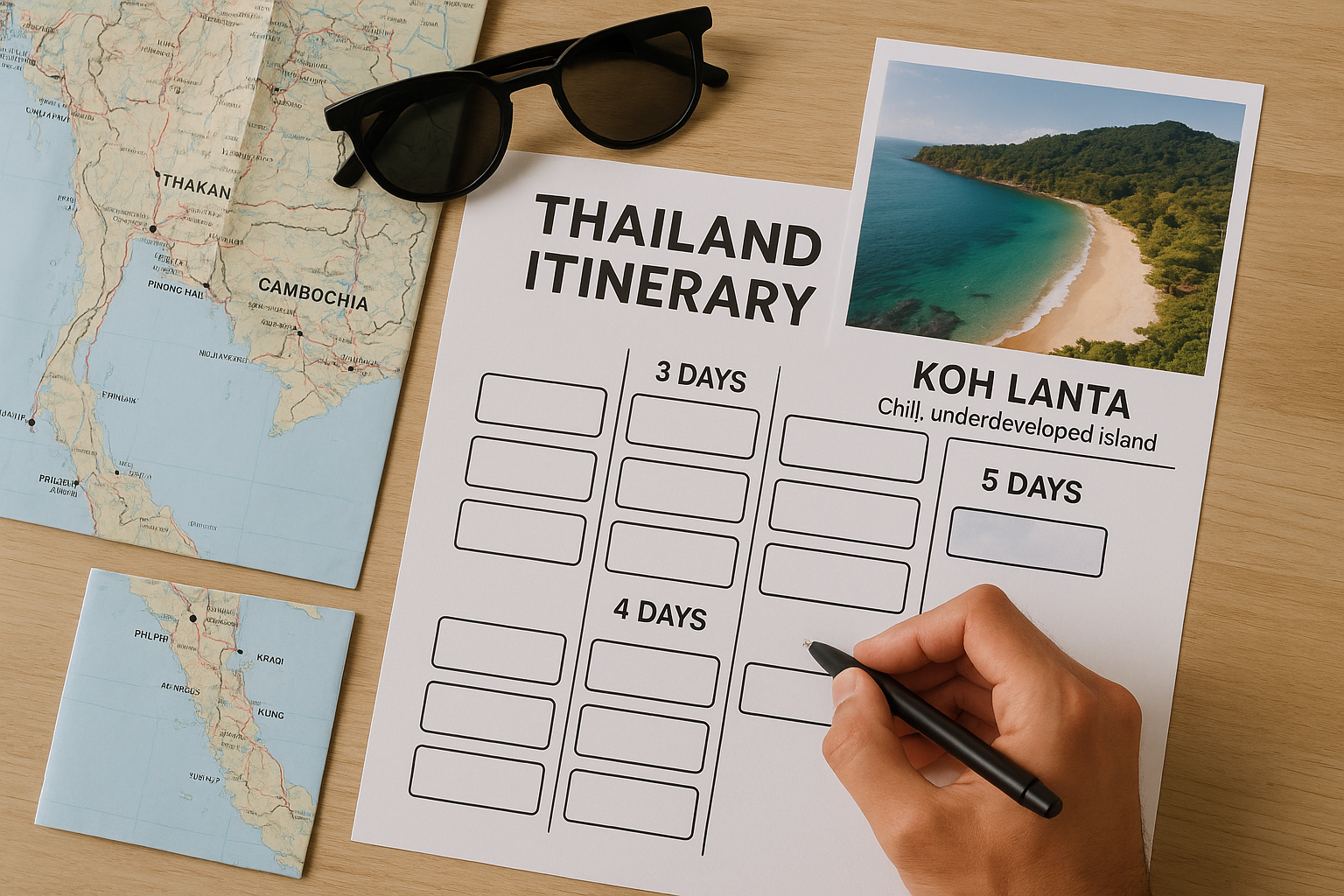
Thailand Planning Made Simple: How to Build Your Perfect Thailand Itinerary
Thailand is one of those destinations that gets under your skin fast. One week you’re eating pad thai on a plastic stool in Bangkok, the next you’re watching the sun melt into the Andaman Sea from a longtail boat. Building a solid thailand itinerary isn’t about cramming in every temple and every island — it’s about knowing what kind of trip you want and giving yourself enough time to actually feel it. Whether you’ve got one week or a full month, this guide will help you think through your options, make smart choices, and leave room for the unexpected moments that end up being your best stories.
Why Thailand Rewards Thoughtful Planning
Thailand stretches across a huge range of landscapes, cultures, and climates. Its coastline alone runs for roughly 2,000 miles, split between the Gulf of Thailand to the east and a stretch flowing into the Andaman Sea on the western side. That geography matters when you’re planning, because the two coasts have different weather patterns, different island personalities, and different vibes entirely.
The country also divides naturally into distinct regions: the north, with its mountains, ancient cities, and cooler temperatures; the center, anchored by the sprawling, electric energy of Bangkok; and the south, where the beaches and islands take over. Understanding these zones is the first step to building a trip that actually flows instead of one that leaves you exhausted on an overnight bus every other night.
In terms of timing, Thailand is a popular winter sun destination, with the islands staying wonderfully warm and dry between November and February. That’s peak season, and for good reason. But shoulder seasons — particularly April to June and September to October — can offer fewer crowds and lower prices if you’re willing to accept the occasional afternoon downpour.
The Four Building Blocks of Any Thailand Itinerary
Think of Thailand in modules. Experienced travelers and planning guides, including Indie Traveller’s modular framework, tend to break the country into four main zones: Northern Thailand, Bangkok and the Central Region, the Andaman Coast, and the Gulf Coast. You don’t have to visit all four — and honestly, trying to rush through all of them in a short trip usually means you don’t truly experience any of them.
Bangkok and the Central Region
Almost every Thailand trip starts here, and for good reason. Bangkok is one of the most dynamic cities in Southeast Asia. It’s loud, layered, and full of contrasts — gold-spired temples standing next to neon-lit street markets, rooftop bars overlooking a river where wooden ferries still carry commuters to work. Give Bangkok at least two or three days. Walk through the Grand Palace complex, lose yourself in the alleyways of Chinatown, and eat everything.
If you have a little extra time in the center, consider a day trip or overnight to Ayutthaya, the ancient former capital north of Bangkok. The ruins there are some of the most atmospheric in all of Southeast Asia, and the town is quiet enough to feel like you’ve genuinely stepped off the tourist trail.
Northern Thailand
Chiang Mai is the gateway to the north, and it earns its reputation. The old city is ringed by a moat and packed with temples, night markets, and cooking schools where you can spend a morning learning to make green curry from scratch. The surrounding mountains offer trekking, zip-lining, and visits to hill tribe villages — experiences that feel a world away from the beach resorts further south.
Further north, Chiang Rai is worth the journey. The White Temple — formally known as Wat Rong Khun — is genuinely unlike anything else you’ll see in Thailand. The town itself is smaller and calmer than Chiang Mai, which some travelers prefer. If you have three weeks or more, consider looping through both and spending a few nights in a more rural guesthouse to get a feel for northern Thai life beyond the main tourist centers.
The Andaman Coast
The Andaman side of southern Thailand is where the dramatic limestone karsts, emerald-green water, and postcard-perfect beaches live. Krabi, Railay Beach, the Phi Phi Islands, and Koh Lanta are all clustered in this region. The scenery here is genuinely stunning — towering cliffs rising straight out of the sea, hidden lagoons accessible only by kayak, and sunsets that make you forget what day it is.
The trade-off is that some of the most famous spots — particularly Phi Phi — can feel overwhelmingly crowded during peak season. That’s part of why slower, quieter islands like Koh Lanta have become increasingly appealing to travelers looking for something more relaxed.
The Gulf Coast
The Gulf side has its own character entirely. Koh Samui is the biggest and most developed island here, with a full range of resorts, restaurants, and nightlife. Koh Phangan is famous for its Full Moon Party but has a quieter, more bohemian side if you explore beyond the main beach. Koh Tao is the diving capital of the region, with some of the most affordable dive courses in the world and clear, warm water year-round.
Because the Gulf and Andaman coasts have different weather seasons, it’s worth checking which side is likely to be drier during your travel window before committing to a specific route.
Planning by Time: 1 to 4 Weeks in Thailand
How long you have shapes everything. Here’s a realistic framework for different trip lengths — not a rigid schedule, but a starting point you can adapt to your own pace.
One Week
A week in Thailand is absolutely doable, but you’ll need to make choices. Pick one region and commit to it rather than trying to cover the whole country. The most popular one-week route combines Bangkok with either a northern escape to Chiang Mai or a southern island. Bangkok to Chiang Mai is an easy domestic flight or an overnight train — both are affordable and part of the experience. Alternatively, fly straight from Bangkok to Krabi or Koh Samui and spend your week exploring the south.
Don’t underestimate travel time between places. Thailand is bigger than it looks on a map, and internal journeys — especially to islands, which often involve a flight plus a ferry — can eat up half a day easily.

Two Weeks
Two weeks is the sweet spot for many first-time visitors. You can cover Bangkok, a northern destination like Chiang Mai, and a southern island without feeling constantly rushed. A natural flow might look like: a couple of days in Bangkok, then north to Chiang Mai for three or four days, then flying south to spend the remainder of your trip island-hopping along either the Andaman or Gulf coast.
With two weeks, you also have the luxury of slowing down. Spend an extra night somewhere you love. Say yes to the day trip someone at your guesthouse recommends. That flexibility is where the real memories get made.
Three Weeks
Three weeks lets you genuinely explore both north and south without sacrificing depth for breadth. You can spend meaningful time in Bangkok, explore both Chiang Mai and Chiang Rai in the north, then head south to experience multiple islands — perhaps one busier, more social island and one quieter, more laid-back one. Koh Lanta, for example, sits in the Andaman region and offers a noticeably different pace compared to the busier spots nearby, making it a natural contrast to include in a longer southern leg.
Four Weeks
A full month in Thailand opens up everything. You can move slowly, revisit places you loved, take a Thai cooking course, do a multi-day trek in the north, get your PADI certification in Koh Tao, or simply spend an entire week reading on a beach without guilt. Four weeks also makes it worthwhile to explore lesser-visited corners — smaller towns in the north, less-developed islands in the south, or even a quick border hop into neighboring countries if the mood strikes.
The biggest risk with a month-long trip is decision fatigue. Build in a couple of anchor points — places you commit to staying for at least four or five nights — and let the rest of the trip breathe around them.
Koh Lanta: A Case Study in Choosing the Right Island
With so many islands to choose from, how do you pick? Koh Lanta is a useful example of how to think through the decision. Located in Krabi Province on the Andaman side, Koh Lanta tends to attract travelers who want beaches without the party scene, and nature without the queues. It’s big enough to have good infrastructure — decent restaurants, comfortable guesthouses, motorbike rentals — but calm enough that you can find a stretch of beach to yourself if you explore beyond the main tourist strip.
The island has a long western coastline with several distinct beaches, each with its own personality. The northern beaches are more developed and social; the further south you go, the quieter and more remote things become. Koh Lanta Old Town, on the eastern side of the island, is a genuinely charming place — a stilted fishing village with wooden shophouses, local cafés, and a slow pace that feels authentically Thai rather than built for tourists.
For wildlife, the southern tip of the island is home to a national park where you can hike through jungle to secluded coves and spot monitor lizards along the trail. It’s not dramatic adventure — it’s the kind of quiet exploration that reminds you why you came traveling in the first place.
Accommodation Strategies: Finding Your Base
Thailand has accommodation for every budget, and the range is genuinely impressive. In Bangkok, you can find clean, social hostels in the Khao San Road area or in the trendier Ari and Silom neighborhoods for a fraction of what you’d pay in most European cities. Guesthouses and boutique hotels in the mid-range offer excellent value, often including breakfast and rooftop pools that would cost a fortune elsewhere.
On the islands, the accommodation landscape shifts depending on how developed the island is. Busier spots tend to have a full spectrum from party hostels to luxury resorts. Quieter islands often lean more toward family-run bungalow operations — simple, charming, and often right on the beach. These bungalow-style places are some of the most memorable places to stay in all of Thailand. Waking up twenty steps from the water, with a hammock on your porch and the sound of waves as your alarm clock, is an experience that doesn’t require spending a lot of money.
In the north, Chiang Mai has a thriving hostel scene centered around the old city, with plenty of affordable guesthouses tucked inside the moat area. The city is compact enough to walk most places, which makes staying central genuinely practical rather than just convenient.
A few general principles worth keeping in mind: book ahead for the first and last nights of your trip, especially during peak season. For nights in the middle, staying flexible often leads to better deals and more spontaneous decisions. Apps and booking platforms make it easy to find something last-minute in most Thai destinations, though the most popular spots on the most popular islands can genuinely sell out during November to February.
Practical Notes Before You Go
- Visa: Many nationalities receive a visa exemption on arrival in Thailand, but the rules change periodically — always check the current requirements for your passport before you travel.
- Getting around: Domestic flights are affordable and save significant time on long routes. Overnight trains between Bangkok and Chiang Mai are a classic experience. For islands, ferries and speedboats are the norm, and schedules vary by season.
- Money: Thailand is a cash-heavy country in many places, particularly on smaller islands and at local markets. ATMs are widely available but often charge withdrawal fees, so plan accordingly.
- Respect: Dress modestly when visiting temples — shoulders and knees covered. Remove your shoes before entering. These aren’t just tourist rules; they reflect genuine cultural values, and locals notice and appreciate when visitors make the effort.
- Sim cards: Affordable local SIM cards are available at the airport and in convenience stores throughout the country. Getting one on arrival makes navigation, translation, and staying connected effortless.
Making Your Thailand Itinerary Your Own
The best Thailand itinerary isn’t the one that hits the most famous spots — it’s the one that matches your pace, your interests, and the kind of traveler you want to be. Some people come to Thailand and never want to leave the north. Others fall so deeply in love with a particular island that they extend their stay by a week and cancel the rest of their plans. Both are valid. Both are the point.
Use the frameworks in this guide as a starting point, not a rulebook. Talk to other travelers when you arrive — the hostel common room, the guesthouse breakfast table, the ferry deck — because the best recommendations always come from people who were just where you’re heading. Thailand rewards curiosity, generosity, and a willingness to slow down. Give it that, and it’ll give you back more than you planned for.
Start mapping out your route, pack lighter than you think you need to, and trust that the trip will find its own shape once you’re there. Your Thailand story is waiting — you just have to show up and let it begin.
This article was produced with AI assistance and reviewed editorially.


City Guides for Young Travelers: Buenos Aires, Quito, and Trujillo (Culture, Food & Adventure)

Where to Stay in Southern Africa: Botswana, Namibia & Madagascar for First-Time Visitors


