
Europe
Barcelona & London: Urban Exploration for Young Travelers (2025–2026 Local Guides)
Discover the best Barcelona London travel guide for young travelers. Explore local cafes, cocktail bars, walking routes, and neighborhoods beyond tourist crowds.

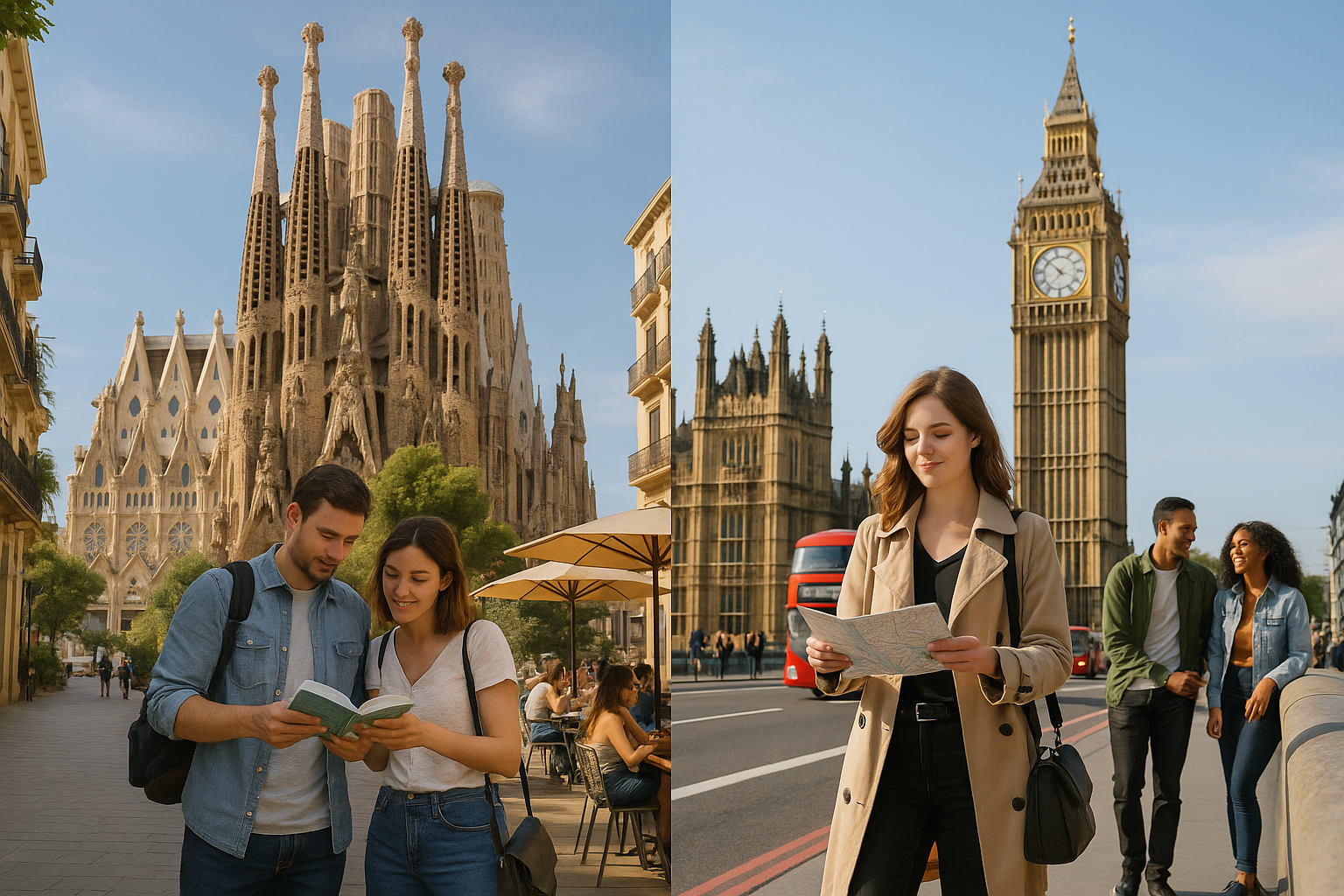
Your Barcelona & London Travel Guide: Two Cities, Endless Stories
If you’re putting together a Barcelona London travel guide in your head — flipping between tapas bars and pub crawls, Gothic Quarter alleyways and East London street art — you’re already thinking about two of the most electric cities in Europe. Barcelona and London are wildly different from each other, but they share one thing: both reward the traveler who goes beyond the obvious. This guide is built for exactly that. Whether you’re doing both cities in one trip or diving deep into just one, here’s how to experience them the way people who actually live there do.
Why Barcelona and London Make the Perfect Pairing
On paper, these cities shouldn’t feel like natural companions. One is sun-soaked, loud, and runs on a schedule that starts at midnight. The other is grey, layered, and fueled by flat whites and quiet ambition. But together, they cover almost every dimension of what makes European travel so compelling.
Barcelona gives you the Mediterranean — the architecture, the beach culture, the food markets, the late-night energy that doesn’t feel forced. London gives you something harder to name: a city that’s constantly reinventing itself while somehow staying deeply rooted in its own identity. Moving between the two, even on a short trip, gives you a genuine sense of contrast that makes both cities more vivid.
If you want a structured way to do both, Contiki’s London to Barcelona Quest covers eight days across three countries and nine cities — a solid starting point if you want the framework before you start layering in your own discoveries. But this guide is about what happens when you step off the itinerary.
Barcelona: How to Actually Experience the City Like a Local
Start in the Neighborhoods, Not the Landmarks
Sagrada Família and Park Güell are worth seeing — genuinely. The architecture is unlike anything else on the planet, and you’d be doing yourself a disservice by skipping them entirely. But if those are the only things you see, you’ve missed the city. Book your tickets in advance (the queues without them are brutal), go early in the morning, and then spend the rest of your time in the neighborhoods.
El Born is where Barcelona’s creative energy lives. It’s dense with independent coffee shops, vintage stores, and small galleries tucked into medieval streets. Grab a coffee at a place with no English menu and no Instagram sign above the door — those are almost always the ones worth finding. Gràcia, just north of the old city, has a village-within-a-city feel. Its plazas fill up in the evening with locals who pull chairs out and stay for hours. That’s not a tourist activity. That’s just what people do there.
Poblenou is the neighborhood that feels most alive right now. Once an industrial district, it’s become a hub for studios, co-working spaces, and a genuinely interesting food and drink scene. It’s also far enough from the Ramblas that the crowds thin out almost completely.
Coffee Culture and Where to Find It
Barcelona’s café scene has transformed significantly over the past several years. Specialty coffee has arrived in a serious way, and you’ll find roasters and third-wave cafés scattered through El Born, Gràcia, and Eixample. Look for places that source single-origin beans and take their espresso seriously — they tend to also have the best atmosphere for spending a slow morning.
The local habit is still a cortado or a café amb llet, taken quickly at the bar. If you want to blend in, do it that way at least once. But the sit-down specialty cafés are where you’ll meet other travelers worth knowing and locals who work remotely and actually want to talk.
A good barcelona london travel guide will tell you that café culture in these two cities is almost opposite — Barcelona is fast and social at the bar; London is slow, seated, and often solitary. Both are worth experiencing on their own terms.
The Food Scene Beyond Paella
Paella exists. It’s fine. It’s also rarely what locals eat on a Tuesday. The real food culture in Barcelona is built around the market, the pintxo bar, and the long, unhurried lunch.
La Boqueria on the Ramblas is famous for a reason, but it’s also extremely touristy. Mercat de Santa Caterina in El Born and Mercat de l’Abaceria in Gràcia are where you’ll find locals actually shopping. Walk through them in the morning, pick up something simple — cheese, fruit, a slice of tortilla española — and eat it on a bench nearby. That’s a Barcelona breakfast.
For dinner, eat late. Restaurants that open at 8 pm are still essentially empty until 9:30 or 10. Showing up at 7 pm marks you immediately as a tourist. If you can push your hunger back, you’ll find a completely different atmosphere — noisier, more local, more alive.
Cocktail Bars and the Nightlife Rhythm
Barcelona’s cocktail scene is genuinely impressive. The city has a long history with vermouth — vermut is practically a cultural institution, consumed in the early afternoon as a pre-lunch ritual — and that tradition has fed into a broader appreciation for well-made drinks.
The Raval neighborhood has a cluster of bars that stay interesting without being overrun. El Born has some of the most beautifully designed small bars in Europe — places where the interior is part of the experience and the bartenders actually know what they’re doing. Avoid the Ramblas bar strip entirely. The drinks are overpriced, the atmosphere is manufactured, and you’ll spend the whole time next to people who are also wondering why they’re there.
Pre-drinks (or pre-pre-drinks, really) start around midnight. Clubs don’t fill up until 2 am. If you’re not used to that rhythm, give yourself a night to adjust before committing to a full evening out.
London: A City That Reveals Itself Slowly
Walk More Than You Think You Need To
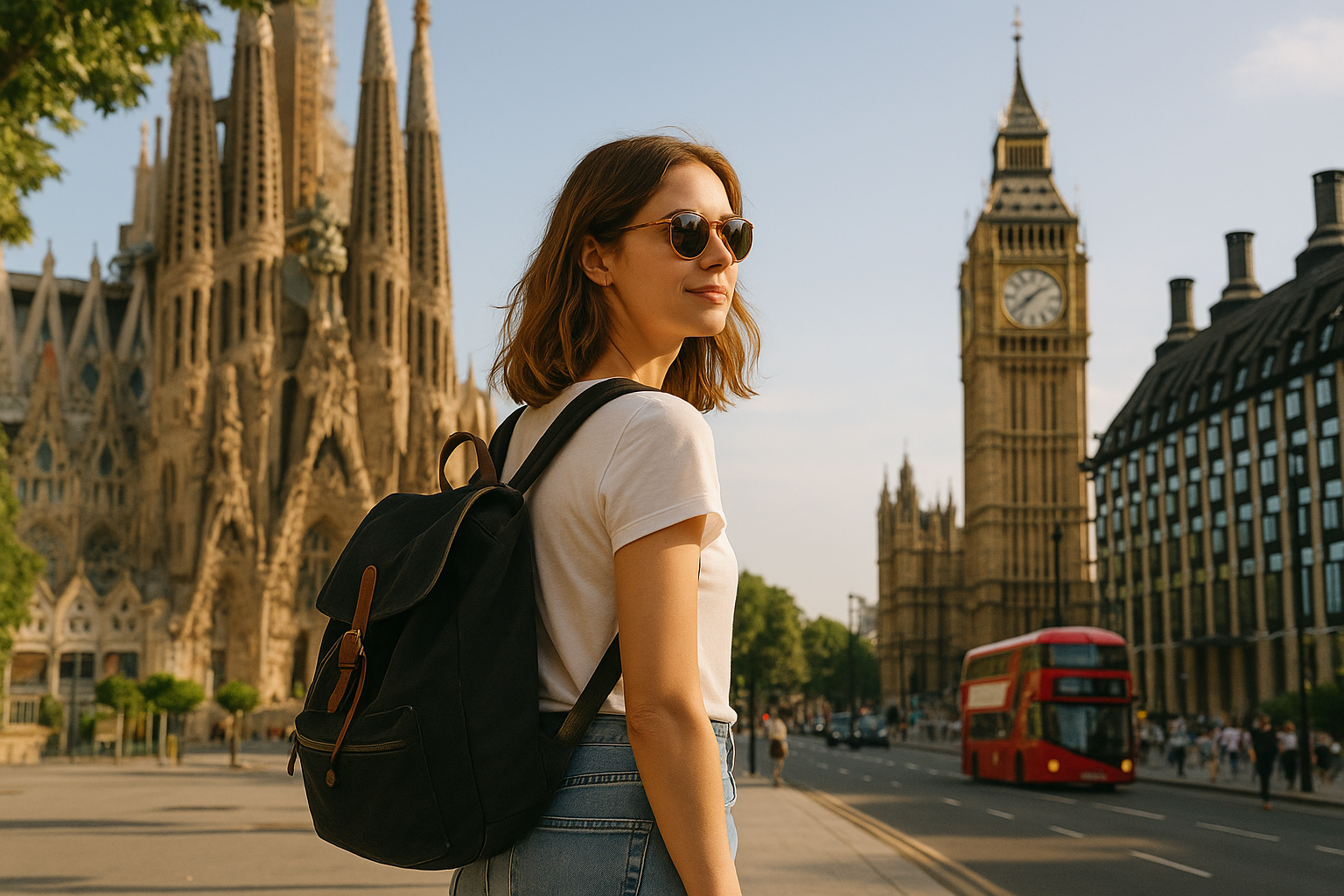
London’s greatest secret is that it’s best explored on foot. The Tube is efficient, but it skips everything interesting. The distance between Shoreditch and the City of London is about twenty minutes on foot, and that walk takes you through layers of history, architecture, and street life that no underground journey can replicate.
Some of the most rewarding walking routes in the city aren’t marked on any tourist map. The South Bank walk from London Bridge to Tate Modern and beyond gives you the river, the skyline, the Tate’s rotating exhibitions, and a string of independent food stalls and bookshops. The Regent’s Canal towpath from King’s Cross to Broadway Market in Hackney is one of the most unexpectedly peaceful walks in the city — narrowboats, herons, and a slow pace that feels completely disconnected from the city around it.
Hampstead Heath is worth an entire afternoon. It’s vast, slightly wild, and offers views of the London skyline from Parliament Hill that most visitors never find because they assume it’s too far out. It isn’t. And on a clear day, standing up there with the whole city spread out below you, it’s one of those moments you’ll still be thinking about long after you’ve gone home.
Neighborhoods Worth Your Time
Shoreditch and Dalston in East London are the obvious starting points for anyone interested in street art, independent music venues, and a food scene that’s constantly evolving. They’re well-known, but they’re well-known for good reasons. The street art changes regularly, the markets are genuinely excellent, and the energy on a Friday evening is hard to match anywhere in Europe.
Brixton in South London has a cultural depth that rewards slower exploration. The market is a real market — not a tourist market — with independent traders, Caribbean food stalls, and a community feel that’s been there for decades. The music scene here is legendary, and the live venues are some of the best in the city.
Peckham has become one of the most interesting neighborhoods in London over the past few years. The rooftop bar scene, the independent galleries, and the multicultural food options make it worth an afternoon even if you’re only in London for a few days. It’s the kind of place that feels genuinely alive rather than performing for visitors.
Coffee, Pubs, and Eating Well Without Spending Everything
London’s coffee scene is world-class. The city has been at the center of the specialty coffee movement for years, and you’ll find outstanding roasters and cafés in almost every neighborhood worth visiting. Avoid the chain coffee shops — not because they’re bad, but because the independent alternatives are so much better and usually not significantly more expensive.
The pub is a cultural institution, not just a place to drink. A good London pub — one that’s been there for decades, with worn wooden floors and a proper beer garden — is a social space in the way that a café is a social space in Barcelona. Sit at the bar, order a pint of something local, and stay for a while. You’ll end up in conversations you didn’t plan on having.
For food, London’s diversity is its greatest asset. Borough Market near London Bridge is a destination in itself — the quality of the produce and the prepared food is exceptional. But for everyday eating, the city’s neighborhoods offer everything from outstanding Vietnamese food in Hackney to West African cooking in Brixton to some of the best Japanese food outside Japan in the West End. Eating well in London doesn’t require spending a lot of money. It requires knowing where to look.
Practical Tips for Doing Both Cities
Getting Between Barcelona and London
Flying is the most common option, and budget airlines make the route affordable if you book with enough lead time. The flight is roughly two hours. If you’re doing a wider European trip, the train and bus routes through France add time but give you more of the journey itself — which, depending on your travel style, might be exactly what you want.
If you’re newer to independent travel and want some structure before going fully solo, Travel for Teens’ Europe for Older Teens program covers both London and Barcelona alongside Paris and the French Riviera — a good way to get comfortable with the cities before returning on your own terms.
Timing and Crowds
Both cities are busy year-round, but Barcelona in July and August is genuinely overwhelming — hot, crowded, and expensive. The shoulder seasons (April to early June, September to October) give you better weather, smaller crowds, and a city that feels more like itself. London is less affected by seasonal tourism but tends to be most vibrant in late spring and early autumn when the light is good and the city is outdoors.
In both cities, mornings are your best friend. The streets that feel impossible to navigate at noon are peaceful and photogenic at 8 am. The markets are fresher, the cafés are quieter, and you get the feeling of having the city to yourself — which, in two of Europe’s most visited destinations, is genuinely rare.
What to Actually Pack
Comfortable shoes are non-negotiable. Both cities are walking cities, and you will cover more ground than you expect. A light layer for London’s unpredictable weather and sun protection for Barcelona’s summer heat cover most scenarios. Pack light enough that you can move easily between neighborhoods without going back to your accommodation.
The Mindset That Makes Both Cities Worth It
The best version of any city is the one you find by slowing down. It’s the café you walked past three times before finally going in. It’s the neighborhood you ended up in because you missed a turn. It’s the conversation you had with someone at a bar who told you about a place that wasn’t in any guide.
This barcelona london travel guide can give you a framework, but the actual experience is built in the gaps — the unplanned hours, the wrong turns, the moments when you put your phone away and just pay attention to where you are. Both Barcelona and London are cities that reward curiosity. The more genuinely curious you are, the more they give back.
Go with a rough plan. Stay open to abandoning it. Come back with stories that are actually yours.
This article was produced with AI assistance and reviewed editorially.


City Guides for Young Travelers: Buenos Aires, Quito, and Trujillo (Culture, Food & Adventure)

Where to Stay in Southern Africa: Botswana, Namibia & Madagascar for First-Time Visitors


