
Greece
Milos, Greece: 14 Best Beaches, Caves, and Hidden Gems Beyond the Tourist Trail (2026)
Discover Milos Greece beaches beyond the crowds. Explore 14 stunning coastal spots, sea caves, and secluded coves with insider tips for authentic island travel.

Why Milos Should Be on Every Young Traveler’s Radar Right Now
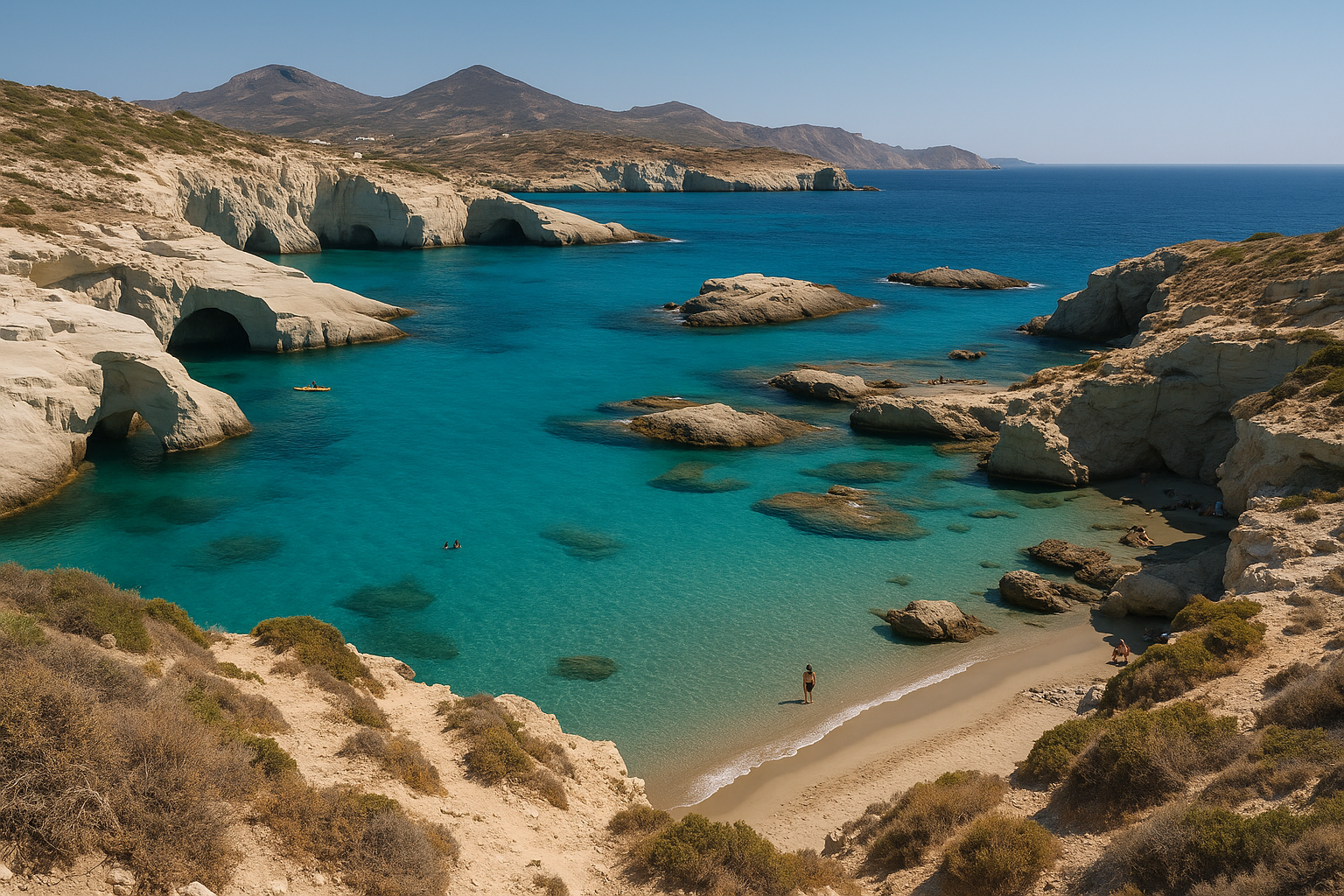
If you’ve been scrolling through travel content lately, you’ve probably seen those jaw-dropping shots of multicolored cliffs dropping into impossibly blue water. That’s Milos — and it looks even better in person. The Milos, Greece beaches scene is one of the most diverse and genuinely stunning in the entire Mediterranean, yet the island still feels a world away from the crowds that swamp Santorini and Mykonos every summer. That’s exactly why it deserves your attention.
Milos is a volcanic island in the Aegean Sea, sitting at the southwestern edge of the Cyclades group, just north of the Sea of Crete. Its volcanic origins are written all over the landscape: in the rust-red and ochre cliffs, the steaming coastal vents, the strange rock formations that look like they belong on another planet. With more than 70 sand and pebble beaches scattered around its coastline, you could spend two weeks here and never visit the same spot twice. And the island is still small enough that it never feels overwhelming.
This guide goes beyond the obvious. Yes, we’ll talk about the famous spots — because some things are famous for a reason — but we’ll also dig into the hidden corners, the local villages, the food experiences, and the practical details that actually make a trip work. Consider this your honest, experience-first introduction to one of Greece’s most compelling islands.
The Beaches: What Makes Milos Different
Most Greek islands have beautiful beaches. Milos has beautiful beaches that look like they were designed by a geologist with a dramatic flair. The volcanic rock creates formations you won’t find anywhere else — sea caves carved into white cliffs, coves hidden behind towering columns of stone, and water that shifts from turquoise to deep cobalt depending on the depth and the light.
Papafragas: Where the Sea Meets the Rock
Papafragas is one of those places that stops you mid-sentence. It’s not a beach in the traditional sense — it’s a series of narrow sea inlets carved into white volcanic rock, creating natural swimming pools that feel almost theatrical. You climb down through a gap in the cliffs and suddenly you’re surrounded by towering white walls with the Aegean stretching out in front of you. The light bounces off the water in a way that makes everything glow.
Go early in the morning if you can. The crowds thin out, the water is calmer, and the whole place feels like it belongs to you. Bring water shoes — the rocks can be sharp — and don’t rush. This is a spot worth sitting with for a while.
Tsigrado: The Beach You Have to Earn
Tsigrado is the kind of beach that rewards effort. Getting down to it involves a rope and ladder descent through a narrow crevice in the cliffs — which sounds intimidating but is genuinely manageable if you’re reasonably comfortable with heights. What waits at the bottom is a sheltered sandy cove with calm, crystal-clear water and almost no one else around.
Because the access is slightly unconventional, Tsigrado naturally filters out the casual day-trippers. The people you meet here tend to be the kind who actually appreciate what they’ve found. Pack a lunch, bring more water than you think you need, and plan to stay for a few hours.
Gerontas: Quiet, Remote, Worth It
On the southern coast, Gerontas offers a different kind of Milos experience. It’s remote enough that you’ll need your own transport to get there — a scooter or rental car works well — and the road in is rough in places. But the beach itself is wide, peaceful, and backed by striking colored cliffs. You might arrive to find only a handful of other people there, even in the middle of summer.
This is the kind of place where you realize what Milos is really about. Not Instagram moments (though those happen naturally), but the feeling of being genuinely somewhere — present, unhurried, away from the noise.
The Rest of the Coastline: Keep Exploring
With more than 70 beaches on the island, the honest advice is simple: rent a boat or a scooter, pick a direction, and start exploring. Some of the best spots on Milos don’t have names on maps. You’ll round a corner, see a flash of turquoise through the rocks, and find yourself scrambling down to a cove that feels entirely undiscovered. That sense of spontaneous discovery is part of what makes the Milos, Greece beaches experience so memorable.
- Rent a scooter or ATV for flexibility — some beaches are only reachable by rough track
- Boat rentals (with or without a skipper) let you reach sea caves and coves inaccessible by land
- Early mornings and late afternoons offer the best light and fewer people
- Always bring more water than you think you’ll need — shade can be scarce
Kleftiko: The Sea Cave Experience You Won’t Forget
If there’s one experience that defines Milos for most travelers, it’s Kleftiko. Located on the southwestern coast, this cluster of dramatic white rock formations and sea caves is only accessible by boat — which makes it feel genuinely remote even when it’s busy. The caves themselves are large enough to swim through, and the water inside shifts between shades of green and blue depending on the angle of the light.
The name translates roughly to “thieves’ hideout,” and the legend is that pirates once used these caves as shelter. Whether or not that’s true, the atmosphere makes it easy to believe. You float through narrow passages in the rock, emerge into open water framed by towering white cliffs, and feel the particular kind of awe that only geography can produce.
Day boat trips from the main port of Adamas are the most common way to visit. These typically combine Kleftiko with several other coastal stops, giving you a full day on the water. If you want more flexibility, smaller private boat rentals from Pollonia or Adamas let you linger longer and set your own pace. Either way, this is one of those experiences where the journey — the open sea, the wind, the stops along the way — is as good as the destination itself.
For a broader look at boat-based exploration around the Greek islands, Wikivoyage’s Milos guide offers useful practical orientation for planning your time on the water.
Beyond the Beaches: Villages, History, and Hidden Gems
Plaka: The Hilltop Capital
Milos’s capital sits high on a hill above the island, and the walk up through its narrow whitewashed streets is one of the best things you can do here. The Cycladic architecture is classic — blue doors, bougainvillea spilling over walls, cats sleeping in doorways — but Plaka has a lived-in quality that feels genuinely local rather than curated for tourists.
From the Venetian castle at the top, the view stretches across the whole bay. At sunset, this spot becomes something special. The light turns golden, the sea goes dark, and the islands in the distance dissolve into silhouette. It’s the kind of view that makes you stop talking and just look.
Pollonia: The Laid-Back Village on the Northeast Coast
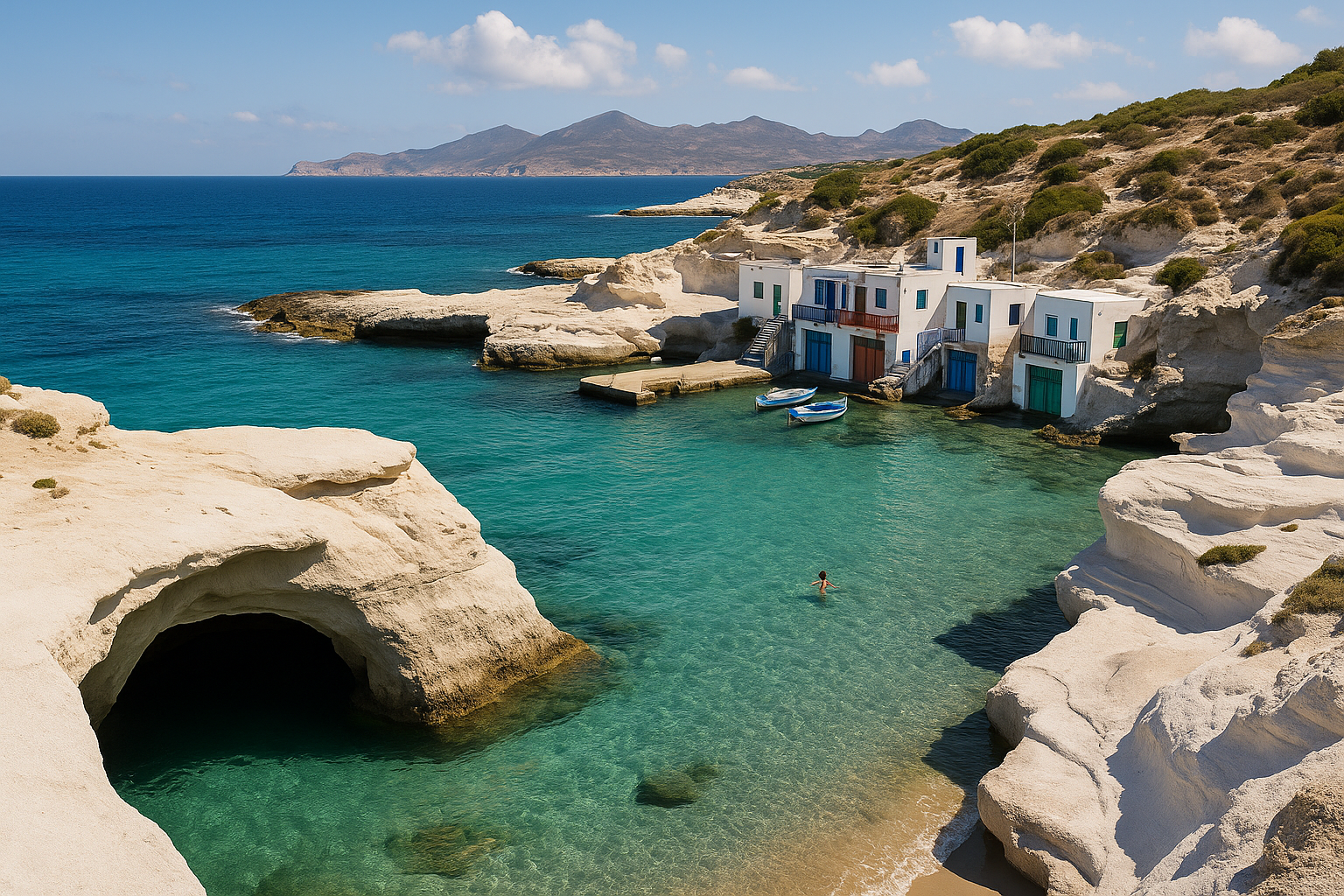
Pollonia is smaller and quieter than Adamas, with a fishing harbor, a handful of tavernas, and a genuinely relaxed atmosphere. It’s also the departure point for the short ferry crossing to Kimolos, the neighboring island that takes about 20 minutes to reach and offers yet another layer of Greek island life if you want a day trip with almost no other tourists.
Near Pollonia, you’ll also find one of the island’s more unusual attractions: a Cave Winery where you can taste local wine inside a natural cave. It’s exactly as atmospheric as it sounds. The combination of cool air, stone walls, and decent local wine makes for a memorable afternoon stop — and a story worth telling later.
The Mining History: Thiorichio and Beyond
Milos has a long industrial history that most visitors overlook entirely. The island’s volcanic geology made it rich in minerals, and the old sulfur mines of Thiorichio are a striking reminder of that past. The rusting structures and ochre-stained landscape have a strange, melancholy beauty — like a postindustrial ghost town set against the Aegean.
It’s not a conventional tourist attraction, but that’s part of the point. Milos has layers beyond its beaches, and the mining history is one of them. Walking through the remnants of that industry gives you a different perspective on the island — one that connects it to something older and more complex than sun and sea.
Profitis Ilias: The View from the Top
For the best panoramic view of Milos, head to Profitis Ilias, the island’s highest point. From the summit, you get a full 360-degree perspective over the entire island — the bays, the villages, the coastline, and on a clear day, neighboring islands scattered across the Aegean. It’s a relatively straightforward hike, and the payoff is worth every step.
Go at sunrise if you’re an early riser. The light is extraordinary, the air is cool, and you’ll almost certainly have the summit to yourself. It’s one of those quiet, uncrowded moments that travel memories are actually made of.
The Venus de Milo Connection
Milos has a claim to art history that most people don’t connect to the island until they arrive: the Venus de Milo, the famous ancient statue of Aphrodite now housed in the Louvre in Paris, was unearthed here in 1820 by a farmer working in a field. The island’s archaeological museum in Plaka holds replicas and artifacts that tell the story of this discovery and the broader ancient history of Milos.
It’s a fascinating piece of context for the island. Standing in that museum, looking at the replica of one of the world’s most recognized sculptures and knowing it came from this small volcanic island in the Aegean, adds a dimension to Milos that the beaches alone don’t provide.
Food, Drink, and Eating Like a Local
Greek island food is always good. On Milos, it’s particularly good. The island has its own culinary traditions, and the freshest fish you’ll eat anywhere tends to come from small harbourside tavernas where the catch of the day is written on a chalkboard and the owner will tell you exactly where it came from.
Look for places away from the main tourist strips. The tavernas that don’t have English-language signs out front and don’t push laminated menus at passing tourists are usually the ones worth sitting down at. Order whatever the kitchen recommends, share dishes, and don’t rush. A long lunch with local wine and good company is one of the authentic pleasures of Greek island life, and Milos does it well.
Local specialties to look for include pitarakia (small fried cheese pies), fresh grilled octopus, and the island’s own style of cured fish. Pair any of it with a glass of local white wine and you have a meal worth building an afternoon around.
Getting to Milos and Getting Around
From Athens, you have two main options: ferry or flight. Regular ferry services run from Piraeus (Athens’s main port), with journey times varying depending on the type of vessel — high-speed ferries are significantly faster than conventional ones. It’s worth checking current schedules and booking ahead, especially in summer when routes fill up quickly. The ferry crossing itself is a pleasant experience: open deck, sea air, and the gradual emergence of the Cyclades on the horizon.
Flights from Athens to Milos are also available and take under an hour, which makes sense if your time is limited. The small airport is straightforward to navigate.
Once on the island, a rental scooter or small car gives you the most freedom. Public buses connect the main villages and some beach areas, but the island’s more remote spots — including some of the best Milos, Greece beaches — require your own transport. Boat rentals open up the coastline in a completely different way and are well worth considering for at least one day of your trip.
For current ferry schedules and booking, TripAdvisor’s Milos travel hub is a useful starting point for orientation and traveler reviews.
When to Go: Timing Your Trip Right
Milos is at its most accessible and most social from late spring through early autumn. The shoulder months — roughly late April through June, and September into October — offer warm weather, calmer seas, and noticeably fewer crowds than the peak July and August window. If you’re traveling on a budget and want the island to feel more like a discovery than a destination, those shoulder periods are the sweet spot.
July and August are busy, but Milos handles the summer influx better than many Greek islands simply because of its size and the sheer number of beaches. Even in peak season, you can find quiet coves if you’re willing to walk a little further or get on the water.
Winter on Milos is quiet to the point of being almost empty — many businesses close, and the island settles into its off-season rhythm. For travelers who want a genuinely local, unhurried experience and don’t mind cooler temperatures, this can actually be a fascinating time to visit.
Practical Tips Before You Go
- Book accommodation early for summer visits — the island is small and good places fill up fast
- Bring cash — smaller tavernas and beach vendors often don’t take cards
- A dry bag is worth packing if you’re planning boat trips or cave swims
- Respect the environment — some beaches have sensitive ecosystems, and the volcanic landscape is fragile
- Learn a few words of Greek — locals genuinely appreciate the effort, even if your pronunciation is rough
- Don’t over-schedule — some of the best experiences on Milos happen when you leave the afternoon open
The Real Reason to Go to Milos
There’s something about Milos that resists easy description. It’s not just the beaches, though the Milos, Greece beaches are genuinely among the most varied and visually striking in the Mediterranean. It’s not just the history, though the island carries centuries of it in its soil and its stones. It’s the combination: the volcanic landscape that makes every view feel slightly surreal, the local life that continues quietly alongside the tourism, the sense that you’ve found somewhere that hasn’t been entirely smoothed out and packaged for consumption.
You’ll swim through sea caves and eat grilled fish at a table ten meters from the water. You’ll climb to a hilltop at sunset and feel the particular satisfaction of having earned the view. You’ll take a wrong turn on a coastal track and end up at a beach with no name and no one else on it. And somewhere in the middle of all that, you’ll stop thinking about where you’re going next and just be where you are.
That’s what Milos does. It slows you down in the best possible way. And it’s one of those places you’ll still be thinking about long after the tan has faded and the photos have been filed away. Start planning — your next story is waiting for you on a small volcanic island at the edge of the Cyclades.
This article was produced with AI assistance and reviewed editorially.


City Guides for Young Travelers: Buenos Aires, Quito, and Trujillo (Culture, Food & Adventure)

Where to Stay in Southern Africa: Botswana, Namibia & Madagascar for First-Time Visitors


