
United Kingdom
London Beyond the Landmarks: 8 Walks from Tourist Icons to Hidden Neighborhoods (2026)
Discover London on foot with 8 walking routes that blend iconic sights with hidden neighborhoods, markets, and local streets. A guide for first-time visitors and returnin

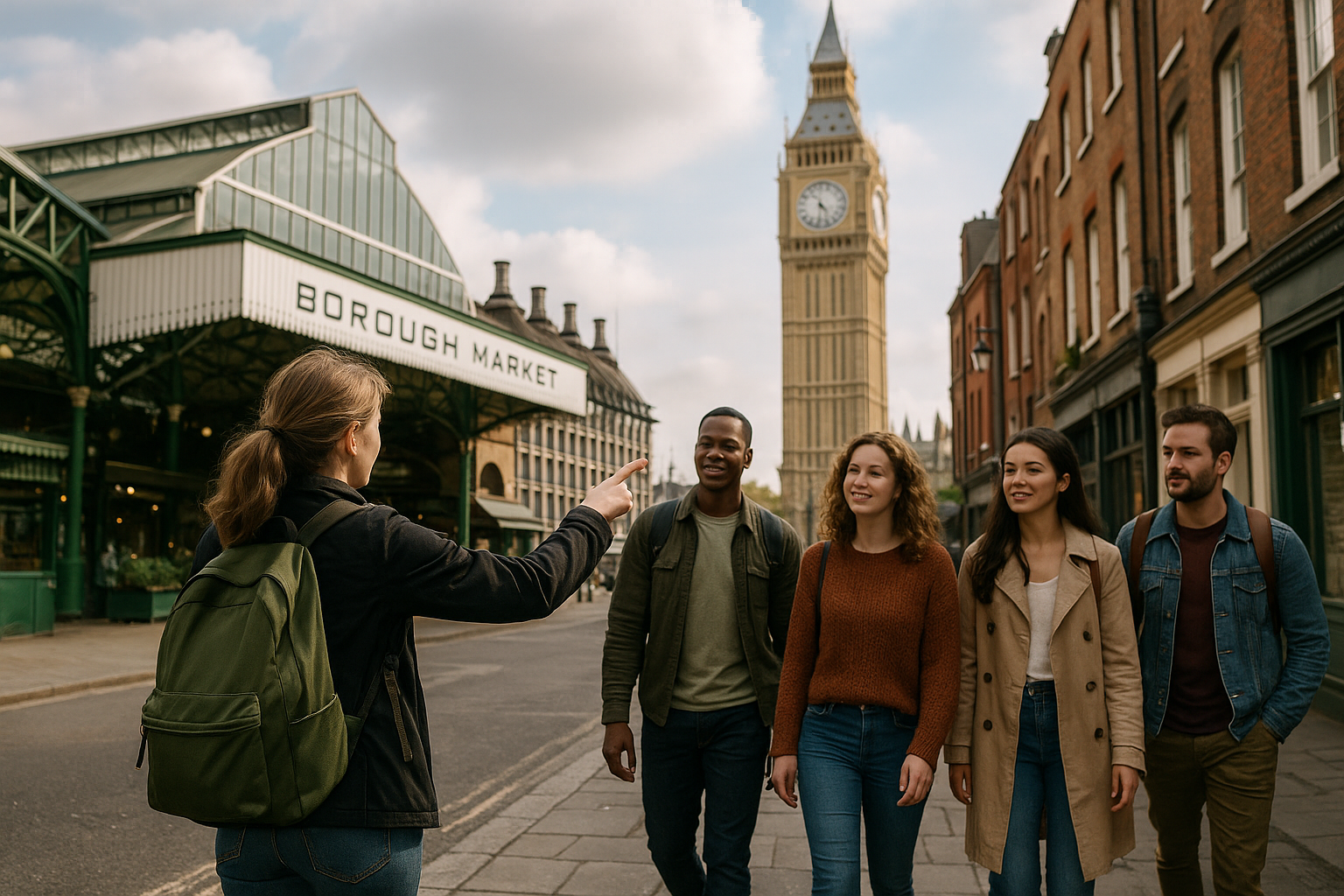
Why London Is Best Explored on Foot
There’s a version of London that most visitors never see. It’s not hidden exactly — it’s just a few streets away from the crowds, tucked behind a famous landmark, or waiting at the end of an alley you almost walked past. The best way to find it? Lace up your shoes and start walking. London walking tours — whether guided or self-directed — have a way of revealing the city’s real character in a way that no bus, tube, or hop-on-hop-off route ever could.
London is one of the most walkable major cities in the world. Its neighborhoods shift dramatically every few blocks. You can go from a medieval market to a brutalist housing estate to a Georgian square in under twenty minutes. That contrast is exactly what makes exploring on foot so rewarding — and so endlessly surprising, even if you’ve visited before.
This guide is built for people who want more than the postcard version of London. Whether you’re visiting for the first time or returning with fresh eyes, these eight walking routes are designed to take you from the iconic to the unexpected — and everywhere in between.
How to Approach These Walks
Each route in this guide starts at a recognizable landmark and moves outward into the surrounding neighborhood. The idea is simple: use the famous sights as anchors, then let curiosity do the rest. You don’t need to follow every step precisely. In fact, the best moments often happen when you wander off the suggested path.
A few practical things to know before you head out:
- Comfortable shoes are non-negotiable. London’s pavements are uneven in older areas, and you’ll easily cover five to eight miles on a good day of walking.
- The weather is famously unpredictable. Pack a light layer and something waterproof, even in summer.
- An Oyster card or contactless payment will let you hop on the tube or a bus if your legs give out before your curiosity does.
- Most of these routes work best on weekday mornings, when the streets are alive with locals rather than tour groups.
- Free guided options exist alongside self-guided walks. The Walks company, for instance, runs a two-hour Hidden London guided walk starting from Monument Underground station, which is a great complement to exploring on your own.
Walk 1: The South Bank and Bankside — Where History Meets Street Culture
Start at Tate Modern, cross the Millennium Bridge, and then resist the urge to walk straight back to St Paul’s. Instead, turn east along the riverbank. This stretch of the South Bank is one of London’s great public spaces — skateboarders under the Southbank Centre, second-hand book stalls that have been there for decades, buskers setting up before noon.
Keep walking east past the Globe Theatre and into Bankside. Duck into the narrow lanes around Clink Street, where you’ll find remnants of the old Southwark prison and some of the oldest surviving buildings in London. Borough Market is nearby, and even if you’ve been before, it’s worth another visit — the food is genuinely exceptional, and the atmosphere on a weekday morning is completely different from the weekend rush.
End the walk at London Bridge, or continue east toward Bermondsey for its independent galleries and the famous Bermondsey Antiques Market, which runs on Friday mornings and draws dealers from across the country.
Walk 2: From the Tower of London into Whitechapel
The Tower of London is one of the city’s most visited sites, and for good reason — nearly a thousand years of history are packed into that complex. Spend an hour inside if you haven’t been, then cross the road and head north into Whitechapel.
This part of East London has been absorbing waves of new communities for centuries, and that history is visible on every street. The Whitechapel Gallery has been championing contemporary art since the early twentieth century and still puts on some of the most interesting exhibitions in the city. Nearby, Whitechapel Road is lined with Bengali restaurants, Bangladeshi grocery stores, and fabric shops that feel a world away from the tourist trail.
Continue north into Spitalfields. Brick Lane is famous — perhaps too famous — but the streets around it are genuinely fascinating. Fournier Street has a building that has served as a Huguenot chapel, a Methodist church, a synagogue, and a mosque, all in sequence. That single building tells you everything you need to know about East London’s layered identity.
Walk 3: Covent Garden to Seven Dials and Beyond
Covent Garden is unavoidable, and honestly, it deserves its reputation. The street performers are genuinely talented, the market building is beautiful, and the surrounding streets are full of interesting theatre history. But most visitors stop there. Don’t.
Head west toward Seven Dials, a seven-street junction that was once one of London’s most notorious slums and is now one of its most charming shopping areas. The independent shops here — bookshops, record stores, small fashion labels — are worth an hour of browsing. From there, push further into Soho.
Soho rewards slow walking. It’s dense, layered, and constantly shifting. Old Compton Street has been the heart of London’s LGBTQ+ community for generations. Berwick Street Market is one of the last traditional street markets in central London. And the side streets are full of recording studios, independent cinemas, and restaurants that have been feeding the city’s creative class for decades.
Walk 4: Hyde Park to Notting Hill
Enter Hyde Park from the east and give yourself time to simply be in it. This is one of the largest royal parks in London, and on a good morning, it’s genuinely peaceful — joggers, dog walkers, people reading on the grass. Walk through to the Serpentine Gallery, which consistently shows some of the most compelling contemporary art in the city, then exit the park at the north-western corner.
You’ll emerge near Notting Hill. The area around Portobello Road is famous for its Saturday antiques market, but the neighborhood itself is worth exploring on any day of the week. The streets of pastel-colored Victorian terraces are as beautiful in person as they look in photographs. Push north of the main drag into Golborne Road, which has a more local, less polished feel — Portuguese cafés, Moroccan grocers, and a relaxed pace that the more touristy end of Notting Hill has largely lost.
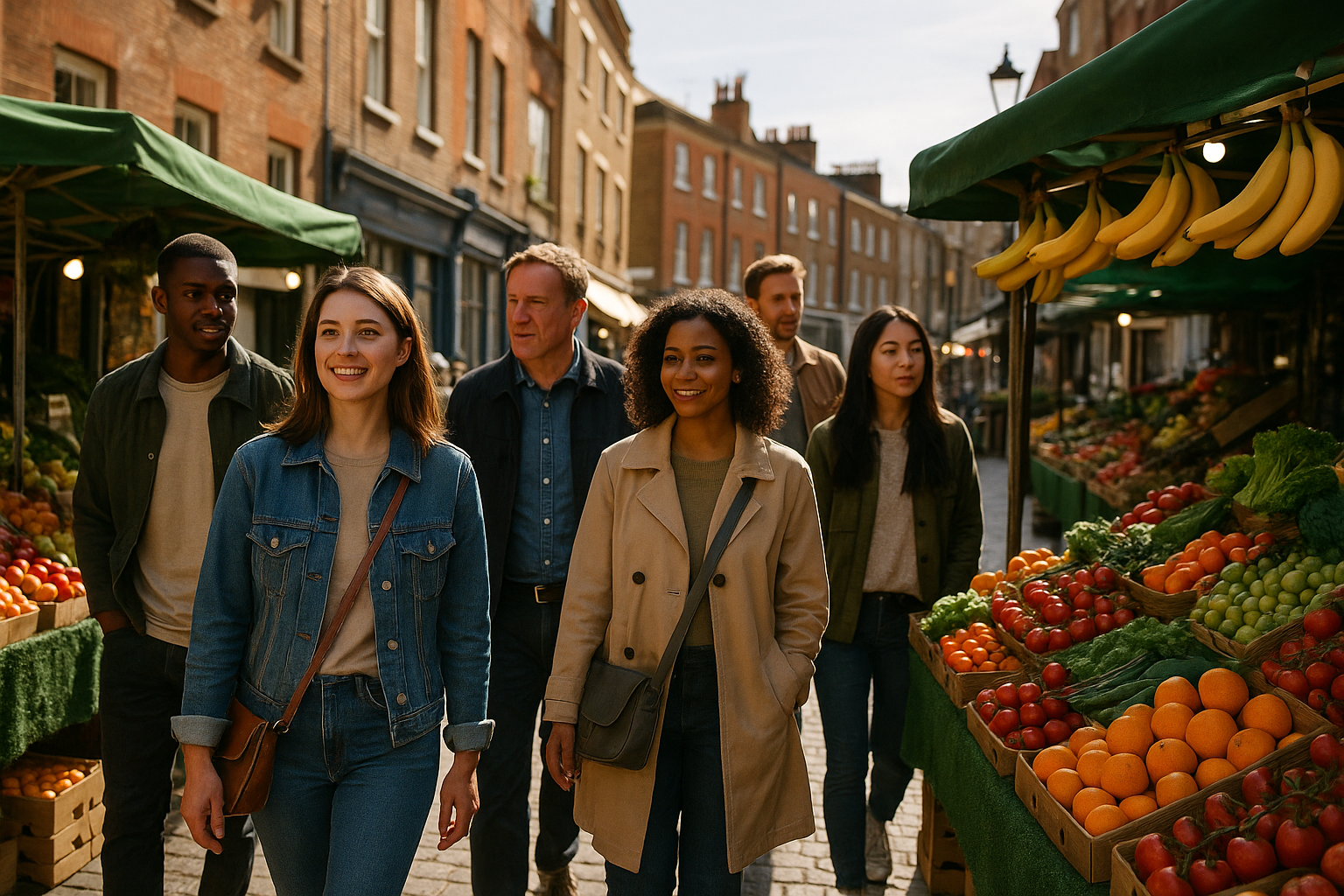
Walk 5: Greenwich — A Village Within a City
Getting to Greenwich involves either a river boat from central London (highly recommended) or the DLR from Bank. Either way, arriving in Greenwich feels like stepping into a different city. The scale changes, the air feels cleaner, and the pace slows down noticeably.
The Royal Observatory sits at the top of Greenwich Park, and the view from up there — across the river toward Canary Wharf and beyond — is one of the best free views in London. Walk down through the park, explore the market, and then head into the back streets of Greenwich town. There are independent bookshops, local pubs that have been serving the community for well over a century, and a general sense that this part of London has managed to hold onto its identity despite everything.
Cross under the Thames via the Greenwich Foot Tunnel — a slightly surreal pedestrian passage that runs beneath the river — and you’ll emerge in Island Gardens on the Isle of Dogs, with one of the best views of the Old Royal Naval College behind you.
Walk 6: Clerkenwell and Exmouth Market
This is the walk for people who think they know London. Clerkenwell sits between the City and Islington, and it’s one of those neighborhoods that locals love and visitors rarely find. It has a long history as a center for craft — watchmakers, printers, jewelers — and that creative energy is still present in the design studios and independent restaurants that line its streets today.
Start at Farringdon station and walk north. Exmouth Market is a pedestrianized street lined with cafés and independent restaurants that fills up at lunchtime with workers from the surrounding offices. It’s a good place to stop and eat. From there, explore the backstreets of Clerkenwell — St John’s Square, the old Priory Church of St John, and the narrow lanes around Hatton Garden, London’s historic jewelry quarter.
This walk connects naturally into Islington to the north, where Upper Street has a long stretch of independent restaurants, or east toward Shoreditch if you want to keep the day going.
Walk 7: Brixton and Herne Hill
Brixton is one of London’s most vibrant neighborhoods, and it’s been that way for a long time. The market — which runs through a series of covered arcades as well as an open-air street — is a sensory experience unlike anything else in the city. You’ll find Caribbean food, African fabrics, vintage clothing, and record shops all within a few hundred meters of each other.
Brixton Village and Market Row, the two covered market arcades, have evolved over the years into a mix of traditional traders and newer independent restaurants and bars. It’s a good place to eat at any time of day. From Brixton, walk south through Brockwell Park — a quieter, more local alternative to the bigger royal parks — and down into Herne Hill.
Herne Hill has a Sunday market, a beautiful Victorian lido that’s worth visiting in summer, and a collection of independent shops and cafés that feel genuinely rooted in the community. It’s the kind of neighborhood that makes you understand why people love living in London.
Walk 8: From St Paul’s into the City — London’s Ancient Heart
The City of London — the square mile at the historic center — is fascinating and almost completely empty on weekends. That makes Saturday or Sunday the ideal time to explore it on foot. St Paul’s Cathedral is the obvious starting point, and the cathedral itself is worth going inside if you haven’t before.
From there, walk east through streets that follow the same routes as Roman roads laid down nearly two thousand years ago. Look for the small green plaques that mark the sites of churches destroyed in the Great Fire of 1666 and rebuilt by Christopher Wren. Walk down to the Monument — the column built to commemorate the fire — and then into the narrow lanes of the old city: Bow Lane, Watling Street, Garlick Hill.
This is one of the oldest continuously inhabited urban areas in the world, and walking through it on a quiet Sunday morning, when the financial district is deserted and the streets belong to curious wanderers, is one of the most quietly extraordinary experiences London has to offer.
Making the Most of London Walking Tours
Self-guided walks give you total freedom, but there’s real value in combining them with guided options. Visit London maintains a regularly updated list of recommended tours and sightseeing experiences that can help you find guided walks covering specific themes — street art, history, food, architecture — that complement the routes you explore on your own.
The best approach is to mix both. Use a guided walk to get oriented in a new neighborhood or to understand the history behind what you’re seeing, then return on your own to explore at your own pace. London rewards that kind of layered attention.
It’s also worth remembering that the city changes constantly. Neighborhoods that felt rough-edged five years ago are now full of independent coffee shops and galleries. Areas that were heavily gentrified are finding new character again. Walking is the only way to keep up with those shifts — and to form your own opinion about what London actually is, rather than what anyone tells you it should be.
London Is Always Worth Another Look
There’s a reason people spend years in London and still feel like they haven’t seen everything. The city is genuinely inexhaustible. Every walk reveals something new — a courtyard you didn’t notice before, a pub with a history that goes back centuries, a street mural that appeared overnight, a market stall run by someone with a story worth hearing. The famous landmarks are famous for a reason, and they deserve your time. But the city that surrounds them — messy, layered, contradictory, alive — is where London really lives. Put on your shoes, pick a direction, and go find it.
This article was produced with AI assistance and reviewed editorially.


City Guides for Young Travelers: Buenos Aires, Quito, and Trujillo (Culture, Food & Adventure)

Where to Stay in Southern Africa: Botswana, Namibia & Madagascar for First-Time Visitors


