
Asia
Budget Backpacking Southeast Asia: Sri Lanka, Laos & Beyond
Explore Southeast Asia on a budget with tested itineraries for Laos and Sri Lanka, including daily cost breakdowns, local transport hacks, and seasonal travel tips.

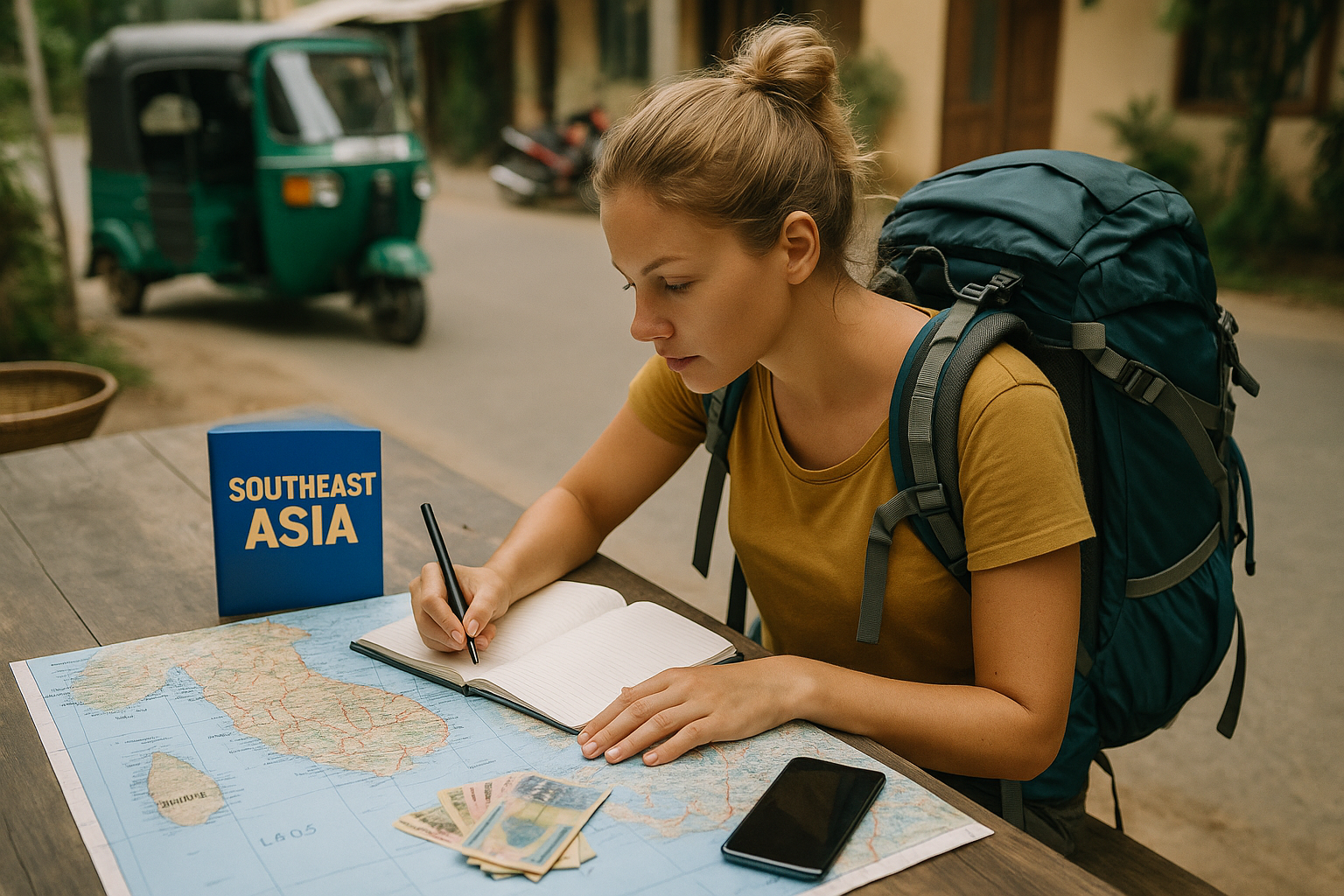
Why Budget Backpacking Southeast Asia Is Still One of the Best Decisions You’ll Make
There’s a reason so many young travelers point to Southeast Asia as the trip that changed everything. The region packs an extraordinary range of experiences into a relatively small geographic area — ancient temples rising out of jungle mist, turquoise coastlines, mountain villages, and street food that costs less than a coffee back home. If you’re thinking about budget backpacking Southeast Asia, the good news is that it genuinely is as affordable as people say. You can stretch a modest travel fund across weeks or even months without sacrificing the experiences that make a trip worth taking. This guide covers two of the most rewarding destinations in the region — Laos and Sri Lanka — along with the practical framework you need to plan a journey that’s rich in memory and light on your wallet.
What Makes Southeast Asia So Accessible for Young Travelers
Southeast Asia has long been the go-to region for first-time backpackers, and that reputation is well-earned. The infrastructure for independent travel is well-developed, locals are generally welcoming to visitors, and the density of things to see and do means you never feel like you’re running out of reasons to keep moving.
The landscape variety is genuinely staggering. Within a single multi-country trip, you can move from mountains and tropical rainforests to ancient temple complexes to lively coastal towns with thriving bar scenes. Countries like Thailand, Cambodia, Vietnam, Laos, Malaysia, the Philippines, and Singapore each offer something distinct — and they’re all relatively easy to connect between overland or by low-cost flights.
Budget-wise, the numbers are encouraging. Travelers who commit to a backpacker-style approach — guesthouses, local food, shared transport — have reported completing extensive multi-country journeys for roughly around $22 per day on average, which works out to approximately $670 per month. Other estimates put the monthly budget closer to $500 per month if you’re disciplined about spending. These figures aren’t guarantees — your actual costs will depend heavily on your travel style, the countries you choose, and how often you splurge on experiences — but they give you a realistic baseline to plan around.
Laos: A One-Month Journey Through Temples and Rivers
Laos is one of Southeast Asia’s most underrated destinations. It moves at a slower pace than its neighbors, and that’s exactly the point. If you’re coming from the sensory overload of Bangkok or Ho Chi Minh City, Laos feels like a deep exhale.
The Classic Route Through Laos
A month in Laos gives you enough time to explore the country from north to south — or south to north — without rushing. Most travelers enter from Thailand via the Friendship Bridge near Vientiane, or cross from northern Thailand into Huay Xai and take the famous slow boat down the Mekong River to Luang Prabang.
That slow boat journey is one of the defining experiences of the region. Two days on the river, watching the jungle-covered banks drift past, talking to other travelers, and arriving in Luang Prabang at golden hour — it’s the kind of thing you’ll describe to people for years. Luang Prabang itself is a UNESCO-listed town where Buddhist temples sit alongside French colonial architecture and the Mekong laps at the edge of the peninsula. Wake up early enough and you’ll witness the alms-giving ceremony, where monks in saffron robes walk silently through the streets at dawn.
From Luang Prabang, head northeast toward Vang Vieng, a town that has evolved from a backpacker party hub into something more balanced — you can still find a lively atmosphere, but the surrounding landscape of karst limestone mountains and the Nam Song River makes it genuinely beautiful. Kayaking, cave exploration, and cycling through rice paddies fill the days.
Further south, Vientiane is a laid-back capital with a distinctly unhurried energy. The Patuxai monument, Pha That Luang, and the riverside evening market are all worth your time. From there, the 4,000 Islands region in the far south — known as Si Phan Don — offers a completely different Laos: hammocks, river dolphins, waterfalls, and a pace of life so slow it feels almost dreamlike.
Getting Around Laos on a Budget
Local buses are the backbone of budget travel in Laos. They’re slow, sometimes uncomfortable, and occasionally unpredictable — but they’re cheap and they go almost everywhere. Minivans are a step up in speed and comfort and are widely used between tourist hubs. Tuk-tuks handle shorter distances within towns. The slow boat, as mentioned, is both a transport option and an experience in itself. Renting a bicycle or motorbike is a brilliant way to explore smaller towns and rural areas at your own pace.
Food in Laos is one of the great budget pleasures of the region. Sticky rice, laap (a fragrant minced meat salad), and noodle soups from market stalls will keep you well-fed for very little. Eating where locals eat is almost always the right call — both for your budget and for the experience.
Sri Lanka: Ten Days of Beaches, Tea Country, and Wildlife
Sri Lanka technically sits off the southern tip of India rather than within mainland Southeast Asia, but it has become a natural extension of the classic backpacking circuit — and for good reason. The island packs an almost absurd amount of variety into a relatively compact space. Empty beaches, crowded cities, terraced tea plantations, wild jungles, and wildlife including elephants, leopards, whales, and monkeys all exist within the same small island.
The good news for budget travelers is that Sri Lanka is genuinely affordable. It’s possible to travel here for under $500 for a full month if you’re thoughtful about your choices — staying in guesthouses, eating local food, and using public transport.
A Ten-Day Sri Lanka Itinerary
Ten days is enough to hit the highlights without feeling rushed, provided you plan your route efficiently. A circular route works well here, letting you avoid backtracking.
Start in Colombo, the capital. It’s not the most immediately charming city, but spend a day exploring the Pettah market district, the Galle Face promenade at sunset, and the colorful neighborhoods of Cinnamon Gardens and you’ll find plenty to appreciate. Colombo is also where you’ll get your bearings and sort out any logistics.
From Colombo, head to Kandy — the cultural heart of the island. The Temple of the Tooth Relic is the most sacred Buddhist site in Sri Lanka, and the surrounding hill country is green and beautiful. Kandy is also your gateway to the tea country.
The train journey from Kandy to Ella is one of the most celebrated rail routes in the world. The carriages wind through mist-covered mountains, past waterfalls and tea estates, with views that make you want to press your face against the window the entire way. Ella itself is a small hill town with excellent hiking — the walk up Little Adam’s Peak takes about an hour and rewards you with panoramic views over the valley.
From Ella, continue south toward the coast. Mirissa and Tangalle offer beautiful beaches that feel far less crowded than some of the more heavily touristed spots in the region. If you’re visiting between November and April, whale watching off the southern coast is a genuinely extraordinary experience.
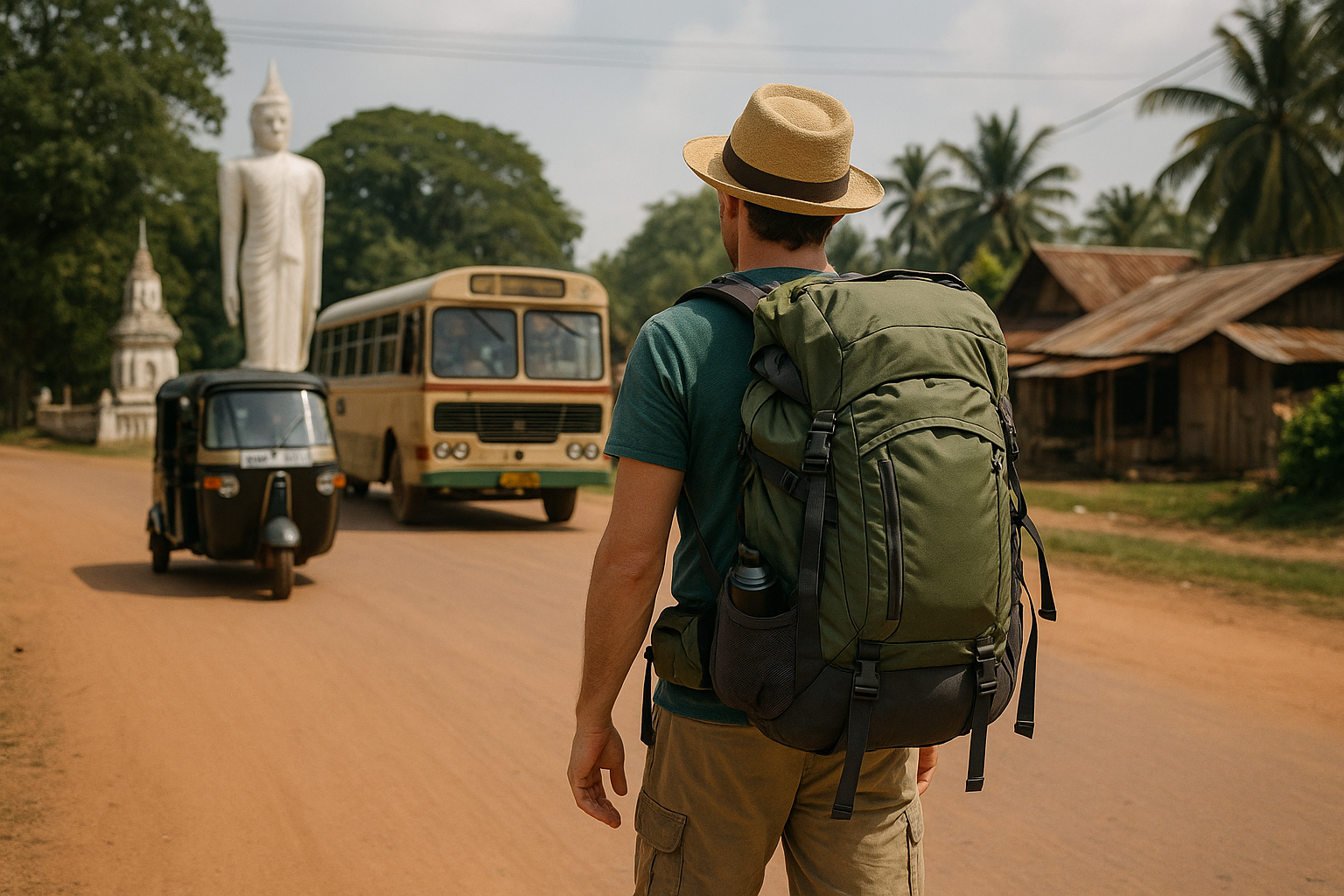
The ancient cultural triangle in the north-central region — Sigiriya, Polonnaruwa, and Dambulla — is worth building into your route if time allows. Sigiriya Rock Fortress, a fifth-century citadel rising dramatically from the surrounding jungle, is one of those places that earns its reputation. Arrive early to beat both the heat and the crowds.
Getting Around Sri Lanka
Independent travel in Sri Lanka is very manageable by bus, train, and tuk-tuk. The train network is scenic and affordable, making it the preferred option for longer journeys. Buses reach virtually everywhere and are even cheaper. Tuk-tuks are ideal for shorter hops and can be negotiated directly with drivers. Renting a scooter gives you maximum flexibility in coastal areas, though traffic in cities is best left to locals.
Guesthouses and family-run homestays are the accommodation sweet spot in Sri Lanka — affordable, warm, and often including a home-cooked breakfast that will make you want to extend your stay by a week.
Practical Budget Tips That Apply Across the Region
Accommodation
- Hostels and guesthouses are your best friends. Dorm beds keep costs low, and common areas are where you’ll meet other travelers and swap route ideas.
- Book a night or two in advance when arriving in a new city, then reassess once you’re on the ground.
- Avoid booking everything through large platforms — walking in directly or booking through local sites often gets you a better rate.
- Homestays offer exceptional value and often the most memorable stays of a trip.
Food
- Eat where locals eat. Street food and market stalls are almost universally safe, delicious, and a fraction of the price of tourist restaurants.
- Learn one or two phrases in the local language — even a basic greeting goes a long way and often results in a warmer welcome.
- Avoid ordering Western food. It’s always more expensive and almost always worse than the local equivalent.
Transport
- Overnight buses and trains save you a night’s accommodation cost while covering distance.
- Slow boats and local ferries are often cheaper than tourist-specific options and considerably more interesting.
- For shorter distances, walk when you can. You’ll discover things you’d never find from a vehicle window.
Activities
- Many temples, markets, and natural sites have little or no entrance fee.
- Sunrise and sunset hikes are free and often the most memorable experiences of a trip.
- Be selective with paid tours — many experiences are just as good (or better) when explored independently.
Timing Your Trip: Seasons and Crowds
Southeast Asia is a year-round destination, but timing does matter — both for weather and for avoiding the densest crowds. Generally speaking, the dry season in most of mainland Southeast Asia runs from roughly November through April, making this the most popular window for travel. Shoulder seasons — the months just before and after peak — often offer a compelling balance: decent weather, lower prices, and noticeably fewer tourists at major sites.
Sri Lanka’s weather is more nuanced because the island’s two coasts are affected by different monsoon patterns. The southwest coast and hill country tend to be driest from December through March, while the east coast has its best weather from May through September. This means that with smart routing, you can find good conditions somewhere on the island at almost any time of year.
For Laos, the cool dry season from November through February is the most comfortable for travel. March and April bring heat before the rains arrive. The wet season from May through October turns the landscape lush and green, brings fewer tourists, and offers lower prices — though some roads and river crossings can become challenging.
The broader principle for budget travelers: traveling slightly outside peak season almost always means lower accommodation costs, easier negotiation on transport, and a more relaxed experience at popular sites. You’ll share the Luang Prabang temples with fewer tour groups and find guesthouse owners more willing to negotiate on price.
Building Your Itinerary: Combining Countries Smartly
One of the joys of budget backpacking Southeast Asia is how naturally the countries connect. A classic multi-country route might flow from Thailand into Laos, then into Vietnam, Cambodia, and onward — with Sri Lanka added as a standalone side trip or a bookend to the journey. Low-cost airlines have made it increasingly practical to fly into one city and out of another, avoiding backtracking entirely.
When planning, resist the urge to cram in too many destinations. Moving too quickly costs more — in transport, in the mental energy of constant packing and unpacking, and in the experiences you miss by never staying long enough to scratch the surface. A week in one place often reveals more than a single day in three.
Give yourself permission to linger. The best moments of a backpacking trip are rarely the ones you planned — they’re the conversation with a guesthouse owner that leads to a hidden waterfall, the spontaneous detour that turns into a two-day adventure, the meal shared with strangers that somehow becomes the story you tell most often.
Start Planning, Not Overthinking
Budget backpacking Southeast Asia is one of those journeys that rewards action over endless preparation. You don’t need a perfect itinerary, a massive travel fund, or months of research before you book your flight. You need a rough direction, a flexible mindset, and the willingness to figure things out as you go — because that, more than anything, is what makes this kind of travel so formative. The region is forgiving, the community of fellow travelers is generous with advice, and the experiences waiting for you are the kind that reshape how you see the world. Pack light, stay curious, and go.
This article was produced with AI assistance and reviewed editorially.


City Guides for Young Travelers: Buenos Aires, Quito, and Trujillo (Culture, Food & Adventure)

Where to Stay in Southern Africa: Botswana, Namibia & Madagascar for First-Time Visitors


