
Asia
Eastern & Oriental Express: What It’s Really Like to Travel on Southeast Asia’s Most Iconic Train (2026)
Discover what it’s really like traveling on the Eastern and Oriental Express through Thailand, Malaysia, and Singapore. Honest breakdown of costs, cabins, and dining.

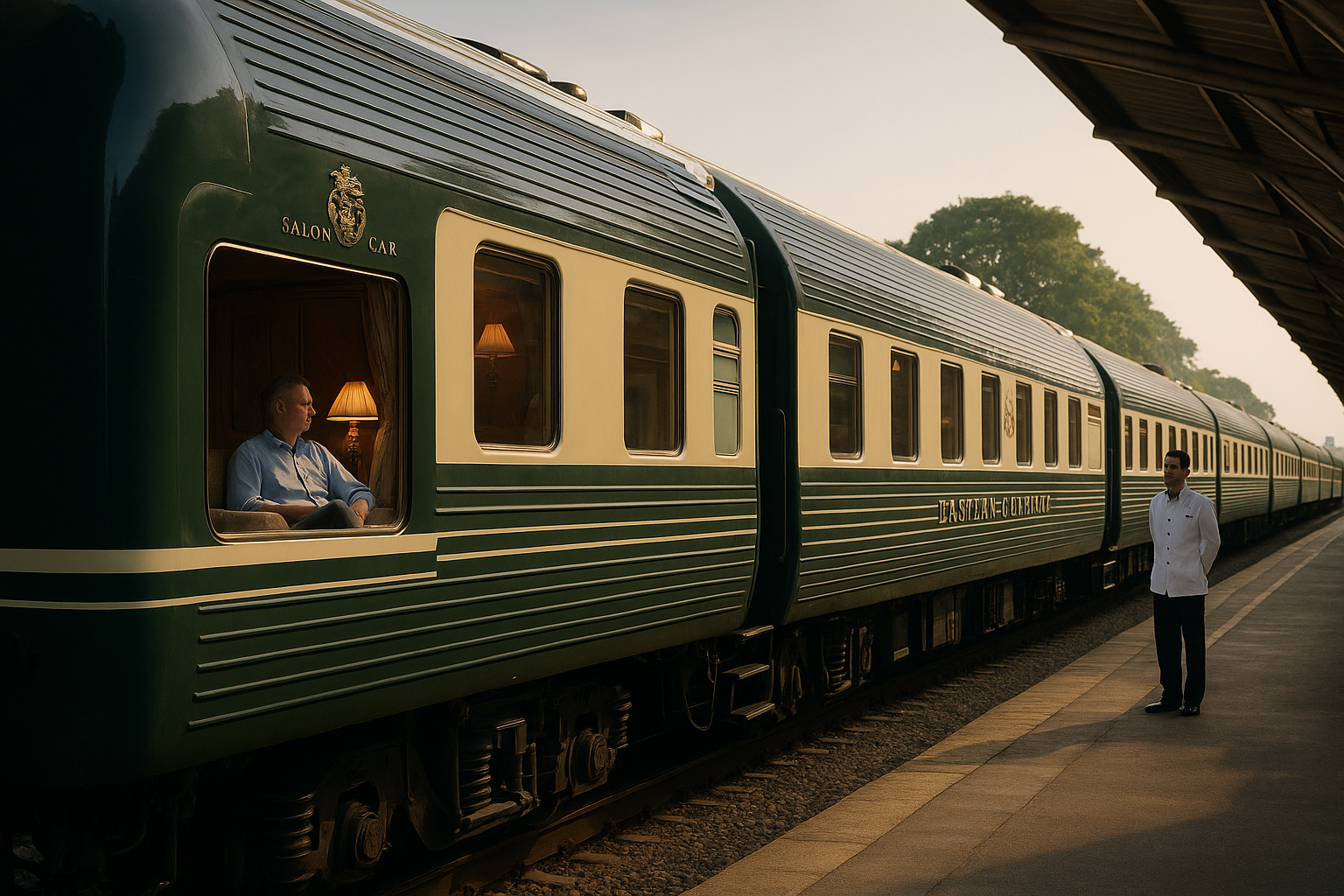
The Eastern & Oriental Express: Southeast Asia’s Most Legendary Train Journey
Some travel experiences exist purely to get you from A to B. And then there’s the Eastern and Oriental Express — a journey that makes the getting there the entire point. Operated by Belmond, this legendary luxury sleeper train winds its way through the heart of Southeast Asia, connecting Thailand, Malaysia, and Singapore across a route that feels like it was designed specifically to make you fall in love with a part of the world that already has plenty of ways to steal your heart.
If you’ve ever scrolled past photos of a gleaming green-and-gold train rolling through lush jungle and thought “that looks unreal” — you’re not wrong. The Eastern and Oriental Express is one of those rare travel experiences that genuinely lives up to the image. But before you start daydreaming too hard, let’s talk about what it’s actually like, what you need to know before you go, and whether it’s worth it for a younger traveler who’s used to stretching every dollar.
What Exactly Is the Eastern and Oriental Express?
The Eastern and Oriental Express is a luxury sleeper train that travels through Southeast Asia, passing through Thailand, Malaysia, and Singapore. It’s operated by Belmond, the same hospitality group behind some of the world’s most iconic travel experiences — think historic hotels, river cruises, and scenic rail journeys across multiple continents.
This particular train has built a reputation as one of the most atmospheric ways to experience Southeast Asia. Instead of flying over the rainforest canopy or sitting in a car on a congested highway, you’re moving through it — slowly, deliberately, with a cocktail in hand and the landscape rolling past your window like a private screening of a nature documentary.
The concept is simple but powerful: slow travel done with serious style. The train itself is beautifully designed, with carriages that blend colonial-era elegance with Southeast Asian craftsmanship. It’s the kind of place where the details matter — the carved wood panels, the crisp linens, the way the light changes as you cross from one country into the next.
The Route: Thailand, Malaysia, and Singapore
The Eastern and Oriental Express route is one of the most scenic rail corridors in the world. The journey moves through dramatically different landscapes — from the temples and tuk-tuks of Thailand to the dense, green hills of the Malaysian peninsula, eventually arriving in the gleaming, modern cityscape of Singapore.
Each leg of the journey offers something completely different. In Thailand, you might find yourself gliding past rice paddies and rural villages at sunrise, the kind of scene that makes you put your phone down and just watch. As the train crosses into Malaysia, the landscape shifts — the jungle gets denser, the air feels heavier, and the towns you pass through have a different rhythm entirely.
There are typically stops along the way that allow passengers to step off and explore. Depending on the itinerary, these can include visits to historic sites, local markets, or scenic viewpoints that you simply couldn’t access any other way. These excursions are usually organized as part of the journey experience, meaning you’re not left to figure things out alone — but you still get that feeling of genuine discovery.
Singapore, when you arrive, feels like landing on another planet compared to where you started. The contrast between the jungle-draped countryside of the Malaysian interior and the precision of Singapore’s skyline is genuinely striking — and arriving by train rather than by plane gives you time to feel that transition rather than just teleport through it.
What to Expect Onboard
The Cabins
Sleeping on the Eastern and Oriental Express is not like sleeping on a budget overnight train. The cabins are designed to feel like private retreats — compact, yes, but thoughtfully arranged so that nothing feels cramped. During the day, your space is set up as a comfortable sitting area where you can read, watch the scenery, or simply do nothing. At night, the cabin converts into a proper sleeping arrangement with real bedding, pillows, and enough comfort to actually sleep well while moving.
Different cabin categories are available, ranging from more accessible options to genuinely lavish suites with their own private bathrooms and panoramic windows. If you’re traveling as a couple or with a close friend, sharing a cabin makes the experience significantly more affordable without sacrificing any of the atmosphere. The higher-tier suites are exactly what they sound like — generous, beautifully appointed spaces that feel more like a boutique hotel room than anything you’d expect to find on a train.
For younger travelers on a tighter budget, the entry-level cabins are still a world apart from anything you’d find on a standard rail journey. They’re not enormous, but they’re well-designed, comfortable, and come with everything you need for a multi-day journey through some of Southeast Asia’s most striking scenery.
Dining and the Onboard Experience
Food on the Eastern and Oriental Express is a serious part of the experience — not an afterthought. The dining car is one of the social hearts of the train, a place where you dress up slightly (not formally, but with intention), sit down to a proper meal, and find yourself talking to people you’d never otherwise meet.
The menus draw on the culinary traditions of the countries the train passes through — expect dishes that reflect the flavors of Thailand, Malaysia, and Singapore, prepared with genuine care. Meals are typically included as part of the journey package, which means you’re not constantly calculating what you can afford to order. You just eat, enjoy, and let the landscape outside the window provide the backdrop.
Beyond the dining car, there’s usually a bar carriage where passengers gather for drinks, live music, and the kind of easy, spontaneous conversations that happen when a group of travelers is sharing something out of the ordinary. It’s one of those rare environments where talking to strangers feels completely natural — everyone is there for the same reason, and that creates an instant sense of community.
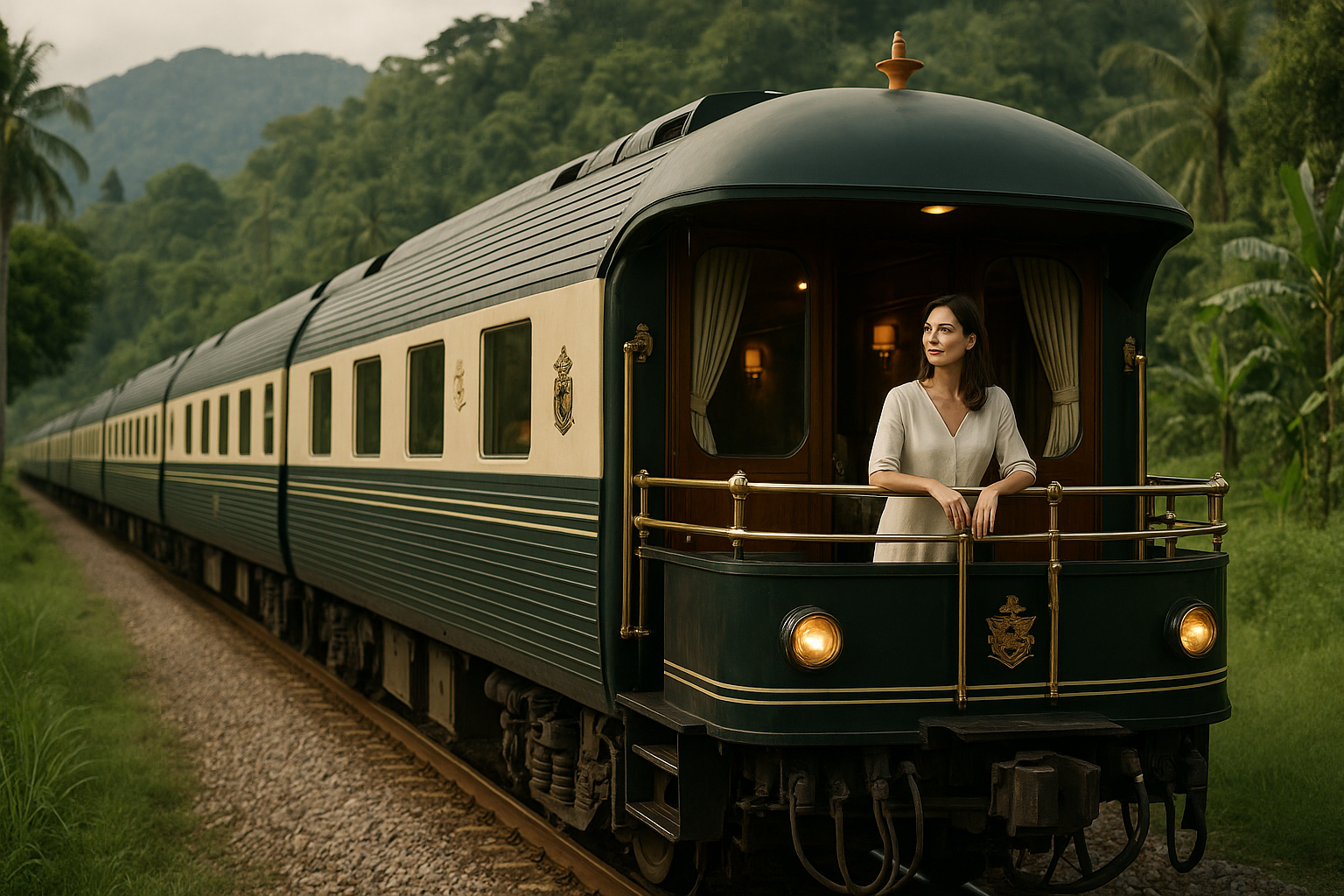
There are also observation areas where you can sit closer to the open air and feel the movement of the train more directly. Watching the Malaysian jungle blur past from an open-sided carriage as the sun sets is the kind of moment that stays with you long after you’ve unpacked your bag.
How Much Does It Cost — And Is It Worth It?
Let’s be honest: the Eastern and Oriental Express is not a budget experience. Belmond positions it firmly in the luxury travel category, and the pricing reflects that. For exact, up-to-date 2026 fares and availability, your best starting point is the official Belmond website, or you can reach their reservations team directly at +44 (0) 204 525 1139.
What’s important to understand is what you’re actually paying for. On most journeys, the ticket price includes your cabin, all meals, selected excursions at stops along the route, and onboard entertainment. You’re not just buying a seat on a train — you’re buying a curated multi-day experience where most of the logistics are handled for you. When you break it down that way, the value calculation starts to look different.
For younger travelers, the question of whether it’s worth the splurge comes down to priorities. If you’d rather spend the same money on three weeks of backpacking across Southeast Asia, that’s a completely valid choice — and honestly, a brilliant one. But if you’re at a point where you want to do something genuinely different, something that feels more like an event than a trip, the Eastern and Oriental Express delivers in ways that are hard to replicate.
It’s worth considering for milestone moments — a graduation trip, a big birthday, a once-in-a-while splurge that you’ll be describing to people for years. It’s also worth looking at as a contrast experience: many travelers combine a few days on the train with a longer backpacking journey through the same region, using it as a deliberate change of pace rather than the entire trip.
Practical Tips Before You Book
- Book well in advance. The Eastern and Oriental Express has limited capacity by design, and popular departure dates fill up quickly. If you have a specific journey in mind, don’t wait until the last minute.
- Check what’s included. Different journey packages include different combinations of meals, excursions, and onboard experiences. Read the details carefully before booking so you know exactly what you’re getting.
- Pack light but pack smart. Cabin storage is limited, so a smaller bag is genuinely better. Think about what you actually need for a few days of slow travel rather than packing for every possible scenario.
- Dress with a little intention. You don’t need formal wear, but the dining car has a certain atmosphere that rewards making a small effort. A clean shirt and something that isn’t hiking gear goes a long way.
- Bring a book or a journal. There’s a lot of time to simply be on this train, and that’s the whole point. Lean into it. Some of the best moments happen when you’re not looking at a screen.
- Be open to conversation. The people you meet on a journey like this tend to be interesting, well-traveled, and genuinely curious. The social side of the experience is part of what makes it memorable.
- Combine it with wider travel. The route connects three countries, each of which has enormous amounts to explore beyond the train windows. Use the journey as a starting point rather than the whole trip.
Who Is This Journey Really For?
The Eastern and Oriental Express gets marketed as a luxury experience, and it is — but that doesn’t mean it’s only for a certain type of traveler. Younger people who appreciate craftsmanship, history, slow travel, and the feeling of moving through a landscape rather than over it tend to find it genuinely compelling, even if it sits outside their usual travel style.
It’s particularly well-suited to anyone who wants to experience Southeast Asia in a way that feels completely different from the standard backpacker trail. The region is extraordinary at every budget level, but there’s something specific about seeing it from a moving train — the rhythm of the journey, the way the landscape changes hour by hour, the enforced slowness of it all — that you simply can’t replicate any other way.
It’s also a strong choice for anyone traveling with a parent, grandparent, or older friend who shares a love of travel but might find the more physically demanding aspects of backpacking challenging. The Eastern and Oriental Express is one of those rare experiences that works beautifully across generations — everyone arrives at the same destination having shared something genuinely special.
The Bigger Picture: Why Slow Travel Matters
There’s a growing movement among younger travelers who are pushing back against the idea that more destinations equals a better trip. The Eastern and Oriental Express fits naturally into this way of thinking. Instead of rushing between cities, you’re choosing depth over distance — spending days rather than hours moving between places, with time to actually notice what’s around you.
It’s also worth thinking about the environmental dimension. Rail travel, even in its most luxurious form, has a significantly lower carbon footprint than flying the equivalent distance. Choosing to travel by train through Southeast Asia rather than taking multiple short-haul flights is a meaningful choice, and one that aligns with the values of a generation that cares about traveling more thoughtfully.
The Eastern and Oriental Express won’t be the right choice for every trip or every traveler. But for a specific kind of journey — one where the experience of moving is as important as the destination itself — it’s hard to think of anything quite like it. It’s the kind of train ride that makes you understand why people fell in love with rail travel in the first place, and why that feeling hasn’t gone away even in an era of instant everything. Some journeys are worth taking slowly. This is one of them.
This article was produced with AI assistance and reviewed editorially.


City Guides for Young Travelers: Buenos Aires, Quito, and Trujillo (Culture, Food & Adventure)

Where to Stay in Southern Africa: Botswana, Namibia & Madagascar for First-Time Visitors


