
Greece
Greek Island Hopping: Milos Revealed—Beaches, Caves & Hidden Gems (2026)
Explore Milos, Greece’s hidden gem in the Cyclades. Discover 14 must-do experiences including iconic beaches like Sarakiniko, sea caves at Kleftiko, and lesser-known loca

Why Milos Deserves a Spot on Your Greek Island Itinerary
When most travelers think about the Greek islands, their minds jump straight to Santorini’s famous caldera views or Mykonos’s buzzing nightlife. Milos tends to sit quietly in the background — and honestly, that’s part of what makes it so special. Located in the Cyclades in the South Aegean, Milos is a volcanic island with a landscape unlike anywhere else in Greece. Dramatic rock formations, beaches that look like they belong on another planet, crystal-clear water in every shade of blue, and a pace of life that feels genuinely unhurried. If you’re looking for Milos Greece things to do that go beyond the typical tourist trail, you’ve landed in the right place.
This guide covers the experiences that make Milos worth the trip — from the beaches everyone talks about to the hidden corners that most visitors never find. Whether you’re island hopping through the Cyclades or dedicating a full week to this one island, Milos rewards curiosity. Bring your snorkel, your camera, and a willingness to get a little lost.
Getting to Know Milos: The Island That Surprises Everyone
Milos sits in the southwestern part of the Cyclades, roughly equidistant from Athens and Crete. Its volcanic origins have shaped everything — the jagged coastline, the mineral-rich cliffs, the otherworldly rock formations that frame nearly every beach. The island is relatively compact, which means you can explore a huge amount in just a few days, but it’s also layered enough that a longer stay keeps revealing new things.
The main town, Adamas (also called Adamantas), is where the ferry port sits and where most accommodation options cluster. From there, the island opens up in every direction. The hilltop village of Plaka offers sweeping views over the Aegean and a maze of whitewashed streets that are genuinely lovely to wander at golden hour. And scattered across the island’s roughly 125 kilometres of coastline are beaches — dozens of them — each with its own character.
According to Discover Greece, Milos is a destination defined by its hidden gems and extraordinary natural beauty, making it one of the most rewarding islands in the Cyclades for travelers who are willing to explore beyond the obvious.
The Beaches: Where Milos Really Shines
Sarakiniko: The Moon Beach
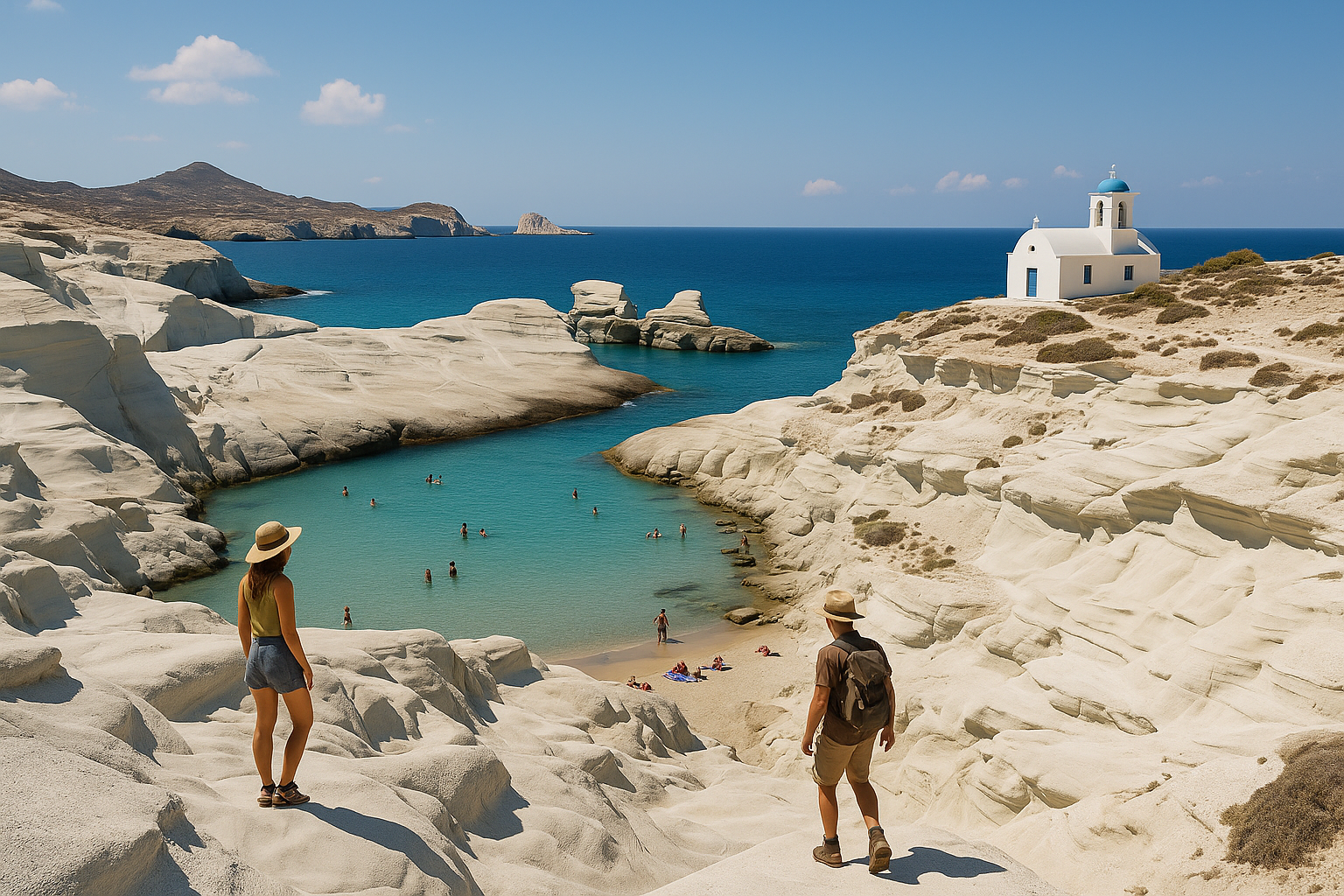
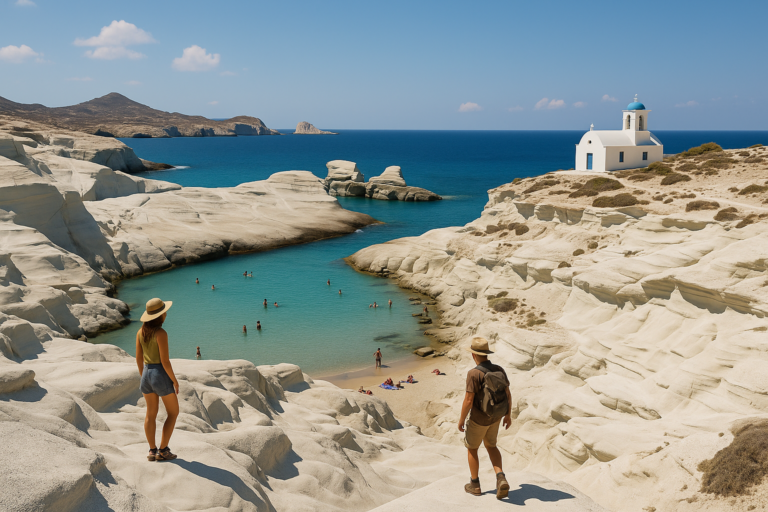
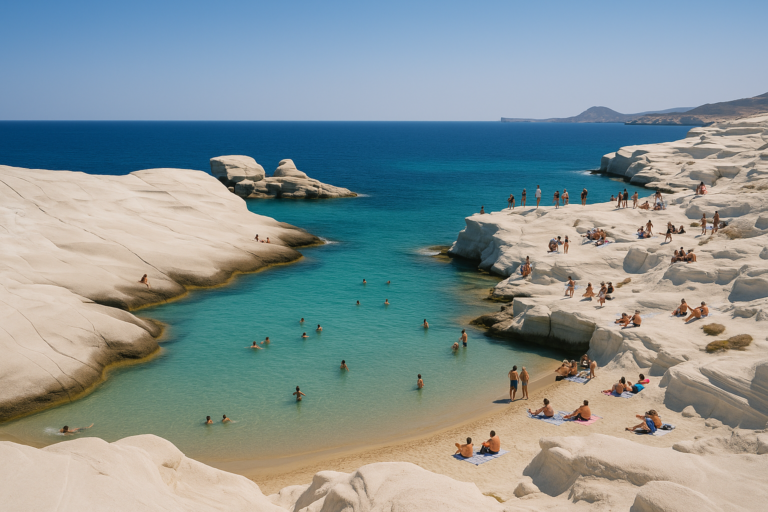
If you only visit one beach on Milos, make it Sarakiniko. The landscape here is so surreal it barely looks real — smooth white volcanic rock sculpted by wind and sea into sweeping curves and deep hollows, all set against water that shifts from pale turquoise to deep navy depending on the light. Locals call it the “moon beach,” and once you see it, you’ll understand why immediately.
Come early in the morning if you can. The light is extraordinary, the crowds are thin, and you can scramble across the rocks and find your own private perch above the water. By midday it fills up, but there’s enough space to spread out. Jumping from the rocks into the sea is a rite of passage — just check the depth before you leap.
Kleftiko: The Sea Caves of the Southwest
Kleftiko is only accessible by boat, which is exactly why it feels like a discovery. This cluster of white rock formations, sea caves, and hidden coves on the southwestern coast of Milos is one of the most dramatic natural landscapes in the entire Aegean. The caves are large enough to swim through, the water inside them glows with filtered light, and the snorkeling is exceptional.
You can join a boat tour from Adamas — most last a full day and stop at several spots along the coast, including Kleftiko as the highlight. It’s worth every euro. Bring underwater goggles and plenty of water, because you’ll want to spend as long as possible here.
Tsigrado: The Beach You Climb Down To
Getting to Tsigrado requires a bit of effort — you descend through a narrow crack in the cliffs using a rope and a short ladder. That small act of commitment keeps the crowds away, which means when you arrive at the small, sheltered cove below, it often feels like you have it to yourself. The water is calm, clear, and surrounded by towering golden cliffs. It’s one of those spots that rewards the adventurous traveler.
Firiplaka and Provatas: The Relaxed South Coast
If Sarakiniko and Tsigrado are for the explorers, Firiplaka and Provatas are for anyone who wants to slow down and simply swim. These long, sandy beaches on the southern coast are calmer and more organized, with some facilities nearby. Firiplaka in particular has a beautiful backdrop of colourful cliffs — reds, yellows, and oranges that glow in the afternoon sun. Bring a book, find a spot, and let the day disappear.
Papafragas: The Hidden Sea Pools
Papafragas is a short drive from Sarakiniko but feels like a completely different world. Three narrow inlets cut into the white volcanic rock, creating natural sea pools that are perfectly sheltered from the wind. The water is deep and intensely blue. You access them by climbing down the cliffs — again, not difficult, but requiring a little nerve. It’s one of the most photogenic spots on the island and, for some reason, still relatively quiet compared to the main beaches.
Beyond the Beaches: Milos Greece Things to Do on Land
Explore Plaka and Kastro
Plaka is the kind of village that makes you want to stay longer than you planned. Perched on a hilltop in the centre of the island, it’s a classic Cycladic settlement of narrow whitewashed lanes, blue-domed churches, and flower-draped walls. At the very top sits the ruins of Kastro, a medieval fortress that offers a 360-degree panorama of the island and the surrounding sea. Watching the sunset from here is one of those experiences that stays with you — the kind of moment where you forget to take photos because you’re too busy just being present.
Visit the Catacombs of Milos
The catacombs of Milos are among the most significant early Christian monuments in Greece. Carved into the soft volcanic rock near the village of Tripiti, these ancient burial tunnels date back to the early centuries of the common era and once held thousands of tombs. Guided tours take you through the dimly lit passages, and the history here is genuinely fascinating — especially for anyone interested in how early Christian communities lived and buried their dead in the ancient Mediterranean world. It’s a powerful contrast to the beach-and-sun side of the island.
Walk to the Ancient Theatre
Just below Plaka, carved into the hillside with views directly out to sea, sits the ancient theatre of Milos. This open-air theatre dates to the Roman period and is remarkably well-preserved. You can walk there from Plaka in about ten minutes, and the views from the upper tiers are worth the trip alone. Early evening, when the light is soft and the heat of the day has faded, is the best time to visit.
Discover Klima: The Fishing Village with Colourful Boathouses
Klima is one of the most photographed villages in the Cyclades, and it earns the attention. The traditional fishermen’s houses — called syrmata — are built directly into the base of the cliffs, with the ground floor serving as a garage for fishing boats and the upper floor as living quarters. They’re painted in vivid colours: cobalt blue, terracotta, yellow, and green. The combination of the painted facades, the rocky cliffs above, and the clear water lapping at the doorsteps creates a scene that feels both timeless and completely unique to Milos.
Taste the Local Food Scene
Milos has a genuinely strong food culture, built on fresh seafood, local cheeses, and traditional recipes that haven’t changed much in generations. The island’s most famous product is pitarakia — small fried cheese pies filled with local fresh cheese and mint. You’ll find them in bakeries and tavernas across the island, and they’re the kind of snack you end up eating every single day without any regret.
For a full meal, head to a waterfront taverna in Adamas or one of the smaller villages and order whatever fish came in that morning. Grilled octopus, fresh sea bream, and local salads dressed with good olive oil are the foundation of a meal here. Eat slowly. Order a carafe of local wine. Let the evening stretch out.
Take a Boat Tour Around the Island
One of the best ways to understand Milos is from the water. The coastline is deeply indented with coves, caves, and rock formations that are completely inaccessible by land. A full-day boat tour — available from Adamas — takes you around the island’s most dramatic stretches, stopping at Kleftiko, swimming in sea caves, and anchoring in hidden bays. It’s a genuinely social experience too, as you’ll share the boat with a small group of fellow travelers. Some of the best conversations happen on these tours.
Rent a Scooter or ATV and Explore
Milos rewards independent exploration. Renting a scooter or ATV for a day or two is one of the best decisions you can make on this island. The roads are generally manageable, the distances are short, and the freedom to pull over whenever a beach or viewpoint catches your eye is exactly the kind of spontaneous travel that makes a trip memorable. Head south for the sandy beaches, north for the volcanic landscapes, and stop in every village you pass through.
Visit the Milos Mining Museum
Milos has a long history of mineral extraction — the island’s volcanic geology has made it rich in obsidian, bentonite, kaolin, and other minerals that have been mined here for thousands of years. The Milos Mining Museum in Adamas tells this story in an engaging and surprisingly fascinating way. It’s a good option for a hot afternoon when you want to step out of the sun, and it gives you a much richer understanding of why the island looks the way it does.
Watch the Sunset from Plaka or Firopotamos
Milos has exceptional sunsets, and the best viewing spots tend to be the hilltop areas around Plaka and the quieter northern village of Firopotamos. Firopotamos is a tiny, almost untouched fishing village on the north coast with a small church, a handful of syrmata, and water so clear you can see the bottom even in the deeper sections. Sitting there as the light fades is one of those genuinely peaceful travel moments.
Practical Tips for Visiting Milos
- Getting there: Milos is accessible by ferry from Piraeus (Athens’s main port), with journey times varying depending on the type of vessel. There’s also a small airport with connections to Athens, which makes it easy to combine with a wider Greek itinerary.
- Best time to visit: Late spring (May to June) and early autumn (September to October) offer warm weather, calm seas, and noticeably fewer crowds than the peak summer months. July and August are busy and hot — still great, but plan ahead.
- Getting around: Renting a vehicle is strongly recommended. The island’s beaches and villages are spread out, and the bus network, while functional, doesn’t reach everywhere you’ll want to go.
- Where to stay: Adamas is the most convenient base, with easy access to the ferry port and a good range of accommodation. Plaka is quieter and more atmospheric if you want a more local feel.
- Cash: Carry some cash. Smaller tavernas and beach vendors sometimes don’t accept cards, and ATMs in the smaller villages are limited.
- Boat tours: Book your boat tour early in your stay, especially in summer. They fill up quickly and are genuinely one of the highlights of any visit to Milos.
Planning Your Trip: Resources Worth Bookmarking
For a deeper dive into what the island offers, Discover Greece’s Milos page is a reliable starting point, covering beaches, villages, and practical travel information. Milos is also featured among the standout Cycladic islands for 2026 travel, recognised for the kind of authentic, experience-driven journey that makes Greek island hopping so rewarding.
The island is compact enough that you can cover a huge amount in three or four days, but generous enough that a full week never feels like too long. Every corner of Milos seems to offer something worth discovering — whether that’s a beach you stumble onto by accident, a conversation with a fisherman mending nets at dawn, or a bowl of fresh pasta at a table that overlooks the sea.
Milos Is the Greek Island That Stays With You
There’s something about Milos that’s hard to explain until you’ve been there. It’s not the flashiest island in the Cyclades, and it doesn’t try to be. What it offers instead is something more lasting: landscapes that genuinely take your breath away, food that tastes like it was made with real care, and a quieter pace that lets you actually absorb where you are. The Milos Greece things to do listed here are just the beginning — the island has a way of revealing itself slowly, rewarding the travelers who take their time and stay curious. Go once, and you’ll already be planning the next visit before you’ve even left.
This article was produced with AI assistance and reviewed editorially.


Southeast Asia on a Shoestring: Budget Travel Guide to Border Crossings & Regional Itineraries

London Beyond the Eye: 8 Walks from Landmarks to Hidden Neighborhoods (2026)


