
Asia
Sri Lanka on a Shoestring: How to Skip the Tourist Crowds and Eat Like a Local
Learn how to travel Sri Lanka on a shoestring with insider food tips, authentic 10-day itinerary, and real costs from a two-month stay.

Why Sri Lanka Should Be Your Next Budget Adventure
There’s a moment that happens somewhere between your first tuk-tuk ride and your third plate of rice and curry that you realize budget travel in Sri Lanka isn’t just possible — it’s one of the most rewarding ways to see the world. The island punches well above its weight. Ancient temples, misty hill country, golden beaches, and street food that’ll rearrange your entire understanding of flavor — all of it accessible without draining your savings. If you’re looking for a destination that gives you everything and asks for very little in return, Sri Lanka deserves to be at the very top of your list.
This guide is built for curious, independent travelers who want to move beyond the resort bubble and actually experience the country. We’re talking local food, local transport, off-the-beaten-path corners, and a loose 10-day framework that balances the iconic with the unexpected. No fluff, no inflated price tags — just honest, practical advice for making the most of every rupee.
Getting Around Without Breaking the Bank
One of the first things you’ll discover is that Sri Lanka’s transport network, while occasionally chaotic, is genuinely budget-friendly. The backbone of independent travel here is a combination of buses, trains, and tuk-tuks — and learning to use all three will transform your trip.
Trains: The Scenic Way to Move
If you do nothing else on this list, take the train through the hill country. The route from Kandy to Ella is widely regarded as one of the most scenic train journeys in the world, and it’s easy to see why. You’ll wind through emerald tea plantations, past waterfalls and misty valleys, with the kind of views that make you put your phone down and just look. Book a second-class seat for the best experience — windows you can actually open, breezes rolling in, and fellow travelers who are just as wide-eyed as you are. Trains across the island are affordable and give you an authentic slice of daily Sri Lankan life that no air-conditioned tourist van ever could.
For the Kandy–Ella route specifically, try to book in advance through the official Sri Lanka tourism resources or at the station itself. Seats sell out, especially during peak travel periods, and standing in the doorway for six hours is romantic for about twenty minutes.
Buses and Tuk-Tuks
Intercity buses connect virtually every corner of the island and cost a fraction of private transfers. They’re not always punctual, and they’re rarely quiet, but they’re a genuine cultural experience. You’ll share the ride with school kids, market vendors, monks, and grandmothers balancing improbable quantities of produce — it’s real life, unfiltered.
Tuk-tuks are your go-to for shorter distances and last-mile connections. Always agree on a price before you get in, and don’t be afraid to walk away if the opening offer feels too high. The second offer is usually much more reasonable. Some travelers rent tuk-tuks for multi-day self-drive adventures — a genuinely fun option if you’re comfortable navigating by instinct and occasional confusion.
Eating Like a Local: The Real Sri Lanka Food Experience
Sri Lankan food is extraordinary, and the best of it is almost never found in the places that cater exclusively to tourists. If your meal comes with a laminated menu and a photograph of every dish, you’re probably paying two or three times what you need to. Here’s how to eat well and eat smart.
Rice and Curry: The Foundation of Everything
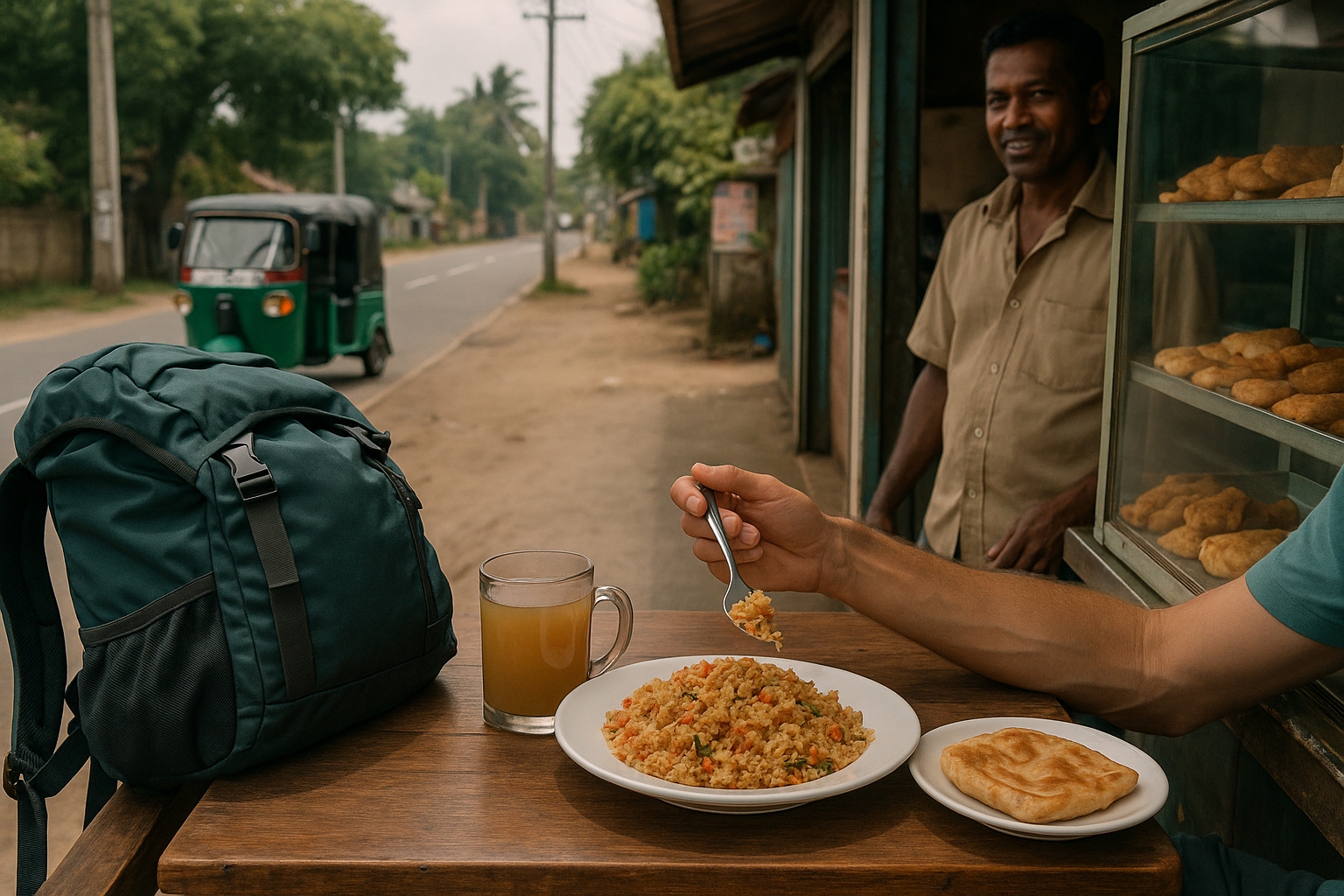
The national dish isn’t just one thing — it’s a whole philosophy. A proper rice and curry spread involves a mound of steamed rice surrounded by small bowls of different curries: lentil dhal, jackfruit, fish, potato, coconut sambol, and more. The combination changes by region, by season, and by whoever’s cooking that day. Find a local “hotel” (that’s what Sri Lankans call small, no-frills eateries) and order the set meal. You’ll eat until you can’t move, and the bill will be genuinely surprising in the best possible way.
These local hotels typically display their dishes behind a glass counter or on a chalkboard. Point, smile, and eat. No need for extensive menus or lengthy explanations — the food speaks for itself.
Street Food Worth Seeking Out
Sri Lanka’s street food scene rewards the curious. Kottu roti — chopped flatbread stir-fried with vegetables, egg, and your choice of protein on a hot griddle — is the kind of dish you’ll think about for years. The rhythmic clanging of the metal blades chopping the roti is both a cooking technique and a dinner bell; follow the sound and you’re almost always in the right place.
Hoppers are another essential. These bowl-shaped rice flour crepes, sometimes with an egg cracked into the center, are typically a breakfast or evening food. Pair them with coconut sambol and seeni sambol (a sweet, caramelized onion relish) and you have a meal that costs very little and delivers a lot. String hoppers — delicate steamed rice noodle discs — are equally worth tracking down.
Pol roti, a thick flatbread made with coconut, is a staple snack you’ll find at roadside stalls throughout the island. Grab one with a cup of Ceylon tea and you’ve just had the most Sri Lankan morning possible.
Where to Find the Good Stuff
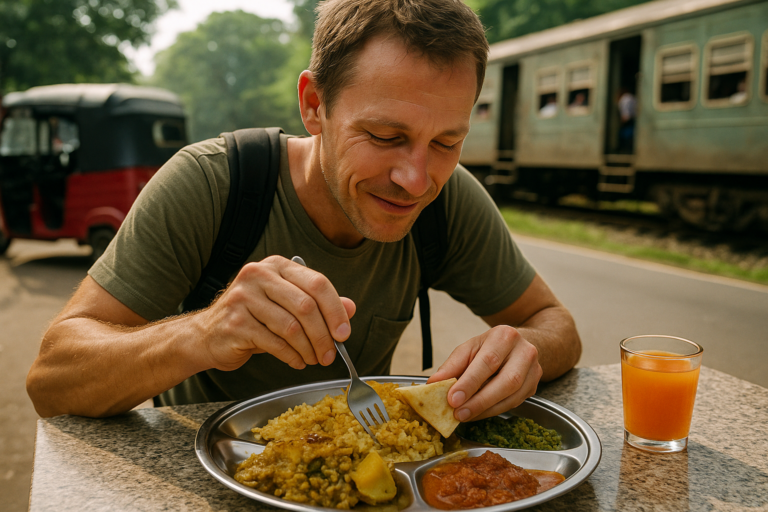
Markets are your best friend. Morning markets in towns like Nuwara Eliya, Tangalle, and Trincomalee are full of fresh produce, snacks, and prepared foods that locals actually eat. Wander, observe, and try things without overthinking it. The vendors are generally patient and often delighted when a traveler shows genuine interest in what they’re selling.
Look for places where locals are queuing. A queue is the universal signal for quality. If a stall has ten people waiting and the one next to it is empty, the answer is obvious. Trust the crowd.
A Loose 10-Day Framework for Independent Travelers
Sri Lanka is compact enough to cover a lot of ground in ten days, but trying to rush every highlight will leave you exhausted and slightly hollow. The key is choosing a rhythm that mixes the iconic with the quiet, the popular with the personal.
Days 1–2: Colombo
Start in the capital. Colombo gets dismissed by travelers who rush straight to the beach or the hill country, but it’s worth a day or two of genuine exploration. The Pettah district is a sensory overload in the best way — markets spilling onto streets, the smell of spices, the noise of a city fully alive. Galle Face Green at sunset, with vendors selling isso vadai (prawn fritters) along the promenade, is one of those low-key moments that ends up in your top memories of the trip.
Days 3–4: Kandy and the Cultural Triangle
Head north to Kandy, home of the Temple of the Tooth and a city that feels genuinely different from the coast. The surrounding Cultural Triangle — Sigiriya, Dambulla, Polonnaruwa — holds some of the most remarkable ancient sites in Asia. Sigiriya Rock Fortress is worth the climb and the entrance fee. Go early, before the heat builds and before the tour groups arrive. The view from the top is the kind that earns its reputation.
Days 5–6: Hill Country and the Kandy–Ella Train
This is where budget travel in Sri Lanka really earns its reputation for delivering outsized experiences. The train journey itself is the activity. Settle in, let the landscape unfold, and arrive in Ella with the kind of relaxed, unhurried feeling that’s hard to manufacture. Ella is small, walkable, and surrounded by tea country. Hike to Little Adam’s Peak in the early morning before the day warms up, wander through tea plantations, and eat at the simple local spots rather than the tourist-facing cafes on the main strip.
Days 7–8: The South Coast
Head south to the coast. Mirissa, Unawatuna, and Tangalle each offer something different — Mirissa for whale watching (seasonal), Unawatuna for easy beach days, Tangalle for a quieter, less developed stretch of sand. The south coast can get crowded, but arrive outside of peak hours and you’ll find pockets of genuine calm. Eat at the fish stalls near the harbor in Mirissa for the freshest catch at the fairest price.
Days 9–10: Off the Beaten Path in Uva Province
If you have flexibility in your schedule, consider spending your final days exploring the Uva Province — a region that sees far fewer tourists than the coastal or hill country circuits. The landscape is dramatic, the pace is slow, and the experience feels genuinely removed from the well-worn tourist trail. Horizon Guides’ Sri Lanka off-the-beaten-path resource is a useful starting point for planning this kind of detour. It’s the kind of place where you might be the only foreigner in the guesthouse, which, if you’re open to it, leads to the most memorable conversations of the trip.
Practical Tips for Keeping Costs Down
- Accommodation: Guesthouses run by local families consistently offer better value than larger hotels — and far better breakfasts. Ask for a room with a fan rather than air conditioning if the climate allows; the price difference is significant.
- Water: Carry a reusable bottle and refill at guesthouses where filtered water is available. It saves money and reduces plastic waste, which is a real issue in coastal areas.
- SIM cards: Pick one up at the airport on arrival. Data is affordable and having a working map makes independent navigation dramatically less stressful.
- Timing: Sri Lanka has two monsoon seasons affecting different coasts at different times of year. Research which coast suits your travel window — arriving on the wrong coast during monsoon season is a genuinely soggy experience.
- Bargaining: Appropriate in markets and with tuk-tuk drivers, but not in restaurants or shops with fixed prices. Read the context and approach it respectfully rather than aggressively.
- Entrance fees: Some of the major archaeological sites have entrance fees that can feel steep relative to other daily costs. Budget for these in advance so they don’t come as a shock — they’re generally worth it.
The Mindset That Makes Budget Travel in Sri Lanka Work
The travelers who get the most out of Sri Lanka are the ones who stay curious and stay flexible. The best meal you’ll eat probably won’t be the one you planned — it’ll be the one you stumbled into because you followed the smell of something cooking down an alley. The most memorable conversation will happen on a bus, or at a tea stall, or while waiting for a train that’s running late.
Budget travel in Sri Lanka isn’t about deprivation. It’s about choosing depth over convenience, connection over comfort, and experience over expense. The island is generous with its rewards for travelers who approach it with openness. You don’t need a big budget to have a rich trip — you need curiosity, patience, and a willingness to eat where the locals eat and go where the tourists don’t.
Sri Lanka has a way of getting under your skin. The food, the landscapes, the warmth of the people, the sheer variety of experiences packed into a relatively small island — it adds up to something that’s genuinely hard to leave behind. Start planning, stay open, and let the island surprise you. It will.
This article was produced with AI assistance and reviewed editorially.


Southeast Asia on a Shoestring: Budget Routes Across Thailand, Vietnam & Cambodia

Southeast Asia Decoded: Hanoi 3-Day Itinerary + Vietnam Misconceptions Debunked


