
Mexico
Mexico’s Best-Kept Secrets: From El Cuyo to Mexico City (2026)
Discover the best hidden gems in Mexico beyond the resort zones — from flamingo lagoons in El Cuyo to ghost towns in the Sierra Madre. Real places, real experiences, zero tourist queues.

Hidden Gems Mexico: Beyond the Resort Zones and Into the Real Thing
Mexico is one of those countries that keeps surprising you. The hidden gems Mexico has been quietly holding onto are exactly the kind of places that make you rethink everything you thought you knew about travel. Not the all-inclusive pools. Not the Instagram-famous cenotes with a ticket queue stretching around the block. We’re talking about fishing villages where the biggest decision of the day is whether to eat your tacos on the dock or the beach, highland towns where every textile tells a living story, and a capital city so layered with culture that a month barely scratches the surface.
The more you’re willing to wander off the well-worn path, the more Mexico gives back. So if you’re planning a trip and you want something that actually stays with you — something real — here’s where to start. From a remote Yucatán village with flamingos at sunrise to a ghost town carved into the Sierra Madre, these are the hidden gems in Mexico worth seeking out in 2026 and beyond.
Why Mexico’s Hidden Gems Are Worth the Extra Effort
Most travelers land in Cancún, Cabo, or Los Cabos and never look beyond the resort strip. That’s their loss — and quietly, your gain. Mexico is the fifth-largest country in the Americas, with 31 states, dozens of distinct indigenous cultures, and landscapes that shift from Caribbean turquoise to high-altitude pine forest to Pacific desert within a single road trip. The places that don’t make it onto the highlight reels are often the ones that leave the deepest mark.
What makes a hidden gem in Mexico? It’s not just about being remote. It’s about places where the local economy hasn’t been swallowed by mass tourism, where you can eat at a family comedor and the owner will ask where you’re from and genuinely mean it, where the landscape hasn’t been curated for a photo op. These places still exist — and there are more of them than you might think.
The Best Hidden Gems in Mexico Right Now
Mexico’s lesser-known destinations span every type of experience — wild coastlines, colonial highlands, jungle ruins, and creative cities that most international travelers simply fly over. Below you’ll find the places that consistently reward curious, independent travelers who are willing to go a little further than the guidebook suggests.
El Cuyo: The Yucatán Village That Hasn’t Been Discovered Yet
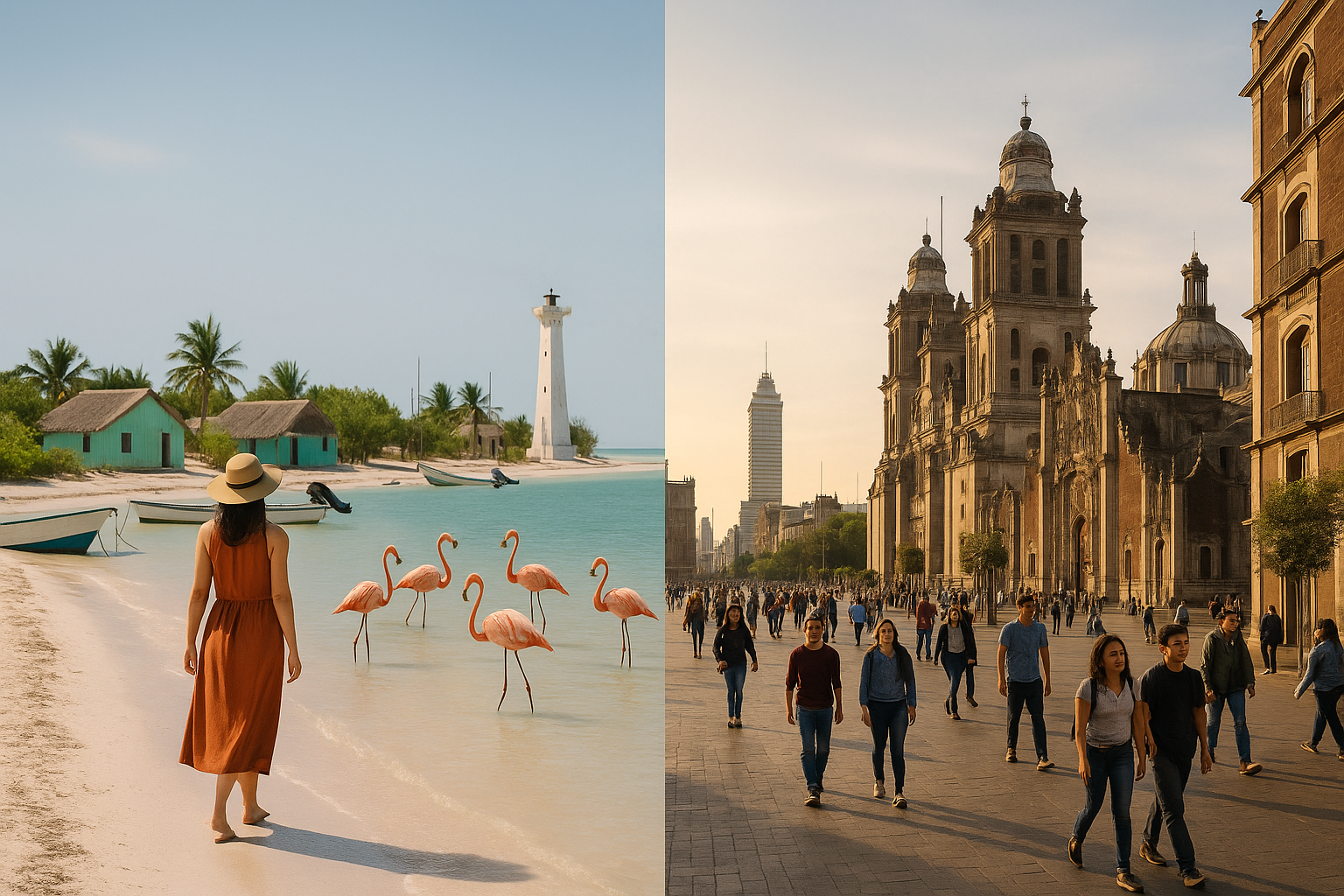
El Cuyo sits at the northeastern tip of the Yucatán Peninsula, tucked between the Gulf of Mexico and the Ría Lagartos Biosphere Reserve. It’s a small fishing community — the kind of place where the streets are sandy, the internet is unreliable, and that’s entirely the point.
There are no resort chains here. No swim-up bars, no organized excursions with matching wristbands. What you get instead is a long, wild stretch of beach that’s almost always empty, a handful of family-run guesthouses, and an evening sky that turns every shade of orange before fading into the kind of darkness you only see when there’s no light pollution for miles.
The real draw, though, is what surrounds El Cuyo. The Ría Lagartos Biosphere Reserve is one of the most important flamingo habitats in the Western Hemisphere. You can hire a local guide to take you through the mangrove channels by boat and watch hundreds of pink flamingos wade through the shallow lagoons at sunrise. It’s one of those experiences that genuinely stops you mid-breath. The reserve is also a critical stop for migratory bird species, making it a quiet paradise for anyone who appreciates nature in its least-curated form.
Getting here takes effort. You’ll likely fly into Cancún or Mérida, then take a combination of buses and colectivos — shared minivans that are the backbone of local transport across the Yucatán. The journey from Mérida takes roughly three to four hours depending on connections, and that journey itself is part of the experience. You’ll pass through small towns, roadside fruit stalls, and stretches of flat scrubland that feel a long way from the tourist corridor of Playa del Carmen.
What to Do in and Around El Cuyo
- Book a dawn flamingo tour through the Ría Lagartos lagoons with a local guide — most guesthouses can connect you with someone trustworthy
- Rent a bicycle and explore the coastline heading west toward Holbox — the road is flat and the scenery is remarkable
- Eat fresh ceviche and grilled fish at one of the family-run comedores along the main street — the food is honest, cheap, and genuinely good
- Watch the kite surfers who use El Cuyo’s consistent winds — the beach is one of the better kite surfing spots in the region, though it’s still largely under the radar
- Do very little, on purpose — slow travel is the whole philosophy here
A word on sustainability: El Cuyo is still small and relatively untouched because not many people know about it. If you go, travel with that in mind. Stay in locally owned accommodation, eat at family restaurants, hire local guides rather than booking through external platforms. The community’s fishing economy is delicate, and the kind of tourism that serves it best is the kind that flows money directly into local hands.
Mexico City: A Cultural Universe That Never Runs Out
Mexico City is not a hidden gem in the traditional sense — it’s a megalopolis of over 20 million people. But for young travelers, it remains one of the most underrated destinations on the planet. People fly over it on the way to beach resorts without realizing what they’re missing. That’s a genuine shame, because CDMX — as locals call it — is one of the most culturally rich, creatively alive, and culinarily extraordinary cities in the world.
The key is knowing which parts of the city to explore. The tourist-heavy historic center is worth a day, but the neighborhoods of Roma, Condesa, Coyoacán, and Xochimilco are where the city’s real personality lives.
The Neighborhoods You Actually Want to Spend Time In
Roma and Condesa sit next to each other and feel like the city’s creative heartbeat. Tree-lined streets, independent bookshops, coffee shops where people work on laptops and argue about art, and a restaurant scene that ranges from humble taco stands to some of the most exciting contemporary Mexican cuisine you’ll find anywhere. Walk here on a Sunday morning and the city feels almost quiet — almost.
Coyoacán is where Frida Kahlo was born and lived. The Museo Frida Kahlo, known locally as La Casa Azul (The Blue House), is one of the most moving museums in Mexico — not just because of Kahlo’s art, but because of how it preserves the physical space she inhabited. Her studio, her garden, her personal objects. Book tickets in advance because they sell out fast. The neighborhood itself has a bohemian, village-like character that’s completely at odds with the scale of the city around it. There’s a central market, a cobblestone plaza, and a rhythm that encourages you to slow down.
Xochimilco is unlike anything else in the city. A network of ancient canals built by the Aztecs, now lined with colorful trajineras — flat-bottomed boats that families and groups of friends hire for weekend afternoons. It’s festive, chaotic, and deeply local. Vendors float alongside you selling corn, tamales, and cold drinks. Mariachi bands paddle up and offer to play a song. It’s joyful in a way that’s hard to manufacture.
Museums Worth More Than an Afternoon
The Museo Nacional de Antropología is genuinely one of the great museums of the world. It houses the most comprehensive collection of pre-Hispanic artifacts in existence — from Aztec, Maya, Olmec, Zapotec, and dozens of other civilizations. Set aside at least half a day. The building itself, designed by Pedro Ramírez Vázquez, is an architectural achievement. The central courtyard alone is worth the entrance fee.
Beyond the big names, Mexico City has a thriving contemporary art scene. The Museo Universitario Arte Contemporáneo (MUAC) at UNAM’s main campus is one of Latin America’s most important contemporary art institutions, and the campus itself — a UNESCO World Heritage Site — is worth exploring on its own terms.
Street Food as Cultural Experience
You can’t talk about Mexico City without talking about what you eat there. Street food in CDMX isn’t a budget option — it’s a cultural institution. Tacos al pastor, where pork is slow-cooked on a vertical spit and served with pineapple and coriander, originated here. Tlayudas, memelas, esquites, tamales wrapped in banana leaves — the variety is staggering and the quality is high.
Head to Mercado de Jamaica for flowers and produce, or Mercado de Medellín in Roma for an international mix of ingredients that reflects the city’s diversity. For mezcal, look for small mezcalerías in Roma Norte where the staff will walk you through regional varieties the way a sommelier talks about wine. It’s a ritual worth engaging with seriously.
More Hidden Gems in Mexico You Shouldn’t Overlook
El Cuyo and Mexico City represent two very different ends of the spectrum — remote nature and urban culture — but Mexico has dozens of places that fall somewhere in between and deserve far more attention than they get. These are the destinations that don’t make it onto most itineraries, and that’s exactly why they’re worth seeking out.
Bacalar, Quintana Roo
Bacalar has been growing in profile, but it’s still a world away from the Cancún experience. The Lagoon of Seven Colors lives up to its name — the water shifts from turquoise to deep indigo depending on depth and light. Wooden docks, hammocks over the water, and a relaxed pace define the town. Get there before the next wave of development changes it. It’s one of those rare places where doing nothing feels like exactly the right choice — and one of the most beautiful hidden gems in Mexico that more travelers are only just discovering.
San Cristóbal de las Casas, Chiapas
San Cristóbal sits at 2,200 meters in the highlands and has a cool climate, colonial architecture, and a strong indigenous Tzotzil and Tzeltal cultural presence. The markets sell handwoven textiles that are specific to individual villages — each community has its own pattern, a living tradition that goes back centuries. The surrounding villages of San Juan Chamula and Zinacantán are accessible by colectivo and offer a window into indigenous religious and cultural practices that are genuinely unlike anything else in Mexico. If you’re looking for hidden gems in Mexico that connect you to living history, this is it.
Oaxaca City
Oaxaca rewards slow, curious exploration. The mezcal culture here is serious and rooted — visit a palenque (small-scale distillery) outside the city to understand how it’s made and why the regional variations matter. The food scene, centered around mole negro, tlayudas, and chocolate, is extraordinary. And the nearby archaeological site of Monte Albán, a Zapotec city built on a flattened mountaintop, is one of the most dramatic pre-Hispanic sites in the country.
Mazunte, Oaxacan Coast
Tucked along the Pacific coast of Oaxaca, Mazunte is a tiny village that runs almost entirely on solar energy and community values. The beach is wild and beautiful, the vibe is unhurried, and the sunsets over the Pacific are the kind that make you want to stay another week. It’s a former turtle-processing town that reinvented itself around eco-tourism — and the transformation is genuinely inspiring. Stay in a small eco-hostel, take a boat trip to spot dolphins, and eat at the handful of open-air restaurants that serve fresh fish with views of the ocean.
Real de Catorce, San Luis Potosí
Real de Catorce is one of Mexico’s most atmospheric ghost towns — a former silver-mining settlement perched at 2,750 meters in the Sierra Madre Oriental. You reach it through a single-lane tunnel carved into the mountain. The town itself is mostly cobblestone streets, crumbling colonial buildings, and a population that’s a fraction of what it once was. It’s also a sacred site for the Wixáritari (Huichol) people, who make annual pilgrimages here. The surrounding desert landscape, part of the Wirikuta biosphere reserve, is surreal and unforgettable. This is one of those hidden gems in Mexico that genuinely feels like stepping into another world.
Isla Holbox, Quintana Roo
Holbox sits just off the northern tip of the Yucatán Peninsula, separated from the mainland by a shallow lagoon. There are no paved roads — just sandy paths, golf carts, and a pace of life that feels completely disconnected from the resort coast nearby. The water is shallow and warm, bioluminescent plankton lights up the sea on dark nights, and between June and September you can swim alongside whale sharks in open water. It’s the kind of place that makes you wonder why you ever thought a busy beach was the point.
Palenque, Chiapas
Most travelers rush through Palenque on the way to somewhere else. That’s a mistake. The Maya ruins here are some of the most impressive in all of Mexico — partially reclaimed by jungle, with temples rising through the canopy and howler monkeys calling from the trees above. Arrive early, before the tour groups, and you’ll have stretches of it almost to yourself. The surrounding waterfalls at Misol-Ha and Agua Azul are worth building a full day around. Palenque is one of those hidden gems in Mexico that keeps giving the more time you give it.
Tulum Pueblo vs. Tulum Beach: The Side Most Tourists Miss
Everyone knows Tulum’s beach strip — the boutique hotels, the wellness retreats, the cenotes with queues. But Tulum Pueblo, the actual town a few kilometers inland, is a completely different story. It’s where locals eat, where the market runs on Saturday mornings, and where you can find genuinely good food for a fraction of the beach prices. If you’re already heading to the Riviera Maya, spending a day in the pueblo rather than the resort zone will give you a much clearer picture of what the region actually feels like to live in.
Guanajuato City
Guanajuato is one of Mexico’s most visually striking cities — a tangle of colorful colonial buildings, underground roads carved through old mining tunnels, and plazas that come alive at night with student musicians called estudiantinas. It’s a UNESCO World Heritage city that somehow still flies under the radar for international travelers. The Museo de las Momias is genuinely unlike anything else you’ll encounter, and the Callejón del Beso — a narrow alley where two balconies almost touch — has a legend attached to it that locals will happily tell you over a beer. If you want a Mexican city that feels completely different from CDMX, Guanajuato is the answer.
Hierve el Agua, Oaxaca
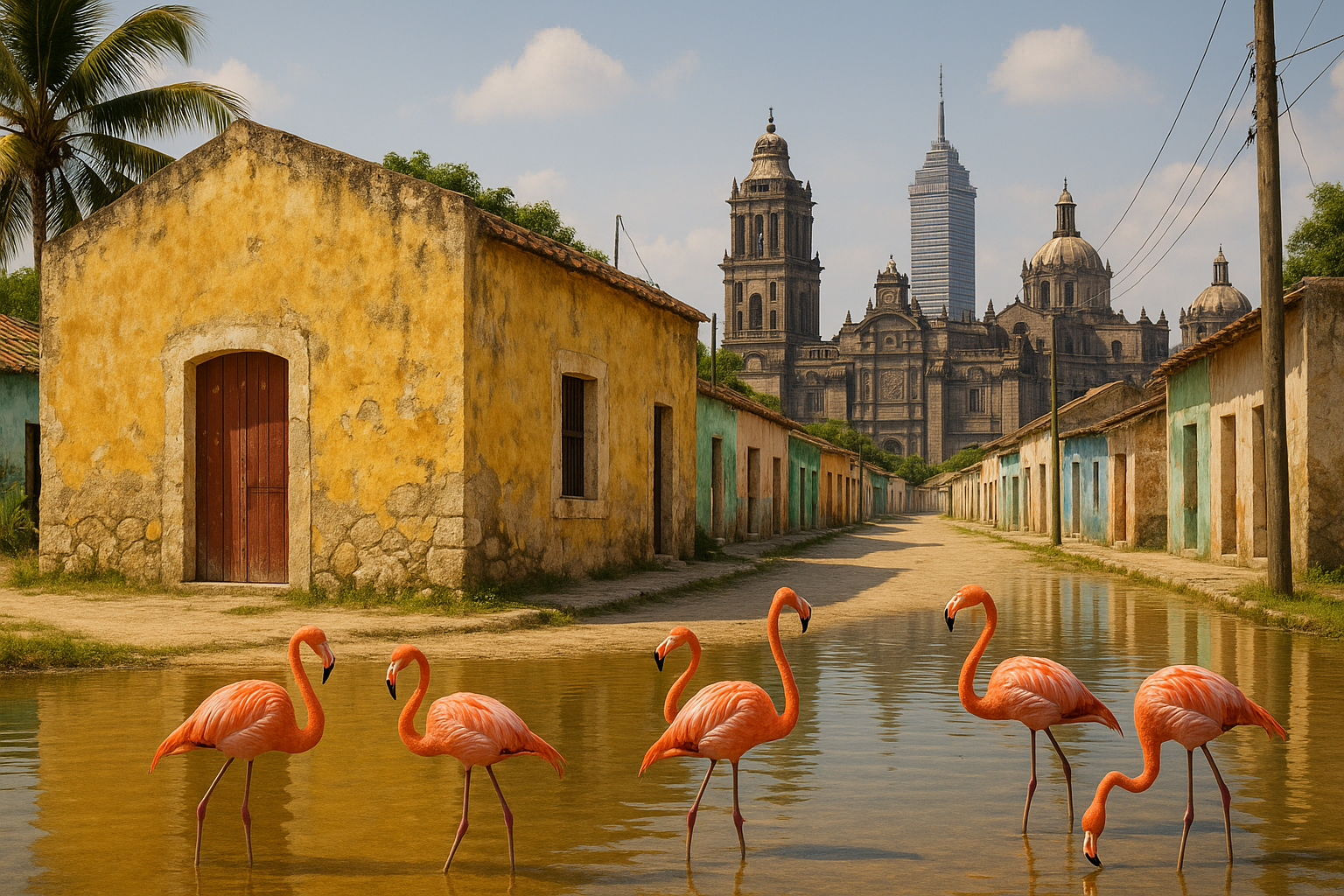
Most people who visit Oaxaca City don’t make it out to Hierve el Agua — and that’s exactly why you should. These petrified waterfalls, formed over thousands of years by mineral-rich spring water, cascade down a clifftop with sweeping views of the valley below. Natural infinity pools sit at the edge of the drop, and on a clear morning the light is extraordinary. It’s about two hours from Oaxaca City by colectivo, and the journey through the dry Oaxacan landscape is part of the experience. Come early, bring water, and give yourself time to just sit with it.
Comitán de Domínguez, Chiapas
Comitán is one of those towns that travelers pass through on the way to the Lagunas de Montebello and rarely stop to explore properly. That’s a shame. It has a handsome colonial center, a genuinely local market scene, and a quieter, more lived-in feel than San Cristóbal. The nearby Lagos de Montebello — a chain of over 50 lakes in shades of green, blue, and turquoise — are among the most underrated natural landscapes in southern Mexico. Rent a bike, hire a local guide, and spend a full day out there. You’ll likely have most of it to yourself.
Mineral de Pozos, Guanajuato
If Real de Catorce feels too remote, Mineral de Pozos offers a similar ghost-town atmosphere with easier access. This former silver-mining town in the high desert of Guanajuato is slowly being reclaimed by artists and small guesthouse owners — but it’s still quiet, still raw, and still genuinely off the tourist trail. Crumbling mine shafts dot the surrounding hills, the streets are almost entirely unpaved, and the silence on a weekday morning is something you’ll carry with you. It’s one of those hidden gems in Mexico that rewards the traveler who simply shows up with no particular plan.
Tepoztlán, Morelos
Just 80 kilometers south of Mexico City, Tepoztlán feels like a different universe. A small town ringed by dramatic volcanic cliffs, it has a famous weekend market, a pre-Hispanic pyramid perched high on the ridge above town, and a creative community that draws artists, writers, and curious travelers in equal measure. The hike up to the Tepozteco pyramid takes about an hour and rewards you with views across the valley that are genuinely hard to describe. It’s an easy day trip from CDMX, but staying overnight lets you experience the town after the day-trippers leave — and that’s when it really comes alive.
Sayulita, Nayarit
Sayulita has been on the radar for a few years, but it still delivers something the big Pacific resorts can’t — a genuine surf-village atmosphere where the streets are painted in bright murals, the tacos are served from carts on the beach, and the pace of life is set by the tides. It’s the kind of place where you arrive for a weekend and start looking at monthly rentals. The surf is beginner-friendly, the community is welcoming, and the surrounding coastline — including the quieter beaches of San Francisco (San Pancho) just up the road — gives you plenty of reasons to stay longer than planned.
Hidden Gems in Mexico by Region: A Quick Reference
Mexico is vast, and the best lesser-known destinations are spread across very different landscapes and cultures. Here’s a quick way to think about it by region, so you can plan around wherever you’re already heading.
Yucatán Peninsula
El Cuyo, Isla Holbox, Bacalar, and Tulum Pueblo. This region rewards travelers who look beyond the Cancún–Playa del Carmen corridor. The interior of the peninsula — small Maya towns, cenotes with no entrance fee, and local markets — is almost entirely overlooked.
Chiapas
San Cristóbal de las Casas, Palenque, and Comitán de Domínguez. Chiapas is one of Mexico’s most biodiverse and culturally rich states, and it sees a fraction of the visitors that Oaxaca or the Yucatán attract. That gap is closing, but slowly.
Oaxaca
Oaxaca City, Mazunte, and Hierve el Agua. The state of Oaxaca punches well above its weight for food, mezcal, indigenous culture, and natural landscapes. It’s one of the most rewarding regions in the country for travelers who want depth over speed.
Central Highlands
Guanajuato City, Mineral de Pozos, Real de Catorce, and Tepoztlán. The colonial heartland of Mexico is full of cities and towns that feel like film sets — except they’re entirely real and entirely lived-in. This region is especially good for travelers who want culture, history, and architecture without the beach-resort price tag.
Pacific Coast
Mazunte and Sayulita. The Pacific coast of Mexico stretches for thousands of kilometers and most of it is completely undeveloped. If you’re willing to travel between towns by local bus rather than private transfer, you’ll find beaches and villages that feel genuinely remote.
How to Travel Mexico’s Hidden Gems Responsibly
The places on this list are special precisely because they haven’t been overrun. Keeping them that way takes a little intention on your part — but it’s not complicated.
- Stay local. Choose family-run guesthouses and small eco-hostels over international chains. Your money stays in the community.
- Eat where locals eat. Comedores, market stalls, and small restaurants run by families are almost always better than tourist-facing menus — and significantly cheaper.
- Hire local guides. Especially for nature reserves, archaeological sites, and indigenous communities. Local guides know the land, speak the languages, and benefit directly from your visit.
- Learn a few words of Spanish. You don’t need to be fluent. Even basic phrases — gracias, por favor, ¿cuánto cuesta? — open doors and show respect.
- Ask before photographing people. Particularly in indigenous communities. It’s a simple courtesy that matters enormously.
- Travel slowly. The hidden gems in Mexico reward patience. Spending three days in one small town will give you more than rushing through five in a week.
Practical Tips for Exploring Hidden Gems in Mexico
Getting to lesser-known destinations in Mexico is easier than it sounds, but it does require a bit more planning than booking a resort package. Here’s what actually helps.
Getting Around
Mexico has an excellent long-distance bus network. ADO and its affiliated companies cover most of the country comfortably and affordably. For shorter distances, colectivos — shared minivans or taxis — are the standard local option and are usually very cheap. Renting a car gives you the most freedom, especially in Oaxaca, Chiapas, and the Yucatán interior, but isn’t always necessary if you’re based in one town and exploring by foot and local transport.
When to Go
Mexico’s climate varies enormously by region. The Yucatán Peninsula is best visited between November and April, when humidity drops and the risk of hurricanes passes. Oaxaca and Chiapas are pleasant year-round, though the rainy season (June to October) brings lush landscapes and fewer crowds. The central highlands have a mild, spring-like climate for most of the year. For whale shark swimming near Holbox, June to September is the window.
Safety
Mexico’s safety situation varies significantly by region. The destinations on this list are generally considered safe for travelers, but it’s always worth checking current travel advisories from your home country’s foreign affairs department before you go. Use common sense, avoid traveling at night on unfamiliar roads, and ask locals — guesthouse owners, market vendors, fellow travelers — for up-to-date advice on the ground. The vast majority of travelers who visit Mexico’s lesser-known regions do so without incident and leave wanting to come back.
Budget
Mexico’s hidden gems are almost universally more affordable than the resort zones. A bed in a family guesthouse in El Cuyo or Mazunte will cost a fraction of what you’d pay in Tulum Beach. Street food and market meals are cheap and excellent. Local transport is inexpensive. If you’re traveling on a tight budget, Mexico’s off-the-beaten-path destinations are actually your best option — you get more experience for less money.
Frequently Asked Questions About Hidden Gems in Mexico
What are the most underrated places to visit in Mexico?
Some of the most underrated destinations in Mexico include El Cuyo in the Yucatán, Real de Catorce in San Luis Potosí, Comitán de Domínguez in Chiapas, Mineral de Pozos in Guanajuato, and Mazunte on the Oaxacan coast. These places offer authentic experiences, stunning landscapes, and genuine local culture — without the crowds you’d find in more famous destinations.
Is it safe to visit lesser-known places in Mexico?
Many of Mexico’s hidden gems are in regions that are considered safe for travelers. As with any destination, it’s worth checking current travel advisories, staying informed on the ground, and using common sense. The destinations listed in this guide — particularly those in Oaxaca, Chiapas, the Yucatán, and the central highlands — are regularly visited by independent travelers without issue.
How do I get to Mexico’s off-the-beaten-path destinations?
Most hidden gems in Mexico are reachable by a combination of long-distance bus and local colectivo. ADO buses connect major cities and towns across the country. From there, colectivos cover shorter distances cheaply and efficiently. Renting a car gives you more flexibility, especially in rural areas. Some destinations, like El Cuyo, require a bit more patience with connections — but that’s part of the experience.
What’s the best time of year to explore hidden gems in Mexico?
It depends on the region. November to April is generally the best window for the Yucatán Peninsula. Oaxaca and Chiapas are pleasant year-round, with the rainy season (June to October) bringing fewer tourists and greener landscapes. The central highlands enjoy mild weather for most of the year. For specific experiences like whale shark swimming near Holbox, June to September is the season.
Are Mexico’s hidden gems suitable for solo travelers?
Absolutely. Many of the destinations on this list are particularly well-suited to solo travel — small towns where guesthouse owners look out for their guests, local transport that connects you with other travelers, and a culture of hospitality that makes independent exploration feel genuinely welcoming. Solo travelers often find that Mexico’s lesser-known destinations are easier to navigate and more rewarding than the crowded resort zones.
Which hidden gem in Mexico is best for nature lovers?
El Cuyo and the Ría Lagartos Biosphere Reserve for flamingos and birdwatching. Isla Holbox for whale sharks and bioluminescence. Hierve el Agua for petrified waterfalls and valley views. The Lagos de Montebello near Comitán for multicolored lakes. Mazunte for Pacific coast wildlife and sea turtles. Mexico’s biodiversity is extraordinary — and most of the best natural experiences are well away from the resort zones.
This article was produced with AI assistance and reviewed editorially.


UK Island & Coastal Escapes: Cornwall, Isles of Scilly & Theme Parks (2026)

Escape the Crowds: Hidden Gems in Capri, Milos & Gran Canaria (2026)


