
Roaming Around the World
The Rise of Slow Travel: Why Spending a Month in One Place Changes Everything
Discover why slow travel beats rushing through landmarks. Learn how spending a month in one place creates authentic connections, saves money, and builds lasting memories.

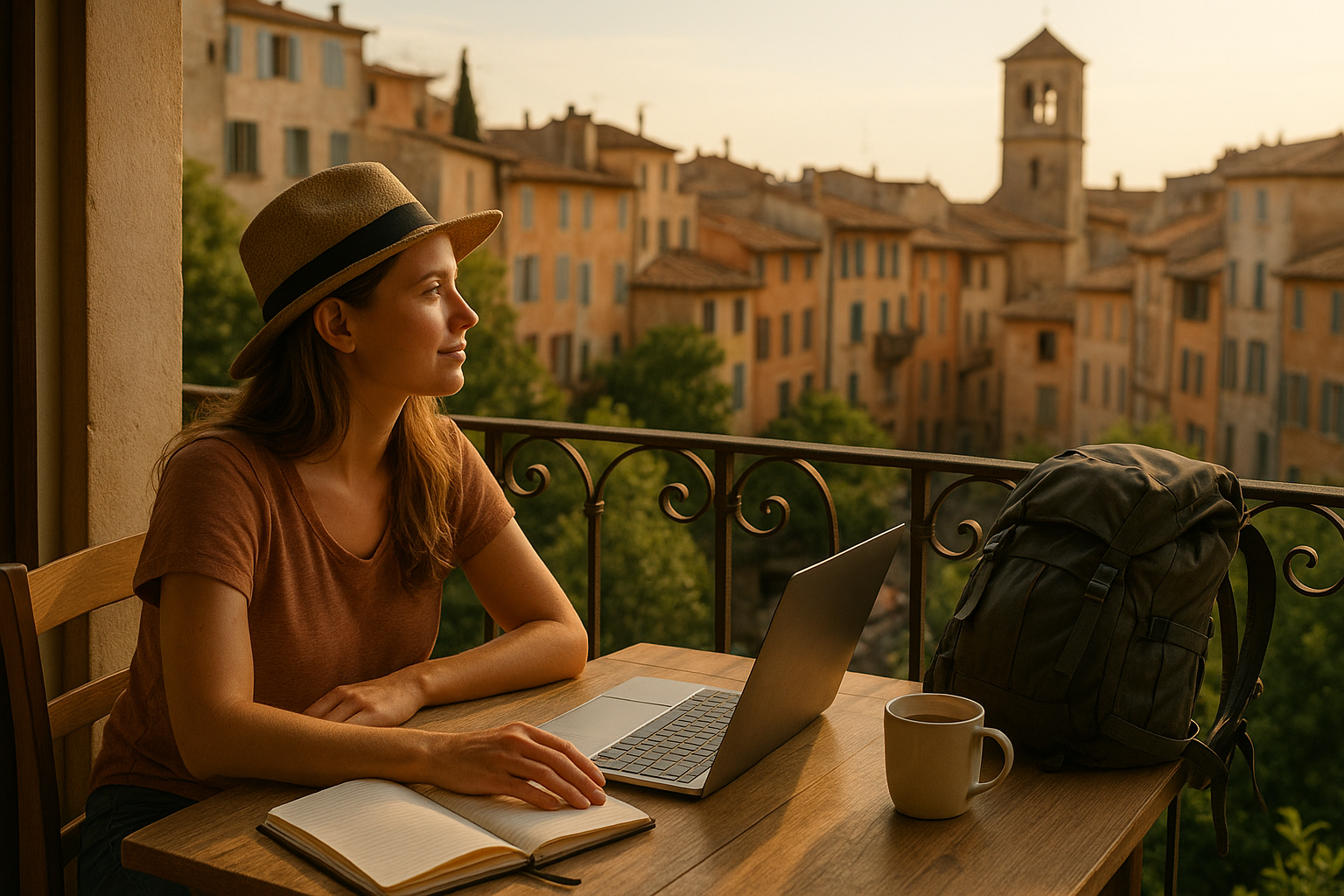
The Rise of Slow Travel: Why Spending a Month in One Place Changes Everything
Picture this: you’ve got two weeks in Southeast Asia, a list of twelve cities, and a schedule that would exhaust a travel agent. You sprint from temple to temple, eat pad thai at the nearest tourist spot, and spend more time in airports than actually living anywhere. You come home with hundreds of photos and almost no memory of how any of it actually felt.
Sound familiar? A growing number of young travelers are walking away from that approach entirely. Instead, they’re choosing to slow down, stay longer, and go deeper. Welcome to the slow travel movement — and once you understand it, you’ll wonder why you ever traveled any other way.
What Slow Travel Actually Means
Slow travel isn’t about moving at a snail’s pace. It’s about choosing depth over breadth. Instead of visiting eight countries in three weeks, you pick one city, one neighborhood, maybe one country — and you actually live there for a while. We’re talking weeks or months, not days.
It’s different from being a digital nomad, though there’s some overlap. Slow travel isn’t necessarily about working remotely from a laptop while hopping between co-working spaces. It’s more intentional than that. It’s about choosing to experience a place the way residents do — finding your corner café, learning which market opens on Saturdays, getting to know the person who sells you fruit every morning.
It’s also not a staycation. You’re still exploring somewhere new. You’re still curious, still adventurous. You’ve just decided that one place, explored properly, is worth more than ten places seen through a bus window.
Why Young Travelers Are Choosing This
Slow travel has always existed, but it’s gaining serious momentum among travelers aged 16 to 30. The reasons are more practical than you might think.
- Burnout is real. Rushing through destinations leaves many travelers feeling exhausted rather than refreshed. Staying longer reduces the constant mental load of logistics, packing, and adjusting to new environments every few days.
- Remote work has opened the door. For young professionals and students with flexible schedules, spending a month somewhere is no longer a fantasy reserved for sabbaticals. It’s becoming a realistic option.
- Authenticity matters more than ever. Gen Z and young Millennials are increasingly skeptical of curated, tourist-facing experiences. They want to connect with real local life — and that takes time.
- The memories are better. Research on memory formation consistently shows that rich, varied, emotionally meaningful experiences stick longer than a blur of checked-off landmarks. A month in one place gives you time to build those layers.
The Surprising Financial Case for Staying Longer
Here’s something that might change how you think about your travel budget: staying longer is often cheaper than moving fast.
Monthly rental rates through platforms like Airbnb, Booking.com, or local housing apps are dramatically lower per night than short-term stays. A place that costs €80 a night for a weekend might drop to €35 a night if you commit to a month. Add in the money you save on flights — because you’re not constantly booking new ones — and the numbers start making a lot of sense.
You also spend less when you live somewhere rather than visit it. You cook occasionally. You find the affordable local restaurants that don’t appear on tourist maps. You stop paying the tourist premium that follows you everywhere when you’re clearly just passing through.
Slow travel also tends to benefit local economies more meaningfully. When you spend a month in a neighborhood, your money goes to local landlords, small restaurants, neighborhood shops, and community markets — not just the hotels and attractions built specifically for tourists.
What Actually Changes When You Stay
The real shift happens around the two-week mark. The novelty of being a visitor starts to fade, and something more interesting takes its place. You start to belong, just a little.
You pick up phrases in the local language without even trying. You stop needing Google Maps for your daily routine. The woman at the bakery recognizes you. You get invited to things. You start to understand the rhythm of the city — when it’s quiet, when it comes alive, what locals actually do on weekends.
These are the moments that don’t photograph well but stay with you for years. The spontaneous dinner that turned into a four-hour conversation. The local festival you only found out about because your neighbor mentioned it. The friendship you built slowly, over many coffees, that you’d never have had time for on a three-day trip.
Language acquisition follows a similar pattern. You don’t need to become fluent. But even a few weeks of daily immersion teaches you more than months of classroom study. More importantly, making the effort to communicate in someone’s language opens doors that staying in tourist-facing English simply doesn’t.
Popular Destinations for Slow Travelers
Some cities have become natural hubs for longer-stay travelers, offering the right mix of affordability, infrastructure, and local culture worth digging into.
- Medellín, Colombia — Affordable, vibrant, with a thriving community of long-term visitors and a local culture that rewards curiosity.
- Chiang Mai, Thailand — A longtime favorite for its low cost of living, walkable neighborhoods, and genuine warmth toward visitors who take the time to engage.
- Tbilisi, Georgia — One of Europe’s most underrated cities, with remarkable food, architecture, and a hospitality culture that makes extended stays feel immediately comfortable.
- Lisbon, Portugal — Accessible, walkable, and full of distinct neighborhoods that each feel like their own small world.
- Oaxaca, Mexico — Rich in culture, craft, and cuisine, with a pace of life that naturally encourages you to slow down.
A Few Things Worth Knowing Before You Go
Slow travel isn’t without its practical considerations. Visa requirements vary significantly depending on your nationality and your destination. Many countries allow stays of 30 to 90 days on a tourist visa, but it’s worth checking the specific rules well in advance. Some destinations offer dedicated remote work or digital nomad visas that make longer stays even more straightforward.
It’s also honest to acknowledge that slow travel, in its most extended forms, requires a certain level of flexibility — either in your work situation, your studies, or your financial planning. It’s not automatically accessible to everyone, and that’s worth recognizing. But it doesn’t have to mean months abroad. Even two or three weeks in one place, rather than spread across five cities, brings many of the same benefits at a fraction of the logistical complexity.
The Bigger Shift in How We Think About Travel
Slow travel reflects something deeper changing in how young people approach the world. Travel was never really about collecting stamps in a passport. It was always about the stories, the people, the moments that made you see things differently. Somewhere along the way, the pressure to see everything made us forget that.
Spending a month in one place won’t give you a longer list of destinations to name-drop. But it will give you something harder to manufacture: a genuine understanding of somewhere that isn’t your home. And that, more than any highlight reel, is what travel is actually for.
Your next adventure doesn’t have to cover more ground. Sometimes, it just has to go deeper.
This article was produced with AI assistance and reviewed editorially.


The Rise of Slow Travel: Why Spending a Month in One Place Changes Everything

Hidden Gems vs. Viral Spots: How to Find Real Experiences Beyond Instagram


